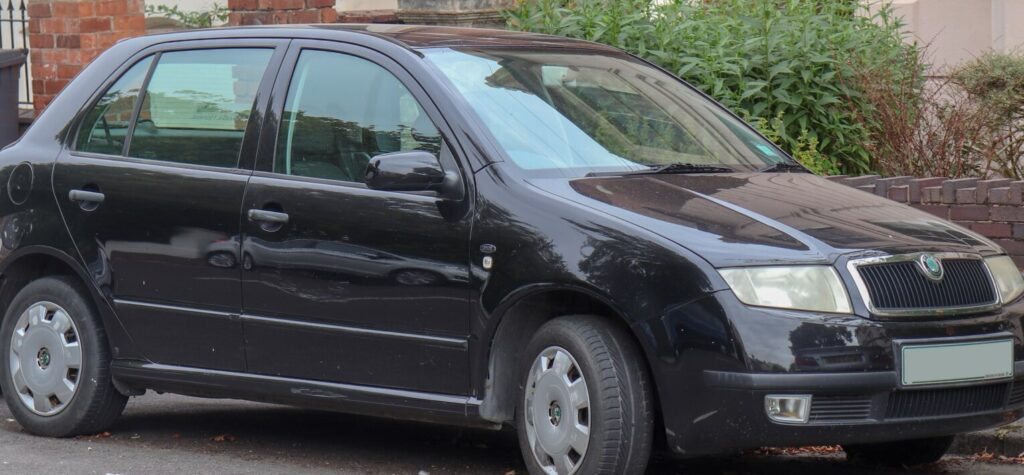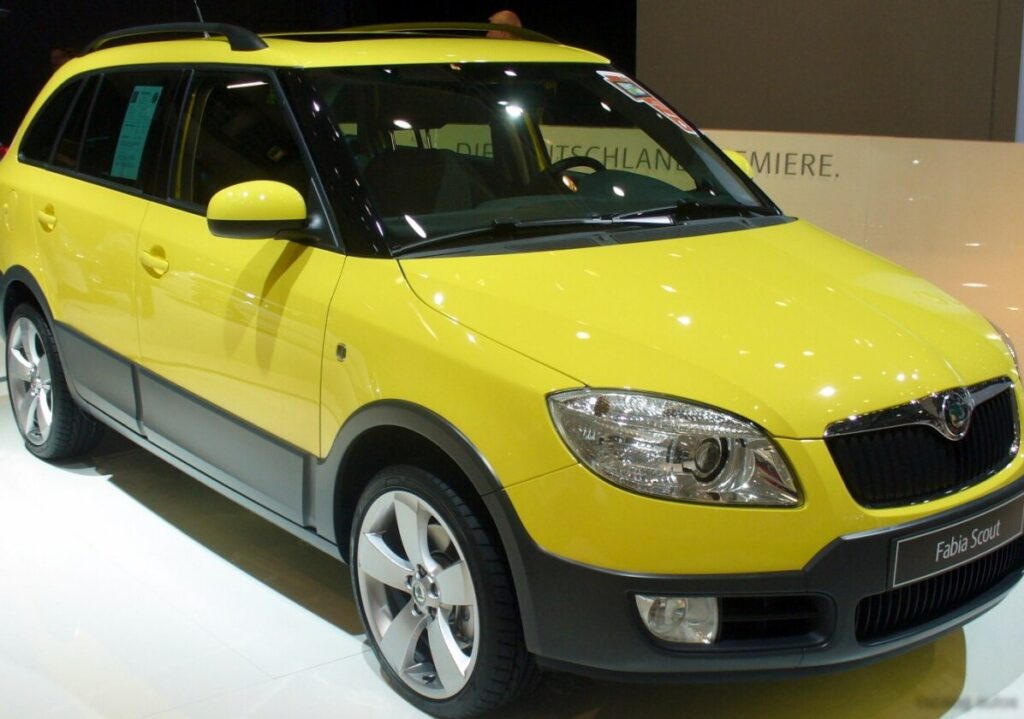
The Skoda Fabia II Combi Scout 1.9 TDI, produced from 2009 to 2010, was a unique offering within the second-generation Fabia (Typ 5J) range. Positioned as a crossover-styled estate car, the Scout aimed to blend the practicality of a station wagon with a slightly more rugged aesthetic and enhanced off-road capability – though remaining primarily a road-focused vehicle. This particular variant, equipped with the 1.9-liter TDI engine producing 105 horsepower, represented a mid-range option in the Scout lineup, balancing fuel efficiency with acceptable performance. It was primarily sold in European markets, capitalizing on the popularity of compact estates and the growing demand for vehicles with a hint of adventure styling.
Technical Specifications
| Brand | Skoda |
| Model | Fabia |
| Generation | Fabia II Combi Scout |
| Type (Engine) | 1.9 TDI (105 Hp) DPF |
| Start of production | 2009 |
| End of production | 2010 |
| Powertrain Architecture | Internal Combustion engine |
| Body type | Station wagon (estate), Crossover |
| Seats | 5 |
| Doors | 5 |
| Fuel consumption (urban) | 6.5 l/100 km (36.2 US mpg, 43.5 UK mpg) |
| Fuel consumption (extra urban) | 4.1 l/100 km (57.4 US mpg, 68.9 UK mpg) |
| Fuel consumption (combined) | 5 l/100 km (47 US mpg, 56.5 UK mpg) |
| CO2 emissions | 130 g/km |
| Fuel Type | Diesel |
| Acceleration 0 – 100 km/h | 11 sec |
| Acceleration 0 – 62 mph | 11 sec |
| Acceleration 0 – 60 mph | 10.5 sec |
| Maximum speed | 188 km/h (116.82 mph) |
| Emission standard | Euro 4 |
| Weight-to-power ratio | 11.2 kg/Hp |
| Weight-to-torque ratio | 4.9 kg/Nm |
| Power | 105 Hp @ 4000 rpm |
| Torque | 240 Nm @ 1900 rpm (177.01 lb.-ft. @ 1900 rpm) |
| Engine layout | Front, Transverse |
| Engine Model/Code | EA188 / BLS |
| Engine displacement | 1896 cm3 (115.7 cu. in.) |
| Number of cylinders | 4 |
| Engine configuration | Inline |
| Cylinder Bore | 79.5 mm (3.13 in.) |
| Piston Stroke | 95.5 mm (3.76 in.) |
| Compression ratio | 19:1 |
| Number of valves per cylinder | 2 |
| Fuel injection system | Pump-nozzle (Unit Injector) |
| Engine aspiration | Turbocharger, Intercooler |
| Valvetrain | SOHC |
| Engine oil capacity | 4.3 l (4.54 US qt | 3.78 UK qt) |
| Coolant capacity | 6.8 l (7.19 US qt | 5.98 UK qt) |
| Kerb Weight | 1180 kg (2601.45 lbs.) |
| Max. weight | 1710 kg (3769.9 lbs.) |
| Max load | 530 kg (1168.45 lbs.) |
| Trunk (boot) space – minimum | 480 l (16.95 cu. ft.) |
| Trunk (boot) space – maximum | 1460 l (51.56 cu. ft.) |
| Fuel tank capacity | 45 l (11.89 US gal | 9.9 UK gal) |
| Max. roof load | 75 kg (165.35 lbs.) |
| Permitted trailer load (braked) | 1200 kg (2645.55 lbs.) |
| Permitted trailer load (unbraked) | 450 kg (992.08 lbs.) |
| Permitted towbar download | 50 kg (110.23 lbs.) |
| Length | 4250 mm (167.32 in.) |
| Width | 1658 mm (65.28 in.) |
| Width including mirrors | 1886 mm (74.25 in.) |
| Height | 1542 mm (60.71 in.) |
| Wheelbase | 2462 mm (96.93 in.) |
| Front track | 1430 mm (56.3 in.) |
| Rear track | 1420 mm (55.91 in.) |
| Drag coefficient (Cd) | 0.32 |
| Minimum turning circle | 10 m (32.81 ft.) |
| Front suspension | Independent, McPherson with coil spring and anti-roll bar |
| Rear suspension | Coil spring, Torsion |
| Front brakes | Ventilated discs |
| Rear brakes | Disc |
| Assisting systems | ABS (Anti-lock braking system) |
| Steering type | Steering rack and pinion |
| Power steering | Electric |
| Tires size | 205/45 R16 |
| Wheel rims size | 6.5J x 16 |
INTRODUCTION
The Skoda Fabia II Combi Scout 1.9 TDI (produced 2009-2010) was a variant of the Fabia II series, built on the Volkswagen Group’s PQ35 platform (also known as the 1HX0/A3 platform). The Scout trim level aimed to offer a more adventurous aesthetic and slightly increased ground clearance compared to the standard Fabia Combi. This was achieved through plastic body cladding, roof rails, and a marginally raised suspension. The 1.9 TDI engine with 105 horsepower was a popular choice, offering a good balance between fuel economy and performance for everyday driving. It sat in the middle of the Scout range, below the more powerful petrol engines and above the base-level diesel options.
Powertrain & Engine Architecture
The heart of the Fabia II Combi Scout 1.9 TDI is the EA188 series 1.9-liter inline-four diesel engine, specifically the BLS code. This engine is a direct injection diesel, utilizing pump-nozzle (unit injector) technology for precise fuel delivery. The BLS engine features a single overhead camshaft (SOHC) operating two valves per cylinder. A turbocharger with an intercooler is employed to boost power and torque. The 1896cc engine produces 105 horsepower at 4000 rpm and 240 Nm (177 lb-ft) of torque at 1900 rpm. The engine is transversely mounted in the front of the vehicle. The transmission paired with this engine was typically a five-speed manual, but a six-speed automatic transmission was also available, though less common. The automatic transmission was a conventional torque converter type, prioritizing smooth shifts over outright performance.
Driving Characteristics
The 1.9 TDI 105 hp engine in the Fabia Scout provided adequate, but not exhilarating, performance. Acceleration from 0-60 mph took around 10.5 seconds, and top speed was approximately 117 mph. The engine’s strength lay in its mid-range torque, making it well-suited for everyday driving and overtaking maneuvers. The automatic transmission, while offering convenience, did slightly diminish performance compared to the manual version due to power losses within the torque converter. Gear ratios were optimized for fuel efficiency, meaning the engine could feel strained when pushed hard. The raised suspension of the Scout trim did offer a slightly more comfortable ride, but also resulted in a bit more body roll in corners compared to the standard Fabia Combi.
Equipment & Trim Levels
The Scout trim level came with a number of standard features designed to enhance its rugged appeal. These typically included roof rails, plastic body cladding around the wheel arches and sills, and unique interior upholstery with Scout-specific badging. Standard equipment also included air conditioning, electric front windows, a CD stereo, and ABS brakes. Optional extras included alloy wheels, a sunroof, parking sensors, and upgraded audio systems. The interior was generally functional and well-built, reflecting Skoda’s reputation for value for money. The dashboard layout was similar to other Fabia II models, with a clear and straightforward design.
Chassis & Braking
The Fabia II Combi Scout utilized a McPherson strut front suspension and a torsion beam rear suspension. The Scout trim featured a slightly raised ride height compared to the standard Fabia Combi, providing a small increase in ground clearance. Front brakes were ventilated discs, while rear brakes were solid discs. ABS (Anti-lock Braking System) was standard. The steering was a rack and pinion system with electric power assistance. The tires were typically 205/45 R16, providing a good balance between grip and comfort.
Market Reception & Comparison
The Fabia II Combi Scout 1.9 TDI was generally well-received by automotive critics as a practical and affordable crossover. The 1.9 TDI engine was praised for its fuel efficiency and reliability. However, some reviewers noted that the 105 hp output felt somewhat underpowered, especially when paired with the automatic transmission. Compared to the more powerful petrol versions of the Scout, the 1.9 TDI offered significantly better fuel economy but less outright performance. Against other diesel variants in the Fabia range, the 1.9 TDI Scout offered a unique blend of practicality, rugged styling, and reasonable running costs.
Legacy
The 1.9 TDI engine, in various iterations, proved to be a remarkably durable and reliable powerplant. The BLS code engine, found in the Fabia Scout, is known for its longevity when properly maintained. Today, used examples of the Fabia II Combi Scout 1.9 TDI are relatively common and can be found at affordable prices. While they may require some age-related maintenance, the robust engine and relatively simple mechanicals make them a sensible choice for those seeking a practical and economical estate car. The Scout trim level remains a popular choice for those who appreciate its distinctive styling and slightly more rugged image.