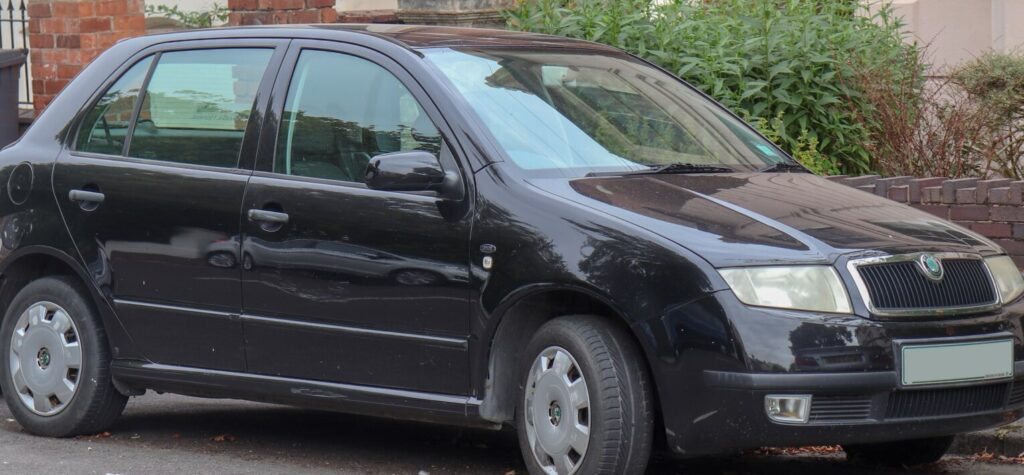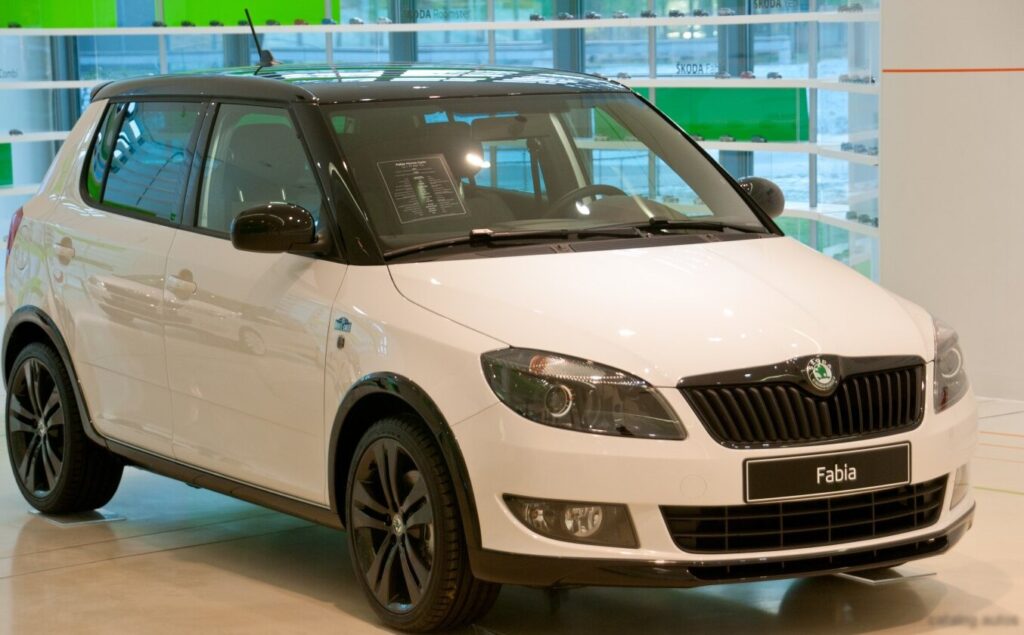
The Skoda Fabia II (facelift, produced 2010-2014) 1.2 MPI 60 horsepower variant represents an entry-level offering within the second generation Fabia lineup. Introduced in November 2011, this model aimed to provide an affordable and economical option for buyers in European markets. Positioned as the base trim, it catered to customers prioritizing fuel efficiency and low running costs over outright performance. The Fabia II itself was built on the Volkswagen Group’s PQ24 platform, also known as the A3/1HX0 platform, shared with models like the Volkswagen Polo and SEAT Ibiza. This 1.2 MPI engine served as the gateway into the Fabia range, offering a practical and reliable, if modestly powered, hatchback.
Technical Specifications
| Brand | Skoda |
| Model | Fabia |
| Generation | Fabia II (facelift 2010) |
| Type (Engine) | 1.2 MPI (60 Hp) |
| Start of production | November, 2011 |
| End of production | 2014 |
| Powertrain Architecture | Internal Combustion engine |
| Body type | Hatchback |
| Seats | 5 |
| Doors | 5 |
| Fuel consumption (urban) | 7.3-7.5 l/100 km (32.2 – 31.4 US mpg) |
| Fuel consumption (extra urban) | 4.5-4.7 l/100 km (52.3 – 50 US mpg) |
| Fuel consumption (combined) | 5.5-5.7 l/100 km (42.8 – 41.3 US mpg) |
| CO2 emissions | 128-132 g/km |
| Fuel Type | Petrol (Gasoline) |
| Acceleration 0 – 100 km/h | 16.5 sec |
| Acceleration 0 – 62 mph | 16.5 sec |
| Acceleration 0 – 60 mph | 15.7 sec |
| Maximum speed | 155 km/h (96.31 mph) |
| Emission standard | Euro 5 |
| Weight-to-power ratio | 16.9 kg/Hp |
| Weight-to-torque ratio | 9.4 kg/Nm |
| Power | 60 Hp @ 5200 rpm |
| Torque | 108 Nm @ 3000 rpm (79.66 lb.-ft. @ 3000 rpm) |
| Engine layout | Front, Transverse |
| Engine Model/Code | EA111 / CGPB |
| Engine displacement | 1198 cm3 (73.11 cu. in.) |
| Number of cylinders | 3 |
| Engine configuration | Inline |
| Cylinder Bore | 76.5 mm (3.01 in.) |
| Piston Stroke | 86.9 mm (3.42 in.) |
| Compression ratio | 10.5:1 |
| Number of valves per cylinder | 4 |
| Fuel injection system | Multi-port manifold injection |
| Engine aspiration | Naturally aspirated |
| Valvetrain | DOHC |
| Engine oil capacity | 2.8 l (2.96 US qt | 2.46 UK qt) |
| Coolant capacity | 5.5 l (5.81 US qt | 4.84 UK qt) |
| Kerb Weight | 1015-1020 kg (2237.69 – 2248.72 lbs.) |
| Max. weight | 1545-1550 kg (3406.14 – 3417.17 lbs.) |
| Max load | 530 kg (1168.45 lbs.) |
| Trunk (boot) space – minimum | 315 l (11.12 cu. ft.) |
| Trunk (boot) space – maximum | 1180 l (41.67 cu. ft.) |
| Fuel tank capacity | 45 l (11.89 US gal | 9.9 UK gal) |
| Max. roof load | 75 kg (165.35 lbs.) |
| Permitted trailer load (braked) | 800 kg (1763.7 lbs.) |
| Permitted trailer load (unbraked) | 500 kg (1102.31 lbs.) |
| Permitted towbar download | 50 kg (110.23 lbs.) |
| Length | 4000 mm (157.48 in.) |
| Width | 1642 mm (64.65 in.) |
| Width including mirrors | 1886 mm (74.25 in.) |
| Height | 1498 mm (58.98 in.) |
| Wheelbase | 2465 mm (97.05 in.) |
| Front track | 1433 mm (56.42 in.) |
| Rear track | 1426 mm (56.14 in.) |
| Front overhang | 860 mm (33.86 in.) |
| Rear overhang | 675 mm (26.57 in.) |
| Ride height (ground clearance) | 134 mm (5.28 in.) |
| Drag coefficient (Cd) | 0.32 |
| Minimum turning circle | 10 m (32.81 ft.) |
| Approach angle | 14° |
| Departure angle | 16.2° |
| Drivetrain | Front wheel drive |
| Number of gears | 5 |
| Gearbox type | Manual transmission |
| Front suspension | Independent, McPherson with coil spring and anti-roll bar |
| Rear suspension | Coil spring, Torsion |
| Front brakes | Ventilated discs |
| Rear brakes | Drum |
| Assisting systems | ABS (Anti-lock braking system) |
| Steering type | Steering rack and pinion |
| Power steering | Electric |
| Tires size | 165/70 R14; 185/60 R14; 195/55 R15 |
| Wheel rims size | 5J x 14; 6J x 14; 6J x 15 |
Powertrain & Engine Architecture
The heart of this Fabia variant is the EA111 series 1.2-liter inline-three cylinder petrol engine, specifically the CGPB engine code. This engine is a naturally aspirated unit featuring multi-point fuel injection. The engine utilizes a double overhead camshaft (DOHC) valvetrain with four valves per cylinder, contributing to reasonable efficiency for its displacement. The 1.2 MPI engine is known for its simplicity and relatively low maintenance requirements. The five-speed manual transmission was the standard offering, designed to maximize fuel economy rather than provide sporty acceleration. The gear ratios are relatively long, prioritizing higher gears for cruising efficiency.
Driving Characteristics
The 60 horsepower output and 108 Nm of torque translate to modest performance. Acceleration from 0-100 km/h takes approximately 16.5 seconds, and top speed is limited to 155 km/h. In real-world driving, the 1.2 MPI feels adequate for urban commutes and slower country roads, but struggles with overtaking maneuvers or when fully loaded. Compared to higher-output versions of the Fabia II, such as the 1.4 TSI or 1.6 MPI, this variant feels significantly underpowered. The long gear ratios contribute to a relaxed driving experience at highway speeds, but require downshifting for quicker acceleration. The manual transmission, while not particularly engaging, is light and easy to use.
Equipment & Trim Levels
The 1.2 MPI typically came with a basic level of equipment. Standard features generally included power steering, ABS, front airbags, and a basic audio system. Interior upholstery was typically cloth, and the dashboard featured a simple, functional design. Optional extras included air conditioning, alloy wheels, and an upgraded audio system. This trim level was often targeted at budget-conscious buyers, so many examples were sold with minimal options.
Chassis & Braking
The Fabia II’s chassis features an independent McPherson strut front suspension and a torsion beam rear suspension. This setup provides a comfortable ride quality, although it’s not particularly sporty. The front brakes are ventilated discs, while the rear brakes are drums. This configuration is typical for a vehicle in this weight class and price range. Stabilizer bars were often omitted on the base trim to further reduce costs.
Market Reception & Comparison
The 1.2 MPI Fabia was generally well-received as an affordable and economical option. Critics praised its fuel efficiency and low running costs, but noted its lack of performance. Compared to other trims in the Fabia lineup, such as the 1.4 TSI, the 1.2 MPI offered significantly lower fuel economy but also considerably less power. The 1.6 MPI offered a compromise between performance and economy. In terms of reliability, the 1.2 MPI engine is generally considered to be robust and dependable, although regular maintenance is essential.
Legacy
The Skoda Fabia II 1.2 MPI 60 horsepower variant remains a common sight on used car markets. Its affordability and fuel efficiency continue to appeal to buyers seeking a practical and economical hatchback. While not a performance car, its simplicity and reliability make it a sensible choice for those prioritizing low running costs. The EA111 engine, while superseded by newer designs, is well-understood by mechanics, making maintenance relatively straightforward and affordable. These models represent a good value proposition for first-time car buyers or those needing a dependable city car.