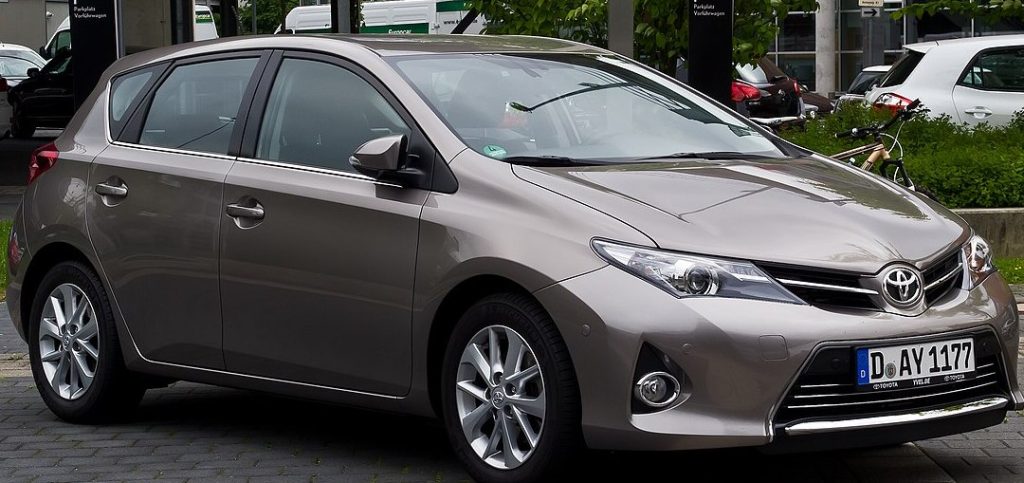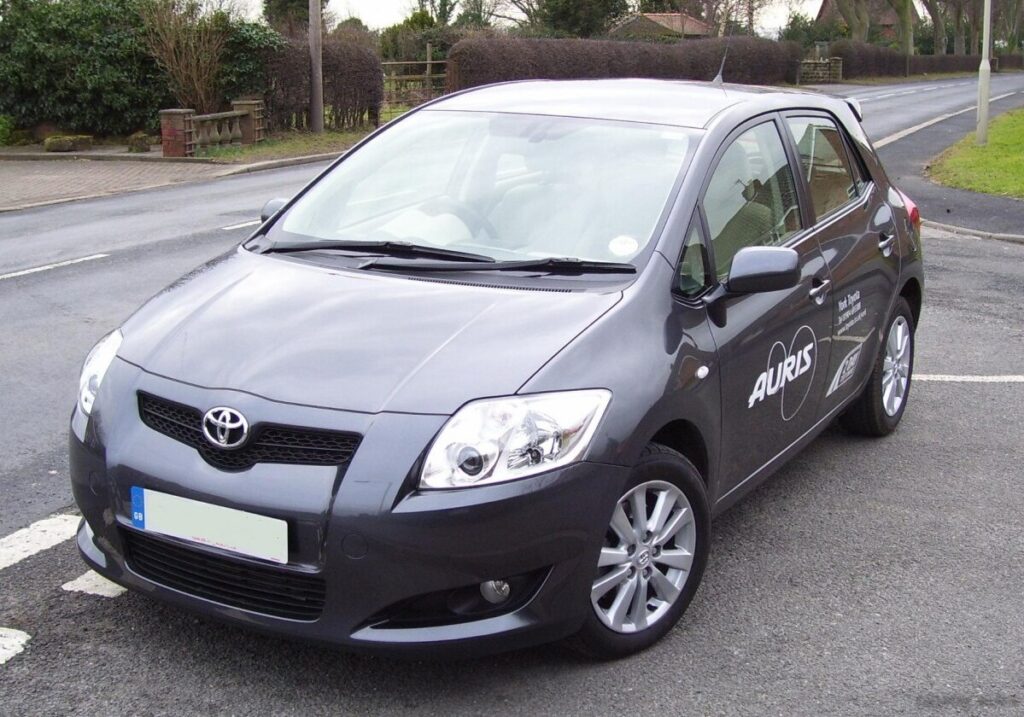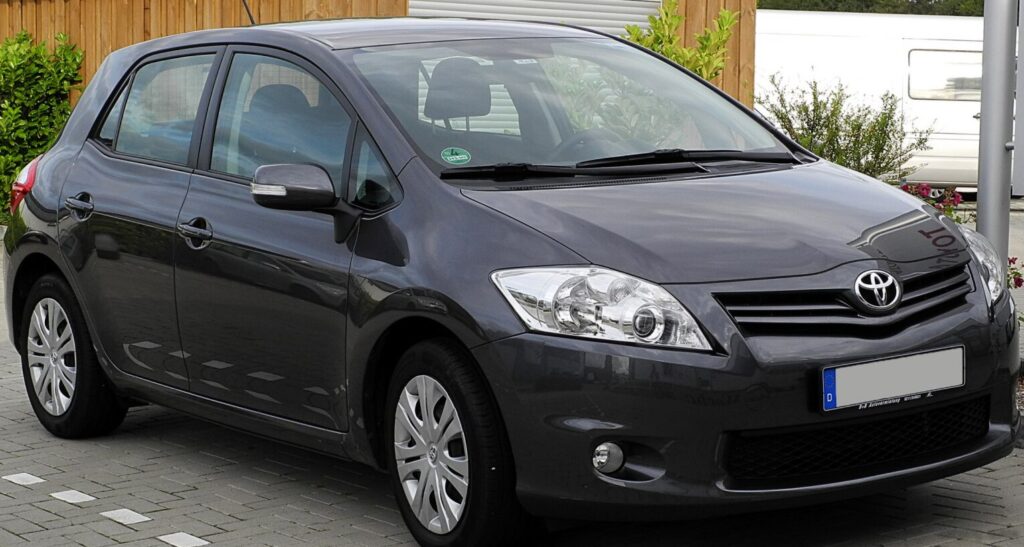
The Toyota Auris I (facelift, produced 2010-2012) 1.33 VVT-i, generating 99 horsepower, represented an entry-level offering within the first generation Auris lineup. Introduced as a more affordable and fuel-efficient option, this variant aimed to broaden the Auris’s appeal in the European market, where compact hatchbacks were – and remain – immensely popular. The facelift brought styling updates and minor mechanical revisions to the original Auris, launched in 2006, positioning it as a strong competitor against rivals like the Volkswagen Golf, Ford Focus, and Opel/Vauxhall Astra. This specific engine and transmission combination was designed for buyers prioritizing economy and practicality over outright performance.
Technical Specifications
| Brand | Toyota |
| Model | Auris |
| Generation | Auris I (facelift 2010) |
| Type (Engine) | 1.33 VVT-i (99 Hp) |
| Start of production | 2010 |
| End of production | 2012 |
| Powertrain Architecture | Internal Combustion engine |
| Body type | Hatchback |
| Seats | 5 |
| Doors | 5 |
| Fuel consumption (urban) | 7.2 l/100 km (32.7 US mpg, 39.2 UK mpg, 13.9 km/l) |
| Fuel consumption (extra urban) | 5.1 l/100 km (46.1 US mpg, 55.4 UK mpg, 19.6 km/l) |
| Fuel consumption (combined) | 5.9 l/100 km (39.9 US mpg, 47.9 UK mpg, 16.9 km/l) |
| Fuel Type | Petrol (Gasoline) |
| Acceleration 0 – 100 km/h | 13.1 sec |
| Acceleration 0 – 62 mph | 13.1 sec |
| Acceleration 0 – 60 mph | 12.4 sec |
| Maximum speed | 175 km/h (108.74 mph) |
| Emission standard | Euro 5 |
| Weight-to-power ratio | 12.3 kg/Hp, 81.1 Hp/tonne |
| Weight-to-torque ratio | 9.2 kg/Nm, 108.2 Nm/tonne |
| Power | 99 Hp @ 6000 rpm |
| Power per litre | 74.5 Hp/l |
| Torque | 132 Nm @ 3800 rpm (97.36 lb.-ft. @ 3800 rpm) |
| Engine layout | Front, Transverse |
| Engine Model/Code | 1NR-FE |
| Engine displacement | 1329 cm3 (81.1 cu. in.) |
| Number of cylinders | 4 |
| Engine configuration | Inline |
| Cylinder Bore | 72.5 mm (2.85 in.) |
| Piston Stroke | 80.5 mm (3.17 in.) |
| Compression ratio | 11.5:1 |
| Number of valves per cylinder | 4 |
| Fuel injection system | Multi-port manifold injection |
| Engine aspiration | Naturally aspirated engine |
| Valvetrain | DOHC |
| Engine oil capacity | 3.4 l (3.59 US qt | 2.99 UK qt) |
| Coolant capacity | 4.7 l (4.97 US qt | 4.14 UK qt) |
| Kerb Weight | 1220 kg (2689.64 lbs.) |
| Max. weight | 1720 kg (3791.95 lbs.) |
| Max load | 500 kg (1102.31 lbs.) |
| Trunk (boot) space – minimum | 350 l (12.36 cu. ft.) |
| Trunk (boot) space – maximum | 777 l (27.44 cu. ft.) |
| Fuel tank capacity | 55 l (14.53 US gal | 12.1 UK gal) |
| Length | 4245 mm (167.13 in.) |
| Width | 1760 mm (69.29 in.) |
| Height | 1515 mm (59.65 in.) |
| Wheelbase | 2600 mm (102.36 in.) |
| Front track | 1525 mm (60.04 in.) |
| Rear track | 1525 mm (60.04 in.) |
| Minimum turning circle | 10.4 m (34.12 ft.) |
| Drivetrain Architecture | Front wheel drive |
| Drive wheel | Front wheel drive |
| Number of gears | 6 gears, manual transmission |
| Front suspension | Independent type McPherson |
| Rear suspension | Torsion |
| Front brakes | Ventilated discs |
| Rear brakes | Disc |
| Assisting systems | ABS (Anti-lock braking system) |
| Steering type | Steering rack and pinion |
| Tires size | 195/65 R15 |
| Wheel rims size | 15 |
INTRODUCTION
The Toyota Auris I, launched in 2006 as a replacement for the Corolla Hatchback in Europe, aimed to offer a more modern and stylish alternative in the competitive compact segment. The 2010 facelift brought revised front-end styling, interior enhancements, and improvements to the suspension. The 1.33 VVT-i engine, producing 99 horsepower, was a key component of the Auris range, positioned as the entry point for buyers. It was designed to appeal to those seeking a practical, reliable, and fuel-efficient hatchback for daily commuting and urban driving. This variant was primarily sold in Europe, where smaller displacement engines were favored due to tax regulations and fuel costs.
Powertrain & Engine Architecture
The heart of this Auris variant is the 1NR-FE engine, a 1.329-liter inline-four cylinder gasoline engine. This engine utilizes Toyota’s Variable Valve Timing-intelligent (VVT-i) technology, which optimizes valve timing based on engine speed and load, improving both fuel efficiency and performance. The 1NR-FE employs multi-port fuel injection, delivering fuel directly into the intake ports. The engine’s architecture is relatively simple, contributing to its reliability and ease of maintenance. The 99 horsepower and 132 Nm (97 lb-ft) of torque are delivered at 6,000 rpm and 3,800 rpm respectively. The engine is paired with a six-speed manual transmission, which was the most common configuration for this trim level. While an automatic transmission was available in some markets, it wasn’t as frequently selected with this engine due to its impact on fuel economy and performance.
Driving Characteristics
The 1.33 VVT-i Auris, with its modest power output, prioritizes fuel efficiency over exhilarating acceleration. The 0-60 mph time of around 12.4 seconds and a top speed of 175 km/h (108.74 mph) reflect this focus. The six-speed manual transmission helps to keep the engine in its optimal power band, but drivers will find themselves shifting frequently, especially when overtaking or climbing hills. Compared to higher-output Auris variants, such as the 1.6L or 1.8L models, the 1.33 feels noticeably slower. However, the engine is smooth and refined, and the gear ratios are well-matched for everyday driving. The steering is light and precise, making it easy to maneuver in urban environments. The suspension provides a comfortable ride, absorbing bumps and imperfections in the road surface effectively.
Equipment & Trim Levels
The 1.33 VVT-i Auris typically came with a reasonable level of standard equipment, focusing on practicality and convenience. Standard features generally included air conditioning, power steering, electric front windows, a CD player with auxiliary input, and ABS brakes. Safety features such as airbags and stability control were also standard. Higher trim levels, such as the ‘Active’ or ‘Icon’ variants, added features like alloy wheels, a multi-function steering wheel, and upgraded audio systems. Optional extras included a sunroof, rear parking sensors, and a navigation system. Interior upholstery was typically cloth, with a functional and durable design. The dashboard layout was straightforward and easy to use, with clearly labeled controls.
Chassis & Braking
The Auris I utilized a front-wheel-drive platform with an independent McPherson strut suspension at the front and a torsion beam suspension at the rear. This setup provided a good balance between ride comfort and handling. The front brakes were ventilated discs, offering good stopping power, while the rear brakes were solid discs. ABS (Anti-lock Braking System) was standard, enhancing safety during emergency braking situations. The chassis was designed to be lightweight, contributing to the car’s fuel efficiency. The steering system employed a rack and pinion setup, providing precise and responsive steering feel.
Market Reception & Comparison
The 1.33 VVT-i Auris was generally well-received by critics as a sensible and economical choice in the compact hatchback segment. It was praised for its fuel efficiency, reliability, and comfortable ride. However, some reviewers noted its lack of outright performance and its relatively basic interior compared to some rivals. Compared to the 1.6L Auris, the 1.33 offered significantly better fuel economy but lacked the extra power and responsiveness. The 1.8L models provided even more performance but came at a higher price point. In terms of reliability, the 1.33 VVT-i engine proved to be very dependable, with few reported issues.
Legacy
The 1.33 VVT-i Auris remains a popular choice in the used car market, particularly for buyers seeking an affordable and reliable hatchback. The 1NR-FE engine is known for its longevity and low running costs. While not the most exciting car to drive, it offers a practical and dependable transportation solution. The Auris I, in general, helped establish Toyota as a major player in the European compact hatchback market, paving the way for the subsequent Auris generations and the current Toyota Corolla Hatchback.