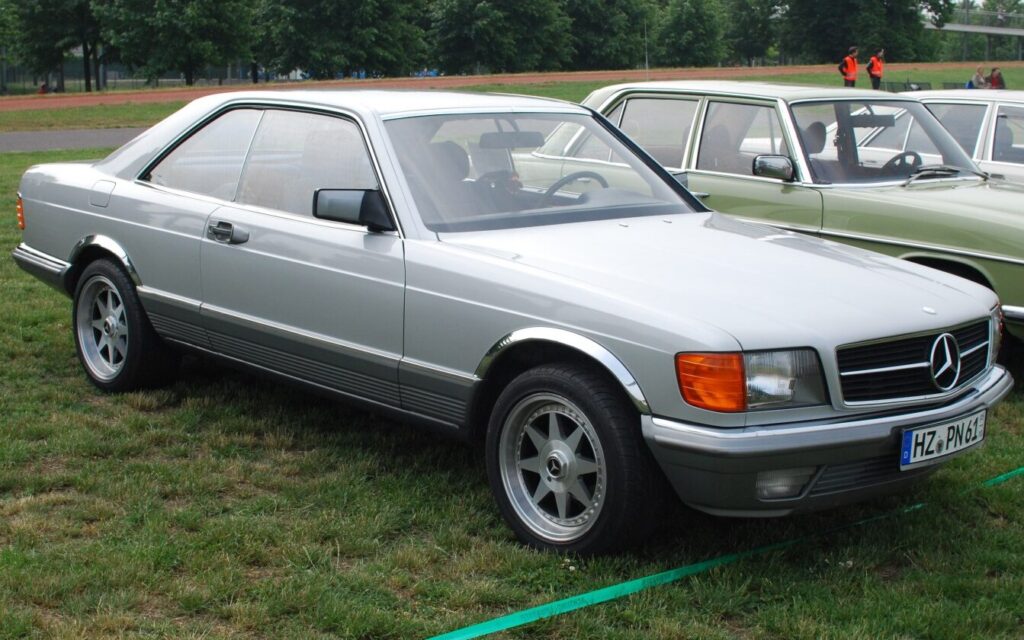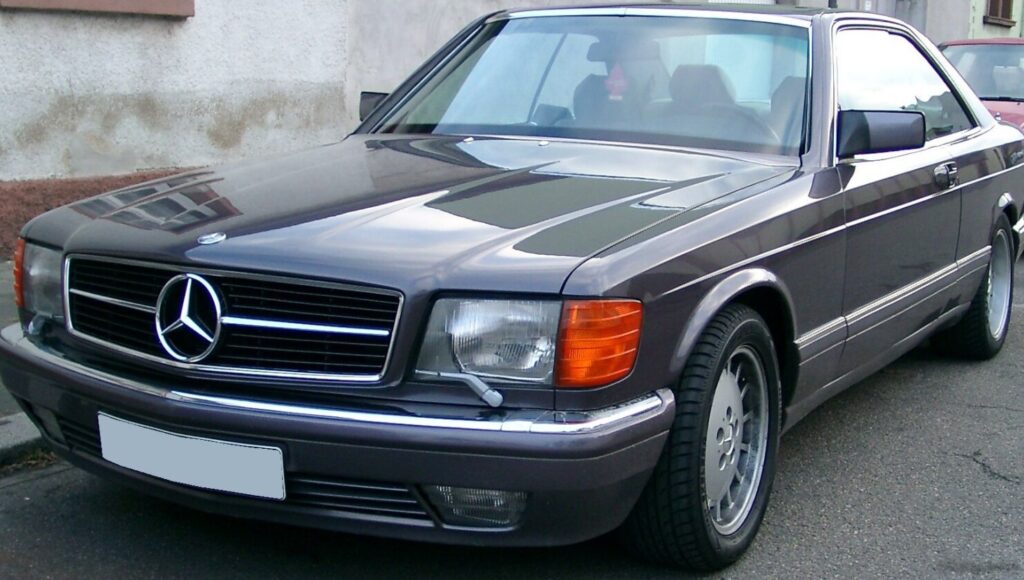
The Mercedes-Benz 560 SEC, part of the C126 series facelift produced from September 1987 to October 1991, represented the pinnacle of luxury coupe performance for its time. Positioned as the flagship of the S-Class coupe range, the 560 SEC featured a potent 5.6-liter V8 engine paired exclusively with a four-speed automatic transmission. This variant was the top-of-the-line offering, commanding a significant premium over the 300 SEC and 420 SEC models. It catered to buyers seeking uncompromising power, refinement, and the prestige associated with the Mercedes-Benz brand. The C126 platform itself, introduced in 1985 as a replacement for the W116 S-Class coupes, was a groundbreaking design that blended elegant styling with advanced engineering.
Technical Specifications
| Brand | Mercedes-Benz |
| Model | S-class |
| Generation | S-class Coupe (C126, facelift 1985) |
| Type (Engine) | 560 SEC V8 (300 Hp) Automatic |
| Start of production | September, 1987 |
| End of production | October, 1991 |
| Powertrain Architecture | Internal Combustion engine |
| Body type | Coupe |
| Seats | 4 |
| Doors | 2 |
| Fuel consumption (urban) | 17.1 l/100 km (13.8 US mpg, 16.5 UK mpg, 5.8 km/l) |
| Fuel consumption (extra urban) | 10.6 l/100 km (22.2 US mpg, 26.6 UK mpg, 9.4 km/l) |
| Fuel Type | Petrol (Gasoline) |
| Acceleration 0 – 100 km/h | 6.8 sec |
| Acceleration 0 – 62 mph | 6.8 sec |
| Acceleration 0 – 60 mph | 6.5 sec |
| Maximum speed | 250 km/h (155.34 mph) |
| Weight-to-power ratio | 5.1 kg/Hp, 194.8 Hp/tonne |
| Weight-to-torque ratio | 3.4 kg/Nm, 295.5 Nm/tonne |
| Power | 300 Hp @ 5000 rpm |
| Power per litre | 54.1 Hp/l |
| Torque | 455 Nm @ 3750 rpm (335.59 lb.-ft. @ 3750 rpm) |
| Engine layout | Front, Longitudinal |
| Engine Model/Code | M 117 E 56 / 117.968 |
| Engine displacement | 5547 cm3 (338.5 cu. in.) |
| Number of cylinders | 8 |
| Engine configuration | V-engine |
| Cylinder Bore | 96.5 mm (3.8 in.) |
| Piston Stroke | 94.8 mm (3.73 in.) |
| Compression ratio | 10:1 |
| Number of valves per cylinder | 2 |
| Fuel injection system | Multi-port manifold injection |
| Engine aspiration | Naturally aspirated engine |
| Valvetrain | SOHC |
| Engine oil capacity | 8 l (8.45 US qt | 7.04 UK qt) |
| Coolant | 13.5 l (14.27 US qt | 11.88 UK qt) |
| Kerb Weight | 1540 kg (3395.12 lbs.) |
| Max. weight | 2220 kg (4894.26 lbs.) |
| Max load | 680 kg (1499.14 lbs.) |
| Fuel tank capacity | 90 l (23.78 US gal | 19.8 UK gal) |
| Length | 4935 mm (194.29 in.) |
| Width | 1828 mm (71.97 in.) |
| Height | 1402 mm (55.2 in.) |
| Wheelbase | 2845 mm (112.01 in.) |
| Front track | 1555 mm (61.22 in.) |
| Rear track | 1527 mm (60.12 in.) |
| Drivetrain Architecture | The Internal combustion engine (ICE) drives the rear wheels of the vehicle. |
| Drive wheel | Rear wheel drive |
| Number of gears and type of gearbox | 4 gears, automatic transmission |
| Front suspension | Double wishbone |
| Rear suspension | Threaded twist beam |
| Front brakes | Ventilated discs |
| Rear brakes | Disc |
| Assisting systems | ABS (Anti-lock braking system) |
| Steering type | Cone worm with recirculation balls |
| Power steering | Hydraulic Steering |
| Tires size | Front wheel tires: 215/65 R15Rear wheel tires: 215/65 R15 |
| Wheel rims size | Front wheel rims: 7J x 15Rear wheel rims: 7J x 15 |
Powertrain & Engine Architecture
The heart of the 560 SEC is the M117 E 56 engine, a 5.6-liter (5547 cc) naturally aspirated V8. This engine, a descendant of the long-running M117 family, featured a cast-iron block and aluminum cylinder heads. It employed a single overhead camshaft (SOHC) design with two valves per cylinder. Fuel delivery was handled by a Bosch K-Jetronic multi-port fuel injection system, known for its reliability and precise metering. The engine produced 300 horsepower at 5000 rpm and a substantial 455 Nm (335.59 lb-ft) of torque at 3750 rpm. The four-speed automatic transmission, a robust unit designed to handle the engine’s output, was the only transmission option. It featured a torque converter and provided smooth, albeit not particularly quick, shifts. The transmission’s gear ratios were optimized for comfortable cruising rather than outright acceleration.
Driving Characteristics
The 560 SEC offered a grand touring experience characterized by effortless power and a smooth ride. While the 6.8-second 0-60 mph acceleration was respectable for the late 1980s, the car’s substantial weight (1540 kg / 3395 lbs) limited its agility. The automatic transmission, while refined, didn’t offer the responsiveness of a manual gearbox. Compared to the 300 SEC and 420 SEC, the 560 SEC provided a significant performance advantage, particularly in highway passing situations. The 300 SEC, with its smaller inline-six engine, felt noticeably less powerful, while the 420 SEC, though offering more torque, lacked the 560 SEC’s overall punch. The 560 SEC’s power delivery was linear and predictable, making it easy to control, but it wasn’t a particularly sporty driving experience.
Equipment & Trim Levels
The 560 SEC came standard with a comprehensive list of luxury features, befitting its flagship status. Leather upholstery was standard, as were power-adjustable front seats with memory function. Other standard amenities included climate control, a premium sound system, power windows, and central locking. The interior trim was typically finished in wood veneer, adding to the car’s opulent ambiance. Optional extras included a sunroof, heated seats, and a rear seat entertainment system. The exterior was typically finished in metallic paint, and alloy wheels were standard.
Chassis & Braking
The C126 coupe utilized a robust chassis with independent suspension at all four wheels. The front suspension featured double wishbones, while the rear employed a threaded twist beam. This setup provided a comfortable ride and good handling characteristics. Braking duties were handled by ventilated discs at the front and solid discs at the rear. An Anti-lock Braking System (ABS) was standard, enhancing safety and stability. The steering was a recirculating ball system with hydraulic power assistance, providing a relatively light and precise feel.
Market Reception & Comparison
The 560 SEC was generally well-received by automotive critics, who praised its powerful engine, luxurious interior, and comfortable ride. However, some criticized its high price and relatively conservative styling. Compared to its rivals, such as the BMW 6 Series and the Jaguar XJS, the 560 SEC offered a more refined and technologically advanced experience. Fuel economy was predictably poor, averaging around 17.1 l/100 km (13.8 US mpg) in urban driving. Reliability was generally good, although the complex K-Jetronic fuel injection system could require specialized maintenance.
Legacy
The Mercedes-Benz 560 SEC remains a highly sought-after classic car today. Its combination of luxury, performance, and build quality has ensured its enduring appeal. The M117 engine, while not particularly fuel-efficient by modern standards, is known for its durability and longevity. Well-maintained examples command high prices in the used car market. The 560 SEC represents a high point in Mercedes-Benz engineering and design, and it continues to be appreciated by enthusiasts around the world. Finding a well-preserved example requires patience and a willingness to invest in ongoing maintenance, but the rewards – a truly special and rewarding driving experience – are well worth the effort.