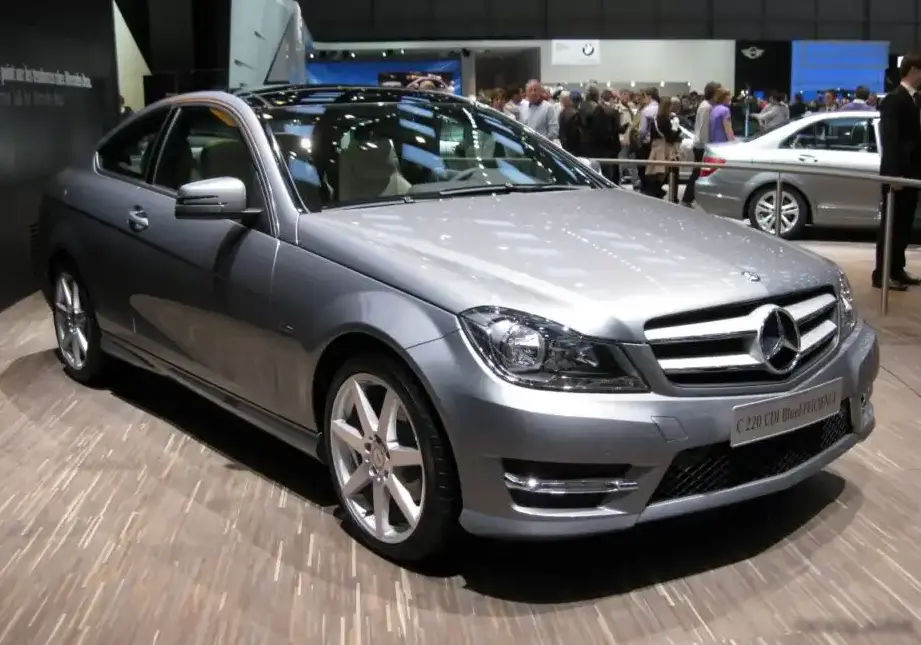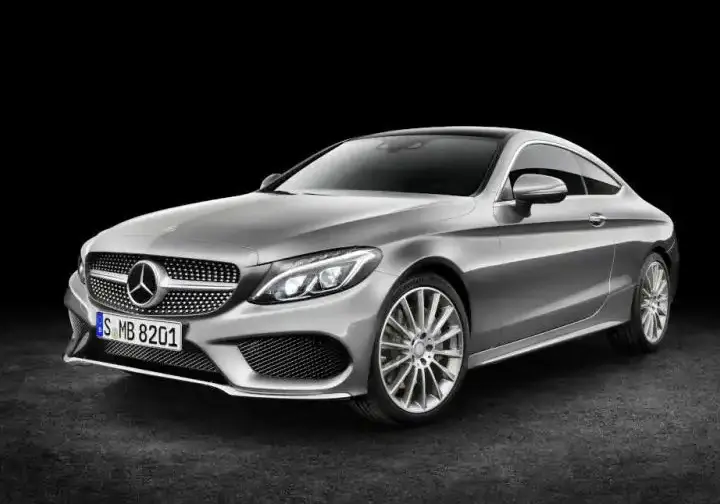
The Mercedes-Benz C-Class (W204) C 320 CDI V6, produced from 2007 to 2009, represented a compelling blend of performance and efficiency within the broader W204 C-Class range. Positioned as a mid-to-upper tier offering, it catered to buyers seeking a refined diesel experience with substantial power and torque. This variant utilized Mercedes’ advanced CDI (Common Rail Direct Injection) technology, offering a sophisticated alternative to the gasoline-powered models and the lower-output diesel options. The W204 generation, launched in 2007, aimed to elevate the C-Class’s standing in the premium compact executive car segment, competing directly with the BMW 3 Series and Audi A4.
Technical Specifications
| Brand | Mercedes-Benz |
| Model | C-class |
| Generation | C-class (W204) |
| Type (Engine) | C 320 CDI V6 (224 Hp) |
| Start of production | 2007 |
| End of production | 2009 |
| Powertrain Architecture | Internal Combustion engine |
| Body type | Sedan |
| Seats | 5 |
| Doors | 4 |
| Fuel consumption (economy) – urban (NEDC) | 9.2-9.5 l/100 km (25.6 – 24.8 US mpg, 30.7 – 29.7 UK mpg, 10.9 – 10.5 km/l) |
| Fuel consumption (economy) – extra urban (NEDC) | 5.5-5.8 l/100 km (42.8 – 40.6 US mpg, 51.4 – 48.7 UK mpg, 18.2 – 17.2 km/l) |
| Fuel consumption (economy) – combined (NEDC) | 6.9-7.2 l/100 km (34.1 – 32.7 US mpg, 40.9 – 39.2 UK mpg, 14.5 – 13.9 km/l) |
| CO2 emissions (NEDC) | 182-193 g/km |
| Fuel Type | Diesel |
| Acceleration 0 – 100 km/h | 7.7 sec |
| Acceleration 0 – 62 mph | 7.7 sec |
| Acceleration 0 – 60 mph | 7.3 sec |
| Maximum speed | 250 km/h (155.34 mph), Electronically limited |
| Emission standard | Euro 4 |
| Weight-to-power ratio | 7.3 kg/Hp, 137.8 Hp/tonne |
| Weight-to-torque ratio | 3.2 kg/Nm, 313.8 Nm/tonne |
| Power | 224 Hp @ 3800 rpm |
| Power per litre | 75 Hp/l |
| Torque | 510 Nm @ 1600-2800 rpm (376.16 lb.-ft. @ 1600-2800 rpm) |
| Engine layout | Front, Longitudinal |
| Engine Model/Code | OM 642.960 |
| Engine displacement | 2987 cm3 (182.28 cu. in.) |
| Number of cylinders | 6 |
| Engine configuration | V-engine |
| Cylinder Bore | 83 mm (3.27 in.) |
| Piston Stroke | 92 mm (3.62 in.) |
| Compression ratio | 17.7:1 |
| Number of valves per cylinder | 4 |
| Fuel injection system | Diesel Commonrail |
| Engine aspiration | Turbocharger, Intercooler |
| Valvetrain | DOHC |
| Engine oil capacity | 8 l (8.45 US qt | 7.04 UK qt) |
| Kerb Weight | 1625 kg (3582.51 lbs.) |
| Max. weight | 2185 kg (4817.1 lbs.) |
| Max load | 560 kg (1234.59 lbs.) |
| Trunk (boot) space – minimum | 475 l (16.77 cu. ft.) |
| Fuel tank capacity | 66 l (17.44 US gal | 14.52 UK gal) |
| Permitted trailer load with brakes (12%) | 1800 kg (3968.32 lbs.) |
| Permitted trailer load without brakes | 750 kg (1653.47 lbs.) |
| Length | 4581 mm (180.35 in.) |
| Width | 1770 mm (69.69 in.) |
| Width including mirrors | 2020 mm (79.53 in.) |
| Height | 1447 mm (56.97 in.) |
| Wheelbase | 2760 mm (108.66 in.) |
| Front track | 1549 mm (60.98 in.) |
| Rear (Back) track | 1552 mm (61.1 in.) |
| Front overhang | 765 mm (30.12 in.) |
| Rear overhang | 1056 mm (41.57 in.) |
| Drag coefficient (Cd) | 0.29 |
| Minimum turning circle (turning diameter) | 10.84 m (35.56 ft.) |
| Drivetrain Architecture | The Internal combustion engine (ICE) drives the rear wheels of the vehicle. |
| Drive wheel | Rear wheel drive |
| Number of gears and type of gearbox | 6 gears, manual transmission |
| Front suspension | Independent type McPherson, Transverse stabilizer |
| Rear suspension | Independent multi-link suspension, Transverse stabilizer |
| Front brakes | Ventilated discs |
| Rear brakes | Disc |
| Assisting systems | ABS (Anti-lock braking system) |
| Steering type | Steering rack and pinion |
| Power steering | Hydraulic Steering |
| Tires size | 225/45 R17 |
| Wheel rims size | 7.5J x 17 |
Powertrain & Engine Architecture
The heart of the C 320 CDI was the OM 642.960 3.0-liter V6 diesel engine. This engine was a significant advancement in Mercedes-Benz’s diesel technology, featuring third-generation common rail direct injection. This system allowed for multiple injections per combustion cycle, optimizing fuel atomization and combustion efficiency. The engine employed a variable geometry turbocharger (VGT) and an intercooler to boost power and torque while minimizing turbo lag. The V6 configuration provided inherent smoothness compared to inline engines, and the DOHC (Double Overhead Camshaft) valvetrain, with four valves per cylinder, further enhanced breathing and performance. A particulate filter was standard, reducing harmful emissions. The engine produced 224 horsepower at 3800 rpm and a substantial 510 Nm (376 lb-ft) of torque between 1600 and 2800 rpm. This torque output was a key characteristic, providing strong acceleration and effortless cruising. The 6-speed manual transmission was standard, offering precise shifts and driver engagement.
Driving Characteristics
The C 320 CDI V6 with the manual transmission delivered a refined and capable driving experience. The abundant torque meant strong acceleration in virtually any gear, making overtaking maneuvers easy and safe. While not a sports car, the C 320 CDI offered a responsive feel and confident handling. The manual gearbox, while engaging, had a slightly longer throw compared to some competitors. Compared to the C 220 CDI, the C 320 CDI offered a noticeable performance upgrade, while the higher-output C 350 gasoline model provided more peak horsepower but lacked the diesel’s low-end torque and fuel efficiency. The suspension provided a comfortable ride, absorbing bumps and imperfections in the road effectively.
Equipment & Trim Levels
The C 320 CDI typically came well-equipped, reflecting its position in the C-Class lineup. Standard features included automatic climate control, power windows and mirrors, a multi-function steering wheel, and a high-quality audio system. Upholstery was typically a combination of fabric and leatherette, with full leather options available. Optional extras included a sunroof, navigation system, premium sound system, and parking sensors. The interior design was typical of Mercedes-Benz, emphasizing quality materials and a sophisticated aesthetic.
Chassis & Braking
The W204 C-Class featured a McPherson strut front suspension and a multi-link independent rear suspension. This setup provided a good balance between ride comfort and handling precision. The C 320 CDI was equipped with ventilated disc brakes at the front and solid discs at the rear. Anti-lock Braking System (ABS) was standard, enhancing braking performance and stability. The steering was a rack-and-pinion system with hydraulic power assistance, providing a direct and responsive feel.
Market Reception & Comparison
The C 320 CDI V6 was generally well-received by automotive critics. It was praised for its powerful and efficient engine, comfortable ride, and refined interior. Fuel economy was a strong point, with combined figures ranging from 6.9 to 7.2 liters per 100 kilometers (34.1-32.7 US mpg). Compared to the gasoline-powered C 350, the C 320 CDI offered superior fuel economy and a broader torque curve. Reliability was generally good, although, like all diesel engines, the particulate filter could require occasional maintenance.
Legacy
The OM 642 engine family, including the 3.0-liter V6 used in the C 320 CDI, proved to be a durable and reliable powerplant. Today, well-maintained examples of the W204 C 320 CDI are sought after by enthusiasts who appreciate the combination of performance, efficiency, and Mercedes-Benz refinement. While modern diesel technology has advanced significantly, the C 320 CDI remains a capable and enjoyable vehicle, offering a unique driving experience. Common issues with used examples include wear and tear on suspension components, potential problems with the turbocharger, and the need for regular maintenance of the diesel particulate filter. However, with proper care, these vehicles can provide many years of reliable service.