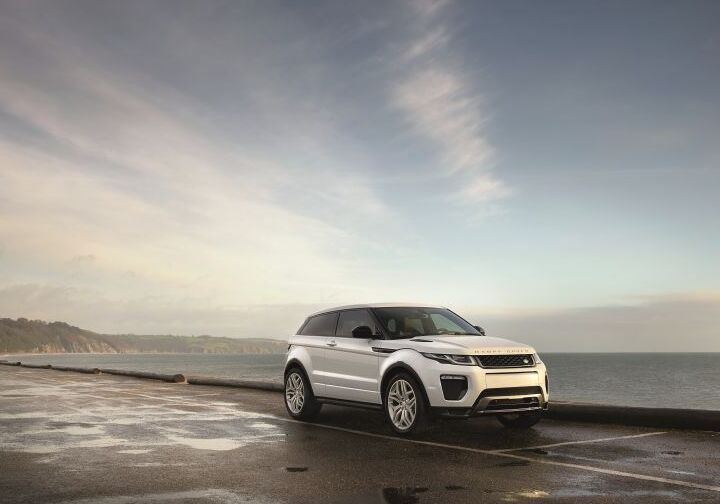
The Land Rover Range Rover Evoque I coupe (facelift 2015) 2.0 TD4, producing 150 horsepower, represents a key variant within the first generation of the Evoque line. Introduced in 2015 as part of a mid-cycle refresh, this model aimed to broaden the Evoque’s appeal by offering a more economical and accessible entry point into the Range Rover family. Positioned as a mid-range offering, it slotted below the higher-powered petrol variants and the more expensive diesel options. Production continued through 2018, solidifying its place as a popular choice in the compact luxury SUV segment, particularly in European and Asian markets where diesel engines were favored. This specific configuration combined a 2.0-liter turbocharged diesel engine with a six-speed manual transmission and all-wheel drive.
Technical Specifications
| Brand | Land Rover |
| Model | Range Rover Evoque |
| Generation | Range Rover Evoque I coupe (facelift 2015) |
| Type (Engine) | 2.0 TD4 (150 Hp) AWD |
| Start of production | 2015 |
| End of production | 2018 |
| Powertrain Architecture | Internal Combustion engine |
| Body type | Coupe, SUV |
| Seats | 5 |
| Doors | 3 |
| Fuel consumption (urban) | 5.5 l/100 km (42.8 US mpg, 51.4 UK mpg, 18.2 km/l) |
| Fuel consumption (extra urban) | 4.3 l/100 km (54.7 US mpg, 65.7 UK mpg, 23.3 km/l) |
| Fuel consumption (combined) | 4.8 l/100 km (49 US mpg, 58.9 UK mpg, 20.8 km/l) |
| CO2 emissions | 125 g/km |
| Fuel Type | Diesel |
| Acceleration 0 – 100 km/h | 10.8 sec |
| Acceleration 0 – 62 mph | 10.8 sec |
| Acceleration 0 – 60 mph | 10.3 sec |
| Maximum speed | 182 km/h (113.09 mph) |
| Emission standard | Euro 6 |
| Weight-to-power ratio | 11.2 kg/Hp, 89.3 Hp/tonne |
| Weight-to-torque ratio | 4.4 kg/Nm, 226.3 Nm/tonne |
| Power | 150 Hp @ 4000 rpm |
| Power per litre | 75 Hp/l |
| Torque | 380 Nm @ 1500 rpm (280.27 lb.-ft. @ 1500 rpm) |
| Engine layout | Front, Transverse |
| Engine Model/Code | Ingenium / 204DTD |
| Engine displacement | 1999 cm3 (121.99 cu. in.) |
| Number of cylinders | 4 |
| Engine configuration | Inline |
| Cylinder Bore | 83 mm (3.27 in.) |
| Piston Stroke | 92.35 mm (3.64 in.) |
| Compression ratio | 15.5:1 |
| Number of valves per cylinder | 4 |
| Fuel injection system | Diesel Commonrail |
| Engine aspiration | Turbocharger, Intercooler |
| Engine oil capacity | 6.5 l (6.87 US qt | 5.72 UK qt) |
| Coolant | 11 l (11.62 US qt | 9.68 UK qt) |
| Kerb Weight | 1679 kg (3701.56 lbs.) |
| Fuel tank capacity | 54 l (14.27 US gal | 11.88 UK gal) |
| Length | 4371 mm (172.09 in.) |
| Width | 1980 mm (77.95 in.) |
| Width including mirrors | 2085 mm (82.09 in.) |
| Height | 1625 mm (63.98 in.) |
| Wheelbase | 2660 mm (104.72 in.) |
| Front track | 1625 mm (63.98 in.) |
| Rear track | 1629 mm (64.13 in.) |
| Ride height (ground clearance) | 215 mm (8.46 in.) |
| Drag coefficient (Cd) | 0.37 |
| Minimum turning circle | 11.3 m (37.07 ft.) |
| Approach angle | 25° |
| Departure angle | 33° |
| Drive wheel | All wheel drive (4×4) |
| Number of gears | 6 |
| Gearbox type | Manual transmission |
| Front suspension | Independent, type McPherson with coil spring and anti-roll bar |
| Rear suspension | Independent multi-link suspension |
| Front brakes | Ventilated discs |
| Rear brakes | Disc |
| Assisting systems | ABS (Anti-lock braking system) |
| Steering type | Steering rack and pinion |
| Power steering | Electric Steering |
Powertrain & Engine Architecture
The heart of the 2.0 TD4 Evoque is the Ingenium engine family, specifically the 204DTD code. This engine represents a significant step forward for Land Rover, being a modular, lightweight design intended for a wide range of applications. The 2.0-liter inline-four diesel utilizes a sophisticated common-rail direct injection system, delivering fuel at extremely high pressures for optimized combustion. A single turbocharger, coupled with an intercooler, provides boost to enhance power and torque. The engine features a 15.5:1 compression ratio, contributing to its efficiency. The six-speed manual transmission was chosen to provide a more engaging driving experience and improve fuel economy compared to the optional nine-speed automatic. The transmission’s gear ratios are tuned for a balance between acceleration and cruising efficiency.
Driving Characteristics
The 150 hp 2.0 TD4 Evoque offers a respectable, though not exhilarating, driving experience. Acceleration from 0-60 mph takes around 10.3 seconds, making it adequate for everyday driving but not particularly sporty. The 380 Nm (280 lb-ft) of torque, available from a low 1500 rpm, provides good responsiveness in most situations, making overtaking at highway speeds manageable. The manual transmission allows for greater driver control, but the gear ratios are spaced to prioritize fuel efficiency over outright performance. Compared to the higher-output 240 hp petrol version, the TD4 feels noticeably slower, but it compensates with significantly better fuel economy. The manual gearbox also provides a more connected feel than the automatic options.
Equipment & Trim Levels
The 2.0 TD4 typically came equipped with a reasonable level of standard features. Interior upholstery was generally cloth, though leather options were available as upgrades. Standard equipment included air conditioning, a touchscreen infotainment system, Bluetooth connectivity, and alloy wheels. Optional extras included heated seats, a panoramic sunroof, upgraded audio systems, and parking sensors. Trim levels varied by market, but generally offered packages that added convenience and luxury features. The coupe body style itself was considered a more stylish, albeit less practical, option compared to the five-door version.
Chassis & Braking
The Evoque’s chassis utilizes McPherson strut suspension at the front and a multi-link setup at the rear, providing a comfortable ride quality. The suspension is tuned to balance on-road comfort with some degree of off-road capability, a hallmark of the Range Rover brand. Braking duties are handled by ventilated discs at the front and solid discs at the rear. Anti-lock Braking System (ABS) is standard. The all-wheel-drive system provides enhanced traction in various conditions, making it suitable for light off-road use. Stabilizer bars are fitted front and rear to reduce body roll during cornering.
Market Reception & Comparison
The Range Rover Evoque, including the 2.0 TD4 variant, was generally well-received by automotive critics. The stylish design and premium interior were frequently praised. The 2.0 TD4 was particularly noted for its fuel efficiency, making it an attractive option for buyers prioritizing economy. Compared to the petrol versions, the diesel offered significantly better mileage, though at the expense of performance. Against competitors like the BMW X1 and Audi Q3, the Evoque stood out with its distinctive styling and brand cachet. However, some critics noted that the rear passenger space in the coupe version was limited.
Legacy
The Ingenium engine family has proven to be relatively reliable, though like any modern diesel, it’s susceptible to issues with the diesel particulate filter (DPF) if not properly maintained. Regular servicing and the use of high-quality diesel fuel are crucial for long-term reliability. On the used car market, the 2.0 TD4 Evoque remains a popular choice, offering a blend of style, practicality, and fuel efficiency. Its relatively affordable price point compared to higher-spec models makes it an accessible entry point into Range Rover ownership. The combination of the manual transmission and diesel engine is favored by drivers who appreciate a more engaging driving experience and lower running costs.