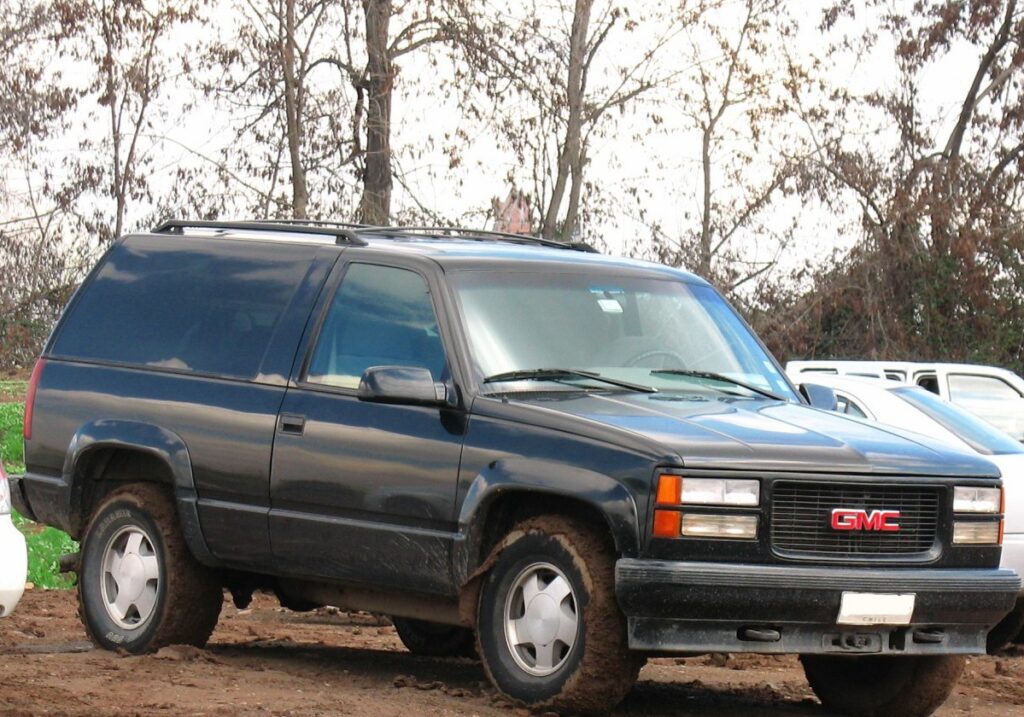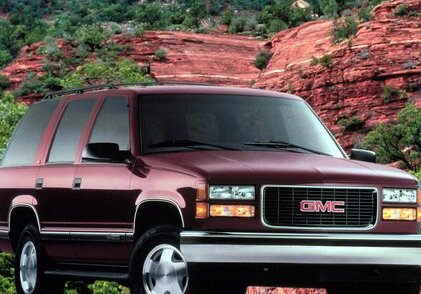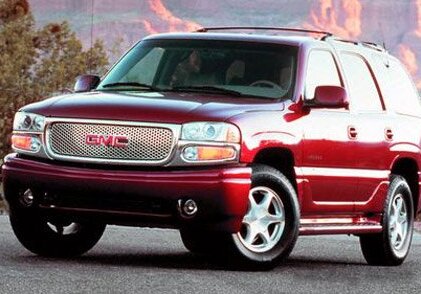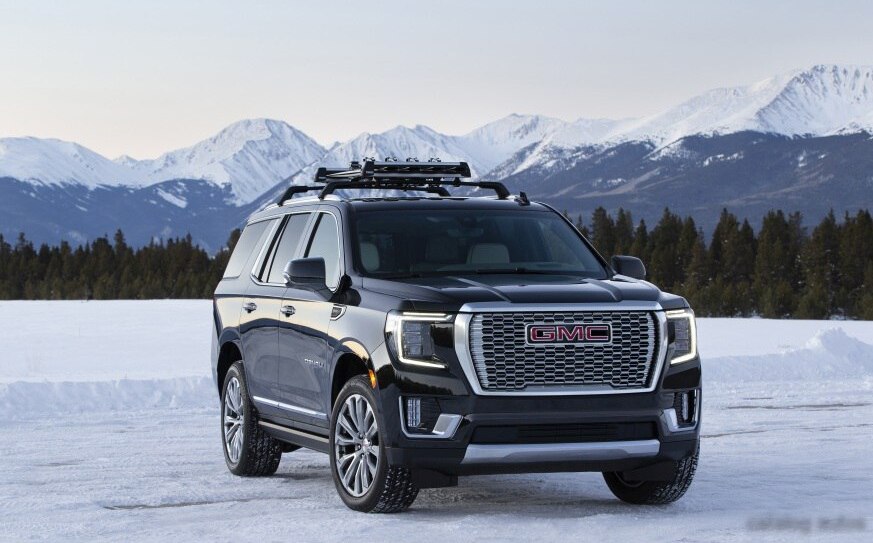
The GMC Yukon V with the 3.0 Duramax turbodiesel engine and automatic transmission was produced from 2020 to 2024. This variant occupied a significant position within the fifth generation (2021-present) Yukon lineup, offering a compelling blend of full-size SUV capability with improved fuel efficiency compared to its gasoline-powered siblings. It catered to buyers needing substantial towing capacity and interior space, but who also prioritized diesel’s characteristic low-end torque and highway economy. The Yukon V series represented GMC’s attempt to broaden the Yukon’s appeal beyond traditional large SUV buyers.
Technical Specifications
| Brand | GMC |
| Model | Yukon |
| Generation | Yukon V |
| Type (Engine) | 3.0 Duramax (277 Hp) Automatic |
| Start of production | 2020 |
| End of production | 2024 |
| Powertrain Architecture | Internal Combustion engine |
| Body type | SUV |
| Seats | 7-8 |
| Doors | 5 |
| Fuel consumption (urban) | 11.2 l/100 km (21 US mpg) |
| Fuel consumption (extra urban) | 8.7 l/100 km (27 US mpg) |
| Fuel Type | Diesel |
| Weight-to-power ratio | 8.8 kg/Hp |
| Weight-to-torque ratio | 3.9 kg/Nm |
| Power | 277 Hp @ 3750 rpm |
| Power per litre | 92.5 Hp/l |
| Torque | 624 Nm @ 1500 rpm (460.24 lb.-ft. @ 1500 rpm) |
| Engine layout | Front, Longitudinal |
| Engine Model/Code | Duramax |
| Engine displacement | 2993 cm3 (182.64 cu. in.) |
| Number of cylinders | 6 |
| Engine configuration | Inline |
| Cylinder Bore | 84 mm (3.31 in.) |
| Piston Stroke | 90 mm (3.54 in.) |
| Compression ratio | 15:1 |
| Number of valves per cylinder | 4 |
| Fuel injection system | Diesel Commonrail |
| Engine aspiration | Turbocharger, Intercooler |
| Valvetrain | DOHC |
| Engine oil capacity | 6.6 l (6.97 US qt | 5.81 UK qt) |
| Coolant capacity | 20.7 l (21.87 US qt | 18.21 UK qt) |
| Kerb Weight | 2429 kg (5355.03 lbs.) |
| Max. weight | 3402 kg (7500.13 lbs.) |
| Max load | 973 kg (2145.1 lbs.) |
| Trunk (boot) space – minimum | 716 l (25.29 cu. ft.) |
| Trunk (boot) space – maximum | 3480 l (122.9 cu. ft.) |
| Fuel tank capacity | 91 l (24.04 US gal | 20.02 UK gal) |
| Permitted trailer load with brakes (12%) | 3674 kg (8099.78 lbs.) |
| Length | 5334 mm (210 in.) |
| Width | 2057 mm (80.98 in.) |
| Height | 1943 mm (76.5 in.) |
| Wheelbase | 3071 mm (120.91 in.) |
| Minimum turning circle | 12.1 m (39.7 ft.) |
| Drivetrain Architecture | Rear wheel drive |
| Number of gears and type of gearbox | 10 gears, automatic transmission |
| Front suspension | Spring Strut |
| Rear suspension | Independent multi-link suspension |
| Front brakes | Ventilated discs |
| Rear brakes | Ventilated discs |
| Steering type | Steering rack and pinion |
| Power steering | Electric Steering |
Powertrain & Engine Architecture
The heart of the Yukon V 3.0 Duramax is the GM LG0 engine, a 3.0-liter inline-six cylinder turbodiesel. This engine utilizes a common-rail direct fuel injection system, delivering fuel at extremely high pressures for optimized combustion. The Duramax engine features a single variable geometry turbocharger (VGT) and an intercooler to enhance power and efficiency. The engine’s DOHC valvetrain, with four valves per cylinder, contributes to its broad torque curve. The 10-speed automatic transmission (specifically the 10L80) was paired exclusively with this engine. This transmission’s wide gear ratio spread allows for both strong acceleration and relaxed highway cruising, optimizing fuel economy and towing performance. The transmission is electronically controlled, adapting shift points based on driving conditions and driver input.
Driving Characteristics
The 277 horsepower and 624 lb-ft of torque produced by the 3.0 Duramax engine provide the Yukon V with substantial pulling power. While not as quick off the line as the gasoline-powered V8 models, the diesel Yukon excels in towing and hauling. The 10-speed automatic transmission is well-tuned, providing smooth and responsive shifts. The gear ratios are optimized for maximizing torque at low speeds, making it ideal for towing heavy loads. On the highway, the Yukon V offers a comfortable and quiet ride, with the engine operating at low RPMs thanks to the tall overdrive gears. Compared to the 5.3L or 6.2L V8 options, the Duramax Yukon prioritizes fuel efficiency and low-end grunt over outright acceleration.
Equipment & Trim Levels
The Yukon V 3.0 Duramax was typically offered in SLE, SLT, and AT4 trim levels. Standard features on the SLE included tri-zone automatic climate control, an 8-inch touchscreen infotainment system with Apple CarPlay and Android Auto compatibility, and a suite of safety features like automatic emergency braking and lane keep assist. The SLT trim added leather upholstery, heated front seats, a larger touchscreen display, and additional convenience features. The AT4 trim, geared towards off-road enthusiasts, featured a more rugged exterior appearance, skid plates, and an upgraded suspension. Optional extras included a panoramic sunroof, a rear-seat entertainment system, and advanced safety technologies like adaptive cruise control and blind-spot monitoring.
Chassis & Braking
The Yukon V utilizes a body-on-frame construction, providing a robust and durable platform. The front suspension consists of independent coil-over-shock struts, while the rear features an independent multi-link suspension. This setup provides a comfortable ride and good handling characteristics for a vehicle of its size. Braking duties are handled by ventilated discs on all four wheels, providing ample stopping power. The Yukon V also incorporates ABS (Anti-lock Braking System) and electronic stability control to enhance safety. Due to the increased weight of the diesel engine, the Yukon V’s suspension components were often slightly stiffer than those found on gasoline-powered models.
Market Reception & Comparison
The GMC Yukon V 3.0 Duramax received generally positive reviews from automotive critics. It was praised for its fuel efficiency, strong towing capacity, and comfortable ride. However, some reviewers noted that the diesel engine was more expensive than the gasoline options and that its acceleration was not as brisk. Compared to the 5.3L V8, the Duramax Yukon offered significantly better fuel economy, particularly on the highway. Compared to the 6.2L V8, the Duramax Yukon traded some performance for improved efficiency and a lower total cost of ownership. The Duramax Yukon appealed to buyers who frequently tow or haul heavy loads and who prioritize fuel economy.
Legacy
The LG0 Duramax engine has proven to be a reliable and durable powertrain. While early models experienced some minor issues with the fuel injection system, these were largely addressed through software updates and revised components. The 10-speed automatic transmission has also proven to be a robust and dependable unit. On the used car market, the Yukon V 3.0 Duramax commands a premium over comparable gasoline-powered models, reflecting its fuel efficiency and towing capabilities. These models are sought after by buyers who need a capable and efficient full-size SUV. The Yukon V 3.0 Duramax represents a significant step forward in diesel engine technology, offering a compelling alternative to traditional gasoline-powered SUVs.