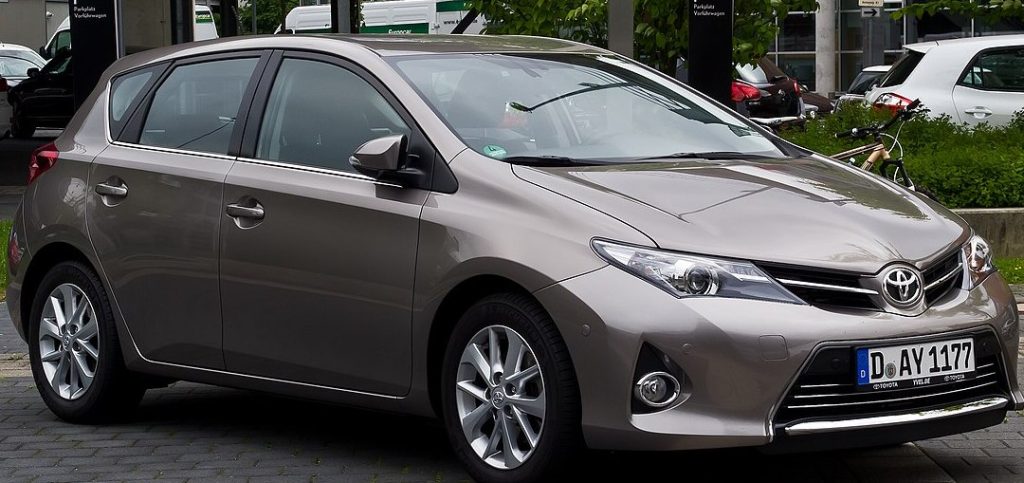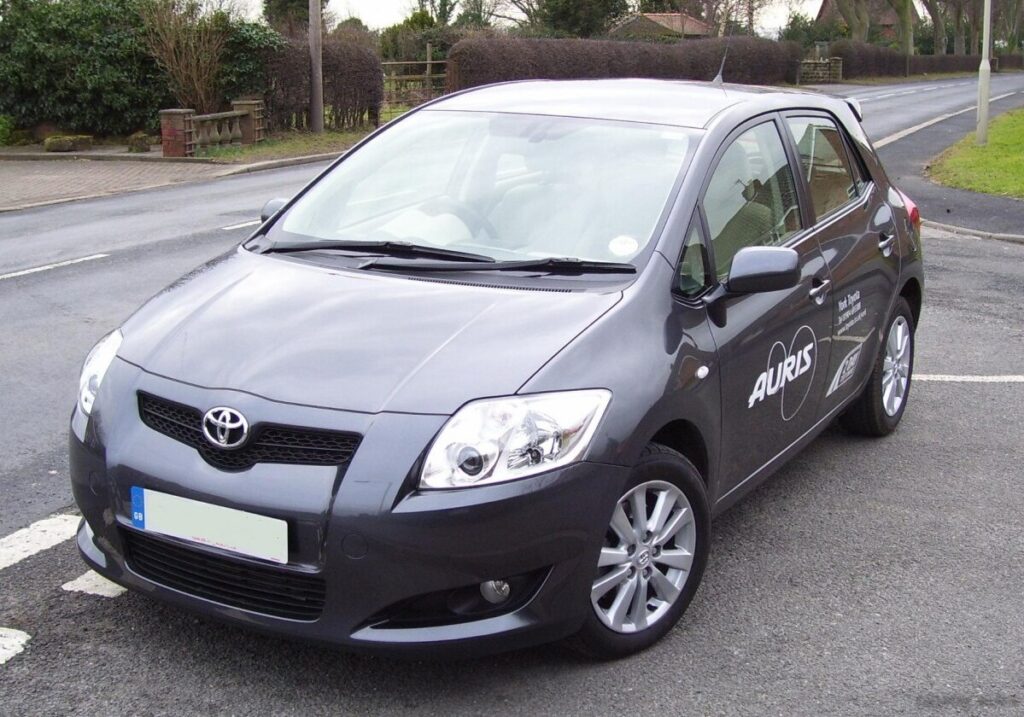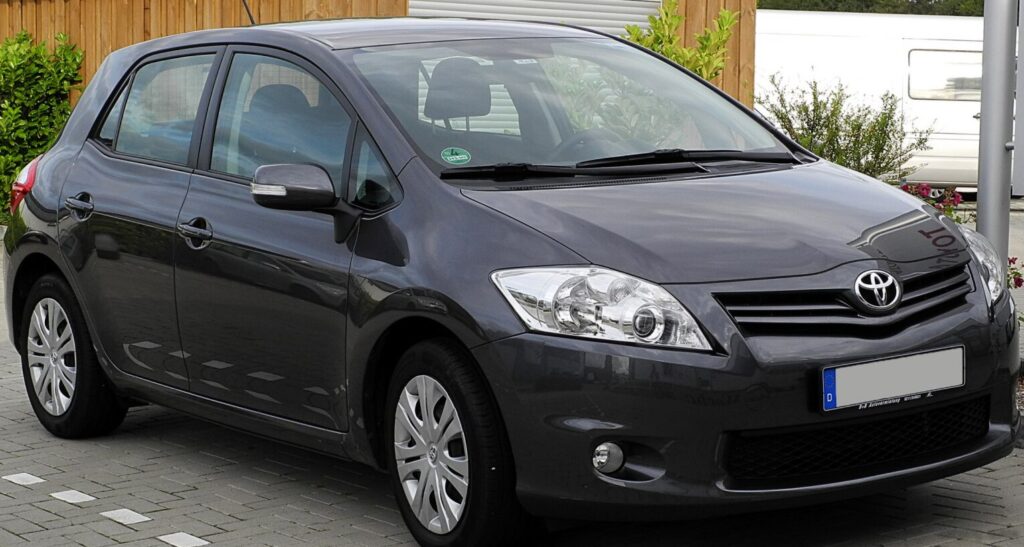
The Toyota Auris I (facelift, 2010) 1.6 16V Valvematic, producing 132 horsepower, was a key variant within the first generation Auris lineup, sold primarily in the European market. Introduced as part of a mid-cycle refresh, this model aimed to offer a balance of fuel efficiency and reasonable performance for buyers seeking a practical, everyday hatchback. Production of this specific configuration ran from 2010 to 2012, positioned as a mid-range option within the broader Auris range, slotting between the base 1.33L engine and the more powerful 1.8L models.
Technical Specifications
| Brand | Toyota |
| Model | Auris |
| Generation | Auris I (facelift 2010) |
| Type (Engine) | 1.6 16V Valvematic (132 Hp) |
| Start of production | 2010 |
| End of production | 2012 |
| Powertrain Architecture | Internal Combustion engine |
| Body type | Hatchback |
| Seats | 5 |
| Doors | 5 |
| Fuel consumption (urban) | 8.6 l/100 km (27.4 US mpg) |
| Fuel consumption (extra urban) | 5.5 l/100 km (42.8 US mpg) |
| Fuel consumption (combined) | 6.6 l/100 km (35.6 US mpg) |
| Fuel Type | Petrol (Gasoline) |
| Acceleration 0 – 100 km/h | 10.2 sec |
| Acceleration 0 – 62 mph | 10.2 sec |
| Acceleration 0 – 60 mph | 9.7 sec |
| Maximum speed | 195 km/h (121.17 mph) |
| Emission standard | Euro 5 |
| Weight-to-power ratio | 9.4 kg/Hp |
| Weight-to-torque ratio | 7.8 kg/Nm |
| Power | 132 Hp @ 6400 rpm |
| Torque | 160 Nm @ 4400 rpm (118.01 lb.-ft. @ 4400 rpm) |
| Engine layout | Front, Transverse |
| Engine Model/Code | 1ZR-FAE |
| Engine displacement | 1598 cm3 (97.52 cu. in.) |
| Number of cylinders | 4 |
| Engine configuration | Inline |
| Cylinder Bore | 80.5 mm (3.17 in.) |
| Piston Stroke | 78.5 mm (3.09 in.) |
| Compression ratio | 10.7:1 |
| Number of valves per cylinder | 4 |
| Fuel injection system | Multi-port manifold injection |
| Engine aspiration | Naturally aspirated engine |
| Valvetrain | DOHC |
| Engine oil capacity | 4.2 l (4.44 US qt | 3.7 UK qt) |
| Coolant capacity | 5.6 l (5.92 US qt | 4.93 UK qt) |
| Kerb Weight | 1245 kg (2744.76 lbs.) |
| Max. weight | 1750 kg (3858.09 lbs.) |
| Max load | 505 kg (1113.33 lbs.) |
| Trunk (boot) space – minimum | 350 l (12.36 cu. ft.) |
| Trunk (boot) space – maximum | 750 l (26.49 cu. ft.) |
| Fuel tank capacity | 55 l (14.53 US gal | 12.1 UK gal) |
| Length | 4245 mm (167.13 in.) |
| Width | 1760 mm (69.29 in.) |
| Height | 1515 mm (59.65 in.) |
| Wheelbase | 2600 mm (102.36 in.) |
| Front track | 1525 mm (60.04 in.) |
| Rear track | 1525 mm (60.04 in.) |
| Minimum turning circle | 10.4 m (34.12 ft.) |
| Drivetrain Architecture | Front wheel drive |
| Number of gears | 6 gears, manual transmission |
| Front suspension | Independent type McPherson |
| Rear suspension | Torsion |
| Front brakes | Ventilated discs |
| Rear brakes | Disc |
| Assisting systems | ABS (Anti-lock braking system) |
| Steering type | Steering rack and pinion |
| Tires size | 195/65 R15 |
| Wheel rims size | 15 |
Powertrain & Engine Architecture
The heart of this Auris variant is the 1ZR-FAE 1.6-liter inline-four engine. This engine utilizes Toyota’s Valvematic technology, a continuously variable valve lift system. Valvematic allows for precise control of intake valve timing and lift, optimizing engine performance and fuel efficiency across a wider range of engine speeds. The 1ZR-FAE employs multi-port fuel injection, delivering fuel directly into the intake ports. The engine’s DOHC (Dual Overhead Camshaft) configuration further enhances its breathing capabilities. Paired with this engine is a six-speed manual transmission, providing drivers with a relatively engaging driving experience. The transmission’s gear ratios were tuned to maximize fuel economy while still providing adequate acceleration.
Driving Characteristics
The 1.6L Valvematic engine in the Auris offered a noticeable step up in performance compared to the base 1.33L engine, but it wasn’t intended to be a sporty performer. Acceleration from 0-60 mph took around 9.7 seconds, and top speed was approximately 121 mph. The Valvematic system helped to deliver a reasonably responsive engine, with usable torque available from lower engine speeds. However, it lacked the outright punch of the 1.8L variants. The six-speed manual transmission allowed drivers to keep the engine in its optimal power band, but the overall driving experience was geared towards comfort and efficiency rather than outright speed. The relatively light weight of the Auris helped to mitigate the engine’s modest power output.
Equipment & Trim Levels
The 1.6 16V Valvematic Auris typically came equipped with a reasonable level of standard features. These included air conditioning, power windows, power door locks, and a basic audio system with CD player. Higher trim levels offered options such as alloy wheels, fog lights, a multi-function steering wheel, and an upgraded audio system with Bluetooth connectivity. Interior upholstery was typically cloth, with a focus on durability and practicality. The dashboard layout was functional and straightforward, prioritizing ease of use.
Chassis & Braking
The Auris I utilized a McPherson strut front suspension and a torsion beam rear suspension. This setup provided a comfortable ride quality, suitable for everyday driving. The front brakes were ventilated discs, offering good stopping power, while the rear brakes were solid discs. ABS (Anti-lock Braking System) was standard, enhancing safety. The steering was a rack and pinion system, providing precise and responsive handling. The suspension was tuned for comfort, prioritizing ride quality over sporty handling.
Market Reception & Comparison
The 1.6L Valvematic Auris was generally well-received by automotive critics as a sensible and practical choice. It offered a good balance of fuel economy, performance, and price. Compared to the base 1.33L engine, the 1.6L provided a noticeable improvement in performance, making it more suitable for highway driving and carrying passengers. However, it wasn’t as refined or powerful as the 1.8L models. Fuel economy was competitive within its class, and the Auris was praised for its reliability and build quality. The 1.8L models were favored by those prioritizing performance, while the 1.33L appealed to buyers seeking the most affordable option.
Legacy
The 1ZR-FAE engine, in general, has proven to be a reliable and durable powerplant. The Valvematic system, while complex, has demonstrated good long-term reliability when properly maintained. Used examples of the 1.6L Auris are still relatively common on the market today, and they continue to offer a practical and affordable transportation option. Maintenance costs are generally reasonable, and parts availability is good. The Auris I, including this 1.6L variant, helped establish Toyota’s reputation for building reliable and fuel-efficient vehicles in the European hatchback segment.