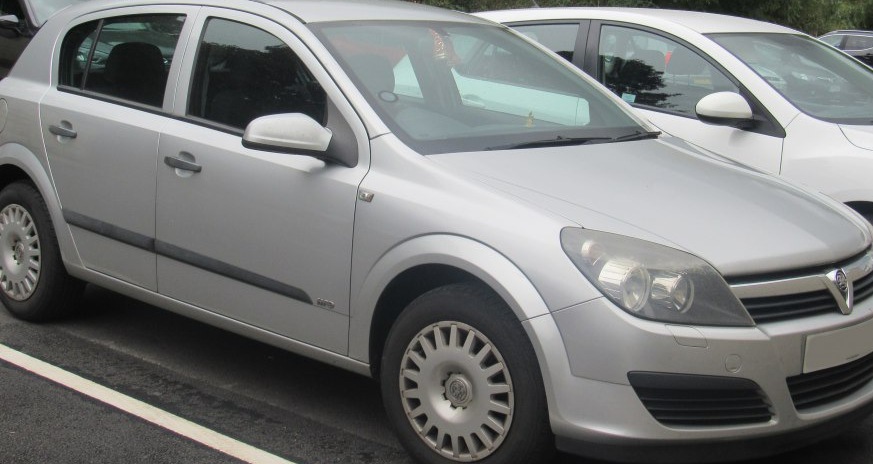
The Vauxhall Astra Mk V CC 1.3 CDTi Automatic, produced between 2004 and 2009, represented an entry-level offering within the broader Astra Mk V (H) range, specifically the five-door hatchback (CC – Club Configuration) body style. Positioned as a fuel-efficient and affordable option, this variant aimed at buyers prioritizing economy over outright performance. It utilized a small-displacement diesel engine paired with a six-speed automatic transmission, a relatively uncommon combination in the European market at the time. The Mk V Astra, built on the GM Delta platform, was a significant model for Vauxhall, representing a step forward in design and technology compared to its predecessor.
Technical Specifications
| Brand | Vauxhall |
| Model | Astra |
| Generation | Astra Mk V CC |
| Type (Engine) | 1.3 CDTi (90 Hp) Automatic |
| Start of production | 2004 |
| End of production | 2009 |
| Powertrain Architecture | Internal Combustion engine |
| Body type | Hatchback |
| Seats | 5 |
| Doors | 5 |
| Fuel consumption (urban) | 6.4 l/100 km (36.8 US mpg, 44.1 UK mpg, 15.6 km/l) |
| Fuel consumption (extra urban) | 4.2 l/100 km (56 US mpg, 67.3 UK mpg, 23.8 km/l) |
| Fuel consumption (combined) | 4.8 l/100 km (49 US mpg, 58.9 UK mpg, 20.8 km/l) |
| CO2 emissions | 134 g/km |
| Fuel Type | Diesel |
| Acceleration 0 – 100 km/h | 13.7 sec |
| Acceleration 0 – 62 mph | 13.7 sec |
| Acceleration 0 – 60 mph | 13 sec |
| Maximum speed | 172 km/h (106.88 mph) |
| Weight-to-power ratio | 14.3 kg/Hp, 70 Hp/tonne |
| Weight-to-torque ratio | 6.4 kg/Nm, 156.4 Nm/tonne |
| Power | 90 Hp @ 4000 rpm |
| Power per litre | 72.1 Hp/l |
| Torque | 201 Nm @ 1750-2500 rpm (148.25 lb.-ft. @ 1750-2500 rpm) |
| Engine layout | Front, Transverse |
| Engine Model/Code | Z13DTH |
| Engine displacement | 1248 cm3 (76.16 cu. in.) |
| Number of cylinders | 4 |
| Engine configuration | Inline |
| Cylinder Bore | 69.6 mm (2.74 in.) |
| Piston Stroke | 82 mm (3.23 in.) |
| Compression ratio | 18.4:1 |
| Number of valves per cylinder | 4 |
| Fuel injection system | Diesel Commonrail |
| Engine aspiration | Turbocharger, Intercooler |
| Engine oil capacity | 3.1 l (3.28 US qt | 2.73 UK qt) |
| Coolant | 6.8 l (7.19 US qt | 5.98 UK qt) |
| Kerb Weight | 1285 kg (2832.94 lbs.) |
| Max. weight | 1805 kg (3979.34 lbs.) |
| Max load | 520 kg (1146.4 lbs.) |
| Trunk (boot) space – minimum | 350 l (12.36 cu. ft.) |
| Trunk (boot) space – maximum | 1270 l (44.85 cu. ft.) |
| Fuel tank capacity | 52 l (13.74 US gal | 11.44 UK gal) |
| Length | 4249 mm (167.28 in.) |
| Width | 1753 mm (69.02 in.) |
| Width including mirrors | 2033 mm (80.04 in.) |
| Height | 1467 mm (57.76 in.) |
| Wheelbase | 2614 mm (102.91 in.) |
| Front track | 1488 mm (58.58 in.) |
| Rear (Back) track | 1488 mm (58.58 in.) |
| Ride height (ground clearance) | 140 mm (5.51 in.) |
| Drag coefficient (Cd) | 0.32 |
| Drivetrain Architecture | The Internal combustion engine (ICE) drives the front wheels of the vehicle. |
| Drive wheel | Front wheel drive |
| Number of gears and type of gearbox | 6 gears, automatic transmission |
| Front brakes | Ventilated discs |
| Rear brakes | Disc |
| Tires size | 195/65 R15 |
| Wheel rims size | 15 |
Powertrain & Engine Architecture
The heart of this Astra variant is the Z13DTH, a 1.3-liter inline-four cylinder diesel engine. This engine is part of the Fiat-developed Multijet family, licensed to General Motors. It features a common rail direct injection system, a turbocharger with an intercooler, and four valves per cylinder. The engine’s relatively high compression ratio of 18.4:1 contributes to its efficiency. The six-speed automatic transmission, sourced from Japan (typically Aisin), was designed to provide smoother shifts compared to earlier automatic gearboxes. While offering convenience, this transmission wasn’t known for its particularly quick responsiveness. The engine’s modest output of 90 horsepower and 201 Nm (148 lb-ft) of torque was sufficient for everyday driving, but it wasn’t designed for spirited acceleration.
Driving Characteristics
The 1.3 CDTi Automatic Astra offered a comfortable, if uninspiring, driving experience. Acceleration from 0-60 mph took around 13 seconds, and top speed was limited to 106.88 mph. The automatic transmission, while smooth, tended to hunt for gears on inclines and didn’t offer manual shift control. The gear ratios were optimized for fuel economy rather than performance. Compared to the 1.8-liter petrol versions or the more powerful 1.9 CDTi diesel, this variant felt noticeably slower. However, its strength lay in its fuel efficiency, achieving combined fuel economy figures of around 49 US mpg. The relatively light weight of the vehicle helped to mitigate the lack of power to some extent.
Equipment & Trim Levels
The 1.3 CDTi Automatic typically fell into the lower to mid-range trim levels of the Astra Mk V CC lineup, often designated as ‘Life’ or ‘Design’ depending on the specific market. Standard equipment generally included air conditioning, power steering, electric front windows, a CD player, and ABS brakes. Higher trim levels added features like alloy wheels, rear electric windows, a trip computer, and upgraded interior trim. Optional extras included parking sensors, a sunroof, and upgraded audio systems. Interior upholstery was typically cloth, with a functional but somewhat basic dashboard layout.
Chassis & Braking
The Astra Mk V CC utilized a MacPherson strut front suspension and a torsion beam rear suspension. The front brakes were ventilated discs, while the rear brakes were solid discs. This braking setup was adequate for the vehicle’s weight and performance. Stabilizer bars were fitted to both the front and rear axles to reduce body roll. The suspension was tuned for comfort, providing a reasonably smooth ride, although it wasn’t particularly sporty. The 195/65 R15 tires offered a good balance of grip and ride comfort.
Market Reception & Comparison
The Astra Mk V 1.3 CDTi Automatic was generally well-received as a practical and economical choice. Critics praised its fuel efficiency and low running costs, but noted its lack of performance. Compared to the 1.8-liter petrol versions, the diesel offered significantly better fuel economy but slower acceleration. The 1.9 CDTi diesel provided a more compelling blend of performance and economy, but at a higher price point. Reliability was generally good, although the automatic transmission could be prone to issues if not properly maintained. The car was a popular choice for fleet operators and private buyers looking for a cost-effective hatchback.
Legacy
The Z13DTH engine, while not known for being particularly powerful, proved to be relatively reliable when properly maintained. The six-speed automatic transmission, while not a performance standout, offered a degree of convenience. Today, the Astra Mk V 1.3 CDTi Automatic can be found on the used car market at very affordable prices. It remains a viable option for buyers seeking a cheap and economical runabout, but potential buyers should be aware of the age-related issues common to older vehicles, such as wear and tear on suspension components and potential problems with the turbocharger. Its enduring appeal lies in its simplicity, fuel efficiency, and relatively low cost of ownership.