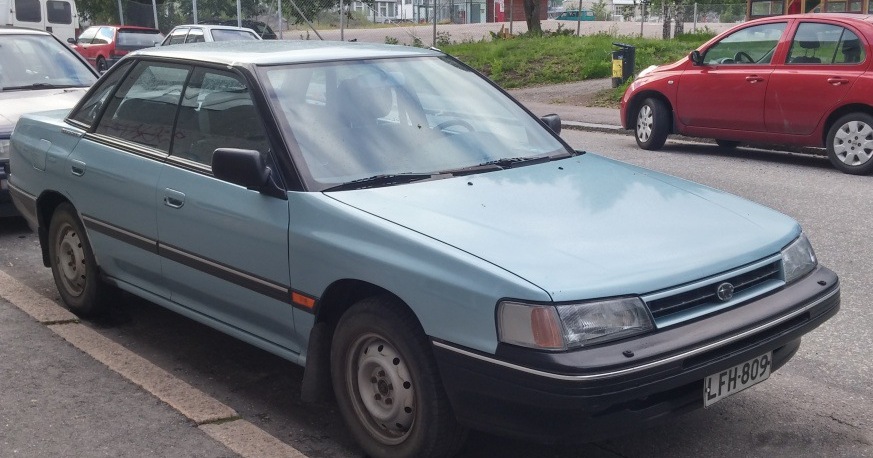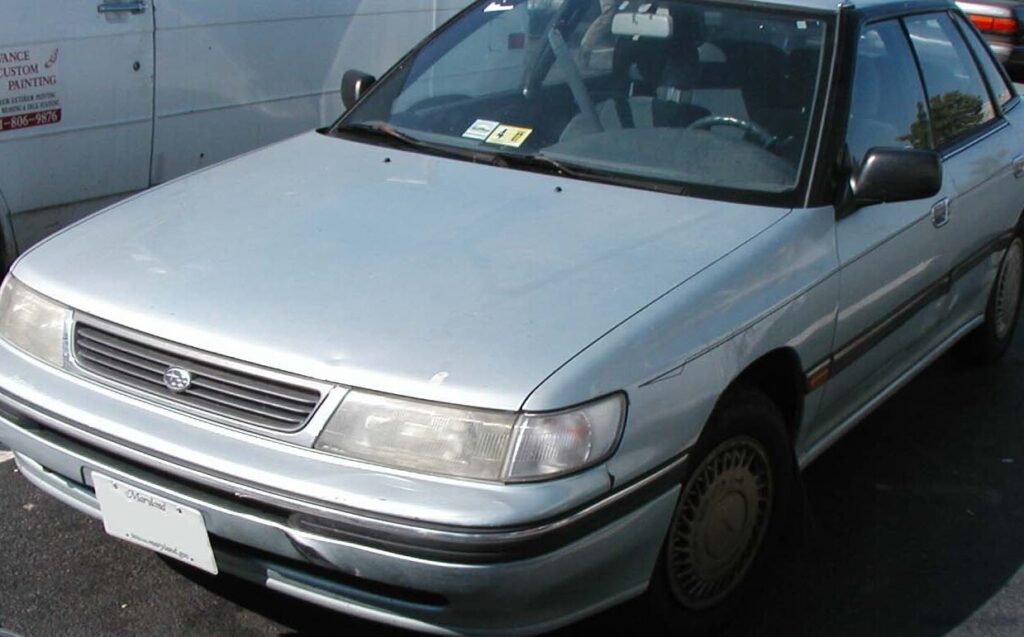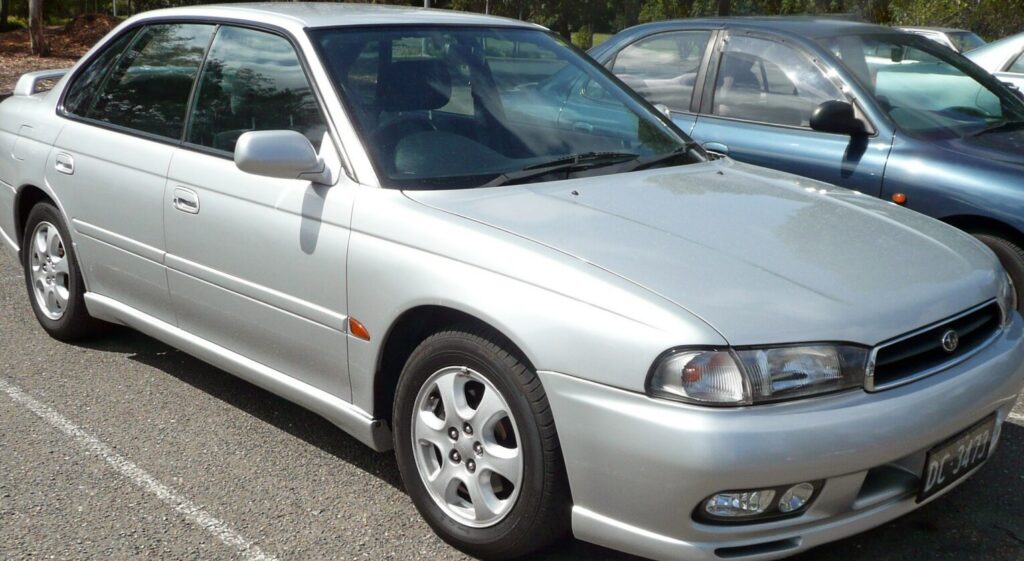
The Subaru Legacy II (BD, BG) 2.5, produced between 1996 and 1999, represented a significant evolution of Subaru’s mid-size offering. Positioned as a step up from the base 2.2-liter models, the 2.5-liter variant with 150 horsepower and all-wheel drive (AWD) aimed to provide a balance of performance, practicality, and Subaru’s renowned symmetrical all-wheel drive system. This generation Legacy, built on the BD/BG platform, was crucial in establishing Subaru’s foothold in the North American market, offering a compelling alternative to traditional front-wheel drive sedans. The 2.5L AWD model was a popular choice for buyers seeking enhanced all-weather capability and a more engaging driving experience.
Technical Specifications
| Brand | Subaru |
| Model | Legacy |
| Generation | Legacy II (BD,BG) |
| Type (Engine) | 2.5 (150 Hp) AWD |
| Start of production | 1996 |
| End of production | 1999 |
| Powertrain Architecture | Internal Combustion engine |
| Body type | Sedan |
| Seats | 5 |
| Doors | 4 |
| Fuel consumption (urban) | 13.9 l/100 km (16.9 US mpg) |
| Fuel consumption (extra urban) | 8.1 l/100 km (29 US mpg) |
| Fuel Type | Petrol (Gasoline) |
| Weight-to-power ratio | 8.4 kg/Hp |
| Weight-to-torque ratio | 5.7 kg/Nm |
| Power | 150 Hp @ 5600 rpm |
| Power per litre | 61.1 Hp/l |
| Torque | 221 Nm @ 4000 rpm (163 lb.-ft. @ 4000 rpm) |
| Engine layout | Front, Longitudinal |
| Engine Model/Code | EJ25 |
| Engine displacement | 2457 cm3 (149.94 cu. in.) |
| Number of cylinders | 4 |
| Engine configuration | Boxer |
| Cylinder Bore | 99.5 mm (3.92 in.) |
| Piston Stroke | 79 mm (3.11 in.) |
| Compression ratio | 9.5:1 |
| Number of valves per cylinder | 4 |
| Fuel injection system | Multi-port manifold injection |
| Engine aspiration | Naturally aspirated engine |
| Engine oil capacity | 4.5 l (4.76 US qt | 3.96 UK qt) |
| Kerb Weight | 1265 kg (2788.85 lbs.) |
| Max. weight | 1800 kg (3968.32 lbs.) |
| Max load | 535 kg (1179.47 lbs.) |
| Trunk (boot) space – minimum | 451 l (15.93 cu. ft.) |
| Fuel tank capacity | 60 l (15.85 US gal | 13.2 UK gal) |
| Length | 4595 mm (180.91 in.) |
| Width | 1695 mm (66.73 in.) |
| Height | 1405 mm (55.31 in.) |
| Wheelbase | 2630 mm (103.54 in.) |
| Front track | 1460 mm (57.48 in.) |
| Rear (Back) track | 1455 mm (57.28 in.) |
| Ride height (ground clearance) | 160 mm (6.3 in.) |
| Drive wheel | All wheel drive (4×4) |
| Number of gears and type of gearbox | 5 gears, manual transmission |
| Front suspension | Wishbone |
| Rear suspension | Several levers and rods |
| Front brakes | Ventilated discs |
| Rear brakes | Disc |
| Assisting systems | ABS (Anti-lock braking system) |
| Steering type | Steering rack and pinion |
| Power steering | Hydraulic Steering |
| Tires size | 205/70 R15 |
| Wheel rims size | 15 |
Powertrain & Engine Architecture
The heart of the Legacy II 2.5 was the EJ25 engine, a 2.5-liter naturally aspirated, horizontally-opposed (boxer) four-cylinder. This engine design, a Subaru hallmark, offered inherent balance and a lower center of gravity, contributing to the car’s handling characteristics. The EJ25 featured multi-port fuel injection and a single overhead camshaft (SOHC) design per cylinder bank. The 9.5:1 compression ratio was a compromise between performance and fuel efficiency. The 150 horsepower peak arrived at 5600 rpm, while the 163 lb-ft of torque was readily available at 4000 rpm. This engine was paired with a robust 5-speed manual transmission, providing drivers with direct control over the power delivery. The longitudinally mounted engine and symmetrical all-wheel drive system were key components of Subaru’s engineering philosophy.
Driving Characteristics
The 2.5-liter engine and 5-speed manual transmission combination provided a noticeably more spirited driving experience compared to the lower-displacement models. While not a sports car, the Legacy 2.5 offered respectable acceleration and ample power for highway merging and passing. The all-wheel drive system instilled confidence in various weather conditions, providing enhanced traction and stability. The manual transmission allowed for precise gear selection, maximizing the engine’s power band. The gear ratios were tuned for a balance of acceleration and fuel economy, with a relatively tall fifth gear for comfortable cruising. Compared to the automatic transmission equipped models, the manual offered a more engaging and responsive driving experience.
Equipment & Trim Levels
The Legacy II 2.5 typically came with a reasonable level of standard equipment. Base models included power windows, power locks, and an AM/FM stereo. Higher trim levels, often denoted by “L” or “Brighton” designations, added features such as cruise control, upgraded upholstery (often cloth or a combination of cloth and vinyl), and alloy wheels. Optional extras included a sunroof, air conditioning, and a premium sound system. Interior appointments were generally functional and durable, reflecting the car’s intended role as a practical family sedan. The dashboard layout was straightforward and easy to use, prioritizing ergonomics.
Chassis & Braking
The Legacy II utilized a MacPherson strut front suspension and a multi-link rear suspension, providing a comfortable ride and predictable handling. The front suspension featured a stabilizer bar to reduce body roll during cornering. Braking duties were handled by ventilated discs at the front and solid discs at the rear. Anti-lock brakes (ABS) were standard, enhancing safety by preventing wheel lockup during hard braking. The chassis was designed to accommodate the all-wheel drive system without compromising interior space. The relatively lightweight construction of the BD/BG platform contributed to the car’s agility.
Market Reception & Comparison
The Subaru Legacy II 2.5 AWD was generally well-received by automotive critics. It was praised for its all-weather capability, comfortable ride, and relatively spacious interior. Compared to its competitors, such as the Honda Accord and Toyota Camry, the Legacy offered a unique combination of features, particularly its standard all-wheel drive. Fuel economy was considered average for the class, with the 2.5-liter engine consuming more fuel than the smaller displacement options. Reliability was generally good, although some owners reported issues with the head gasket, a common problem with early Subaru engines. The 2.5L model was positioned above the 2.2L in the lineup, offering a performance upgrade for buyers willing to pay a premium.
Legacy
The EJ25 engine, while generally reliable, is known for its potential head gasket issues, particularly in earlier iterations. Proper maintenance, including regular oil changes and coolant flushes, is crucial for extending the engine’s lifespan. Today, well-maintained Legacy II 2.5 models are sought after by enthusiasts who appreciate their unique combination of practicality, performance, and all-wheel drive capability. The car’s robust construction and relatively simple mechanical design make it a relatively easy vehicle to maintain and repair. The Legacy II 2.5 remains a testament to Subaru’s commitment to building durable and capable vehicles, and it continues to hold a place in the hearts of many Subaru fans.