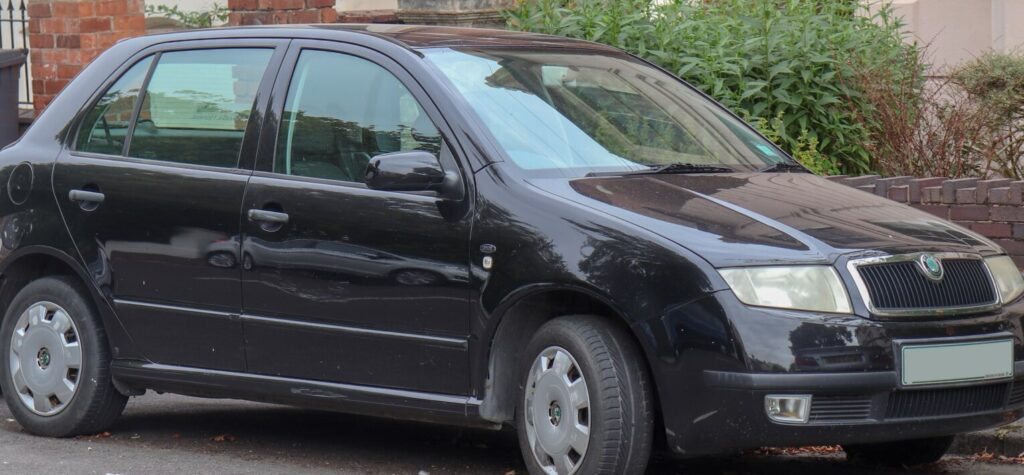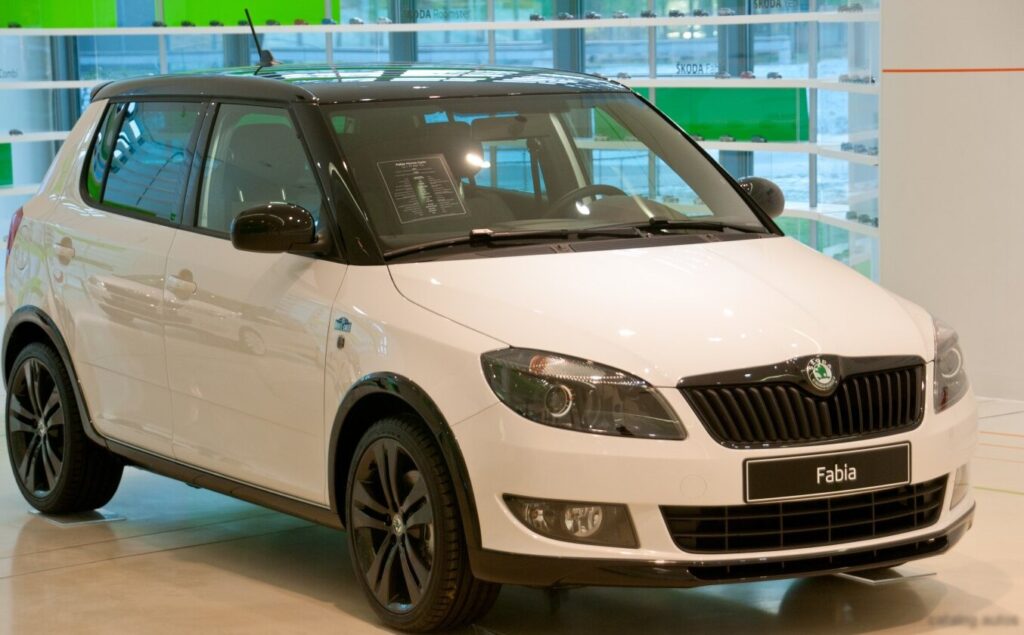
The Skoda Fabia II (facelift, produced from March 2010 to 2014) 1.2 TSI 86 hp variant represented an entry-level offering within the broader Fabia II range, which itself was based on the Volkswagen Group’s PQ25 platform (also known as the A5 platform). This facelift brought revised styling, improved interior materials, and crucially, the introduction of Volkswagen’s new generation of turbocharged direct injection engines, including the 1.2 TSI. Positioned as an affordable and fuel-efficient option, the 1.2 TSI 86 hp model aimed to attract buyers seeking a practical and economical hatchback for urban and everyday driving. It served as a stepping stone into the Fabia lineup, offering a more modern powertrain than the older naturally aspirated engines while remaining more accessible than the higher-powered TSI variants or diesel options.
Technical Specifications
| Brand | Skoda |
| Model | Fabia |
| Generation | Fabia II (facelift 2010) |
| Type (Engine) | 1.2 TSI (86 Hp) |
| Start of production | March, 2010 |
| End of production | 2014 |
| Powertrain Architecture | Internal Combustion engine |
| Body type | Hatchback |
| Seats | 5 |
| Doors | 5 |
| Fuel consumption (urban) | 6.6 l/100 km (35.6 US mpg, 42.8 UK mpg, 15.2 km/l) |
| Fuel consumption (extra urban) | 4.4 l/100 km (53.5 US mpg, 64.2 UK mpg, 22.7 km/l) |
| Fuel consumption (combined) | 5.2 l/100 km (45.2 US mpg, 54.3 UK mpg, 19.2 km/l) |
| CO2 emissions | 121 g/km |
| Fuel Type | Petrol (Gasoline) |
| Acceleration 0 – 100 km/h | 11.7 sec |
| Acceleration 0 – 62 mph | 11.7 sec |
| Acceleration 0 – 60 mph | 11.1 sec |
| Maximum speed | 177 km/h (109.98 mph) |
| Emission standard | Euro 5 |
| Weight-to-power ratio | 12.1 kg/Hp, 82.6 Hp/tonne |
| Weight-to-torque ratio | 6.5 kg/Nm, 153.7 Nm/tonne |
| Power | 86 Hp @ 4800 rpm |
| Power per litre | 71.8 Hp/l |
| Torque | 160 Nm @ 1500-3500 rpm (118.01 lb.-ft. @ 1500-3500 rpm) |
| Engine layout | Front, Transverse |
| Engine Model/Code | EA111 / CBZA |
| Engine displacement | 1197 cm3 (73.05 cu. in.) |
| Number of cylinders | 4 |
| Engine configuration | Inline |
| Cylinder Bore | 71 mm (2.8 in.) |
| Piston Stroke | 75.6 mm (2.98 in.) |
| Compression ratio | 10:1 |
| Number of valves per cylinder | 4 |
| Fuel injection system | Direct injection |
| Engine aspiration | Turbocharger, Intercooler |
| Valvetrain | DOHC |
| Engine oil capacity | 3.6 l (3.8 US qt | 3.17 UK qt) |
| Coolant capacity | 7.7 l (8.14 US qt | 6.78 UK qt) |
| Kerb Weight | 1041 kg (2295.01 lbs.) |
| Max. weight | 1571 kg (3463.46 lbs.) |
| Max load | 530 kg (1168.45 lbs.) |
| Trunk (boot) space – minimum | 315 l (11.12 cu. ft.) |
| Trunk (boot) space – maximum | 1180 l (41.67 cu. ft.) |
| Fuel tank capacity | 45 l (11.89 US gal | 9.9 UK gal) |
| Max. roof load | 75 kg (165.35 lbs.) |
| Permitted trailer load with brakes (12%) | 1100 kg (2425.08 lbs.) |
| Permitted trailer load without brakes | 500 kg (1102.31 lbs.) |
| Permitted towbar download | 50 kg (110.23 lbs.) |
| Length | 4000 mm (157.48 in.) |
| Width | 1642 mm (64.65 in.) |
| Width including mirrors | 1886 mm (74.25 in.) |
| Height | 1498 mm (58.98 in.) |
| Wheelbase | 2465 mm (97.05 in.) |
| Front track | 1433 mm (56.42 in.) |
| Rear track | 1426 mm (56.14 in.) |
| Front overhang | 860 mm (33.86 in.) |
| Rear overhang | 675 mm (26.57 in.) |
| Ride height (ground clearance) | 134 mm (5.28 in.) |
| Drag coefficient (Cd) | 0.33 |
| Minimum turning circle | 10 m (32.81 ft.) |
| Approach angle | 14° |
| Departure angle | 16.2° |
| Drivetrain Architecture | ICE, Front wheel drive |
| Number of gears and type of gearbox | 5 gears, manual transmission |
| Front suspension | Independent, McPherson with coil spring and anti-roll bar |
| Rear suspension | Coil spring, Torsion |
| Front brakes | Disc |
| Rear brakes | Drum |
| Assisting systems | ABS (Anti-lock braking system) |
| Steering type | Steering rack and pinion |
| Power steering | Electric |
| Tires size | 165/70 R14; 185/60 R14; 195/55 R15 |
| Wheel rims size | 5J x 14; 6J x 14; 6J x 15 |
Powertrain & Engine Architecture
The heart of this Fabia variant is the EA111 1.2 TSI engine, specifically the CBZA code. This engine is a 1.2-liter, inline-four cylinder gasoline engine featuring direct fuel injection and a turbocharger with an intercooler. Direct injection allows for precise fuel delivery, improving efficiency and reducing emissions. The CBZA engine utilizes a single scroll turbocharger, which provides a good balance between responsiveness and fuel economy. The engine employs a double overhead camshaft (DOHC) valvetrain with four valves per cylinder, optimizing gas flow for improved performance. The 5-speed manual transmission was the standard offering, chosen for its affordability and efficiency. The transmission’s gear ratios were tuned to maximize the engine’s torque output at lower RPMs, contributing to the car’s usability in everyday driving situations.
Driving Characteristics
The 1.2 TSI 86 hp Fabia offered a respectable, if not exhilarating, driving experience. Acceleration from 0-60 mph took around 11.1 seconds, making it suitable for city driving and highway merging, but not particularly sporty. The turbocharger provided a noticeable boost in power, particularly in the mid-range, but the engine lacked the outright punch of the larger 1.4 TSI or diesel variants. The 5-speed manual transmission was well-matched to the engine’s characteristics, offering smooth shifts and a reasonable spread of gears. The car felt nimble and easy to maneuver, thanks to its relatively light weight and compact dimensions. Fuel economy was a major strength, with combined figures around 45.2 US mpg, making it an attractive option for budget-conscious drivers.
Equipment & Trim Levels
The 1.2 TSI 86 hp Fabia typically came with a base level of equipment, focusing on practicality and affordability. Standard features generally included power windows, central locking, an audio system (usually a basic CD player with MP3 compatibility), and ABS brakes. Interior upholstery was typically cloth, with a functional but not luxurious design. Air conditioning was often an optional extra, as were alloy wheels and more advanced audio systems. Higher trim levels, such as the Elegance, added features like climate control, alloy wheels, and upgraded interior trim.
Chassis & Braking
The Fabia II utilized a McPherson strut front suspension and a torsion beam rear suspension. This setup provided a good balance between ride comfort and handling. The front brakes were disc brakes, while the rear brakes were drum brakes – a cost-saving measure common in entry-level models. ABS (Anti-lock Braking System) was standard, enhancing safety during emergency braking. The steering was rack and pinion with electric power assistance, providing light and precise steering feel.
Market Reception & Comparison
The 1.2 TSI 86 hp Fabia was generally well-received by critics as a sensible and economical choice. It was praised for its fuel efficiency, comfortable ride, and practical interior. However, it was often criticized for its lack of outright performance compared to higher-powered variants. Compared to the 1.4 TSI models, the 1.2 TSI offered lower running costs but less excitement. The diesel variants (particularly the 1.6 TDI) provided even better fuel economy but at a higher initial cost. The 1.2 TSI positioned itself as a sweet spot for buyers prioritizing affordability and efficiency over performance.
Legacy
The EA111 1.2 TSI engine, while generally reliable, has been known to exhibit some issues related to carbon buildup on the intake valves, particularly if not regularly driven on longer journeys. Regular servicing and the use of quality fuel are crucial for maintaining its longevity. Today, the 1.2 TSI Fabia II represents a relatively affordable and practical used car option. Its fuel efficiency and low running costs continue to appeal to budget-conscious buyers. While not a performance car, it remains a capable and reliable hatchback for everyday use, and well-maintained examples can still provide years of service.