
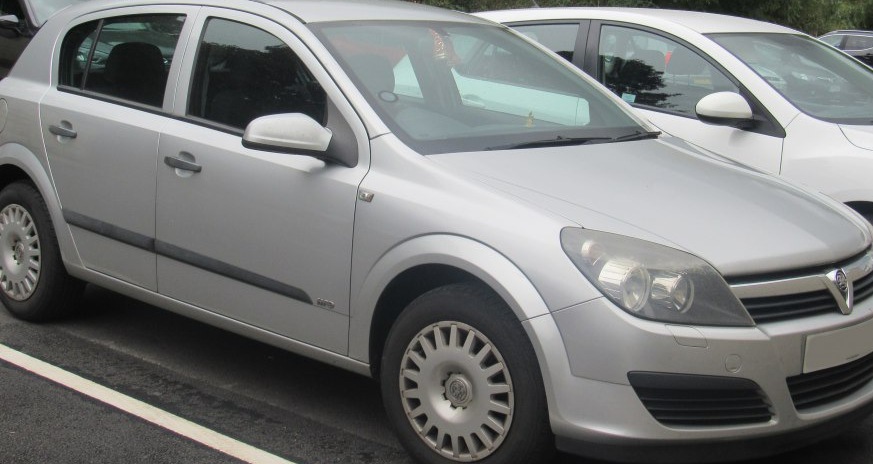
The Vauxhall Astra Mark V, produced between 2004 and 2009, represented a significant step forward for the British marque. Within the Mark V range (designated as the H-series internally), the 1.4-liter 90 horsepower automatic variant occupied the entry-level position, aimed at buyers prioritizing affordability and ease of use over outright performance. This model, a five-door hatchback, was a common sight on UK roads, offering a practical and economical transportation solution. It was built on the GM Delta platform, shared with other vehicles like the Opel Astra and Chevrolet Astra, and represented a move towards greater refinement and build quality compared to its predecessor.
Technical Specifications
| Brand | Vauxhall |
| Model | Astra |
| Generation | Astra Mk V CC |
| Type (Engine) | 1.4 (90 Hp) Automatic |
| Start of production | 2004 |
| End of production | 2009 |
| Powertrain Architecture | Internal Combustion engine |
| Body type | Hatchback |
| Seats | 5 |
| Doors | 5 |
| Fuel consumption (urban) | 8.2 l/100 km (28.7 US mpg) |
| Fuel consumption (extra urban) | 5.2 l/100 km (45.2 US mpg) |
| Fuel consumption (combined) | 6.3 l/100 km (37.3 US mpg) |
| CO2 emissions | 151 g/km |
| Fuel Type | Petrol (Gasoline) |
| Acceleration 0 – 100 km/h | 13.7 sec |
| Acceleration 0 – 62 mph | 13.7 sec |
| Acceleration 0 – 60 mph | 13 sec |
| Maximum speed | 179 km/h (111.23 mph) |
| Weight-to-power ratio | 12.9 kg/Hp |
| Weight-to-torque ratio | 9.3 kg/Nm |
| Power | 90 Hp @ 5600 rpm |
| Torque | 125 Nm @ 4000 rpm (92.2 lb.-ft. @ 4000 rpm) |
| Engine layout | Front, Transverse |
| Engine Model/Code | Z14XEP |
| Engine displacement | 1364 cm3 (83.24 cu. in.) |
| Number of cylinders | 4 |
| Engine configuration | Inline |
| Cylinder Bore | 73.4 mm (2.89 in.) |
| Piston Stroke | 80.6 mm (3.17 in.) |
| Compression ratio | 10.5:1 |
| Number of valves per cylinder | 4 |
| Fuel injection system | Multi-port manifold injection |
| Engine aspiration | Naturally aspirated |
| Engine oil capacity | 3.5 l (3.7 US qt | 3.08 UK qt) |
| Coolant capacity | 5.6 l (5.92 US qt | 4.93 UK qt) |
| Kerb Weight | 1165 kg (2568.39 lbs.) |
| Max. weight | 1705 kg (3758.88 lbs.) |
| Max load | 540 kg (1190.5 lbs.) |
| Trunk (boot) space – minimum | 350 l (12.36 cu. ft.) |
| Trunk (boot) space – maximum | 1270 l (44.85 cu. ft.) |
| Fuel tank capacity | 52 l (13.74 US gal | 11.44 UK gal) |
| Length | 4249 mm (167.28 in.) |
| Width | 1753 mm (69.02 in.) |
| Width including mirrors | 2033 mm (80.04 in.) |
| Height | 1467 mm (57.76 in.) |
| Wheelbase | 2614 mm (102.91 in.) |
| Front track | 1488 mm (58.58 in.) |
| Rear track | 1488 mm (58.58 in.) |
| Ride height (ground clearance) | 140 mm (5.51 in.) |
| Drag coefficient (Cd) | 0.32 |
| Drivetrain Architecture | Front wheel drive |
| Number of gears | 5 |
| Gearbox type | Automatic transmission |
| Front brakes | Ventilated discs |
| Rear brakes | Drum |
| Tires size | 195/65 R15 |
| Wheel rims size | 15 |
Powertrain & Engine Architecture
The heart of this Astra variant was the Z14XEP engine, a 1.4-liter inline-four cylinder petrol engine. This engine belonged to the Vauxhall/Opel Family 1 series, known for its relatively simple design and focus on fuel efficiency. It featured a single overhead camshaft (SOHC) operating four valves per cylinder. Fuel delivery was handled by a multi-point fuel injection system, providing adequate, though not exceptional, throttle response. The engine produced 90 horsepower at 5600 rpm and 125 Nm (92.2 lb-ft) of torque at 4000 rpm. Paired with this engine was a four-speed automatic transmission. This transmission, while providing convenience, was a somewhat dated design by the mid-2000s, contributing to the car’s leisurely acceleration. The transmission’s gear ratios were optimized for fuel economy rather than performance, resulting in a noticeable delay during kickdown and a less engaging driving experience compared to the available five-speed manual gearbox.
Driving Characteristics
The 1.4-liter automatic Astra was not designed for spirited driving. Acceleration from 0-60 mph took around 13 seconds, and top speed was limited to 111 mph. The automatic transmission, while smooth in normal driving conditions, lacked the responsiveness of more modern units. The engine felt strained when attempting to accelerate quickly, and overtaking maneuvers required careful planning. However, for everyday commuting and urban driving, the powertrain proved perfectly adequate. The emphasis was on comfort and ease of use, making it a suitable choice for drivers who prioritized convenience over performance. The relatively light weight of the vehicle (1165 kg / 2568 lbs) helped to mitigate the lack of power to some extent.
Equipment & Trim Levels
The 1.4 Automatic Astra typically came equipped with a reasonable level of standard features. These included central locking, electric front windows, a basic stereo system, and driver and passenger airbags. Trim levels varied, but even base models offered air conditioning as an option. Higher trim levels, such as Life or Design, added features like alloy wheels, upgraded upholstery, and a more sophisticated audio system. Interior upholstery was typically cloth, and the dashboard featured a functional, if somewhat utilitarian, design. Optional extras included parking sensors, a sunroof, and upgraded sound systems.
Chassis & Braking
The Astra Mark V utilized a MacPherson strut front suspension and a torsion beam rear suspension. This setup provided a comfortable ride, although it wasn’t particularly sporty. The front brakes were ventilated discs, offering adequate stopping power, while the rear brakes were drums, a cost-saving measure common in this segment. The car’s relatively modest weight helped to keep braking distances reasonable. Stabilizer bars were fitted to both the front and rear axles to reduce body roll during cornering, but the car’s handling was generally considered safe and predictable rather than engaging.
Market Reception & Comparison
The 1.4 Automatic Astra was generally well-received as an affordable and practical family car. Critics acknowledged its fuel efficiency and comfortable ride, but often criticized its lack of performance. Compared to the 1.8-liter versions, the 1.4 offered significantly less power and a slower driving experience. However, it was more economical and generally cheaper to insure. The 1.9-liter CDTi diesel variants offered superior fuel economy and torque, but came at a higher purchase price. The 1.4 Automatic appealed to buyers who prioritized low running costs and ease of driving over performance and driving enjoyment.
Legacy
The Z14XEP engine, while not known for its longevity or performance, proved to be reasonably reliable when properly maintained. Common issues included oil leaks and occasional problems with the throttle body. The four-speed automatic transmission, however, was more prone to issues as it aged. Today, these Astras are readily available on the used car market at very affordable prices. They represent a budget-friendly option for those seeking a practical and economical hatchback, but potential buyers should be aware of the potential for age-related issues and the limitations of the powertrain. The 1.4 Automatic Astra Mark V remains a common sight on UK roads, a testament to its initial popularity and affordability.