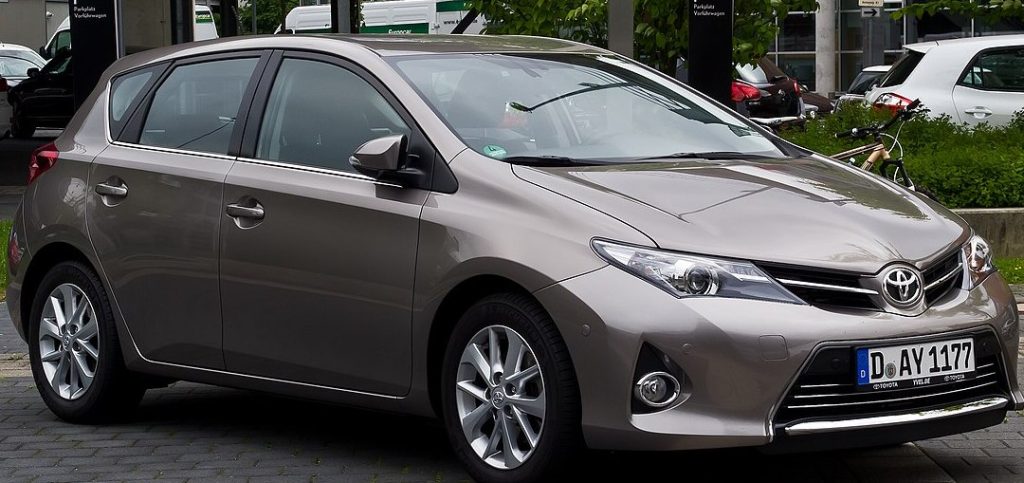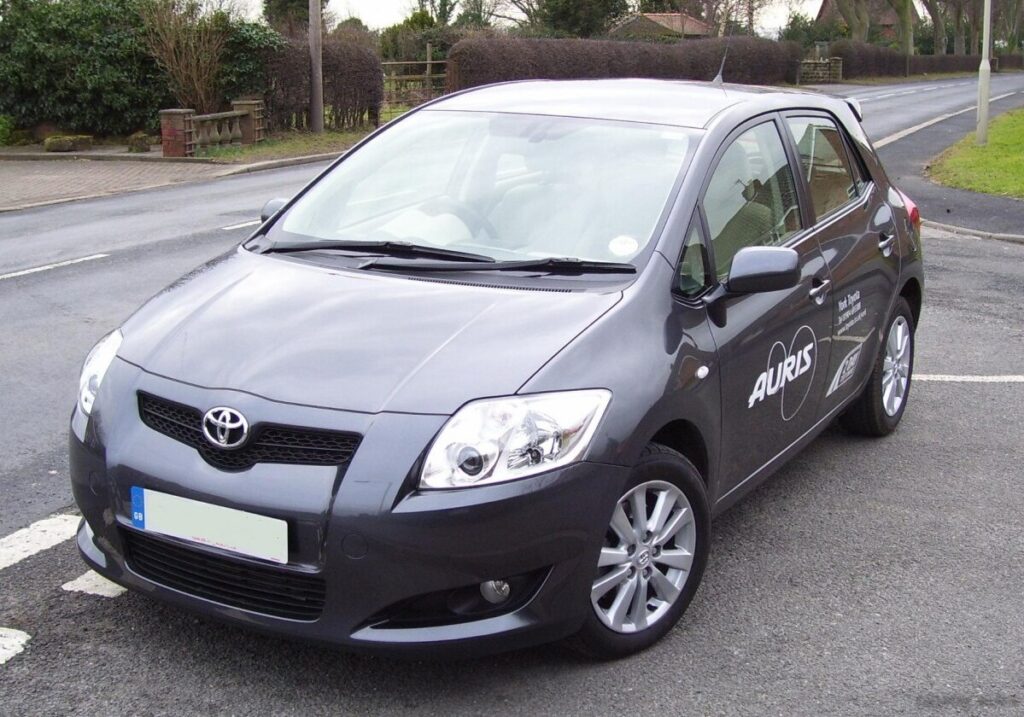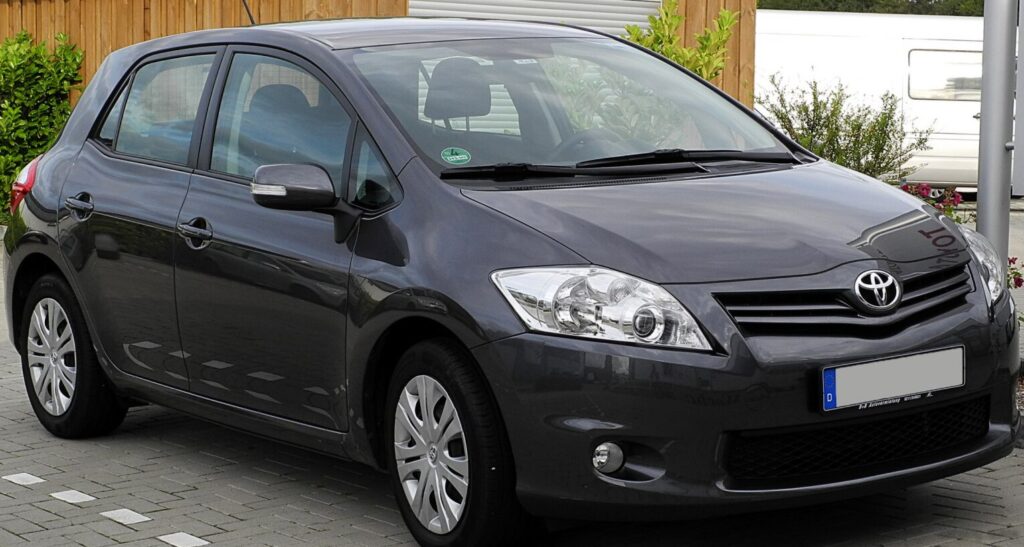
The Toyota Auris I (facelift, 2010-2012) 2.0 D-4D, producing 126 horsepower, represented a significant offering in the European compact hatchback segment. Introduced as part of the Auris’ mid-life refresh, this variant aimed to provide a balance of fuel efficiency, respectable performance, and practicality for buyers seeking a diesel-powered option. It sat within the first generation Auris (E150 series) which was Toyota’s attempt to create a more conventionally styled and sized hatchback to appeal to a broader European audience, replacing the more polarizing Yaris Verso and Corolla Hatchback. This specific 2.0 D-4D trim occupied a mid-range position in the Auris lineup, offering a step up in performance and refinement compared to the lower-powered 1.6-liter diesel and gasoline engines.
Technical Specifications
| Brand | Toyota |
| Model | Auris |
| Generation | Auris I (facelift 2010) |
| Type (Engine) | 2.0 D-4D (126 Hp) |
| Start of production | 2010 |
| End of production | 2012 |
| Powertrain Architecture | Internal Combustion engine |
| Body type | Hatchback |
| Seats | 5 |
| Doors | 5 |
| Fuel consumption (urban) | 6.5 l/100 km (36.2 US mpg, 43.5 UK mpg, 15.4 km/l) |
| Fuel consumption (extra urban) | 4.4 l/100 km (53.5 US mpg, 64.2 UK mpg, 22.7 km/l) |
| Fuel consumption (combined) | 5.2 l/100 km (45.2 US mpg, 54.3 UK mpg, 19.2 km/l) |
| Fuel Type | Diesel |
| Acceleration 0 – 100 km/h | 10.3 sec |
| Acceleration 0 – 62 mph | 10.3 sec |
| Acceleration 0 – 60 mph | 9.8 sec |
| Maximum speed | 195 km/h (121.17 mph) |
| Emission standard | Euro 5 |
| Weight-to-power ratio | 11 kg/Hp, 91 Hp/tonne |
| Weight-to-torque ratio | 4.6 kg/Nm, 216.6 Nm/tonne |
| Power | 126 Hp @ 3600 rpm |
| Power per litre | 63.1 Hp/l |
| Torque | 300 Nm @ 1800-2400 rpm (221.27 lb.-ft. @ 1800-2400 rpm) |
| Engine layout | Front, Transverse |
| Engine Model/Code | 1AD-FTV |
| Engine displacement | 1998 cm3 (121.93 cu. in.) |
| Number of cylinders | 4 |
| Engine configuration | Inline |
| Cylinder Bore | 86 mm (3.39 in.) |
| Piston Stroke | 86 mm (3.39 in.) |
| Compression ratio | 16.8:1 |
| Number of valves per cylinder | 4 |
| Fuel injection system | Diesel Commonrail |
| Engine aspiration | Turbocharger, Intercooler |
| Valvetrain | DOHC |
| Engine oil capacity | 6.3 l (6.66 US qt | 5.54 UK qt) |
| Coolant | 7.4 l (7.82 US qt | 6.51 UK qt) |
| Kerb Weight | 1385 kg (3053.4 lbs.) |
| Max. weight | 1890 kg (4166.74 lbs.) |
| Max load | 505 kg (1113.33 lbs.) |
| Trunk (boot) space – minimum | 354 l (12.5 cu. ft.) |
| Trunk (boot) space – maximum | 761 l (26.87 cu. ft.) |
| Fuel tank capacity | 55 l (14.53 US gal | 12.1 UK gal) |
| Length | 4245 mm (167.13 in.) |
| Width | 1760 mm (69.29 in.) |
| Height | 1515 mm (59.65 in.) |
| Wheelbase | 2600 mm (102.36 in.) |
| Front track | 1524 mm (60 in.) |
| Rear (Back) track | 1522 mm (59.92 in.) |
| Minimum turning circle | 10.2 m (33.46 ft.) |
| Drivetrain Architecture | Front wheel drive |
| Drive wheel | Front wheel drive |
| Number of gears | 6 gears, manual transmission |
| Front suspension | Independent type McPherson |
| Rear suspension | Torsion |
| Front brakes | Ventilated discs |
| Rear brakes | Disc |
| Assisting systems | ABS (Anti-lock braking system) |
| Steering type | Steering rack and pinion |
| Tires size | 195/65 R15 |
| Wheel rims size | 15 |
INTRODUCTION
The Toyota Auris I facelift, launched in 2010, represented a refinement of the original Auris introduced in 2006. The 2.0 D-4D variant, with its 126 horsepower output, was a key component of the lineup, aimed at buyers prioritizing fuel economy and torque for everyday driving and occasional longer journeys. Built on the E150 platform (shared with the Corolla), the Auris sought to offer a more modern and appealing alternative to traditional family hatchbacks. The facelift brought cosmetic updates, improved interior materials, and enhancements to the chassis for a more refined driving experience. This 2.0L diesel engine was positioned as a mid-range option, bridging the gap between the more economical 1.6L diesel and the more powerful, but also more expensive, petrol engines.
Powertrain & Engine Architecture
The heart of the Auris 2.0 D-4D is the 1AD-FTV engine, a 1.998-liter inline-four cylinder diesel. This engine utilizes a common-rail direct injection system, delivering fuel at extremely high pressure for improved combustion efficiency and reduced emissions. A turbocharger with an intercooler further enhances performance, providing increased air intake for greater power output. The engine features a double overhead camshaft (DOHC) valvetrain with four valves per cylinder, optimizing gas flow for improved efficiency. The 1AD-FTV engine is known for its robust construction and relatively simple design, contributing to its long-term reliability. The Auris 2.0 D-4D was exclusively offered with a six-speed manual transmission, designed to efficiently manage the engine’s torque output and contribute to fuel economy. The transmission’s gear ratios were tuned to provide a balance between acceleration and cruising efficiency.
Driving Characteristics
The Auris 2.0 D-4D offered a comfortable and practical driving experience. While not a performance-oriented vehicle, the 126 horsepower and 300 Nm (221 lb-ft) of torque provided ample power for everyday driving situations. Acceleration from 0-60 mph took around 9.8 seconds, and the car could reach a top speed of 195 km/h (121 mph). The engine’s torque was readily available from low RPMs, making it easy to navigate city traffic and execute overtaking maneuvers. Compared to the 1.6 D-4D, the 2.0 D-4D offered noticeably more power and responsiveness. However, it wasn’t as sporty or engaging as the higher-powered petrol variants. The six-speed manual transmission provided precise gear changes, and the clutch was relatively light and easy to operate. The suspension was tuned for comfort, absorbing bumps and imperfections in the road surface effectively.
Equipment & Trim Levels
The Auris 2.0 D-4D typically came equipped with a reasonable level of standard features. These included air conditioning, power windows, power mirrors, a CD player with auxiliary input, and ABS brakes. Higher trim levels, such as the ‘Icon’ or ‘Sport’, added features like alloy wheels, automatic climate control, a multi-function steering wheel, and upgraded interior trim. Optional extras included a touchscreen navigation system, rear parking sensors, and a panoramic sunroof. Interior upholstery was typically cloth, with higher trims offering partial leather options. The dashboard layout was functional and user-friendly, with clearly labeled controls and a straightforward instrument cluster.
Chassis & Braking
The Auris 2.0 D-4D utilized a McPherson strut front suspension and a torsion beam rear suspension. This setup provided a good balance between ride comfort and handling. The front brakes were ventilated discs, offering good stopping power, while the rear brakes were solid discs. ABS (Anti-lock Braking System) was standard, enhancing safety by preventing wheel lockup during hard braking. The steering was a rack and pinion system, providing precise and responsive steering feel. The car’s weight distribution was relatively balanced, contributing to its stable handling characteristics.
Market Reception & Comparison
The Toyota Auris 2.0 D-4D was generally well-received by automotive critics. It was praised for its fuel efficiency, comfortable ride, and reliable engine. However, some critics noted that the interior design was somewhat bland and that the driving experience wasn’t particularly exciting. Compared to rivals like the Volkswagen Golf and Ford Focus, the Auris offered a more affordable price point and a reputation for exceptional reliability. The 2.0 D-4D offered better fuel economy than the petrol engines, while providing more power than the 1.6 D-4D. Maintenance costs were generally reasonable, and the engine proved to be durable and long-lasting.
Legacy
The 1AD-FTV engine, found in the Auris 2.0 D-4D, has proven to be a remarkably reliable powertrain. With proper maintenance, these engines can easily exceed 200,000 miles. On the used car market, the Auris 2.0 D-4D remains a popular choice for buyers seeking a fuel-efficient and dependable compact hatchback. Its reputation for reliability and low running costs makes it an attractive option for those looking for a practical and affordable vehicle. While not a particularly sought-after model by enthusiasts, the Auris 2.0 D-4D represents a solid and dependable choice in the used car market, offering a good balance of practicality, efficiency, and reliability.