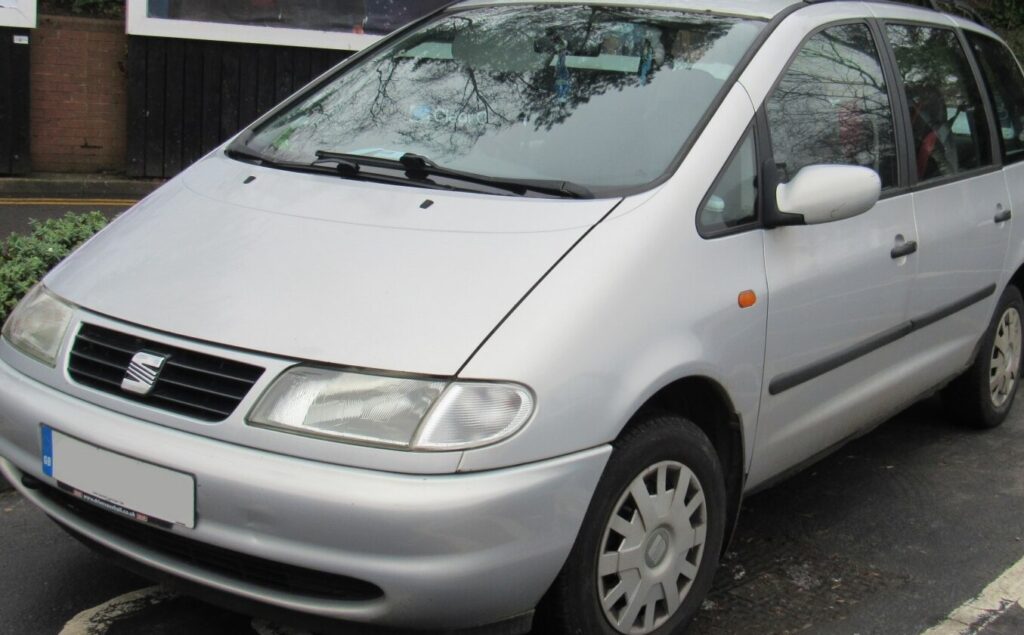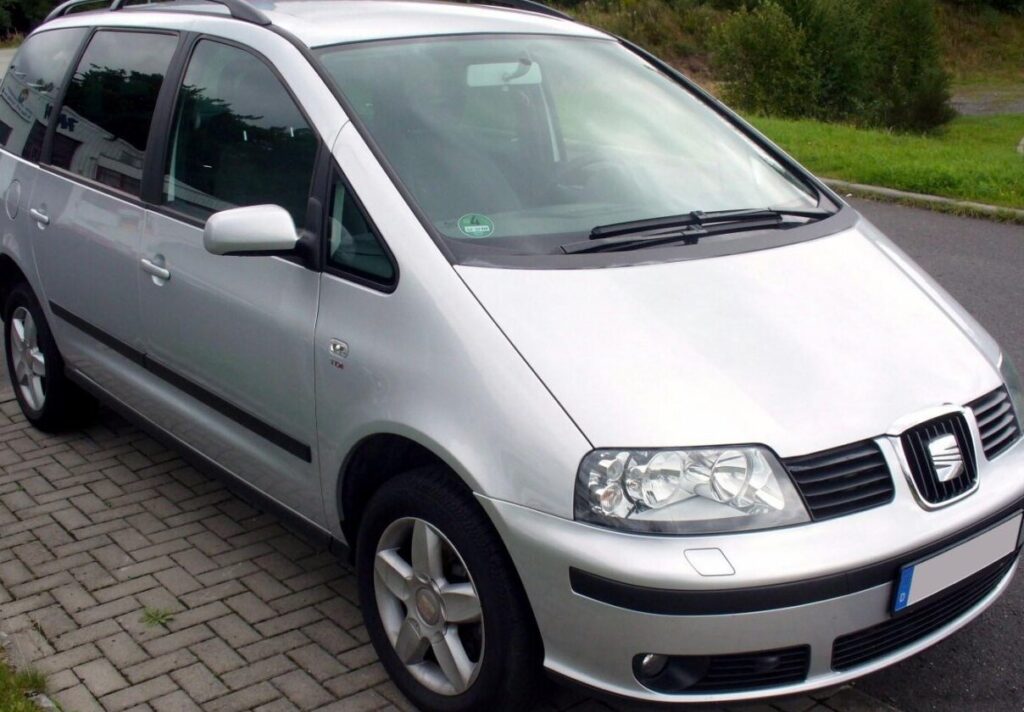
The Seat Alhambra I (7M), particularly the facelifted version introduced in 2000, represented Seat’s entry into the large MPV (Multi-Purpose Vehicle) segment. Produced from 2000 through 2010, this generation Alhambra was a collaborative effort with Volkswagen, sharing its platform and many components with the VW Sharan. The 2.8 V6 model, producing 204 horsepower, was positioned as the premium offering within the Alhambra range, appealing to buyers seeking more performance and refinement than the lower-powered four-cylinder options. It aimed to provide a spacious and versatile vehicle for families, combining practicality with a more engaging driving experience than typically found in this class.
Technical Specifications
| Brand | Seat |
| Model | Alhambra |
| Generation | Alhambra I (7M, facelift 2000) |
| Type (Engine) | 2.8 V6 (204 Hp) |
| Start of production | 2000 year |
| End of production | 2010 year |
| Powertrain Architecture | Internal Combustion engine |
| Body type | Minivan, MPV |
| Seats | 7 |
| Doors | 5 |
| Fuel consumption (economy) – urban (NEDC) | 14.5 l/100 km (16.2 US mpg, 19.5 UK mpg, 6.9 km/l) |
| Fuel consumption (economy) – extra urban (NEDC) | 8.2 l/100 km (28.7 US mpg, 34.4 UK mpg, 12.2 km/l) |
| Fuel consumption (economy) – combined (NEDC) | 10.5 l/100 km (22.4 US mpg, 26.9 UK mpg, 9.5 km/l) |
| CO2 emissions (NEDC) | 252 g/km |
| Fuel Type | Petrol (Gasoline) |
| Acceleration 0 – 100 km/h | 9.9 sec |
| Acceleration 0 – 62 mph | 9.9 sec |
| Acceleration 0 – 60 mph | 9.4 sec |
| Maximum speed | 217 km/h (134.84 mph) |
| Emission standard | Euro 4 |
| Weight-to-power ratio | 7.9 kg/Hp, 126 Hp/tonne |
| Weight-to-torque ratio | 6.1 kg/Nm, 163.7 Nm/tonne |
| Power | 204 Hp @ 6200 rpm |
| Power per litre | 73.1 Hp/l |
| Torque | 265 Nm @ 3400 rpm (195.45 lb.-ft. @ 3400 rpm) |
| Engine layout | Front, Transverse |
| Engine Model/Code | AYL, AUE |
| Engine displacement | 2792 cm3 (170.38 cu. in.) |
| Number of cylinders | 6 |
| Engine configuration | VR-engine |
| Cylinder Bore | 81 mm (3.19 in.) |
| Piston Stroke | 90.3 mm (3.56 in.) |
| Compression ratio | 10.5:1 |
| Number of valves per cylinder | 4 |
| Fuel injection system | Multi-port manifold injection |
| Engine aspiration | Naturally aspirated engine |
| Valvetrain | DOHC |
| Engine oil capacity | 5.5 l (5.81 US qt, 4.84 UK qt) |
| Coolant | 9 l (9.51 US qt, 7.92 UK qt) |
| Kerb Weight | 1619 kg (3569.28 lbs.) |
| Max. weight | 2470 kg (5445.42 lbs.) |
| Max load | 851 kg (1876.13 lbs.) |
| Trunk (boot) space – minimum | 256 l (9.04 cu. ft.) |
| Trunk (boot) space – maximum | 2610 l (92.17 cu. ft.) |
| Fuel tank capacity | 70 l (18.49 US gal, 15.4 UK gal) |
| Max. roof load | 75 kg (165.35 lbs.) |
| Permitted trailer load with brakes (12%) | 2000 kg (4409.25 lbs.) |
| Permitted trailer load without brakes | 700 kg (1543.24 lbs.) |
| Permitted towbar download | 85 kg (187.39 lbs.) |
| Length | 4634 mm (182.44 in.) |
| Width | 1810 mm (71.26 in.) |
| Height | 1762 mm (69.37 in.) |
| Wheelbase | 2835 mm (111.61 in.) |
| Front track | 1520 mm (59.84 in.) |
| Rear (Back) track | 1506 mm (59.29 in.) |
| Front overhang | 892 mm (35.12 in.) |
| Rear overhang | 907 mm (35.71 in.) |
| Drag coefficient (Cd) | 0.31 |
| Minimum turning circle (turning diameter) | 10.9 m (35.76 ft.) |
| Drivetrain Architecture | The Internal combustion engine (ICE) drives the front wheels of the vehicle. |
| Drive wheel | Front wheel drive |
| Number of gears and type of gearbox | 6 gears, manual transmission |
| Front suspension | Independent type McPherson, Transverse stabilizer |
| Rear suspension | Transverse stabilizer, Trailing arm, Coil spring |
| Front brakes | Ventilated discs |
| Rear brakes | Disc |
| Assisting systems | ABS (Anti-lock braking system) |
| Steering type | Steering rack and pinion |
| Power steering | Hydraulic Steering |
| Tires size | 225/45 R17 |
| Wheel rims size | 7J x 17 |
Powertrain & Engine Architecture
The heart of the Alhambra 2.8 V6 was the AYL or AUE engine code, a 2.8-liter naturally aspirated VR6 engine. This engine, a hallmark of Volkswagen Group vehicles of the era, featured a narrow-angle V6 configuration (15 degrees between cylinder banks) which allowed it to be packaged more compactly than a traditional V6. It utilized multi-port fuel injection and a double overhead camshaft (DOHC) valvetrain. The VR6 was known for its relatively smooth power delivery and distinctive exhaust note. The engine’s 2792 cc displacement, combined with a 10.5:1 compression ratio, produced 204 horsepower at 6200 rpm and 265 Nm (195 lb-ft) of torque at 3400 rpm. The Alhambra 2.8 V6 was typically paired with a 6-speed manual transmission, although automatic options were also available, though less common. The automatic transmission, a conventional torque converter type, offered smoother shifts but at the expense of some performance and fuel economy.
Driving Characteristics
The 2.8 V6 Alhambra offered a noticeable performance advantage over the lower-powered engine options. Acceleration to 60 mph took approximately 9.4 seconds, and it could reach a top speed of 134.84 mph. While not a sports car, the V6 provided ample power for overtaking and carrying a full load of passengers and luggage. The 6-speed manual transmission allowed drivers to keep the engine in its optimal power band, while the automatic, though less engaging, offered convenience. Compared to the 1.8L turbocharged or 1.9 TDI diesel variants, the V6 felt more refined and responsive, but it came with a penalty in fuel consumption. The Alhambra’s front-wheel-drive layout provided predictable handling, but it wasn’t particularly sporty. The suspension was tuned for comfort, prioritizing a smooth ride over sharp handling.
Equipment & Trim Levels
The 2.8 V6 Alhambra typically came with a higher level of standard equipment than the base models. This included features like alloy wheels, air conditioning, power windows and mirrors, a radio/CD player, and ABS brakes. Higher trim levels offered options such as leather upholstery, sunroof, upgraded audio systems, and parking sensors. The interior was generally well-built and spacious, with comfortable seating for seven passengers. The rear seats could be folded or removed to create a larger cargo area. The dashboard layout was functional and straightforward, typical of Volkswagen Group designs of the period.
Chassis & Braking
The Alhambra I utilized an independent McPherson strut suspension at the front and a trailing arm setup with coil springs at the rear. A transverse stabilizer bar was fitted to both axles to reduce body roll. Braking duties were handled by ventilated discs at the front and solid discs at the rear, providing adequate stopping power for the vehicle’s weight. ABS (Anti-lock Braking System) was standard, enhancing safety in emergency braking situations. The steering was a rack and pinion system with hydraulic power assistance, offering a reasonable level of feel and responsiveness.
Market Reception & Comparison
The Seat Alhambra 2.8 V6 was generally well-received by automotive critics, who praised its spacious interior, comfortable ride, and strong performance. However, its relatively high price and fuel consumption were often cited as drawbacks. Compared to the 1.8L turbo and 1.9 TDI models, the V6 offered more power and refinement but was significantly more expensive to run. The VW Sharan, being the closely related sibling, offered a similar experience, and buyers often chose between the two based on brand preference and available deals. Fuel economy was a significant concern, averaging around 22.4 US mpg in combined driving, and CO2 emissions were relatively high at 252 g/km.
Legacy
The Seat Alhambra I 2.8 V6, while not a high-volume seller, established Seat as a credible player in the MPV market. The VR6 engine, despite its thirst for fuel, proved to be relatively reliable when properly maintained. Today, these vehicles are becoming increasingly rare, and well-maintained examples are sought after by enthusiasts. Common issues include wear and tear on suspension components, potential oil leaks from the engine, and occasional problems with the electrical system. The Alhambra’s spacious interior and versatile configuration continue to appeal to families, and its distinctive styling has given it a cult following among some car enthusiasts. The 2.8 V6 variant, in particular, is remembered for its smooth power delivery and enjoyable driving experience.