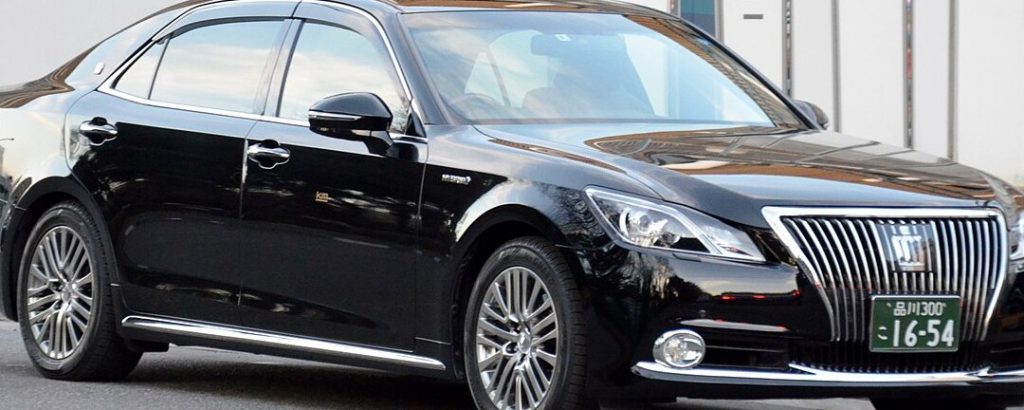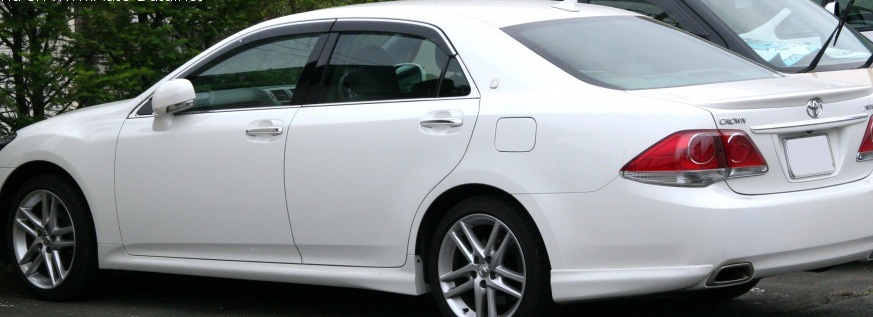
The Toyota Crown XIII Athlete (S200 series, facelifted in 2010) represents a significant iteration of Toyota’s flagship sedan, primarily aimed at the Japanese domestic market (JDM). Produced between 2010 and 2012, this variant distinguished itself with a focus on sporty styling and performance, appealing to a more discerning customer base than the standard Crown models. The S200 series, and particularly the Athlete trim, sought to blend traditional Crown luxury with a more dynamic driving experience. This specific configuration, featuring the 3.5-liter V6 engine paired with a six-speed automatic transmission, occupied the upper echelon of the Crown lineup, offering a compelling alternative to European luxury sedans within Japan.
Technical Specifications
| Brand | Toyota |
| Model | Crown |
| Generation | Crown XIII Athlete (S200, facelift 2010) |
| Type (Engine) | 3.5 V6 24V (315 Hp) Automatic |
| Start of production | 2010 |
| End of production | 2012 |
| Powertrain Architecture | Internal Combustion engine |
| Body type | Sedan |
| Seats | 5 |
| Doors | 4 |
| Fuel Type | Petrol (Gasoline) |
| Weight-to-power ratio | 5.2 kg/Hp, 190.9 Hp/tonne |
| Weight-to-torque ratio | 4.4 kg/Nm, 228.5 Nm/tonne |
| Power | 315 Hp @ 6400 rpm |
| Power per litre | 91.1 Hp/l |
| Torque | 377 Nm @ 4800 rpm (278.06 lb.-ft. @ 4800 rpm) |
| Engine layout | Front, Longitudinal |
| Engine Model/Code | 2GR-FSE |
| Engine displacement | 3456 cm3 (210.9 cu. in.) |
| Number of cylinders | 6 |
| Engine configuration | V-engine |
| Cylinder Bore | 94 mm (3.7 in.) |
| Piston Stroke | 83 mm (3.27 in.) |
| Number of valves per cylinder | 4 |
| Fuel injection system | Direct injection |
| Engine aspiration | Naturally aspirated engine |
| Valvetrain | DOHC |
| Engine oil capacity | 6.3 l (6.66 US qt | 5.54 UK qt) |
| Coolant | 9.2 l (9.72 US qt | 8.09 UK qt) |
| Kerb Weight | 1650 kg (3637.63 lbs.) |
| Max. weight | 1925 kg (4243.9 lbs.) |
| Max load | 275 kg (606.27 lbs.) |
| Fuel tank capacity | 71 l (18.76 US gal | 15.62 UK gal) |
| Length | 4870 mm (191.73 in.) |
| Width | 1795 mm (70.67 in.) |
| Height | 1470 mm (57.87 in.) |
| Wheelbase | 2850 mm (112.2 in.) |
| Front track | 1535 mm (60.43 in.) |
| Rear (Back) track | 1535 mm (60.43 in.) |
| Ride height (ground clearance) | 155 mm (6.1 in.) |
| Minimum turning circle (turning diameter) | 10.4 m (34.12 ft.) |
| Drivetrain Architecture | The Internal combustion engine (ICE) drives the rear wheels of the vehicle. |
| Drive wheel | Rear wheel drive |
| Number of gears and type of gearbox | 6 gears, automatic transmission |
| Front suspension | Double wishbone |
| Rear suspension | Independent multi-link suspension |
| Front brakes | Ventilated discs |
| Rear brakes | Disc |
| Assisting systems | ABS (Anti-lock braking system) |
| Steering type | Steering rack and pinion |
| Tires size | 225/45 R18 |
| Wheel rims size | 18 |
Powertrain & Engine Architecture
The heart of the Crown Athlete 3.5 was the 2GR-FSE engine, a 3.5-liter naturally aspirated V6. This engine was a member of Toyota’s GR family, known for its robust construction and relatively high output. The ‘FSE’ designation indicates the use of Toyota’s D-4S direct injection system, which combined direct and port fuel injection to optimize combustion efficiency and power delivery. The engine featured a dual overhead camshaft (DOHC) valvetrain with four valves per cylinder, contributing to its strong breathing characteristics. The six-speed automatic transmission, a common pairing for this engine, was designed to provide smooth and responsive shifts, although it prioritized comfort over outright performance. It was a conventional torque-converter automatic, offering a balance between efficiency and drivability.
Driving Characteristics
The 315 horsepower and 377 Nm (278 lb-ft) of torque delivered by the 2GR-FSE engine provided the Crown Athlete with brisk acceleration. While not a sports car, the combination of power and the rear-wheel-drive layout offered a more engaging driving experience than the standard Crown models. The automatic transmission, while smooth, could feel slightly hesitant during quick downshifts. Compared to the lower-powered 2.5-liter variants, the 3.5-liter Athlete offered a noticeable performance advantage, particularly in highway passing situations. The gear ratios were tuned for comfortable cruising, rather than maximizing acceleration in each gear. The rear-wheel drive configuration contributed to a balanced feel, although it wasn’t as agile as some contemporary front-wheel-drive competitors.
Equipment & Trim Levels
The Athlete trim level of the Crown XIII was well-equipped, reflecting its position as a premium offering. Standard features typically included leather upholstery, power-adjustable front seats, a premium audio system, automatic climate control, and woodgrain interior trim. The facelifted 2010 model often incorporated updated infotainment systems and safety features. Optional extras could include navigation systems, advanced driver-assistance systems (ADAS), and upgraded audio packages. The interior design emphasized luxury and comfort, with a focus on high-quality materials and a refined aesthetic.
Chassis & Braking
The Crown Athlete utilized a double wishbone suspension setup at the front and an independent multi-link suspension at the rear, providing a comfortable and controlled ride. The suspension was tuned to prioritize ride quality over outright handling sharpness. Braking duties were handled by ventilated discs at the front and solid discs at the rear, equipped with an Anti-lock Braking System (ABS) as standard. The braking performance was adequate for the vehicle’s weight and power, but not particularly sporty. The steering system employed a rack and pinion setup, offering reasonable precision and feedback.
Market Reception & Comparison
The Crown Athlete 3.5 V6 Automatic was generally well-received in the Japanese market. Critics praised its comfortable ride, spacious interior, and refined engine. However, some noted that the automatic transmission could feel slightly sluggish at times. Compared to the 2.5-liter Crown models, the 3.5 Athlete offered a significant performance upgrade, but at a higher price point. It also competed with other Japanese luxury sedans, such as the Nissan Fuga and the Honda Legend, as well as imported models like the BMW 5 Series and the Mercedes-Benz E-Class. Fuel economy was reasonable for a V6 engine of this size, but not class-leading.
Legacy
The Toyota Crown XIII Athlete 3.5 V6 Automatic remains a desirable used car in Japan, appreciated for its blend of luxury, performance, and reliability. The 2GR-FSE engine is known for its durability, and with proper maintenance, can provide many years of trouble-free service. While not as common outside of Japan, these Crowns are occasionally imported and sought after by enthusiasts. The S200 series Crown Athlete represents a high point in the Crown’s evolution, successfully combining traditional Japanese luxury with a more modern and dynamic driving experience. Its continued presence on Japanese roads is a testament to its enduring quality and appeal.