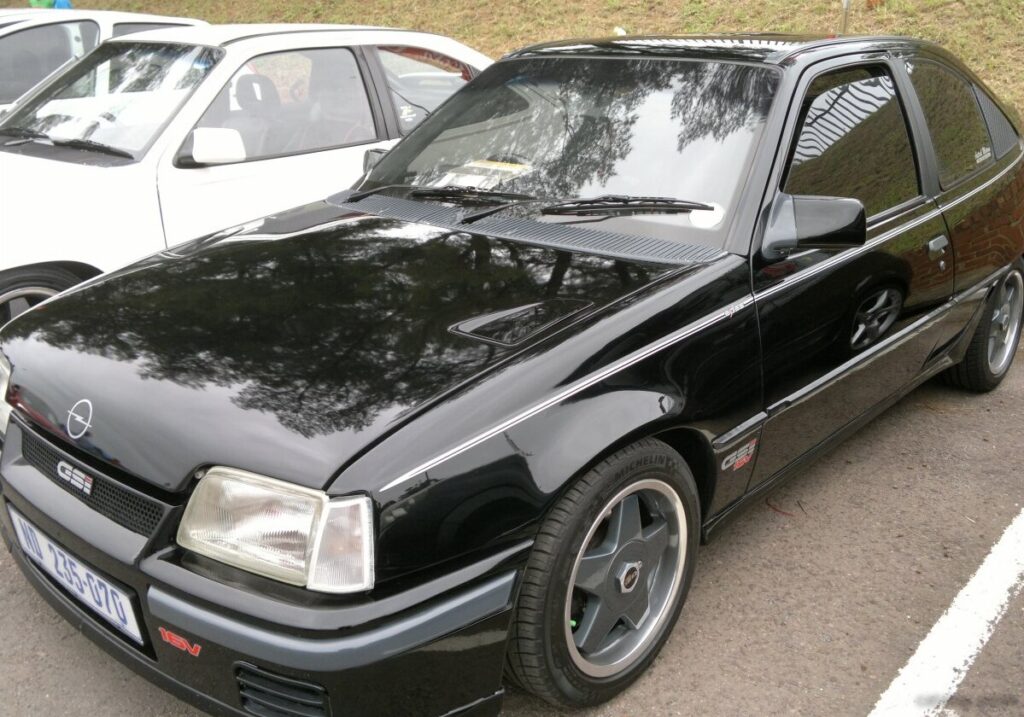
The Opel Kadett E CC 2.0 GSI 16V CAT, produced between 1988 and 1991, represented the performance pinnacle of the Kadett E range. Positioned as the hot hatch variant, the GSI 16V offered a significant step up in power and handling compared to lower-spec Kadett models. It was a key competitor in the European market, appealing to drivers seeking an affordable yet engaging driving experience. The “CC” designation signifies the *Coupé Cabriolet* body style, though it’s commonly understood as the 3-door hatchback configuration. This model was built on the T-platform (also known as the 1HX0/A3 platform) shared with other General Motors products of the era.
Technical Specifications
| Brand | Opel |
| Model | Kadett |
| Generation | Kadett E CC |
| Type (Engine) | 2.0 GSI 16V CAT (156 Hp) |
| Start of production | 1988 |
| End of production | 1991 |
| Powertrain Architecture | Internal Combustion engine |
| Body type | Hatchback |
| Seats | 5 |
| Doors | 3-5 |
| Fuel Type | Petrol (Gasoline) |
| Acceleration 0 – 100 km/h | 8 sec |
| Acceleration 0 – 62 mph | 8 sec |
| Acceleration 0 – 60 mph | 7.6 sec |
| Maximum speed | 217 km/h (134.84 mph) |
| Weight-to-power ratio | 6.5 kg/Hp, 154.5 Hp/tonne |
| Weight-to-torque ratio | 5.2 kg/Nm, 194.1 Nm/tonne |
| Power | 156 Hp @ 6000 rpm |
| Power per litre | 78.1 Hp/l |
| Torque | 196 Nm @ 4800 rpm (144.56 lb.-ft. @ 4800 rpm) |
| Engine layout | Front, Transverse |
| Engine Model/Code | 20XE |
| Engine displacement | 1998 cm3 (121.93 cu. in.) |
| Number of cylinders | 4 |
| Engine configuration | Inline |
| Cylinder Bore | 86 mm (3.39 in.) |
| Piston Stroke | 86 mm (3.39 in.) |
| Compression ratio | 10.5:1 |
| Number of valves per cylinder | 4 |
| Fuel injection system | Multi-port manifold injection |
| Engine aspiration | Naturally aspirated engine |
| Valvetrain | DOHC |
| Engine oil capacity | 4.5 l (4.76 US qt | 3.96 UK qt) |
| Coolant | 6.9 l (7.29 US qt | 6.07 UK qt) |
| Kerb Weight | 1010 kg (2226.67 lbs) |
| Max. weight | 1490 kg (3284.89 lbs) |
| Max load | 480 kg (1058.22 lbs) |
| Trunk (boot) space – minimum | 485 l (17.13 cu. ft.) |
| Trunk (boot) space – maximum | 1385 l (48.91 cu. ft.) |
| Fuel tank capacity | 52 l (13.74 US gal | 11.44 UK gal) |
| Length | 3998 mm (157.4 in.) |
| Width | 1669 mm (65.71 in.) |
| Height | 1395 mm (54.92 in.) |
| Wheelbase | 2520 mm (99.21 in.) |
| Front track | 1406 mm (55.35 in.) |
| Rear (Back) track | 1406 mm (55.35 in.) |
| Minimum turning circle | 10.5 m (34.45 ft.) |
| Drivetrain Architecture | The Internal combustion engine (ICE) drives the front wheels of the vehicle. |
| Drive wheel | Front wheel drive |
| Number of gears and type of gearbox | 5 gears, manual transmission |
| Front brakes | Ventilated discs |
| Rear brakes | Disc |
Powertrain & Engine Architecture
The heart of the Kadett E GSI 16V was the 20XE engine, a 2.0-liter inline-four cylinder powerplant. This engine was a significant upgrade over the standard Kadett engines, featuring a dual overhead camshaft (DOHC) valvetrain with four valves per cylinder. This configuration allowed for improved breathing and higher revs, contributing to the engine’s increased power output. The 20XE utilized Bosch Motronic fuel injection, a sophisticated system for its time, ensuring precise fuel delivery and optimized combustion. The catalytic converter (“CAT” in the model name) was standard equipment, reflecting increasing environmental regulations in Europe. The engine was transversely mounted, driving the front wheels. The five-speed manual transmission was the only gearbox option available, chosen for its direct connection to the engine and enhanced driving experience.
Driving Characteristics
The 2.0 GSI 16V offered a noticeably more engaging driving experience than its less powerful siblings. The 156 horsepower output, while modest by modern standards, provided brisk acceleration – approximately 7.6 seconds to 60 mph – and a top speed of around 135 mph. The five-speed manual transmission allowed drivers to keep the engine in its optimal power band. Gear ratios were well-chosen for spirited driving, providing good acceleration in each gear. Compared to the 1.6-liter or diesel Kadett models, the GSI 16V felt significantly more responsive and capable. While not as refined as some of its rivals, such as the Volkswagen Golf GTI, the Kadett GSI offered a raw and enjoyable driving experience.
Equipment & Trim Levels
The Kadett E GSI 16V came reasonably well-equipped for its price point. Standard features typically included sports seats with upgraded upholstery, a leather-wrapped steering wheel, and a more comprehensive instrument cluster. Exterior features included a distinctive body kit with a rear spoiler, side skirts, and unique alloy wheels. Optional extras included power windows, central locking, and an upgraded sound system. The interior trim was generally functional and durable, reflecting the Kadett’s focus on practicality. The GSI trim level was the highest available on the Kadett E, signifying its performance-oriented nature.
Chassis & Braking
The Kadett E GSI 16V featured a MacPherson strut front suspension and a torsion beam rear suspension. The suspension was tuned for a balance between comfort and handling, providing a reasonably compliant ride while minimizing body roll during cornering. Braking duties were handled by ventilated disc brakes at the front and solid discs at the rear. The braking system was adequate for the car’s performance, but lacked the sophistication of some competitors. Stabilizer bars were fitted front and rear to further reduce body roll and improve handling.
Market Reception & Comparison
The Kadett E GSI 16V was generally well-received by automotive critics. It was praised for its performance, handling, and affordability. However, some critics noted its relatively basic interior and lack of refinement compared to rivals like the Golf GTI and Ford Escort RS2000. Fuel economy was reasonable for a performance car of the era, averaging around 28-32 mpg. Reliability was generally good, although the 20XE engine could be prone to oil leaks if not properly maintained. Compared to the lower-spec Kadett models, the GSI 16V offered a significant performance upgrade, but at a higher price point.
Legacy
The Opel Kadett E GSI 16V has become a sought-after classic among enthusiasts. The 20XE engine is known for its durability and tunability, making it a popular choice for engine swaps and modifications. Well-maintained examples are becoming increasingly rare and valuable. The Kadett GSI 16V represents a significant chapter in Opel’s history, showcasing the brand’s ability to produce affordable and engaging performance cars. Today, it’s remembered as a fun-to-drive and relatively reliable hot hatch that offered a compelling alternative to more established rivals.