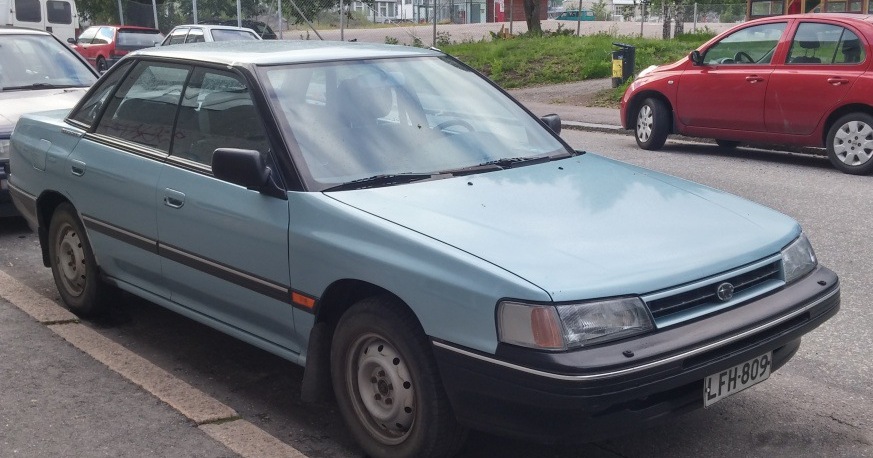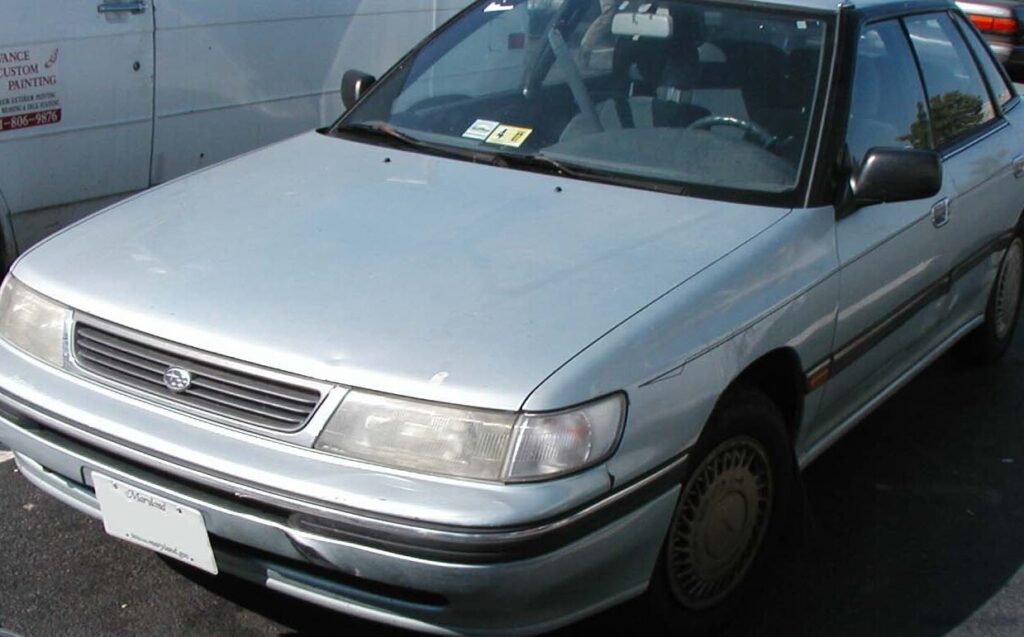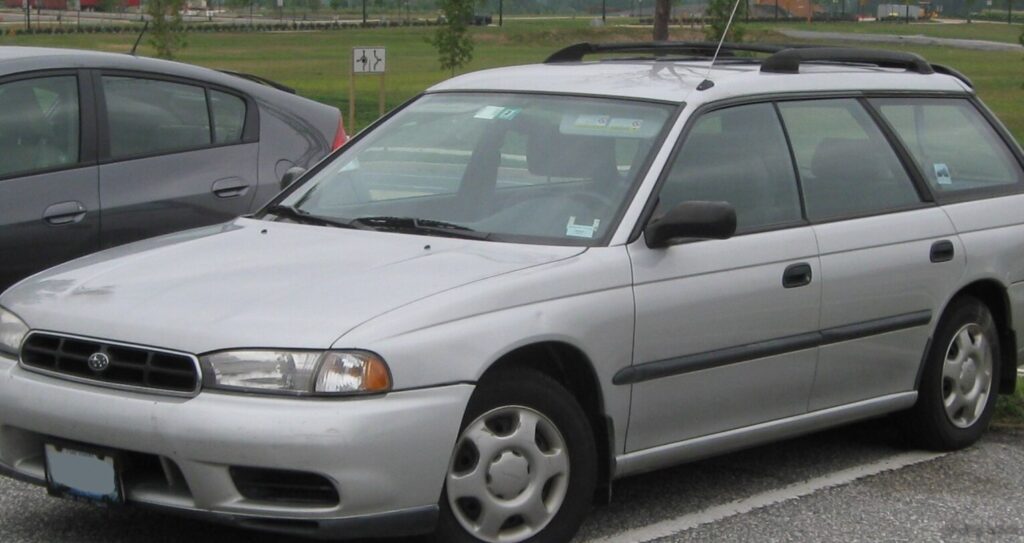
The Subaru Legacy II Station Wagon, internally designated as the BD and BG series, represented Subaru’s second-generation offering in the mid-size wagon segment. Produced between 1993 and 1998, this generation built upon the success of the original Legacy, offering increased refinement, safety features, and a broader range of engine and drivetrain options. The 2.0-liter (116 hp) AWD Automatic variant occupied a central position within the lineup, appealing to buyers seeking a practical, all-weather vehicle with a comfortable driving experience. It was primarily marketed in Japan, Europe, and Australia, with limited sales in North America where the sedan version was more popular.
Technical Specifications
| Brand | Subaru |
| Model | Legacy |
| Generation | Legacy II Station Wagon (BD,BG) |
| Type (Engine) | 2.0 (116 Hp) AWD Automatic |
| Start of production | 1993 |
| End of production | 1998 |
| Powertrain Architecture | Internal Combustion engine |
| Body type | Station wagon (estate) |
| Seats | 5 |
| Doors | 5 |
| Fuel consumption (combined) | 9.2 l/100 km (25.6 US mpg, 30.7 UK mpg, 10.9 km/l) |
| Fuel Type | Petrol (Gasoline) |
| Acceleration 0 – 100 km/h | 12 sec |
| Acceleration 0 – 62 mph | 12 sec |
| Acceleration 0 – 60 mph | 11.4 sec |
| Weight-to-power ratio | 12.2 kg/Hp, 82 Hp/tonne |
| Weight-to-torque ratio | 8.3 kg/Nm, 120.1 Nm/tonne |
| Power | 116 Hp @ 5600 rpm |
| Power per litre | 58.2 Hp/l |
| Torque | 170 Nm @ 4000 rpm (125.39 lb.-ft. @ 4000 rpm) |
| Engine layout | Front, Longitudinal |
| Engine Model/Code | EJ20 |
| Engine displacement | 1994 cm3 (121.68 cu. in.) |
| Number of cylinders | 4 |
| Engine configuration | Boxer |
| Cylinder Bore | 92 mm (3.62 in.) |
| Piston Stroke | 75 mm (2.95 in.) |
| Compression ratio | 9.5:1 |
| Number of valves per cylinder | 4 |
| Fuel injection system | Multi-port manifold injection |
| Engine aspiration | Naturally aspirated engine |
| Valvetrain | SOHC |
| Engine oil capacity | 4 l (4.23 US qt | 3.52 UK qt) |
| Coolant capacity | 6 l (6.34 US qt | 5.28 UK qt) |
| Kerb Weight | 1415 kg (3119.54 lbs.) |
| Max. weight | 1870 kg (4122.64 lbs.) |
| Max load | 455 kg (1003.1 lbs.) |
| Trunk (boot) space – minimum | 488 l (17.23 cu. ft.) |
| Trunk (boot) space – maximum | 700 l (24.72 cu. ft.) |
| Fuel tank capacity | 60 l (15.85 US gal | 13.2 UK gal) |
| Max. roof load | 100 kg (220.46 lbs.) |
| Permitted trailer load with brakes (12%) | 1600 kg (3527.4 lbs.) |
| Permitted trailer load without brakes | 455 kg (1003.1 lbs.) |
| Length | 4670 mm (183.86 in.) |
| Width | 1695 mm (66.73 in.) |
| Height | 1490 mm (58.66 in.) |
| Wheelbase | 2630 mm (103.54 in.) |
| Front track | 1460 mm (57.48 in.) |
| Rear (Back) track | 1455 mm (57.28 in.) |
| Drive wheel | All wheel drive (4×4) |
| Number of gears and type of gearbox | 4 gears, automatic transmission |
| Front suspension | Wishbone |
| Rear suspension | Several levers and rods |
| Front brakes | Ventilated discs |
| Rear brakes | Drum |
| Assisting systems | ABS (Anti-lock braking system) |
| Steering type | Steering rack and pinion |
| Power steering | Hydraulic Steering |
| Tires size | 195/60 R15H |
| Wheel rims size | 15 |
Powertrain & Engine Architecture
The heart of this Legacy variant was the EJ20 engine, a 2.0-liter naturally aspirated, horizontally-opposed (boxer) four-cylinder. Subaru’s boxer engine design, with its pistons moving horizontally, offered inherent balance and a low center of gravity, contributing to the car’s stability. The EJ20 featured a single overhead camshaft (SOHC) valvetrain operating four valves per cylinder. Fuel delivery was managed by a multi-port fuel injection system. This engine produced 116 horsepower at 5600 rpm and 170 Nm (125 lb-ft) of torque at 4000 rpm. The engine was paired with a four-speed automatic transmission, designed for smooth and convenient operation. This transmission featured electronically controlled torque converter lock-up for improved fuel efficiency at highway speeds.
Driving Characteristics
The 2.0-liter automatic Legacy wagon offered a comfortable and predictable driving experience. Acceleration was adequate for everyday driving, with a 0-60 mph time of around 11.4 seconds. However, it wasn’t a particularly sporty performer compared to the manual transmission versions or those equipped with the more powerful 2.2-liter engine. The automatic transmission’s gear ratios were tuned for fuel economy and smooth cruising rather than aggressive acceleration. The all-wheel-drive system provided excellent traction in various weather conditions, making it a capable vehicle for year-round use. The boxer engine’s low center of gravity contributed to stable handling, although the suspension was tuned more for comfort than outright sportiness.
Equipment & Trim Levels
The 2.0-liter AWD Automatic Legacy wagon typically came with a reasonable level of standard equipment. This included power windows, power locks, air conditioning, and an AM/FM stereo. Interior upholstery was typically cloth, with a practical and durable design. Higher trim levels, available as options, could add features such as a sunroof, upgraded audio systems, and alloy wheels. The dashboard layout was functional and straightforward, prioritizing ease of use. Optional extras included leather upholstery, cruise control, and a rear wiper.
Chassis & Braking
The Legacy II wagon utilized a MacPherson strut front suspension and a multi-link rear suspension, providing a comfortable ride and reasonable handling. The front brakes were ventilated discs, offering good stopping power, while the rear brakes were drums. This configuration was typical for vehicles in this weight class during the mid-1990s. Anti-lock braking system (ABS) was standard, enhancing safety by preventing wheel lockup during hard braking. The steering was rack-and-pinion with hydraulic power assistance, providing light and precise steering feel.
Market Reception & Comparison
The 2.0-liter automatic Legacy wagon was generally well-received by critics as a practical and reliable family vehicle. It was praised for its all-wheel-drive system, comfortable ride, and spacious interior. However, some reviewers noted that the engine lacked the power of some competitors, and the automatic transmission could feel somewhat sluggish. Compared to the manual transmission versions, the automatic offered less engaging driving experience. Compared to the 2.2-liter models, it offered lower running costs but sacrificed performance. Fuel economy was respectable for its class, averaging around 25.6 US mpg in combined driving.
Legacy
The EJ20 engine, in its various iterations, proved to be a durable and reliable powerplant. The four-speed automatic transmission, while not the most technologically advanced, also demonstrated good longevity. Today, well-maintained examples of the Legacy II wagon with the 2.0-liter automatic are relatively common in the used car market. They are often sought after by buyers looking for an affordable, all-weather vehicle with a reputation for reliability. Common issues include age-related wear and tear on suspension components and potential oil leaks from the valve cover gaskets. However, parts availability is generally good, and the relatively simple mechanical design makes it a relatively easy vehicle to maintain.