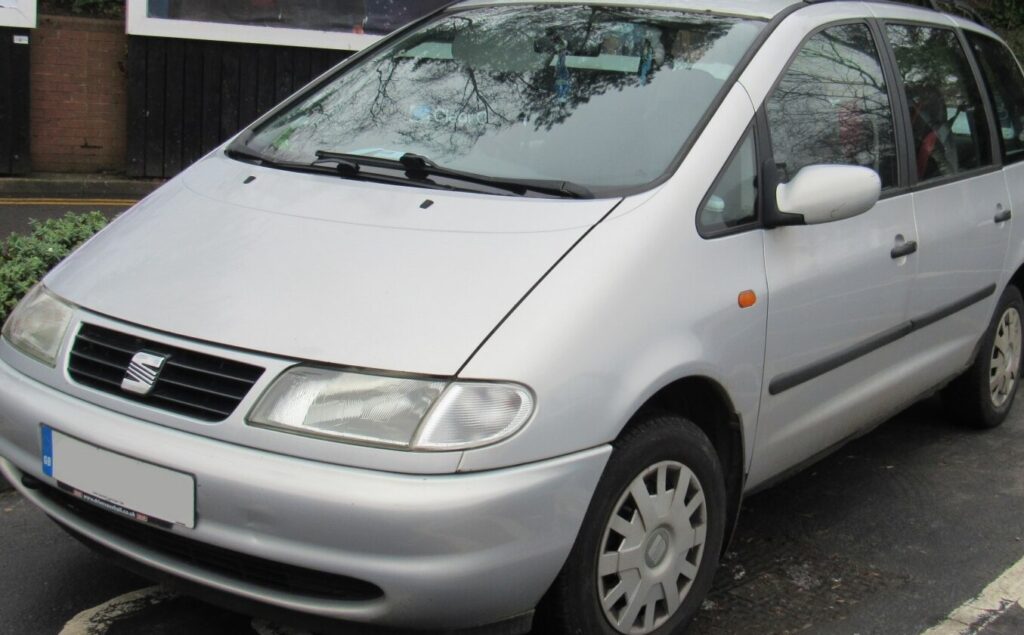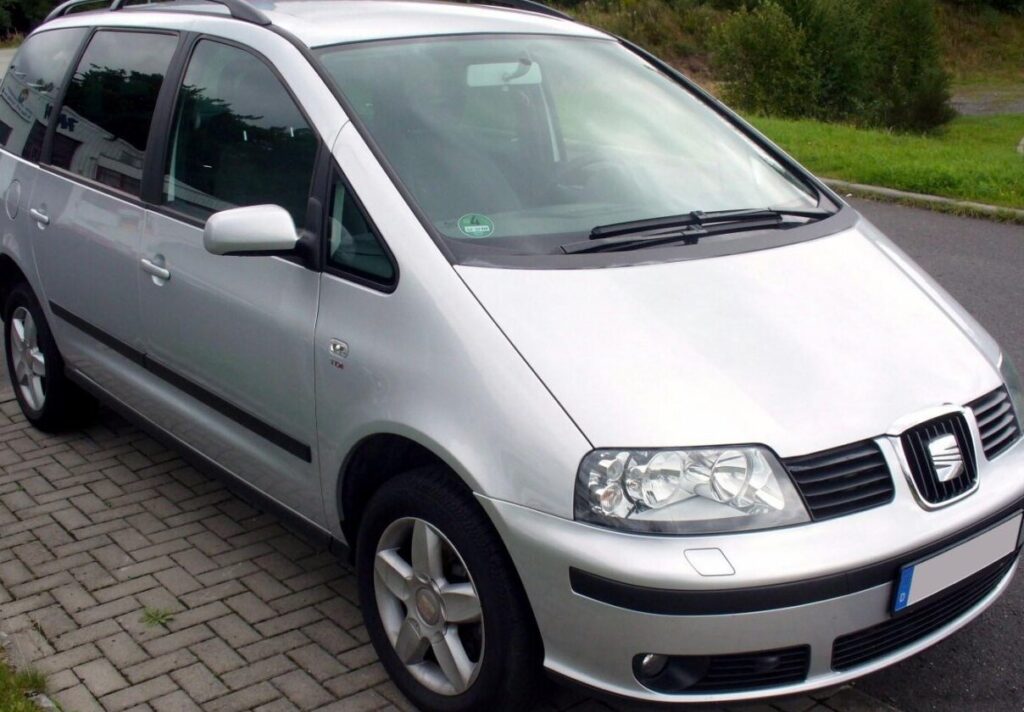
The Seat Alhambra I (7M), particularly the facelifted version introduced in 2000, represented Seat’s entry into the large MPV (Multi-Purpose Vehicle) segment. Produced from 2000 through 2010, this generation Alhambra was a collaborative effort with Ford, sharing its platform and many components with the Ford Galaxy. The 2.8 V6 Tiptronic variant, equipped with a 204 horsepower engine and a five-speed automatic transmission, occupied the premium end of the Alhambra lineup, offering a blend of performance and convenience aimed at families needing space and comfort. It was positioned above the lower-powered four-cylinder options and served as an alternative to the diesel variants, appealing to buyers who preferred the smoothness and responsiveness of a V6 gasoline engine.
Technical Specifications
| Brand | Seat |
| Model | Alhambra |
| Generation | Alhambra I (7M, facelift 2000) |
| Type (Engine) | 2.8 V6 (204 Hp) Tiptronic |
| Start of production | 2000 |
| End of production | 2010 |
| Powertrain Architecture | Internal Combustion engine |
| Body type | Minivan, MPV |
| Seats | 7 |
| Doors | 5 |
| Fuel consumption (urban) | 16.2 l/100 km (14.5 US mpg, 17.4 UK mpg, 6.2 km/l) |
| Fuel consumption (extra urban) | 8.6 l/100 km (27.4 US mpg, 32.8 UK mpg, 11.6 km/l) |
| Fuel consumption (combined) | 11.4 l/100 km (20.6 US mpg, 24.8 UK mpg, 8.8 km/l) |
| CO2 emissions | 274 g/km |
| Fuel Type | Petrol (Gasoline) |
| Acceleration 0 – 100 km/h | 10.4 sec |
| Acceleration 0 – 62 mph | 10.4 sec |
| Acceleration 0 – 60 mph | 9.9 sec |
| Maximum speed | 212 km/h (131.73 mph) |
| Emission standard | Euro 4 |
| Weight-to-power ratio | 8.1 kg/Hp, 123.5 Hp/tonne |
| Weight-to-torque ratio | 6.2 kg/Nm, 160.4 Nm/tonne |
| Power | 204 Hp @ 6200 rpm |
| Power per litre | 73.1 Hp/l |
| Torque | 265 Nm @ 3400 rpm (195.45 lb.-ft. @ 3400 rpm) |
| Engine layout | Front, Transverse |
| Engine Model/Code | AYL, AUE |
| Engine displacement | 2792 cm3 (170.38 cu. in.) |
| Number of cylinders | 6 |
| Engine configuration | VR-engine |
| Cylinder Bore | 81 mm (3.19 in.) |
| Piston Stroke | 90.3 mm (3.56 in.) |
| Compression ratio | 10.5:1 |
| Number of valves per cylinder | 4 |
| Fuel injection system | Multi-port manifold injection |
| Engine aspiration | Naturally aspirated engine |
| Valvetrain | DOHC |
| Engine oil capacity | 5.5 l (5.81 US qt, 4.84 UK qt) |
| Coolant capacity | 9 l (9.51 US qt, 7.92 UK qt) |
| Kerb Weight | 1652 kg (3642.04 lbs.) |
| Max. weight | 2470 kg (5445.42 lbs.) |
| Max load | 818 kg (1803.38 lbs.) |
| Trunk (boot) space – minimum | 256 l (9.04 cu. ft.) |
| Trunk (boot) space – maximum | 2610 l (92.17 cu. ft.) |
| Fuel tank capacity | 70 l (18.49 US gal, 15.4 UK gal) |
| Max. roof load | 75 kg (165.35 lbs.) |
| Permitted trailer load (braked) | 2000 kg (4409.25 lbs.) |
| Permitted trailer load (unbraked) | 700 kg (1543.24 lbs.) |
| Permitted towbar download | 85 kg (187.39 lbs.) |
| Length | 4634 mm (182.44 in.) |
| Width | 1810 mm (71.26 in.) |
| Height | 1762 mm (69.37 in.) |
| Wheelbase | 2835 mm (111.61 in.) |
| Front track | 1532 mm (60.31 in.) |
| Rear track | 1518 mm (59.76 in.) |
| Front overhang | 892 mm (35.12 in.) |
| Rear overhang | 907 mm (35.71 in.) |
| Drag coefficient (Cd) | 0.31 |
| Minimum turning circle | 10.9 m (35.76 ft.) |
| Drivetrain | Front wheel drive |
| Gearbox | 5 gears, automatic transmission Tiptronic |
| Front suspension | Independent type McPherson, Transverse stabilizer |
| Rear suspension | Transverse stabilizer, Trailing arm, Coil spring |
| Front brakes | Ventilated discs |
| Rear brakes | Disc |
| Assisting systems | ABS (Anti-lock braking system) |
| Steering type | Steering rack and pinion |
| Power steering | Hydraulic |
| Tires size | 215/55 R16 |
| Wheel rims size | 7J x 16 |
INTRODUCTION
The Seat Alhambra I, facelifted in 2000, was a significant model for the Spanish automaker, marking its serious attempt to compete in the burgeoning MPV market. Built on the Volkswagen Group’s PL45 (1HX0) platform – shared with the VW Sharan and Ford Galaxy – the Alhambra offered seven-seat capacity, a spacious interior, and a range of engines. The 2.8 V6 Tiptronic variant, produced from 2000 to 2010, was the top-of-the-line offering in terms of engine performance, providing a more refined and powerful driving experience compared to the four-cylinder options. It catered to buyers who prioritized comfort and performance alongside the practicality of a large family vehicle.
Powertrain & Engine Architecture
The heart of the Alhambra 2.8 V6 Tiptronic is the Volkswagen Group’s AYL or AUE engine code, a 2.8-liter naturally aspirated VR6 engine. This engine is characterized by its narrow V-angle (15 degrees), which allows it to be packaged more compactly than a traditional V6. The engine utilizes multi-port fuel injection and a double overhead camshaft (DOHC) valvetrain, contributing to its smooth power delivery. The ‘Tiptronic’ transmission is a five-speed automatic gearbox offering both fully automatic operation and a manual shift mode, allowing the driver some control over gear selection. This transmission was known for its relatively smooth shifts, though not as sporty as some contemporary automatic transmissions. The engine’s design prioritized refinement and usability over outright performance, making it well-suited to the demands of a family MPV.
Driving Characteristics
The 2.8 V6 Tiptronic Alhambra offered a noticeable performance advantage over its four-cylinder counterparts. The 204 horsepower and 265 Nm (195 lb-ft) of torque provided ample power for fully loaded family trips, even with a car full of passengers and luggage. While not a sports car, the Alhambra V6 could accelerate from 0 to 60 mph in around 9.9 seconds and reach a top speed of 131.73 mph. The Tiptronic transmission, while convenient, did slightly diminish acceleration compared to a manual transmission due to inherent torque converter losses. Gear ratios were tuned for comfortable cruising and effortless overtaking, rather than maximizing fuel efficiency. The VR6 engine provided a smooth and refined driving experience, with minimal vibration and a pleasing exhaust note.
Equipment & Trim Levels
The 2.8 V6 Tiptronic trim typically came well-equipped, reflecting its position as the premium variant. Standard features often included air conditioning, power windows and mirrors, central locking, an upgraded audio system, and alloy wheels. Higher trim levels offered options such as leather upholstery, sunroof, rear parking sensors, and upgraded infotainment systems. Interior upholstery was typically cloth or a combination of cloth and leatherette, with a dashboard layout designed for functionality and ease of use. The spacious interior was a key selling point, with flexible seating arrangements allowing for various configurations to maximize cargo space.
Chassis & Braking
The Alhambra’s chassis was designed to provide a comfortable and stable ride. Front suspension utilized an independent McPherson strut setup, while the rear employed a trailing arm configuration with coil springs. A transverse stabilizer bar was fitted to both axles to reduce body roll during cornering. Braking duties were handled by ventilated discs at the front and solid discs at the rear, with ABS (Anti-lock Braking System) as standard. The suspension tuning prioritized comfort over sporty handling, resulting in a ride that was well-suited to long journeys and varied road conditions. The steering was hydraulic power-assisted, providing light and easy steering feel.
Market Reception & Comparison
The Alhambra 2.8 V6 Tiptronic received generally positive reviews, with critics praising its spacious interior, comfortable ride, and refined engine. However, fuel economy was often cited as a drawback, with the V6 engine consuming significantly more fuel than the diesel or four-cylinder options. Compared to the 1.9 TDI diesel variant, the V6 offered more power and refinement but at the cost of significantly higher fuel bills. The V6 was also generally more expensive to maintain due to the complexity of the engine and the potential for higher repair costs. Despite these drawbacks, the Alhambra 2.8 V6 Tiptronic appealed to buyers who prioritized performance and comfort over fuel efficiency.
Legacy
The Seat Alhambra 2.8 V6 Tiptronic, while not a high-volume seller, has developed a loyal following among enthusiasts who appreciate its blend of practicality, performance, and refinement. The VR6 engine is known for its durability, although regular maintenance is crucial to prevent issues. On the used car market, these models tend to hold their value reasonably well, particularly those that have been well-maintained. Common issues include wear and tear on the automatic transmission and potential oil leaks from the engine. However, with proper care, the Alhambra 2.8 V6 Tiptronic remains a capable and comfortable MPV, offering a unique alternative to more mainstream family vehicles.