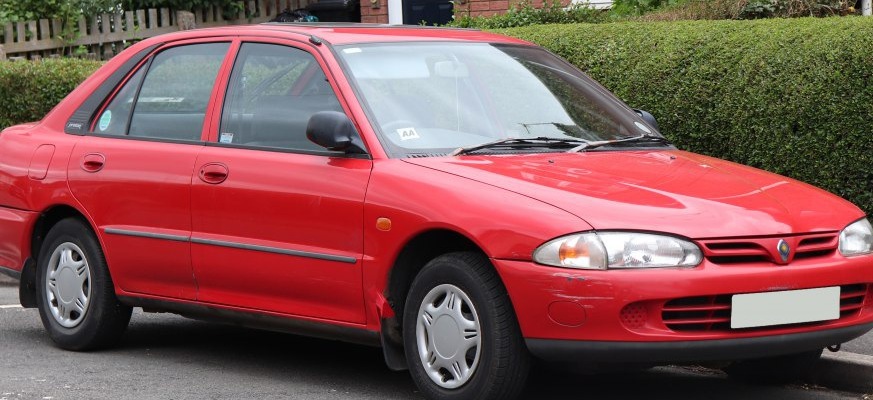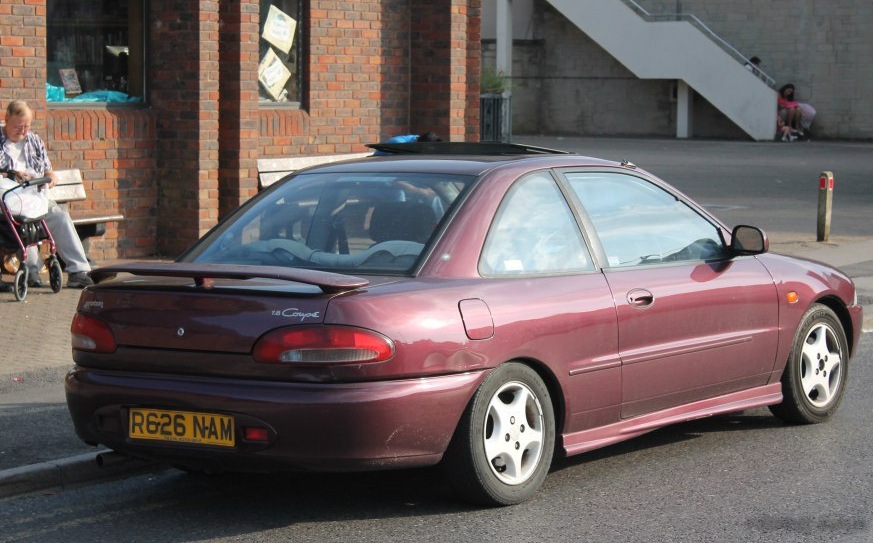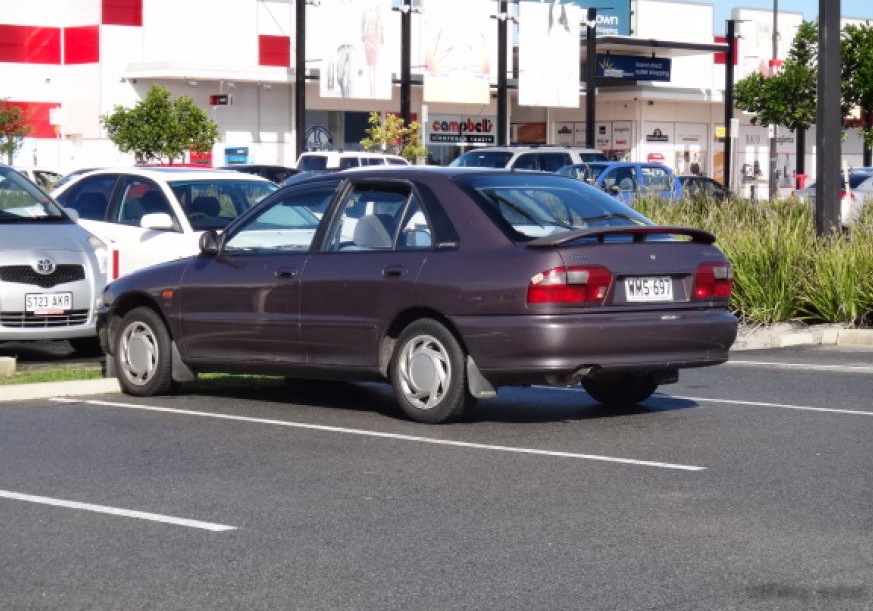
The Proton Persona I Hatchback 2.0 D (420 D), producing 65 horsepower, was a significant model for Proton, Malaysia’s national car manufacturer. Introduced in 1993 and continuing in production until 2007, it represented Proton’s attempt to offer an affordable and practical family vehicle, particularly within the Southeast Asian market. This diesel variant occupied a specific niche within the Persona range, positioned as the entry-level option focused on fuel economy and durability rather than outright performance. It was built upon the foundation of the original Persona platform, a design heavily influenced by the Mitsubishi Mirage, reflecting Proton’s early reliance on Mitsubishi technology and licensing agreements.
Technical Specifications
| Brand | Proton |
| Model | Persona |
| Generation | Persona I Hatchback |
| Type (Engine) | 2.0 D (420 D) (65 Hp) |
| Start of production | 1993 |
| End of production | 2007 |
| Powertrain Architecture | Internal Combustion engine |
| Body type | Hatchback |
| Seats | 5 |
| Doors | 5 |
| Fuel consumption (urban) | 9.3 l/100 km (25.3 US mpg) |
| Fuel consumption (extra urban) | 5.8 l/100 km (40.6 US mpg) |
| Fuel Type | Diesel |
| Acceleration 0 – 100 km/h | 18.5 sec |
| Acceleration 0 – 62 mph | 18.5 sec |
| Acceleration 0 – 60 mph | 17.6 sec |
| Maximum speed | 160 km/h (99.42 mph) |
| Weight-to-power ratio | 17.7 kg/Hp |
| Weight-to-torque ratio | 9.3 kg/Nm |
| Power | 65 Hp @ 4500 rpm |
| Power per litre | 32.5 Hp/l |
| Torque | 123 Nm @ 3000 rpm (90.72 lb.-ft. @ 3000 rpm) |
| Engine layout | Front, Transverse |
| Engine displacement | 1998 cm3 (121.93 cu. in.) |
| Number of cylinders | 4 |
| Engine configuration | Inline |
| Cylinder Bore | 82.7 mm (3.26 in.) |
| Piston Stroke | 93 mm (3.66 in.) |
| Compression ratio | 22.2:1 |
| Number of valves per cylinder | 2 |
| Fuel injection system | Precombustion chamber injection |
| Engine aspiration | Naturally aspirated |
| Valvetrain | OHC |
| Kerb Weight | 1150 kg (2535.32 lbs.) |
| Max. weight | 1575 kg (3472.28 lbs.) |
| Max load | 425 kg (936.96 lbs.) |
| Trunk (boot) space – minimum | 385 l (13.6 cu. ft.) |
| Trunk (boot) space – maximum | 950 l (33.55 cu. ft.) |
| Fuel tank capacity | 50 l (13.21 US gal | 11 UK gal) |
| Length | 4270 mm (168.11 in.) |
| Width | 1680 mm (66.14 in.) |
| Height | 1385 mm (54.53 in.) |
| Wheelbase | 2500 mm (98.43 in.) |
| Front track | 1450 mm (57.09 in.) |
| Rear (Back) track | 1460 mm (57.48 in.) |
| Drivetrain Architecture | The Internal combustion engine (ICE) drives the front wheels of the vehicle. |
| Drive wheel | Front wheel drive |
| Number of gears and type of gearbox | 5 gears, manual transmission |
| Front suspension | Spring Strut |
| Rear suspension | Coil spring |
| Front brakes | Disc |
| Rear brakes | Drum |
| Assisting systems | ABS (Anti-lock braking system) |
| Steering type | Steering rack and pinion |
| Power steering | Hydraulic Steering |
| Tires size | 175/70 R14 |
| Wheel rims size | 14 |
Powertrain & Engine Architecture
The heart of the Persona 2.0 D was the 420 D diesel engine, a 1998cc inline-four cylinder unit. This engine utilized precombustion chamber injection, a system common in diesel engines of the era, where fuel is injected into a precombustion chamber connected to the main cylinder, promoting more complete combustion. The engine featured an overhead camshaft (OHC) valvetrain with two valves per cylinder. While relatively simple in design, this engine was known for its robustness and ability to withstand the demands of less-than-ideal road conditions. The 65 horsepower output at 4500 rpm and 123 Nm (90.72 lb-ft) of torque at 3000 rpm were modest, but sufficient for the intended purpose of providing economical transportation. The engine was paired with a five-speed manual transmission, the only gearbox option available for this variant.
Driving Characteristics
The Persona 2.0 D’s driving experience was defined by its practicality rather than performance. Acceleration was slow, with a 0-60 mph time of around 17.6 seconds, and a top speed of 99.42 mph. The gear ratios were optimized for fuel efficiency and low-speed torque, making it suitable for urban driving and carrying loads. The engine felt strained at higher speeds, and overtaking required careful planning. Compared to the petrol-powered Persona variants, the diesel offered significantly more torque at lower revs, making it more manageable with a full load of passengers or cargo. However, it lacked the responsiveness and refinement of the gasoline engines.
Equipment & Trim Levels
The 2.0 D Persona typically represented the base trim level. Standard features included basic cloth upholstery, a simple dashboard layout, and manual windows and door locks. Air conditioning was often an optional extra, as were power steering and a basic audio system. The interior was functional and durable, prioritizing practicality over luxury. The exterior styling was consistent across the Persona range, with a boxy hatchback silhouette and relatively simple bodywork. The focus was on providing a no-frills, affordable vehicle.
Chassis & Braking
The Persona I Hatchback utilized a front-engine, front-wheel-drive layout. The suspension consisted of a MacPherson strut setup at the front and a coil spring arrangement at the rear. Braking was handled by disc brakes on the front wheels and drum brakes on the rear, a common configuration for vehicles in this price segment. An Anti-lock Braking System (ABS) was included as a safety feature. The chassis was designed for durability and ride comfort, prioritizing stability over sporty handling. The hydraulic steering provided adequate assistance, but lacked the precision of more modern systems.
Market Reception & Comparison
The Proton Persona 2.0 D was generally well-received in the Malaysian market as an affordable and reliable family car. Critics praised its fuel economy and durability, but noted its lack of performance and refinement. Compared to the petrol-powered Persona variants, the diesel offered superior fuel efficiency and torque, making it a popular choice for those who prioritized practicality and cost-effectiveness. However, the petrol engines provided a more enjoyable driving experience. The Persona 2.0 D competed with other budget-friendly hatchbacks in the region, such as the Toyota Corolla and Nissan Sentra, offering a locally-produced alternative.
Legacy
The Proton Persona 2.0 D (420 D) has become a relatively common sight in the used car market in Malaysia and surrounding regions. The 420 D engine, while not known for its high performance, has proven to be remarkably durable and reliable, with many examples still in service today. Maintenance is generally straightforward and affordable, thanks to the engine’s simple design and the widespread availability of spare parts. However, potential buyers should be aware of the age-related issues common to older diesel engines, such as injector wear and potential for smoke. The Persona 2.0 D remains a testament to Proton’s early efforts to establish itself as a viable automotive manufacturer and a symbol of affordable transportation for many families.