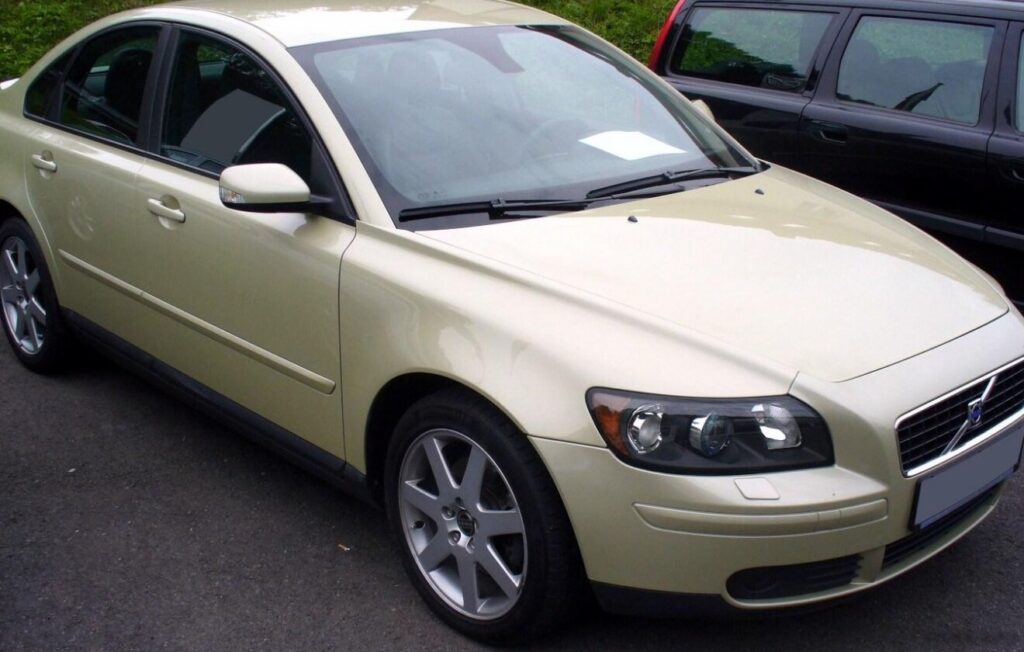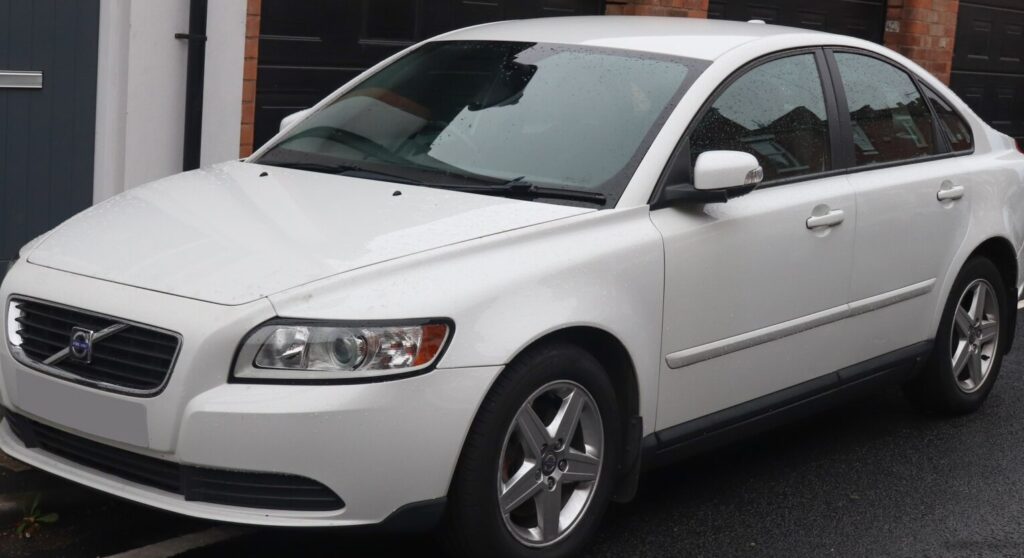
The Volvo S40 II facelift, specifically the 2.0 D3 variant producing 150 horsepower, was a compact executive car produced by the Swedish manufacturer Volvo between 2011 and 2012. This model represented a mid-cycle refresh of the second-generation S40 (introduced in 2004), aiming to enhance its appeal with updated styling, improved efficiency, and refined technology. Positioned as a fuel-efficient and practical option within the S40 lineup, the D3 trim catered to buyers prioritizing economy and reasonable performance over outright speed. It occupied a middle ground, offering more power than the base 1.6D model but remaining more accessible than the higher-performance 2.5 variants.
Technical Specifications
| Brand | Volvo |
| Model | S40 |
| Generation | S40 II (facelift 2007) |
| Type (Engine) | 2.0 D3 (150 Hp) |
| Start of production | 2011 |
| End of production | 2012 |
| Powertrain Architecture | Internal Combustion engine |
| Body type | Sedan |
| Seats | 5 |
| Doors | 4 |
| Fuel consumption (urban) | 7 l/100 km (33.6 US mpg, 40.4 UK mpg, 14.3 km/l) |
| Fuel consumption (extra urban) | 4 l/100 km (58.8 US mpg, 70.6 UK mpg, 25 km/l) |
| Fuel consumption (combined) | 5.1 l/100 km (46.1 US mpg, 55.4 UK mpg, 19.6 km/l) |
| CO2 emissions | 134 g/km |
| Fuel Type | Diesel |
| Acceleration 0 – 100 km/h | 9.5 sec |
| Acceleration 0 – 62 mph | 9.5 sec |
| Acceleration 0 – 60 mph | 9 sec |
| Emission standard | Euro 5 |
| Weight-to-power ratio | 10 kg/Hp, 100.1 Hp/tonne |
| Weight-to-torque ratio | 4.3 kg/Nm, 233.6 Nm/tonne |
| Power | 150 Hp @ 3500 rpm |
| Power per litre | 75.6 Hp/l |
| Torque | 350 Nm @ 1500-2750 rpm (258.15 lb.-ft. @ 1500-2750 rpm) |
| Engine layout | Front, Transverse |
| Engine Model/Code | D5204T5 |
| Engine displacement | 1984 cm3 (121.07 cu. in.) |
| Number of cylinders | 5 |
| Engine configuration | Inline |
| Piston Stroke | 81 mm (3.19 in.) |
| Fuel injection system | Diesel Commonrail |
| Engine aspiration | Turbocharger, Intercooler |
| Engine oil capacity | 5.9 l (6.23 US qt | 5.19 UK qt) |
| Coolant | 8.5 l (8.98 US qt | 7.48 UK qt) |
| Kerb Weight | 1498 kg (3302.52 lbs.) |
| Max. weight | 2020 kg (4453.34 lbs.) |
| Max load | 522 kg (1150.81 lbs.) |
| Trunk (boot) space – minimum | 404 l (14.27 cu. ft.) |
| Fuel tank capacity | 60 l (15.85 US gal | 13.2 UK gal) |
| Length | 4476 mm (176.22 in.) |
| Width | 1770 mm (69.69 in.) |
| Height | 1454 mm (57.24 in.) |
| Wheelbase | 2640 mm (103.94 in.) |
| Front track | 1548 mm (60.94 in.) |
| Rear (Back) track | 1544 mm (60.79 in.) |
| Minimum turning circle | 11.1 m (36.42 ft.) |
| Drivetrain Architecture | The Internal combustion engine (ICE) drives the front wheels of the vehicle. |
| Drive wheel | Front wheel drive |
| Number of gears and type of gearbox | 6 gears, manual transmission |
| Assisting systems | ABS (Anti-lock braking system) |
| Steering type | Steering rack and pinion |
Powertrain & Engine Architecture
The heart of the S40 2.0 D3 was the Volvo D5204T5 engine, a 1.984-liter inline-five cylinder diesel. This engine utilized a common rail direct injection system, delivering fuel at extremely high pressure for optimized combustion. A turbocharger with an intercooler was employed to boost power and torque, providing a broader powerband. The D5204T5 was designed to meet stringent Euro 5 emission standards, incorporating a diesel particulate filter (DPF) to reduce harmful emissions. The engine produced 150 horsepower at 3500 rpm and a substantial 350 Nm (258 lb-ft) of torque between 1500 and 2750 rpm. This torque output was a key characteristic, providing strong pulling power at lower engine speeds. The engine was transversely mounted in the front of the vehicle. The 6-speed manual transmission was standard, offering precise gear changes and contributing to the car’s fuel efficiency.
Driving Characteristics
The S40 2.0 D3 with a manual transmission offered a balanced driving experience. While not a sports car, the engine’s torque allowed for brisk acceleration, achieving 0-60 mph in around 9 seconds. The gear ratios were well-chosen to maximize fuel economy and provide adequate performance in everyday driving situations. The turbocharger provided a noticeable boost in power during acceleration, but turbo lag was present, particularly at lower engine speeds. Compared to the more powerful 2.5-liter petrol variants, the D3 felt less eager to rev, but it offered significantly better fuel economy. The manual gearbox was light and precise, enhancing driver engagement. The suspension was tuned for comfort, providing a smooth ride over most road surfaces, although it wasn’t particularly sporty in handling.
Equipment & Trim Levels
The S40 2.0 D3 typically came equipped with a reasonable level of standard features. These included air conditioning, power windows, power mirrors, a CD stereo system, and ABS brakes. Safety was a Volvo hallmark, and the D3 included features like front and side airbags, and a robust chassis structure. Optional extras included leather upholstery, a sunroof, automatic climate control, and a premium audio system. Trim levels varied slightly depending on the market, but generally, the D3 was positioned as a mid-range offering, bridging the gap between the base models and the more luxurious trims.
Chassis & Braking
The S40 II utilized a MacPherson strut front suspension and a multi-link rear suspension, providing a good balance of ride comfort and handling. The front brakes were ventilated discs, while the rear brakes were typically solid discs, although some earlier models may have featured drum brakes depending on the specific market. The steering was a rack and pinion system, offering precise control and reasonable feedback. Stabilizer bars were fitted to both the front and rear axles to reduce body roll during cornering. The chassis was designed to provide a safe and stable platform, with a focus on occupant protection.
Market Reception & Comparison
The Volvo S40 2.0 D3 was generally well-received by automotive critics as a practical and fuel-efficient compact executive car. It was praised for its comfortable ride, spacious interior, and strong diesel engine. However, some critics noted that the interior design was somewhat dated compared to its rivals, and the handling wasn’t as engaging as some other cars in its class. Compared to the petrol-powered S40 variants, the D3 offered significantly better fuel economy, making it an attractive option for drivers covering long distances. Against competitors like the Audi A3, BMW 1 Series, and Mercedes-Benz A-Class, the S40 D3 offered a compelling combination of value, safety, and practicality.
Legacy
The Volvo S40 2.0 D3, while not a high-performance model, has proven to be a relatively reliable car in the used car market. The D5204T5 engine is known for its durability, although regular maintenance, including timely DPF regeneration, is crucial. Common issues include wear and tear on suspension components and potential problems with the electronic parking brake. Today, the S40 2.0 D3 represents an affordable and practical option for buyers seeking a comfortable and fuel-efficient compact executive car. Its reputation for safety and reliability continues to make it a popular choice among used car buyers.