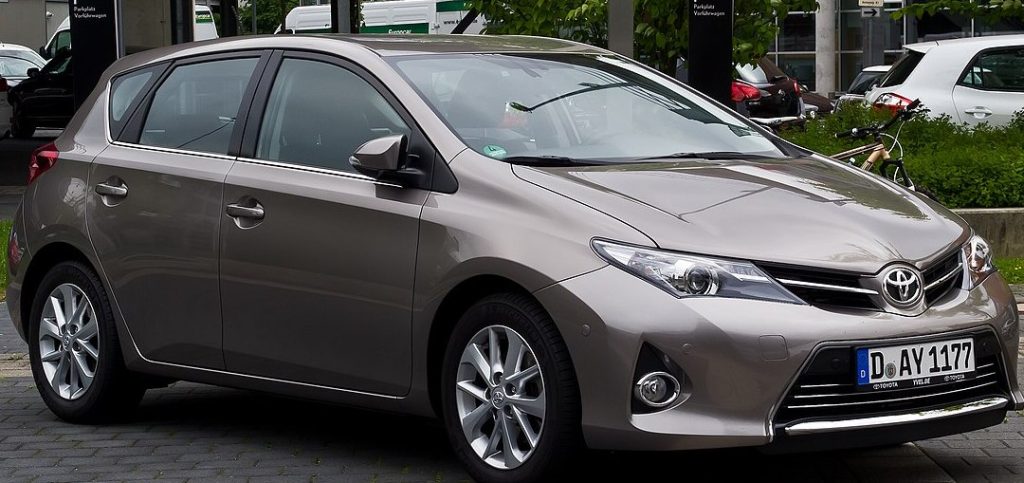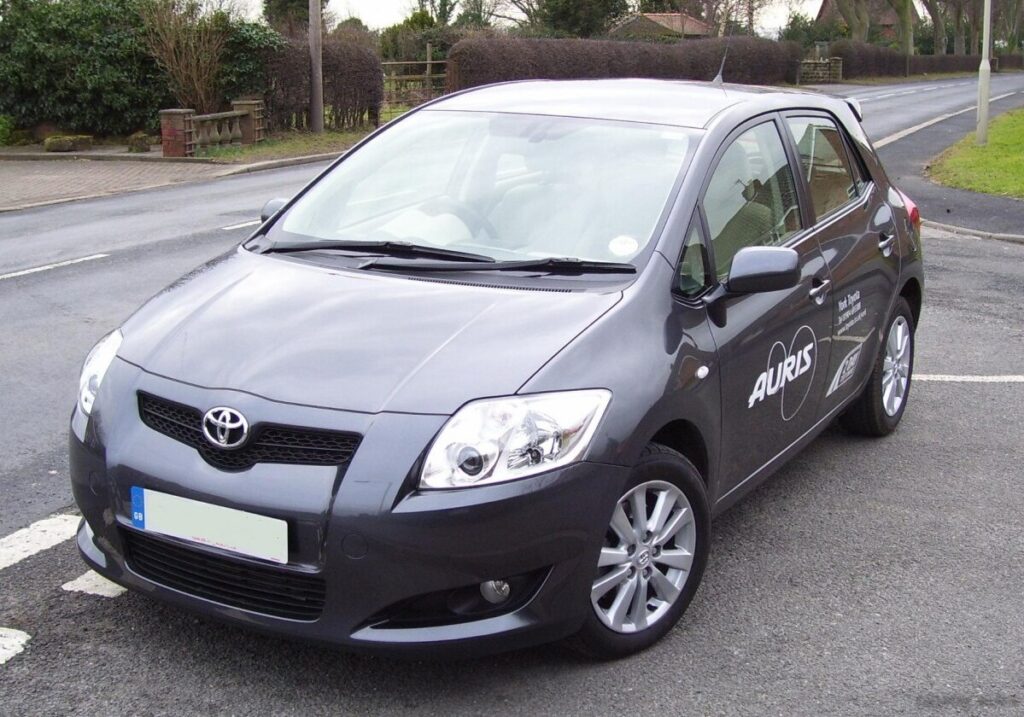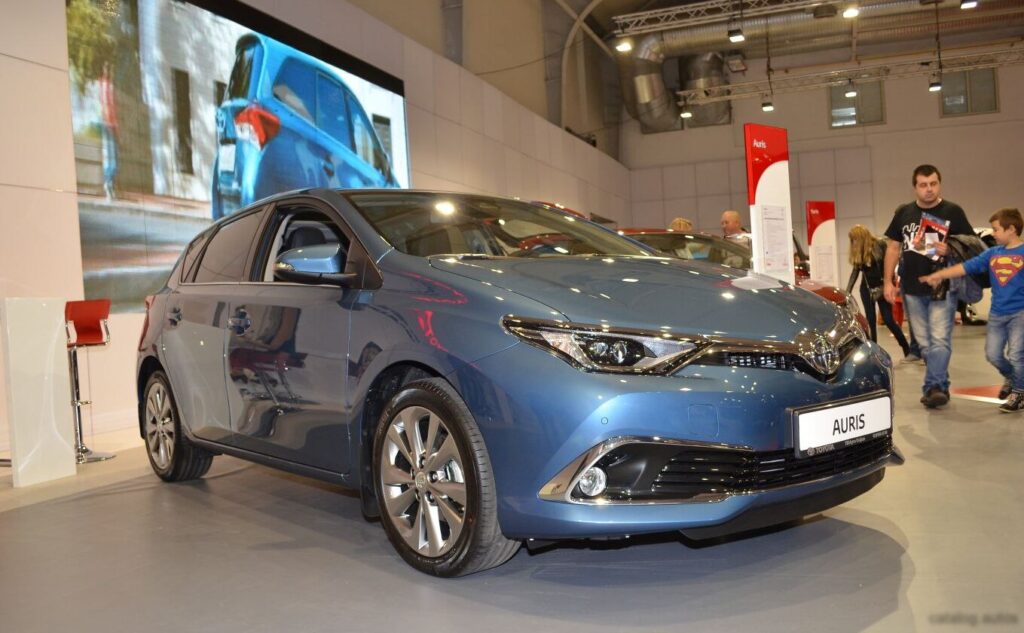
The Toyota Auris II, specifically the 1.2-liter (116 horsepower) Start&Stop model with Multidrive S transmission, was a key variant in Toyota’s European C-segment hatchback lineup from 2015 to 2018. Positioned as a fuel-efficient and accessible option, it occupied the middle ground in the Auris range, offering a balance between affordability and modern technology. This facelifted second-generation Auris (internally designated E180) aimed to improve upon the original with enhanced styling, interior refinements, and powertrain updates, competing directly with vehicles like the Volkswagen Golf, Ford Focus, and Opel Astra.
Technical Specifications
| Brand | Toyota |
| Model | Auris |
| Generation | Auris II (facelift 2015) |
| Type (Engine) | 1.2 (116 Hp) start&stop Multidrive S |
| Start of production | 2015 |
| End of production | 2018 |
| Powertrain Architecture | Internal Combustion engine |
| Body type | Hatchback |
| Seats | 5 |
| Doors | 5 |
| Fuel consumption (urban) | 5.9 l/100 km (39.9 US mpg, 47.9 UK mpg, 16.9 km/l) |
| Fuel consumption (extra urban) | 4.7 l/100 km (50 US mpg, 60.1 UK mpg, 21.3 km/l) |
| Fuel consumption (combined) | 4.6 l/100 km (51.1 US mpg, 61.4 UK mpg, 21.7 km/l) |
| CO2 emissions | 106 g/km |
| Fuel Type | Petrol (Gasoline) |
| Acceleration 0 – 100 km/h | 10.5 sec |
| Acceleration 0 – 62 mph | 10.5 sec |
| Acceleration 0 – 60 mph | 10 sec |
| Maximum speed | 195 km/h (121.17 mph) |
| Emission standard | Euro 6 W |
| Weight-to-power ratio | 10.4 kg/Hp, 96.3 Hp/tonne |
| Weight-to-torque ratio | 6.5 kg/Nm, 153.5 Nm/tonne |
| Power | 116 Hp @ 5200 rpm |
| Power per litre | 96.9 Hp/l |
| Torque | 185 Nm @ 1500-4000 rpm (136.45 lb.-ft. @ 1500-4000 rpm) |
| Engine layout | Front, Transverse |
| Engine Model/Code | 8NR-FTS |
| Engine displacement | 1197 cm3 (73.05 cu. in.) |
| Number of cylinders | 4 |
| Engine configuration | Inline |
| Compression ratio | 10:1 |
| Number of valves per cylinder | 4 |
| Fuel injection system | Direct injection |
| Engine aspiration | Turbocharger, Intercooler |
| Valvetrain | DOHC |
| Engine oil capacity | 4 l (4.23 US qt | 3.52 UK qt) |
| Coolant capacity | 6.4 l (6.76 US qt | 5.63 UK qt) |
| Kerb Weight | 1205-1375 kg (2656.57 – 3031.36 lbs.) |
| Max. weight | 1830 kg (4034.46 lbs.) |
| Max load | 455-625 kg (1003.1 – 1377.89 lbs.) |
| Trunk (boot) space – minimum | 360 l (12.71 cu. ft.) |
| Fuel tank capacity | 50 l (13.21 US gal | 11 UK gal) |
| Max. roof load | 75 kg (165.35 lbs.) |
| Permitted trailer load with brakes (12%) | 1300 kg (2866.01 lbs.) |
| Permitted trailer load without brakes | 450 kg (992.08 lbs.) |
| Permitted towbar download | 55 kg (121.25 lbs.) |
| Length | 4330 mm (170.47 in.) |
| Width | 1760 mm (69.29 in.) |
| Height | 1475 mm (58.07 in.) |
| Wheelbase | 2600 mm (102.36 in.) |
| Front track | 1515 mm (59.65 in.) |
| Rear track | 1515 mm (59.65 in.) |
| Minimum turning circle | 11.0 m (36.09 ft.) |
| Drivetrain Architecture | Front wheel drive |
| Number of gears and type of gearbox | 6 gears, automatic transmission CVT |
| Front suspension | Independent, type McPherson with coil spring and anti-roll bar |
| Rear suspension | Double wishbone |
| Front brakes | Disc |
| Rear brakes | Disc |
| Assisting systems | ABS (Anti-lock braking system) |
| Steering type | Steering rack and pinion |
| Power steering | Electric Steering |
| Tires size | 205/55 R16 |
| Wheel rims size | 6.5J x 16 |
INTRODUCTION
The 2015-2018 Toyota Auris 1.2T Start&Stop Multidrive S represented a significant step forward in Toyota’s efforts to offer a compelling and efficient hatchback. Built on the E180 platform (shared with the Corolla), this variant was designed to appeal to buyers prioritizing fuel economy and ease of use. The “Multidrive S” designation refers to Toyota’s continuously variable transmission (CVT), marketed as a seamless and efficient alternative to traditional automatic gearboxes. The Start&Stop system further enhanced fuel savings by automatically shutting off the engine when the vehicle was stationary, such as at traffic lights.
Powertrain & Engine Architecture
At the heart of this Auris variant lies the 8NR-FTS, a 1.2-liter turbocharged inline-four cylinder gasoline engine. This engine utilizes direct injection and a turbocharger with an intercooler to deliver a respectable 116 horsepower and 185 Nm (136 lb-ft) of torque. The direct injection system precisely meters fuel into the cylinders, improving combustion efficiency and reducing emissions. The DOHC (Double Overhead Camshaft) valvetrain optimizes airflow into and out of the engine, contributing to its performance. The Multidrive S transmission is a CVT, meaning it doesn’t have fixed gear ratios but instead uses a belt and pulley system to provide a virtually infinite number of ratios. This allows the engine to operate at its most efficient point at all times. The Start&Stop system relies on a robust starter motor and battery to ensure quick and reliable restarts.
Driving Characteristics
The 1.2T Multidrive S Auris offered a comfortable and refined driving experience, prioritizing smoothness over outright performance. Acceleration from 0-60 mph took around 10 seconds, which was adequate for everyday driving but not particularly sporty. The CVT transmission provided seamless acceleration, but some drivers found it lacked the responsiveness of a traditional automatic or manual gearbox. The engine delivered its peak torque from 1500-4000 rpm, providing sufficient power for overtaking and merging onto highways. The CVT’s programming was tuned to prioritize fuel efficiency, which meant the engine sometimes felt strained under hard acceleration. Compared to the 1.6L petrol or 1.4 D-4D diesel variants, the 1.2T offered a balance between fuel economy and performance, making it a good all-rounder.
Equipment & Trim Levels
The 1.2T Start&Stop Multidrive S trim typically included standard features such as air conditioning, a touchscreen infotainment system with Bluetooth connectivity, power windows and mirrors, and alloy wheels. Safety features included ABS, Vehicle Stability Control (VSC), and multiple airbags. Optional extras included a reversing camera, parking sensors, automatic headlights and wipers, and upgraded upholstery. Higher trim levels added features like a larger touchscreen display, navigation system, and climate control. Interior materials were generally of good quality, with a focus on durability and practicality.
Chassis & Braking
The Auris II utilized a McPherson strut front suspension and a double wishbone rear suspension, providing a comfortable ride and predictable handling. The front and rear brakes were both disc brakes, offering adequate stopping power. ABS (Anti-lock Braking System) was standard, enhancing safety in emergency braking situations. The suspension was tuned for comfort, prioritizing ride quality over sporty handling. Stabilizer bars were fitted to both the front and rear axles to reduce body roll during cornering.
Market Reception & Comparison
The Toyota Auris 1.2T Start&Stop Multidrive S was generally well-received by critics for its fuel efficiency and comfortable ride. However, some reviewers criticized the CVT transmission for its lack of responsiveness and the engine for its modest performance. Compared to the 1.6L petrol version, the 1.2T offered better fuel economy but slightly less power. The diesel variants provided even better fuel economy but came with a higher purchase price and potential maintenance costs. The Auris consistently scored well in reliability surveys, making it a popular choice for buyers seeking a dependable and economical hatchback.
Legacy
The 8NR-FTS engine and Multidrive S transmission proved to be reliable and durable powertrains. The Auris 1.2T remains a popular choice in the used car market, particularly for buyers seeking a fuel-efficient and affordable hatchback. While not the most exciting car to drive, its practicality, reliability, and low running costs make it a sensible and appealing option. The technology introduced in this variant, such as direct injection and CVT transmissions, has become increasingly common in modern vehicles, demonstrating Toyota’s commitment to innovation and efficiency.