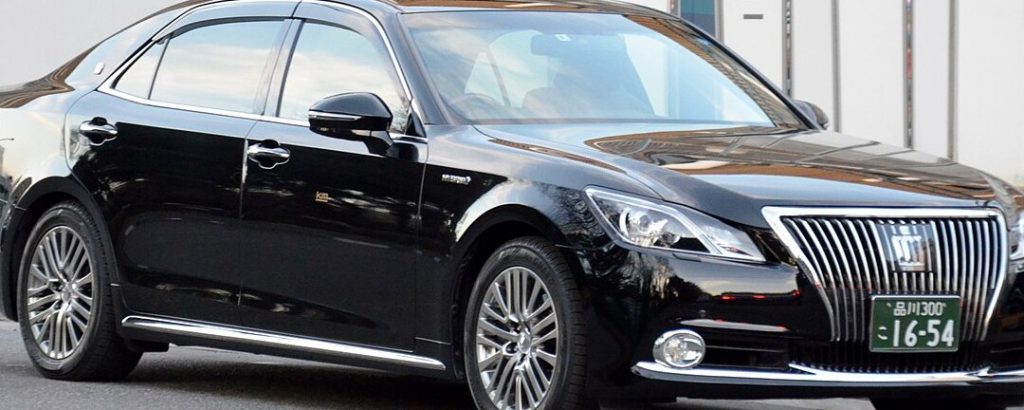
The Toyota Crown XIII, specifically the S200 facelift model produced from 2010 to 2012, represented a significant evolution of Toyota’s flagship sedan. This generation, built on the S200 platform, aimed to blend luxury, technology, and efficiency. The 3.5 V6 24V Hybrid variant, equipped with an e-CVT transmission, was positioned as a premium offering within the Crown lineup, showcasing Toyota’s advancements in hybrid technology. It was primarily marketed in Japan, catering to buyers seeking a sophisticated and fuel-conscious luxury vehicle.
Technical Specifications
| Brand | Toyota |
| Model | Crown |
| Generation | Crown XIII (S200, facelift 2010) |
| Type (Engine) | 3.5 V6 24V (296+200 Hp) Hybrid e-CVT |
| Start of production | 2010 |
| End of production | 2012 |
| Powertrain Architecture | FHEV (Full Hybrid Electric Vehicle) |
| Body type | Sedan |
| Seats | 5 |
| Doors | 4 |
| Fuel consumption (combined) | 7.1 l/100 km (33.1 US mpg, 39.8 UK mpg, 14.1 km/l) |
| CO2 emissions | 166 g/km |
| Fuel Type | Petrol (Gasoline) |
| Emission standard | SU-LEV |
| Weight-to-power ratio | 6.2 kg/Hp, 161.7 Hp/tonne |
| Weight-to-torque ratio | 5 kg/Nm, 201.1 Nm/tonne |
| Battery technology | Nickel-metal hydride (NiMH) |
| Electric motor power | 200 Hp |
| Electric motor Torque | 275 Nm (202.83 lb.-ft.) |
| Electric motor model/code | 1KM |
| Electric motor type | Synchronous |
| Power | 296 Hp @ 6400 rpm |
| Torque | 368 Nm @ 4800 rpm (271.42 lb.-ft. @ 4800 rpm) |
| Engine layout | Front, Longitudinal |
| Engine Model/Code | 2GR-FSE |
| Engine displacement | 3456 cm3 (210.9 cu. in.) |
| Number of cylinders | 6 |
| Engine configuration | V-engine |
| Cylinder Bore | 94 mm (3.7 in.) |
| Piston Stroke | 83 mm (3.27 in.) |
| Compression ratio | 11.8:1 |
| Number of valves per cylinder | 4 |
| Fuel injection system | Direct injection and Multi-port manifold injection |
| Engine aspiration | Naturally aspirated engine |
| Valvetrain | DOHC |
| Engine oil capacity | 4.5 l (4.76 US qt | 3.96 UK qt) |
| Coolant | 8.2 l (8.66 US qt | 7.21 UK qt) |
| Kerb Weight | 1830 kg (4034.46 lbs.) |
| Max. weight | 2105 kg (4640.73 lbs.) |
| Max load | 275 kg (606.27 lbs.) |
| Fuel tank capacity | 65 l (17.17 US gal | 14.3 UK gal) |
| Length | 4870 mm (191.73 in.) |
| Width | 1795 mm (70.67 in.) |
| Height | 1470 mm (57.87 in.) |
| Wheelbase | 2850 mm (112.2 in.) |
| Front track | 1535 mm (60.43 in.) |
| Rear track | 1535 mm (60.43 in.) |
| Ride height (ground clearance) | 155 mm (6.1 in.) |
| Minimum turning circle | 10.4 m (34.12 ft.) |
| Drivetrain Architecture | Rear wheel drive. FHEV. ICE and electric motor drive rear wheels. |
| Drive wheel | Rear wheel drive |
| Number of gears and type of gearbox | automatic transmission e-CVT |
| Front suspension | Double wishbone |
| Rear suspension | Independent multi-link suspension |
| Front brakes | Ventilated discs |
| Rear brakes | Ventilated discs |
| Assisting systems | ABS (Anti-lock braking system) |
| Steering type | Steering rack and pinion |
| Power steering | Electric Steering |
| Tires size | 225/45 R18 |
| Wheel rims size | 18 |
INTRODUCTION
The Toyota Crown XIII (S200) facelift, launched in 2010, continued the Crown’s legacy as Toyota’s premier sedan in the Japanese market. This iteration built upon the foundation laid by the initial S200 release, incorporating styling refinements and technological updates. The 3.5 V6 Hybrid model was a key component of this update, representing Toyota’s commitment to fuel efficiency without sacrificing luxury or performance. It occupied the upper echelon of the Crown range, appealing to buyers who desired a sophisticated and technologically advanced vehicle. The e-CVT transmission was central to the hybrid system’s operation, providing seamless power delivery and maximizing fuel economy.
Powertrain & Engine Architecture
The heart of this Crown variant is the 2GR-FSE 3.5-liter V6 engine. This engine utilizes Toyota’s D-4S direct-injection system, combining direct and port fuel injection for optimal combustion efficiency and power output. The engine features a double overhead camshaft (DOHC) valvetrain with four valves per cylinder, contributing to its responsive nature. The 2GR-FSE produces 296 horsepower at 6400 rpm and 368 Nm (271.42 lb-ft) of torque at 4800 rpm.
Complementing the V6 is a 200 horsepower electric motor (1KM model), powered by a nickel-metal hydride (NiMH) battery pack. This configuration allows for all-electric driving at low speeds and assists the gasoline engine during acceleration, resulting in improved fuel economy. The e-CVT (electronically controlled continuously variable transmission) is a crucial element of the hybrid system. Unlike traditional CVTs with belts, the e-CVT uses a planetary gearset to seamlessly blend the power from the engine and electric motor, offering a smooth and linear driving experience. The system intelligently manages the power flow between the engine, motor, and battery, optimizing efficiency based on driving conditions.
Driving Characteristics
The 3.5 V6 Hybrid Crown delivers a refined and comfortable driving experience. The e-CVT, while not offering the traditional gear changes of an automatic transmission, provides smooth and seamless acceleration. The combined output of 296+200 hp provides ample power for both city driving and highway cruising. Compared to the non-hybrid Crown variants, the hybrid model offers significantly improved fuel economy. While the standard automatic transmissions in other Crown trims provided a more conventional driving feel, the e-CVT prioritized efficiency and smoothness. The rear-wheel-drive configuration contributes to a balanced handling characteristic, although it doesn’t offer the sporty dynamics of some competitors.
Equipment & Trim Levels
The 3.5 V6 Hybrid Crown typically came well-equipped with standard features reflecting its premium positioning. These included leather upholstery, woodgrain interior trim, automatic climate control, a premium audio system, and power-adjustable front seats. Optional extras often included a navigation system, a rearview camera, adaptive cruise control, and advanced safety features like lane departure warning. The interior design emphasized luxury and comfort, with a focus on high-quality materials and a spacious cabin. Trim levels varied slightly depending on the specific package selected, but all versions prioritized a refined and upscale experience.
Chassis & Braking
The Crown XIII utilized a double wishbone suspension setup at the front and an independent multi-link suspension at the rear, providing a comfortable and controlled ride. Ventilated disc brakes were used on all four wheels, offering ample stopping power. The inclusion of ABS (Anti-lock Braking System) further enhanced safety. The suspension tuning was geared towards comfort rather than outright sportiness, prioritizing a smooth and refined ride quality. Stabilizer bars were fitted to both the front and rear axles to minimize body roll during cornering.
Market Reception & Comparison
The Toyota Crown XIII 3.5 V6 Hybrid was generally well-received by critics in Japan. It was praised for its fuel efficiency, smooth ride, and luxurious interior. Compared to other Crown trims, the hybrid model offered a significant advantage in fuel economy, making it an attractive option for environmentally conscious buyers. However, some critics noted that the e-CVT lacked the engaging driving experience of a traditional automatic transmission. Against competitors like the Nissan Fuga and Honda Legend, the Crown Hybrid stood out for its advanced hybrid technology and reputation for reliability.
Legacy
The Toyota Crown XIII 3.5 V6 Hybrid represents a pivotal moment in Toyota’s hybrid technology development. The powertrain, while not without its quirks, proved to be reliable and durable. In the used car market, these models are sought after for their fuel efficiency and luxurious features. The e-CVT transmission, while requiring specialized maintenance, has generally proven to be dependable. The Crown XIII Hybrid remains a testament to Toyota’s commitment to innovation and its ability to blend luxury, performance, and efficiency in a compelling package.