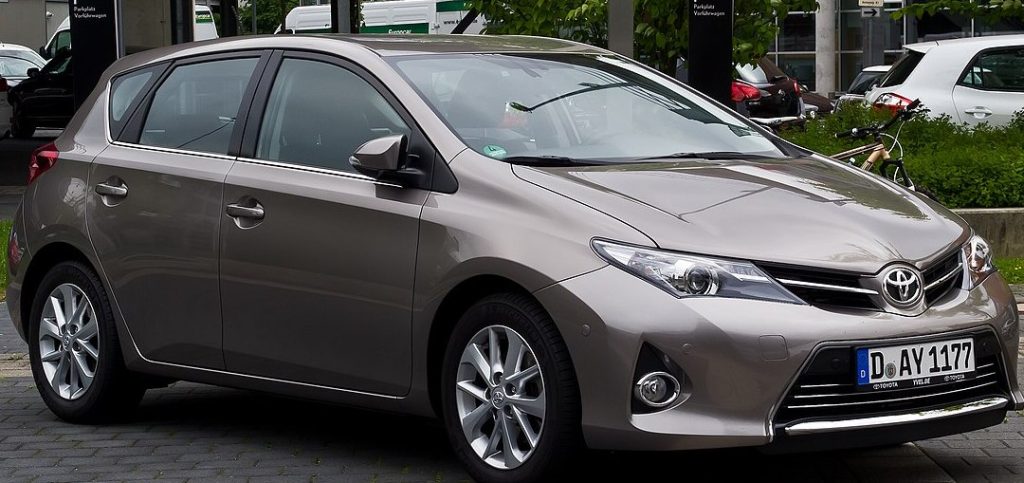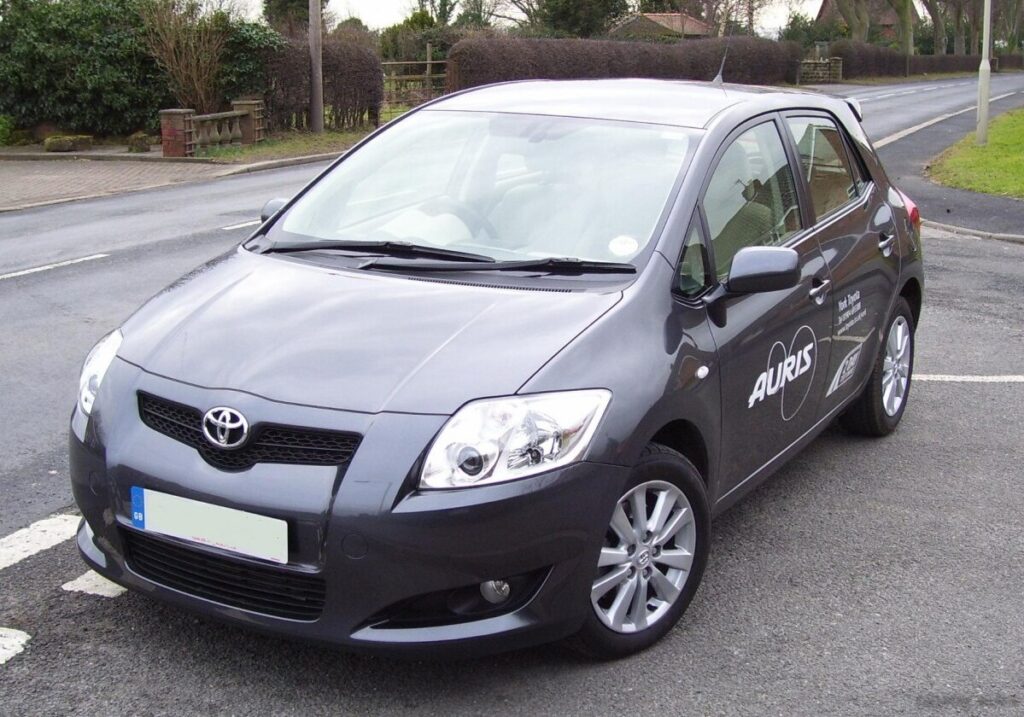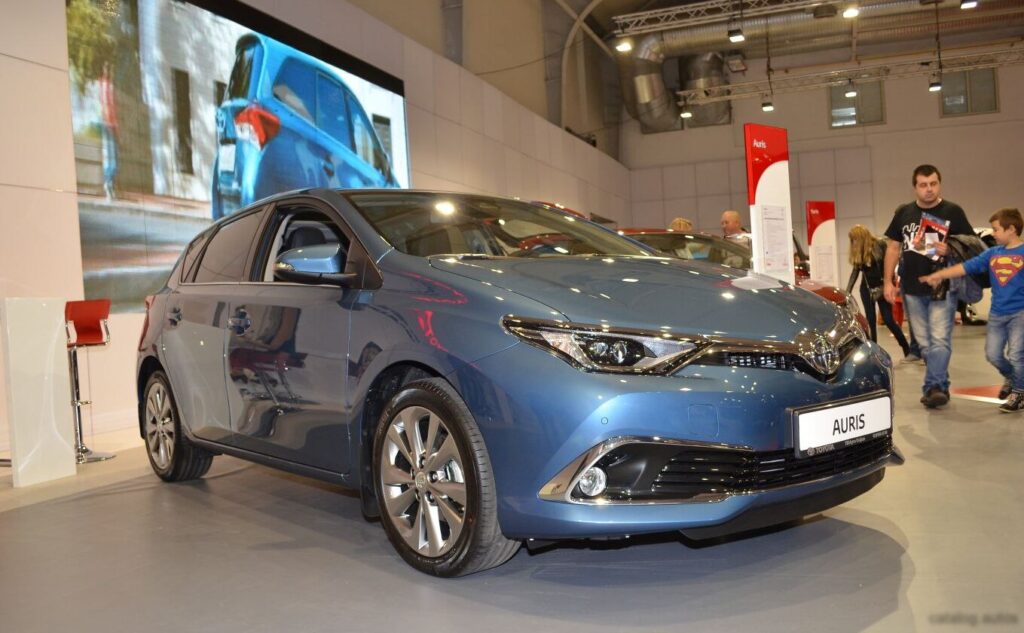
The Toyota Auris II, specifically the 1.33 Dual VVT-i variant producing 99 horsepower, was a key model in Toyota’s European compact hatchback lineup from 2015 to 2018. This version represented an entry-level offering within the Auris range, positioned below the 1.6L petrol and hybrid models. The facelifted Auris II, introduced in 2015, aimed to enhance the car’s styling and appeal, addressing some criticisms of the original second-generation model. It competed directly with vehicles like the Volkswagen Golf, Ford Focus, and Opel Astra, offering a blend of practicality, reliability, and fuel efficiency. This particular engine and transmission combination was geared towards buyers prioritizing affordability and low running costs.
Technical Specifications
| Brand | Toyota |
| Model | Auris |
| Generation | Auris II (facelift 2015) |
| Type (Engine) | 1.33 Dual VVT-i (99 Hp) |
| Start of production | 2015 |
| End of production | 2018 |
| Powertrain Architecture | Internal Combustion engine |
| Body type | Hatchback |
| Seats | 5 |
| Doors | 5 |
| Fuel consumption (urban) | 7 l/100 km (33.6 US mpg, 40.4 UK mpg, 14.3 km/l) |
| Fuel consumption (extra urban) | 4.8 l/100 km (49 US mpg, 58.9 UK mpg, 20.8 km/l) |
| Fuel consumption (combined) | 5.5 l/100 km (42.8 US mpg, 51.4 UK mpg, 18.2 km/l) |
| CO2 emissions | 128 g/km |
| Fuel Type | Petrol (Gasoline) |
| Acceleration 0 – 100 km/h | 12.6 sec |
| Acceleration 0 – 62 mph | 12.6 sec |
| Acceleration 0 – 60 mph | 12 sec |
| Maximum speed | 175 km/h (108.74 mph) |
| Emission standard | Euro 6 W |
| Weight-to-power ratio | 12.4 kg/Hp, 80.8 Hp/tonne |
| Weight-to-torque ratio | 9.6 kg/Nm, 104.5 Nm/tonne |
| Power | 99 Hp @ 6000 rpm |
| Power per litre | 74.5 Hp/l |
| Torque | 128 Nm @ 3800 rpm (94.41 lb.-ft. @ 3800 rpm) |
| Engine layout | Front, Transverse |
| Engine Model/Code | 1NR-FE |
| Engine displacement | 1329 cm3 (81.1 cu. in.) |
| Number of cylinders | 4 |
| Engine configuration | Inline |
| Compression ratio | 11.5:1 |
| Number of valves per cylinder | 4 |
| Fuel injection system | Multi-port manifold injection |
| Engine aspiration | Naturally aspirated engine |
| Valvetrain | DOHC. Dual VVT-i |
| Engine oil capacity | 3.4 l (3.59 US qt | 2.99 UK qt) |
| Coolant | 5.7 l (6.02 US qt | 5.02 UK qt) |
| Kerb Weight | 1225-1355 kg (2700.66 – 2987.26 lbs.) |
| Max. weight | 1735 kg (3825.02 lbs.) |
| Max load | 380-510 kg (837.76 – 1124.36 lbs.) |
| Trunk (boot) space – minimum | 360 l (12.71 cu. ft.) |
| Fuel tank capacity | 50 l (13.21 US gal | 11 UK gal) |
| Max. roof load | 75 kg (165.35 lbs.) |
| Permitted trailer load with brakes (12%) | 1000 kg (2204.62 lbs.) |
| Permitted trailer load without brakes | 450 kg (992.08 lbs.) |
| Permitted towbar download | 55 kg (121.25 lbs.) |
| Length | 4330 mm (170.47 in.) |
| Width | 1760 mm (69.29 in.) |
| Height | 1475 mm (58.07 in.) |
| Wheelbase | 2600 mm (102.36 in.) |
| Front track | 1525 mm (60.04 in.) |
| Rear (Back) track | 1525 mm (60.04 in.) |
| Minimum turning circle (turning diameter) | 11.0 m (36.09 ft.) |
| Drivetrain Architecture | The Internal combustion engine (ICE) drives the front wheels of the vehicle. |
| Drive wheel | Front wheel drive |
| Number of gears and type of gearbox | 6 gears, manual transmission |
| Front suspension | Independent, type McPherson with coil spring and anti-roll bar |
| Rear suspension | Semi-independent, coil spring |
| Front brakes | Disc |
| Rear brakes | Disc |
| Assisting systems | ABS (Anti-lock braking system) |
| Steering type | Steering rack and pinion |
| Power steering | Electric Steering |
| Tires size | 205/55 R16 |
| Wheel rims size | 6.5J x 16 |
INTRODUCTION
The 1.33 Dual VVT-i engine in the Auris II facelift (2015-2018) was designed as an efficient and economical option for European drivers. It falls within the E15 generation of the Auris, built on the Toyota New Global Architecture (TNGA) platform, though the initial TNGA implementation was more pronounced in later models. This engine was primarily aimed at buyers who prioritized fuel economy and lower purchase prices over outright performance. It served as the entry point into the Auris range, offering a practical and reliable hatchback for everyday use. The facelift brought subtle styling updates, improved interior materials, and enhanced safety features, further refining the Auris’s appeal.
Powertrain & Engine Architecture
The 1NR-FE 1.33-liter engine is a naturally aspirated, inline-four cylinder petrol engine. It utilizes Toyota’s Dual VVT-i (Variable Valve Timing-intelligent) technology, which independently controls the timing of both intake and exhaust valves. This system optimizes engine performance and fuel efficiency across a wider range of engine speeds. The engine employs multi-point fuel injection, delivering fuel directly to the intake ports. The 1NR-FE engine is known for its simplicity and robustness. The 6-speed manual transmission paired with this engine was chosen for its efficiency and affordability. It features a conventional cable-operated shift mechanism. While a MultiMode (automated manual) transmission was available on some Auris models, it wasn’t typically paired with the 1.33L engine due to torque limitations.
Driving Characteristics
The 99 horsepower and 128 Nm (94.41 lb-ft) of torque produced by the 1.33L engine translate to modest performance. Acceleration from 0-100 km/h (0-62 mph) takes around 12.6 seconds, and the top speed is 175 km/h (108.74 mph). The engine feels somewhat strained when accelerating hard, particularly when fully loaded or on inclines. The gear ratios in the 6-speed manual transmission are well-spaced to maximize fuel efficiency, but they don’t prioritize rapid acceleration. Compared to the 1.6L petrol engine or the hybrid variants, the 1.33L feels noticeably slower. However, it offers a smoother and more linear power delivery than the more powerful engines, making it easy to drive in urban environments. The light clutch and precise gear changes contribute to a comfortable driving experience.
Equipment & Trim Levels
The 1.33 Dual VVT-i Auris typically came equipped with a reasonable level of standard features. Base models included air conditioning, power steering, electric front windows, a basic audio system with USB connectivity, and ABS brakes. Higher trim levels, such as Active, Icon, and Design, added features like alloy wheels, a touchscreen infotainment system, rear parking sensors, cruise control, and automatic headlights. Interior upholstery was typically cloth, with a dark color scheme. Optional extras included a panoramic sunroof, leather upholstery, and a more advanced navigation system.
Chassis & Braking
The Auris II utilized a McPherson strut front suspension and a semi-independent torsion beam rear suspension. This setup provided a comfortable ride quality, although it wasn’t particularly sporty. The front brakes were ventilated discs, while the rear brakes were solid discs. ABS (Anti-lock Braking System) was standard, providing enhanced braking performance and stability. The steering was electrically assisted, offering light and precise control. The suspension was tuned for comfort rather than handling prowess, prioritizing a smooth ride over sharp cornering.
Market Reception & Comparison
The 1.33L Auris was generally well-received by critics as a sensible and economical choice. It was praised for its fuel efficiency, reliability, and comfortable ride. However, it was often criticized for its lack of performance and somewhat uninspiring driving experience. Compared to the 1.6L petrol engine, the 1.33L offered significantly better fuel economy but considerably less power. The hybrid variants provided even greater fuel efficiency but came at a higher price point. In terms of reliability, the 1.33L engine proved to be very dependable, with few reported issues. Its simplicity contributed to its longevity and low maintenance costs.
Legacy
The 1.33 Dual VVT-i Auris remains a popular choice in the used car market, particularly for buyers seeking an affordable and reliable hatchback. Its fuel efficiency and low running costs make it an attractive option for city driving and commuting. While it may not offer the performance of some of its rivals, its dependability and practicality have ensured its continued relevance. The 1NR-FE engine is known for its longevity, and well-maintained examples can provide many years of trouble-free service. The Auris II, in general, helped solidify Toyota’s reputation for building durable and dependable vehicles.