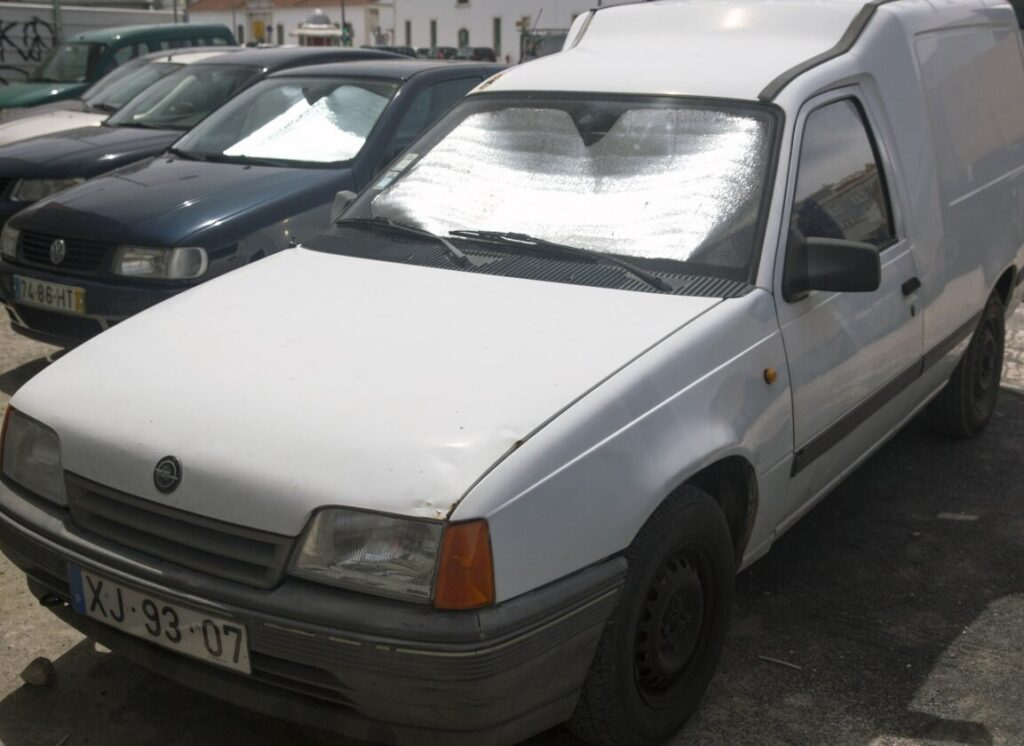
The Opel Kadett E Combo 1.7 TD, produced from August 1992 to June 1993, represented a practical and economical offering within the broader Kadett E range. Positioned as a commercial-oriented variant, the Combo was essentially a panel van version of the Kadett estate, designed for light-duty delivery and tradespeople. This particular 1.7 TD (60 hp) configuration was the base engine option for the Combo, prioritizing fuel efficiency and low running costs over outright performance. It occupied the entry-level position in the Combo lineup, appealing to businesses and individuals seeking a no-frills, utilitarian vehicle.
Technical Specifications
| Brand | Opel |
| Model | Kadett |
| Generation | Kadett E Combo |
| Type (Engine) | 1.7 TD (60 Hp) |
| Start of production | August, 1992 |
| End of production | June, 1993 |
| Powertrain Architecture | Internal Combustion engine |
| Body type | Station wagon (estate) |
| Seats | 2 |
| Doors | 3 |
| Fuel Type | Diesel |
| Power | 60 Hp |
| Engine layout | Front, Transverse |
| Engine Model/Code | 17DR |
| Engine aspiration | Turbocharger |
| Engine oil capacity | 5 l (5.28 US qt | 4.4 UK qt) |
| Coolant | 9.1 l (9.62 US qt | 8.01 UK qt) |
| Trunk (boot) space – maximum | 2450 l (86.52 cu. ft.) |
| Length | 4221 mm (166.18 in.) |
| Width | 1674 mm (65.91 in.) |
| Height | 1670 mm (65.75 in.) |
| Wheelbase | 2530 mm (99.61 in.) |
| Drivetrain Architecture | The Internal combustion engine (ICE) drives the front wheels of the vehicle. |
| Drive wheel | Front wheel drive |
| Number of gears and type of gearbox | 5 gears, manual transmission |
Powertrain & Engine Architecture
The heart of the Kadett E Combo 1.7 TD was the 17DR engine, a 1.7-liter inline-four diesel engine equipped with a turbocharger and indirect injection. This engine was part of Opel’s Isuzu-derived diesel family, known for its robustness and fuel economy. The indirect injection system, while less efficient than direct injection, contributed to quieter operation and reduced emissions for the time. The turbocharger, a Garrett unit typically, boosted power output to 60 horsepower and approximately 120 Nm (88 lb-ft) of torque. The engine featured a cast iron block and an aluminum cylinder head, a common configuration for diesel engines of this era. The five-speed manual transmission was the only gearbox option available for this variant, chosen for its simplicity and efficiency. The transmission was a standard, non-synchronized first gear setup, typical of European manual transmissions of the period.
Driving Characteristics
The Kadett E Combo 1.7 TD was not designed for spirited driving. Its 60 hp output and relatively high weight (considering its size) resulted in modest acceleration and a top speed of around 130 km/h (81 mph). However, the turbocharger provided a noticeable boost in power once spooled up, making it reasonably capable for highway cruising, especially when lightly loaded. The five-speed gearbox allowed for efficient engine operation at highway speeds, and the gear ratios were well-suited for maximizing fuel economy. Compared to the gasoline-powered Kadett E models, the 1.7 TD offered significantly better fuel economy, but at the expense of performance. The manual transmission provided a more engaging driving experience than an automatic would have, and allowed the driver to fully utilize the engine’s torque.
Equipment & Trim Levels
The Kadett E Combo 1.7 TD was a very basic vehicle, reflecting its commercial purpose. Standard equipment was minimal, typically including a driver’s seat, basic instrumentation (speedometer, fuel gauge, temperature gauge), and a steering wheel. The interior was primarily utilitarian, with hard-wearing plastics and minimal sound insulation. Optional extras were limited, but could include a passenger seat, basic radio, and upgraded interior trim. The Combo’s interior was designed for ease of cleaning and durability, rather than comfort or aesthetics. The rear cargo area was fully lined and featured tie-down points for securing loads.
Chassis & Braking
The Kadett E Combo utilized a MacPherson strut front suspension and a twist-beam rear suspension. The suspension was tuned for practicality and load-carrying capacity, rather than sporty handling. The front brakes were disc brakes, while the rear brakes were drum brakes – a cost-saving measure common on base-model vehicles of this era. The steering was a rack-and-pinion system, providing reasonable precision. The Combo’s chassis was reinforced compared to the standard Kadett E to handle the increased weight of cargo. Stabilizer bars were typically omitted on the base model to reduce cost, contributing to a slightly more pronounced body roll in corners.
Market Reception & Comparison
The Kadett E Combo 1.7 TD was well-received in its target market – small businesses and tradespeople. Critics praised its fuel efficiency, low running costs, and practicality. However, its lack of performance and basic equipment levels were also noted. Compared to other light commercial vehicles of the time, such as the Volkswagen Caddy or the Citroën AX, the Kadett E Combo offered a competitive combination of price, fuel economy, and cargo capacity. The 1.7 TD engine was generally considered reliable, although regular maintenance was essential to ensure longevity. The manual transmission was also known for its durability.
Legacy
The Opel Kadett E Combo 1.7 TD, while not a particularly glamorous vehicle, played an important role in the European light commercial vehicle market. Its robust diesel engine and practical design made it a popular choice for businesses and individuals seeking a reliable and economical workhorse. Today, surviving examples are relatively rare, and are often sought after by collectors and enthusiasts who appreciate their simplicity and practicality. The 17DR engine, while aging, is still known for its durability, but finding parts can be challenging. The Kadett E Combo 1.7 TD represents a bygone era of utilitarian vehicles, prioritizing function over form.