
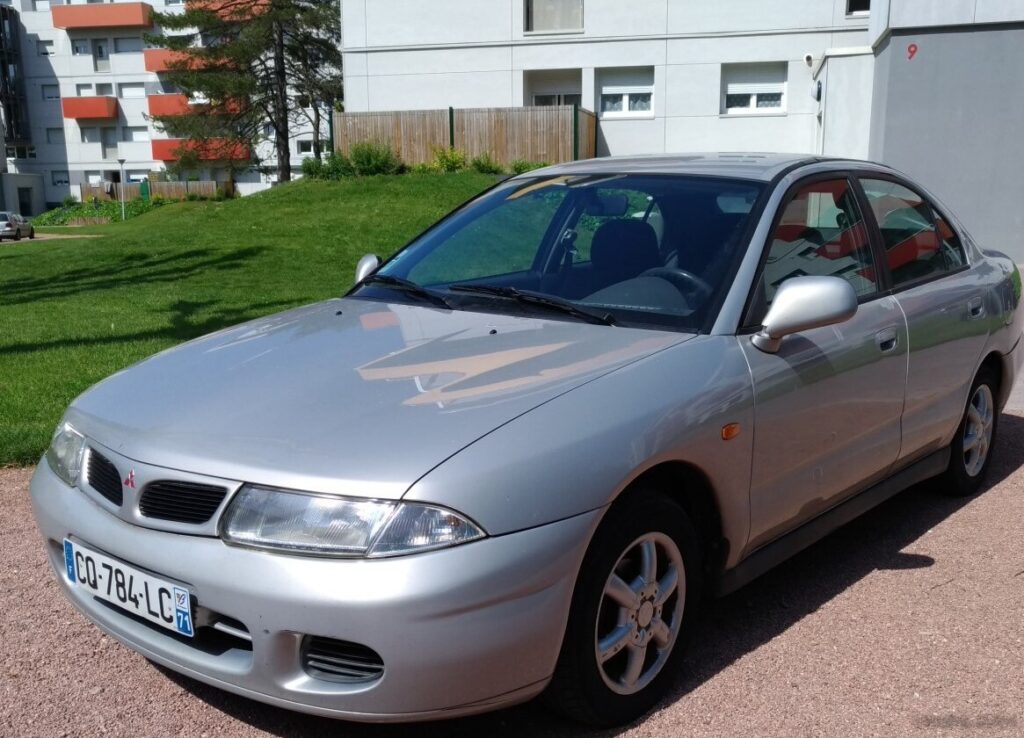
The Mitsubishi Carisma 1.8, equipped with a four-speed automatic transmission, was a mainstay of the Carisma range produced between 1995 and 2000. Positioned as a mid-range offering, it aimed to provide a balance of comfort, convenience, and reasonable performance for family buyers. The Carisma, internally designated as the DA series, represented Mitsubishi’s entry into the competitive C-segment, aiming to challenge established European rivals like the Ford Focus and Opel/Vauxhall Astra. This particular 1.8L automatic variant was a key component of that strategy, offering an accessible automatic option within the lineup.
Technical Specifications
| Brand | Mitsubishi |
| Model | Carisma |
| Generation | Carisma |
| Type (Engine) | 1.8 (116 Hp) Automatic |
| Start of production | 1995 |
| End of production | 2000 |
| Powertrain Architecture | Internal Combustion engine |
| Body type | Sedan |
| Seats | 5 |
| Doors | 4 |
| Fuel consumption (urban) | 9.7 l/100 km (24.2 US mpg) |
| Fuel consumption (extra urban) | 5.7 l/100 km (41.3 US mpg) |
| Fuel consumption (combined) | 7.1 l/100 km (33.1 US mpg) |
| Fuel Type | Petrol (Gasoline) |
| Acceleration 0 – 100 km/h | 12 sec |
| Acceleration 0 – 62 mph | 12 sec |
| Acceleration 0 – 60 mph | 11.4 sec |
| Maximum speed | 200 km/h (124.27 mph) |
| Weight-to-power ratio | 9.7 kg/Hp |
| Weight-to-torque ratio | 7 kg/Nm |
| Power | 116 Hp @ 5500 rpm |
| Torque | 162 Nm @ 4500 rpm (119.49 lb.-ft. @ 4500 rpm) |
| Engine layout | Front, Transverse |
| Engine displacement | 1834 cm3 (111.92 cu. in.) |
| Number of cylinders | 4 |
| Engine configuration | Inline |
| Cylinder Bore | 81 mm (3.19 in.) |
| Piston Stroke | 89 mm (3.5 in.) |
| Compression ratio | 10:1 |
| Number of valves per cylinder | 4 |
| Fuel injection system | Multi-port manifold injection |
| Engine aspiration | Naturally aspirated |
| Valvetrain | OHC |
| Kerb Weight | 1130 kg (2491.22 lbs.) |
| Max. weight | 1660 kg (3659.67 lbs.) |
| Max load | 530 kg (1168.45 lbs.) |
| Trunk (boot) space – maximum | 460 l (16.24 cu. ft.) |
| Fuel tank capacity | 60 l (15.85 US gal | 13.2 UK gal) |
| Length | 4435 mm (174.61 in.) |
| Width | 1710 mm (67.32 in.) |
| Height | 1405 mm (55.31 in.) |
| Wheelbase | 2550 mm (100.39 in.) |
| Front track | 1455 mm (57.28 in.) |
| Rear (Back) track | 1475 mm (58.07 in.) |
| Drivetrain Architecture | The Internal combustion engine (ICE) drives the front wheels of the vehicle. |
| Drive wheel | Front wheel drive |
| Number of gears and type of gearbox | 4 gears, automatic transmission |
| Front suspension | Spring Strut |
| Rear suspension | Coil spring |
| Front brakes | Ventilated discs |
| Rear brakes | Drum |
| Assisting systems | ABS (Anti-lock braking system) |
| Steering type | Steering rack and pinion |
| Power steering | Hydraulic Steering |
| Tires size | 185/65 R14 |
| Wheel rims size | 14 |
Powertrain & Engine Architecture
The Carisma 1.8 Automatic utilized Mitsubishi’s 4G93 inline-four cylinder engine. This engine, a naturally aspirated unit, displaced 1834cc and featured a single overhead camshaft (SOHC) valvetrain with four valves per cylinder. Fuel delivery was handled by a multi-point fuel injection system, contributing to improved efficiency and smoother operation compared to earlier carbureted designs. The engine produced 116 horsepower at 5500 rpm and 162 Nm (119.49 lb-ft) of torque at 4500 rpm. The four-speed automatic transmission, while providing convenience, was a relatively conventional unit for the time. It wasn’t known for particularly quick shifts, but it offered smooth engagement and reliable operation. The transmission was designed to prioritize fuel economy and comfort over outright performance.
Driving Characteristics
The 1.8L automatic Carisma offered a comfortable, if not particularly sporty, driving experience. Acceleration from 0-60 mph took around 11.4 seconds, and top speed was limited to 124 mph. The automatic transmission’s gear ratios were geared towards relaxed cruising, resulting in a noticeable delay when requesting sudden bursts of acceleration. Compared to the five-speed manual version of the 1.8, the automatic felt noticeably slower. The manual transmission allowed the engine to rev more freely, extracting more performance from the available power. However, the automatic’s ease of use made it a popular choice for drivers prioritizing convenience, especially in urban environments.
Equipment & Trim Levels
The 1.8 Automatic trim typically included features such as power steering, central locking, electric front windows, and an AM/FM radio. Air conditioning was often an optional extra. Interior upholstery was typically cloth, with a relatively simple dashboard layout. Higher trim levels, such as the GLX, added features like alloy wheels, a sunroof, and upgraded audio systems. The Carisma aimed for a practical and functional interior, rather than a luxurious one. The focus was on providing a comfortable and durable cabin for everyday use.
Chassis & Braking
The Carisma featured a front-wheel-drive layout with independent front suspension utilizing MacPherson struts and a coil-sprung rear axle. Front brakes were ventilated discs, providing adequate stopping power, while the rear brakes were drums. ABS (Anti-lock Braking System) was standard equipment, enhancing safety. The suspension setup was tuned for comfort, providing a relatively soft ride. Stabilizer bars were fitted to both the front and rear axles to reduce body roll during cornering, but the Carisma wasn’t designed to be a particularly dynamic handler. The chassis was designed to provide a stable and predictable driving experience, prioritizing safety and comfort over sporty handling.
Market Reception & Comparison
The Carisma 1.8 Automatic was generally well-received as a practical and reliable family car. Critics praised its comfortable ride and spacious interior. However, the automatic transmission was often criticized for its sluggish performance compared to the manual gearbox. Fuel economy was respectable, averaging around 33.1 US mpg in combined driving. Compared to other C-segment rivals, the Carisma offered a competitive level of equipment and value for money. The 1.9 TDI diesel version of the Carisma offered significantly better fuel economy, but at the cost of performance and refinement. The higher-output 2.0L petrol engine provided more power, but was also more expensive to run.
Legacy
The Mitsubishi Carisma, while not a groundbreaking vehicle, established Mitsubishi as a credible player in the European C-segment. The 1.8L engine, particularly when paired with the automatic transmission, proved to be a reliable and durable powertrain. Today, well-maintained examples of the Carisma 1.8 Automatic are becoming increasingly rare. The automatic transmission, while not known for its speed, generally holds up well over time with regular servicing. The Carisma’s simple mechanical design makes it relatively easy and affordable to maintain, appealing to enthusiasts and budget-conscious buyers. Its legacy lies in providing a comfortable, practical, and reliable mode of transportation for a generation of families.
