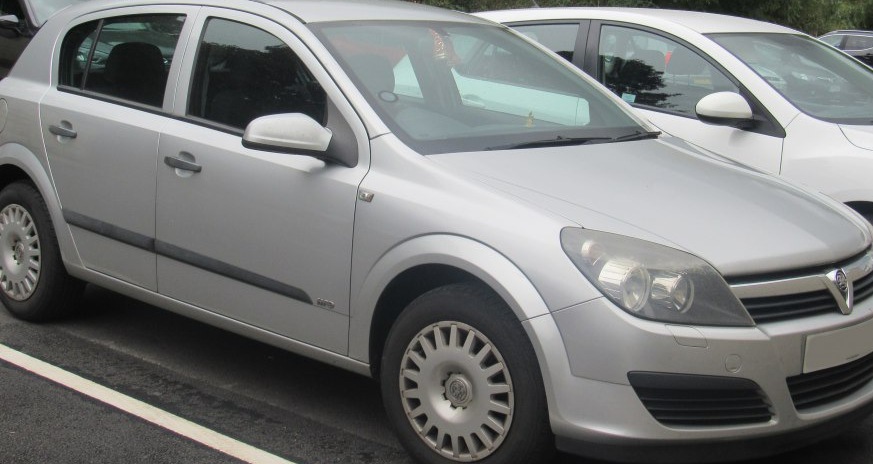
The Vauxhall Astra Mk V CC 2.0, produced between 2004 and 2009, represented a significant offering in the British compact hatchback market. Positioned as a sporty and practical option within the Mk V Astra range (produced 2004-2010), this variant featured a 2.0-liter turbocharged engine delivering 170 horsepower. The “CC” designation, standing for “Coupe Cabriolet”, is a misnomer as this model is a five-door hatchback, not a convertible. It was built on the GM Delta platform, shared with other vehicles like the Opel Astra and Chevrolet Astra, and aimed to provide a more engaging driving experience than the base models while remaining accessible to a broad customer base. This particular engine and transmission combination occupied a mid-range position in the lineup, bridging the gap between the more economical lower-powered engines and the flagship V8 models.
Technical Specifications
| Brand | Vauxhall |
| Model | Astra |
| Generation | Astra Mk V CC |
| Type (Engine) | 2.0 (170 Hp) |
| Start of production | 2004 |
| End of production | 2009 |
| Powertrain Architecture | Internal Combustion engine |
| Body type | Hatchback |
| Seats | 5 |
| Doors | 5 |
| Fuel consumption (urban) | 12.8 l/100 km (18.4 US mpg, 22.1 UK mpg, 7.8 km/l) |
| Fuel consumption (extra urban) | 6.8 l/100 km (34.6 US mpg, 41.5 UK mpg, 14.7 km/l) |
| Fuel consumption (combined) | 9 l/100 km (26.1 US mpg, 31.4 UK mpg, 11.1 km/l) |
| CO2 emissions | 216 g/km |
| Fuel Type | Petrol (Gasoline) |
| Acceleration 0 – 100 km/h | 8.1 sec |
| Acceleration 0 – 62 mph | 8.1 sec |
| Acceleration 0 – 60 mph | 7.7 sec |
| Maximum speed | 217 km/h (134.84 mph) |
| Weight-to-power ratio | 7.8 kg/Hp, 128.6 Hp/tonne |
| Weight-to-torque ratio | 5.3 kg/Nm, 188.4 Nm/tonne |
| Power | 170 Hp @ 5200 rpm |
| Power per litre | 85.1 Hp/l |
| Torque | 249 Nm @ 1950 rpm (183.65 lb.-ft. @ 1950 rpm) |
| Engine layout | Front, Transverse |
| Engine Model/Code | Z20LEL |
| Engine displacement | 1998 cm3 (121.93 cu. in.) |
| Number of cylinders | 4 |
| Engine configuration | Inline |
| Number of valves per cylinder | 4 |
| Fuel injection system | Multi-port manifold injection |
| Engine aspiration | Turbocharger, Intercooler |
| Engine oil capacity | 4.3 l (4.54 US qt | 3.78 UK qt) |
| Coolant capacity | 7.7 l (8.14 US qt | 6.78 UK qt) |
| Kerb Weight | 1322 kg (2914.51 lbs.) |
| Max. weight | 1860 kg (4100.6 lbs.) |
| Max load | 538 kg (1186.09 lbs.) |
| Trunk (boot) space – minimum | 350 l (12.36 cu. ft.) |
| Trunk (boot) space – maximum | 1270 l (44.85 cu. ft.) |
| Fuel tank capacity | 52 l (13.74 US gal | 11.44 UK gal) |
| Length | 4249 mm (167.28 in.) |
| Width | 1753 mm (69.02 in.) |
| Width including mirrors | 2033 mm (80.04 in.) |
| Height | 1467 mm (57.76 in.) |
| Wheelbase | 2614 mm (102.91 in.) |
| Front track | 1488 mm (58.58 in.) |
| Rear track | 1488 mm (58.58 in.) |
| Ride height (ground clearance) | 140 mm (5.51 in.) |
| Drag coefficient (Cd) | 0.32 |
| Drivetrain Architecture | Front wheel drive |
| Number of gears | 6 |
| Gearbox type | Manual transmission |
| Front brakes | Ventilated discs |
| Rear brakes | Disc |
| Tires size | 205/55 R16 |
| Wheel rims size | 16 |
Powertrain & Engine Architecture
The heart of the Astra Mk V CC 2.0 was the Z20LEL engine, a 1.998-liter inline-four cylinder gasoline engine. This engine was part of the Ecotec family developed by General Motors, and featured a cast iron block with an aluminum cylinder head. The Z20LEL utilized a single overhead camshaft (SOHC) design with four valves per cylinder, and was equipped with a Garrett GT17 turbocharger and an intercooler to boost power output. Fuel delivery was managed by a multi-port fuel injection system. The engine’s 170 horsepower and 184 lb-ft of torque were respectable for its time, providing a noticeable performance increase over the naturally aspirated 1.4 and 1.6-liter engines available in the Astra range. The engine was paired with a six-speed manual transmission, offering precise gear changes and contributing to the car’s sporty feel.
Driving Characteristics
The 2.0-liter turbocharged Astra Mk V CC offered a compelling blend of performance and practicality. Acceleration from 0-60 mph took approximately 7.7 seconds, making it a relatively quick hatchback for the mid-2000s. The turbocharger provided a noticeable surge of power in the mid-range, making overtaking maneuvers easy and confident. The six-speed manual transmission allowed drivers to keep the engine in its optimal power band. Compared to the lower-powered Astra variants, the 2.0-liter model felt significantly more responsive and capable. However, it didn’t possess the outright performance of the later V8 models. The suspension was tuned for a balance between comfort and handling, providing a reasonably composed ride on most road surfaces.
Equipment & Trim Levels
The Astra Mk V CC 2.0 typically came equipped with a decent level of standard features. These included air conditioning, power windows, power door locks, a CD player, and alloy wheels. Higher trim levels, such as the SRi and Elite, added features like climate control, upgraded upholstery, a multi-function steering wheel, and parking sensors. Optional extras included a sunroof, leather seats, and a premium sound system. Interior upholstery was typically cloth, although leather was available on higher-spec models. The dashboard layout was functional and straightforward, with easy-to-read gauges and controls.
Chassis & Braking
The Astra Mk V CC 2.0 featured a MacPherson strut front suspension and a torsion beam rear suspension. The front brakes were ventilated discs, providing good stopping power, while the rear brakes were solid discs. The steering was power-assisted, offering a reasonable level of feedback. The chassis was relatively lightweight, contributing to the car’s agility. Stabilizer bars were fitted to both the front and rear axles to reduce body roll during cornering. The 16-inch alloy wheels were typically fitted with 205/55 R16 tires.
Market Reception & Comparison
The Astra Mk V CC 2.0 was generally well-received by automotive critics. It was praised for its strong engine, engaging handling, and practical hatchback body style. However, some critics noted that the interior quality wasn’t quite as refined as some of its rivals, such as the Volkswagen Golf or Ford Focus. In terms of fuel economy, the 2.0-liter model was less efficient than the lower-powered engines, achieving around 26.1 US mpg on the combined cycle. Reliability was generally good, although turbocharger issues could occasionally occur. Compared to the 1.8-liter models, the 2.0-liter offered a significant performance boost, but at the cost of slightly higher fuel consumption and insurance costs.
Legacy
The Vauxhall Astra Mk V CC 2.0 remains a popular choice among used car buyers looking for an affordable and practical hatchback with a bit of extra performance. The Z20LEL engine is generally considered to be a reliable unit, although regular maintenance is essential. Turbocharger health is a key consideration when purchasing a used example. Parts availability is good, and the Astra Mk V CC 2.0 offers a relatively low cost of ownership. While it may not be as technologically advanced as modern hatchbacks, it still provides a rewarding driving experience and represents a good value proposition in the used car market.