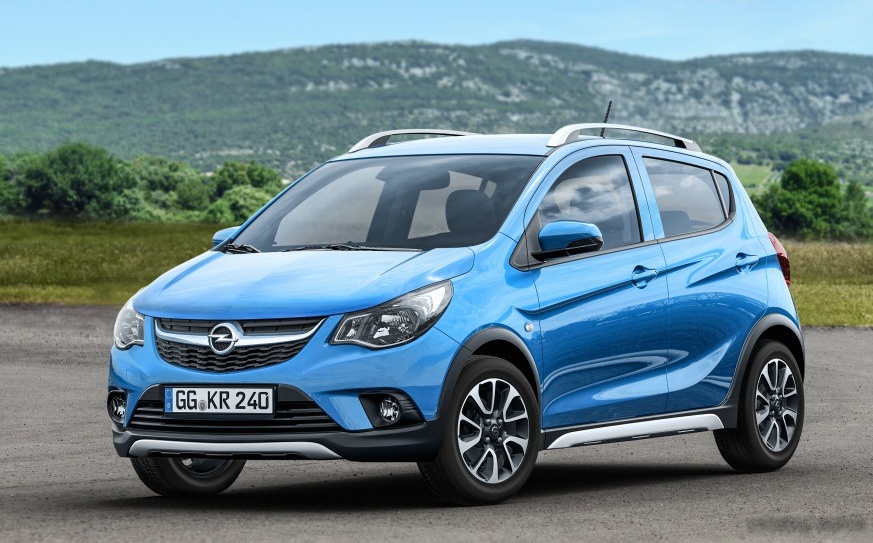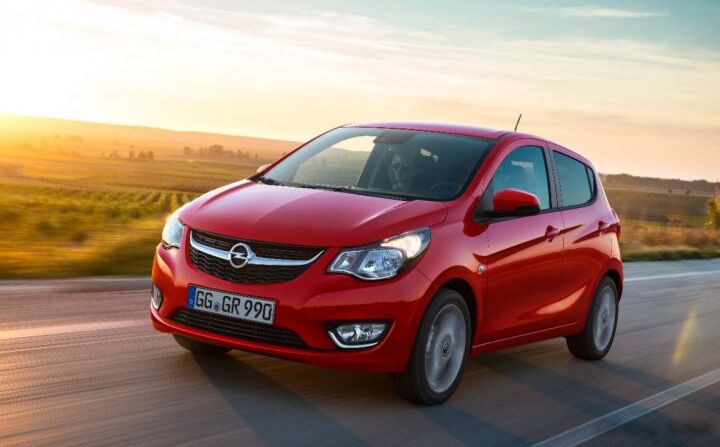
The Opel Karl 1.0 (73 hp) was a subcompact hatchback produced from January 2018 to March 2019. Positioned as the entry-level model within the Karl range, it aimed to provide affordable transportation within the European market. It was part of the broader Karl generation, built on Opel’s platform designed for small, economical city cars. This variant, powered by a 1.0-liter three-cylinder engine, represented Opel’s attempt to capture budget-conscious buyers seeking a practical and fuel-efficient vehicle. The Karl was essentially a rebadged version of the Vauxhall Viva, sold under the Opel brand in mainland Europe.
Technical Specifications
| Brand | Opel |
| Model | Karl |
| Generation | Karl |
| Type (Engine) | 1.0 (73 Hp) |
| Start of production | January, 2018 |
| End of production | March, 2019 |
| Powertrain Architecture | Internal Combustion engine |
| Body type | Hatchback |
| Seats | 4-5 |
| Doors | 5 |
| Combined fuel consumption (WLTP) | 6.0-6.2 l/100 km (39.2 – 37.9 US mpg, 47.1 – 45.6 UK mpg, 16.7 – 16.1 km/l) |
| CO2 emissions (WLTP) | 135-141 g/km |
| Fuel consumption (economy) – urban (NEDC) | 6.0-6.2 l/100 km (39.2 – 37.9 US mpg, 47.1 – 45.6 UK mpg, 16.7 – 16.1 km/l) |
| Fuel consumption (economy) – extra urban (NEDC) | 4.4-4.5 l/100 km (53.5 – 52.3 US mpg, 64.2 – 62.8 UK mpg, 22.7 – 22.2 km/l) |
| Fuel consumption (economy) – combined (NEDC) | 5.0-5.1 l/100 km (47 – 46.1 US mpg, 56.5 – 55.4 UK mpg, 20 – 19.6 km/l) |
| CO2 emissions (NEDC) | 114-117 g/km |
| Fuel Type | Petrol (Gasoline) |
| Acceleration 0 – 100 km/h | 13.9 sec |
| Acceleration 0 – 62 mph | 13.9 sec |
| Acceleration 0 – 60 mph | 13.2 sec |
| Maximum speed | 170 km/h (105.63 mph) |
| Emission standard | Euro 6d-TEMP |
| Weight-to-power ratio | 11.8 kg/Hp, 84.5 Hp/tonne |
| Weight-to-torque ratio | 9.1 kg/Nm, 110 Nm/tonne |
| Power | 73 Hp @ 6500 rpm |
| Power per litre | 73.1 Hp/l |
| Torque | 95 Nm @ 4500 rpm (70.07 lb.-ft. @ 4500 rpm) |
| Engine layout | Front, Transverse |
| Engine Model/Code | D10XE |
| Engine displacement | 999 cm3 (60.96 cu. in.) |
| Number of cylinders | 3 |
| Engine configuration | Inline |
| Cylinder Bore | 74 mm (2.91 in.) |
| Piston Stroke | 77.4 mm (3.05 in.) |
| Compression ratio | 10.5:1 |
| Number of valves per cylinder | 4 |
| Engine aspiration | Naturally aspirated engine |
| Engine oil capacity | 3.5 l (3.7 US qt | 3.08 UK qt) |
| Coolant | 4.2 l (4.44 US qt | 3.7 UK qt) |
| Kerb Weight | 864 kg (1904.79 lbs.) |
| Max. weight | 1353 kg (2982.85 lbs.) |
| Max load | 489 kg (1078.06 lbs.) |
| Trunk (boot) space – minimum | 206 l (7.27 cu. ft.) |
| Trunk (boot) space – maximum | 1013 l (35.77 cu. ft.) |
| Fuel tank capacity | 32 l (8.45 US gal | 7.04 UK gal) |
| Length | 3675 mm (144.69 in.) |
| Width | 1595 mm (62.8 in.) |
| Width with mirrors folded | 1698 mm (66.85 in.) |
| Width including mirrors | 1876 mm (73.86 in.) |
| Height | 1485 mm (58.46 in.) |
| Wheelbase | 2385 mm (93.9 in.) |
| Front track | 1410 mm (55.51 in.) |
| Rear (Back) track | 1418 mm (55.83 in.) |
| Minimum turning circle | 9.8 m (32.15 ft.) |
| Drivetrain Architecture | The Internal combustion engine (ICE) drives the front wheels of the vehicle. |
| Drive wheel | Front wheel drive |
| Number of gears and type of gearbox | 5 gears, manual transmission |
| Front brakes | Ventilated discs |
| Assisting systems | ABS (Anti-lock braking system) |
| Tires size | 165/65 R14; 185/55 R15 |
| Wheel rims size | 5J x 14; 6J x 15 |
Powertrain & Engine Architecture
The Opel Karl 1.0 utilized the D10XE engine, a 999cc inline three-cylinder petrol engine. This engine was part of Opel’s ‘Small Engine Family’ and featured a naturally aspirated configuration. It employed multi-point fuel injection and a single overhead camshaft (SOHC) with four valves per cylinder. The engine’s relatively simple design prioritized affordability and fuel efficiency over outright performance. The 5-speed manual transmission was the only gearbox option available for this variant. The transmission was chosen for its cost-effectiveness and contribution to the vehicle’s overall fuel economy. The engine’s modest 95 Nm (70 lb-ft) of torque was delivered at 4500 rpm, requiring drivers to utilize the gearbox to maintain momentum, especially when fully loaded or tackling inclines.
Driving Characteristics
The Karl 1.0 with the manual transmission offered a basic, but functional driving experience. Acceleration was leisurely, taking approximately 13.9 seconds to reach 62 mph (100 km/h). The engine felt strained at higher speeds, and highway driving required frequent gear changes. The 5-speed gearbox was light and easy to operate, but the long gearing emphasized fuel economy over responsiveness. Compared to potential higher-output versions (which weren’t offered on the Karl), this variant prioritized fuel efficiency and low running costs. The steering was light and easy, making it well-suited for urban environments, but lacked the precision found in more performance-oriented vehicles.
Equipment & Trim Levels
The Karl 1.0 typically came with a basic level of equipment. Standard features included power steering, ABS, front airbags, and a basic audio system. Higher trim levels, though limited, could add features like air conditioning, electric front windows, and a more advanced infotainment system. Interior upholstery was typically cloth, and the dashboard featured a simple, functional design. The focus was on providing essential features at a low price point. Optional extras were kept to a minimum, reflecting the Karl’s position as an entry-level vehicle.
Chassis & Braking
The Karl 1.0 featured a MacPherson strut front suspension and a torsion beam rear suspension. This setup was chosen for its simplicity and cost-effectiveness. The front brakes were ventilated discs, while the rear brakes were drums. This configuration was adequate for the vehicle’s weight and performance, but lacked the stopping power of more sophisticated braking systems. The relatively narrow tires (165/65 R14 or 185/55 R15) contributed to fuel efficiency but offered limited grip. A stabilizer bar was included at the front to reduce body roll during cornering.
Market Reception & Comparison
The Opel Karl 1.0 was generally well-received as an affordable and practical city car. Critics praised its fuel efficiency and low purchase price, but noted its lack of performance and refinement. Compared to other small hatchbacks in the European market, such as the Hyundai i10 and Kia Picanto, the Karl offered a competitive price but lacked some of the features and sophistication of its rivals. Its fuel economy figures were respectable, but not class-leading. Reliability reports were generally positive, with few major issues reported.
Legacy
The Opel Karl 1.0, while not a groundbreaking vehicle, served as an important entry point into the Opel brand for many buyers. The D10XE engine proved to be a relatively reliable unit, and parts availability remains good. On the used car market, the Karl 1.0 represents a very affordable option for those seeking basic transportation. However, potential buyers should be aware of its limited performance and basic equipment levels. The Karl’s legacy lies in its role as a budget-friendly and practical city car, offering a no-frills solution for everyday commuting.