
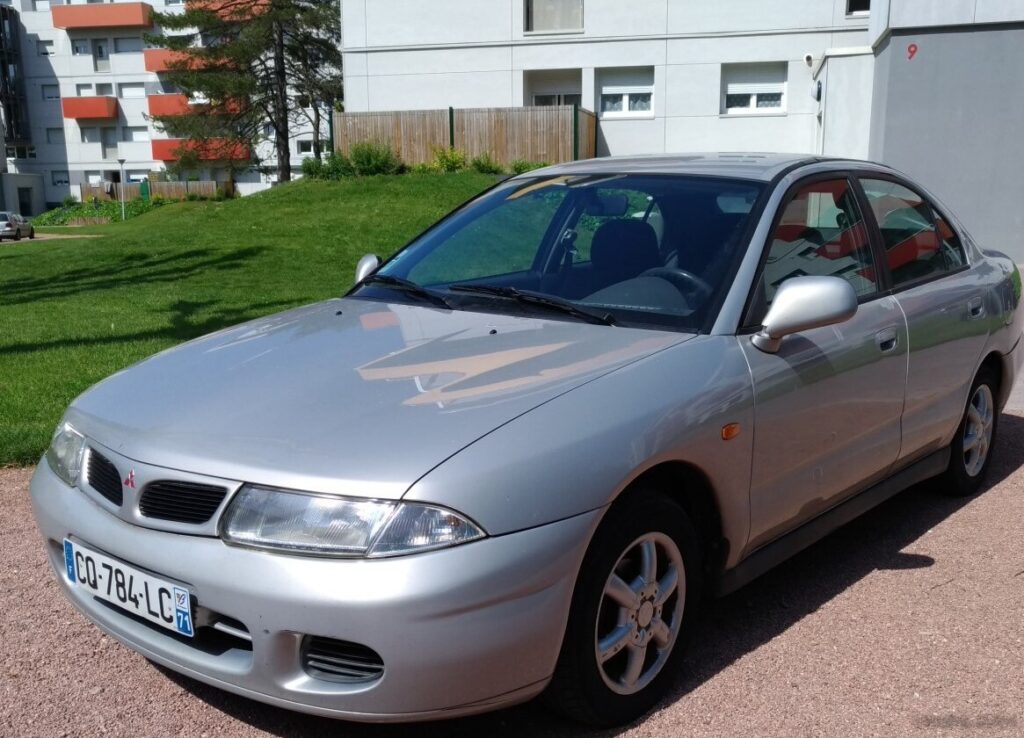
The Mitsubishi Carisma 1.8 16V, produced between 1995 and 2000, represented a significant step forward for Mitsubishi’s presence in the competitive European compact sedan market. Positioned as a mid-range offering within the Carisma lineup – which itself was a replacement for the Galant – the 1.8 16V aimed to balance performance with affordability. It was built on the shared 1HX0/A3 platform developed in collaboration with Volvo, and served as a key model in Mitsubishi’s efforts to establish a stronger foothold against established rivals like the Ford Escort, Opel Astra, and Volkswagen Golf. This variant offered a more spirited driving experience than the base models, while remaining more accessible than the higher-performance options.
Technical Specifications
| Brand | Mitsubishi |
| Model | Carisma |
| Generation | Carisma |
| Type (Engine) | 1.8 16V (140 Hp) |
| Start of production | 1995 |
| End of production | 2000 |
| Powertrain Architecture | Internal Combustion engine |
| Body type | Sedan |
| Seats | 5 |
| Doors | 4 |
| Fuel consumption (urban) | 9 l/100 km (26.1 US mpg) |
| Fuel consumption (extra urban) | 5.2 l/100 km (45.2 US mpg) |
| Fuel consumption (combined) | 6.7 l/100 km (35.1 US mpg) |
| Fuel Type | Petrol (Gasoline) |
| Acceleration 0 – 100 km/h | 9.2 sec |
| Acceleration 0 – 62 mph | 9.2 sec |
| Acceleration 0 – 60 mph | 8.7 sec |
| Maximum speed | 215 km/h (133.59 mph) |
| Weight-to-power ratio | 8.4 kg/Hp |
| Weight-to-torque ratio | 7 kg/Nm |
| Power | 140 Hp @ 6500 rpm |
| Power per litre | 76.3 Hp/l |
| Torque | 167 Nm @ 5000 rpm (123.17 lb.-ft. @ 5000 rpm) |
| Engine layout | Front, Transverse |
| Engine displacement | 1834 cm3 (111.92 cu. in.) |
| Number of cylinders | 4 |
| Engine configuration | Inline |
| Cylinder Bore | 81 mm (3.19 in.) |
| Piston Stroke | 89 mm (3.5 in.) |
| Compression ratio | 10.5:1 |
| Number of valves per cylinder | 4 |
| Fuel injection system | Multi-port manifold injection |
| Engine aspiration | Naturally aspirated engine |
| Valvetrain | DOHC |
| Kerb Weight | 1175 kg (2590.43 lbs.) |
| Max. weight | 1685 kg (3714.79 lbs.) |
| Max load | 510 kg (1124.36 lbs.) |
| Trunk (boot) space – maximum | 460 l (16.24 cu. ft.) |
| Fuel tank capacity | 60 l (15.85 US gal | 13.2 UK gal) |
| Length | 4435 mm (174.61 in.) |
| Width | 1710 mm (67.32 in.) |
| Height | 1405 mm (55.31 in.) |
| Wheelbase | 2550 mm (100.39 in.) |
| Front track | 1455 mm (57.28 in.) |
| Rear (Back) track | 1475 mm (58.07 in.) |
| Drivetrain Architecture | The Internal combustion engine (ICE) drives the front wheels of the vehicle. |
| Drive wheel | Front wheel drive |
| Number of gears and type of gearbox | 5 gears, manual transmission |
| Front suspension | Spring Strut |
| Rear suspension | Coil spring |
| Front brakes | Disc |
| Rear brakes | Disc |
| Assisting systems | ABS (Anti-lock braking system) |
| Steering type | Steering rack and pinion |
| Power steering | Hydraulic Steering |
| Tires size | 195/60 R14 |
Powertrain & Engine Architecture
The heart of the Carisma 1.8 16V is the 4G93 inline-four cylinder engine. This 1.8-liter (1834 cc) powerplant featured a double overhead camshaft (DOHC) valvetrain with four valves per cylinder, contributing to its relatively high output for its displacement. The engine utilized multi-port fuel injection, a common setup for the era, ensuring efficient fuel delivery. The 4G93 engine was known for its robust construction and relative simplicity, making it reasonably reliable. The 140 horsepower peak was achieved at 6500 rpm, while the 167 Nm (123 lb-ft) of torque was available at 5000 rpm. This engine was paired exclusively with a five-speed manual transmission in most markets, offering drivers a direct connection to the engine’s power. The transmission was chosen for its durability and relatively precise shift feel.
Driving Characteristics
The Carisma 1.8 16V offered a noticeably more engaging driving experience compared to the lower-displacement models. Acceleration from 0 to 60 mph took approximately 8.7 seconds, and it could reach a top speed of 133.59 mph. While not a sports car, the 1.8L engine provided sufficient power for comfortable highway cruising and confident overtaking. The five-speed manual transmission allowed drivers to keep the engine in its optimal power band, maximizing performance. Compared to the base 1.6L engine, the 1.8 felt significantly more responsive, particularly at higher speeds. The suspension, tuned for comfort, provided a reasonably compliant ride, although it wasn’t as sporty as some of its rivals. The steering was light and accurate, making the car easy to maneuver in urban environments.
Equipment & Trim Levels
The 1.8 16V trim typically included features such as power steering, central locking, electric front windows, and an upgraded audio system. Interior upholstery was generally cloth, with options for higher-grade materials available. Air conditioning was often standard or available as an option. Depending on the market, additional features like alloy wheels, a sunroof, and anti-lock brakes (ABS) could be specified. The Carisma aimed for a balance between practicality and comfort, offering a well-equipped interior without the premium price tag of more luxurious competitors.
Chassis & Braking
The Carisma utilized a front-wheel-drive layout with independent front suspension using MacPherson struts and a coil spring rear suspension. This setup provided a good balance between ride comfort and handling. Braking duties were handled by disc brakes on all four wheels, providing adequate stopping power. ABS was available as an option, enhancing safety by preventing wheel lockup during hard braking. The chassis was designed to be relatively lightweight, contributing to the car’s overall agility.
Market Reception & Comparison
The Mitsubishi Carisma 1.8 16V was generally well-received by automotive critics. It was praised for its willing engine, comfortable ride, and spacious interior. However, some reviewers noted that the styling was somewhat conservative compared to its rivals. Compared to the base 1.6L model, the 1.8 offered a significant performance upgrade, making it a more attractive option for drivers who prioritized driving enjoyment. Fuel economy was respectable, averaging around 35.1 US mpg in combined driving. Reliability was generally good, although some owners reported minor issues with electrical components. Against competitors like the Ford Escort and Opel Astra, the Carisma offered a compelling package with a good balance of features, performance, and price.
Legacy
The Mitsubishi Carisma 1.8 16V has developed a reputation as a reliable and affordable used car. The 4G93 engine is known for its durability, and parts availability remains relatively good. While not a collector’s item, well-maintained examples are still sought after by enthusiasts and budget-conscious buyers. The Carisma represented a significant step forward for Mitsubishi in the European market, and the 1.8 16V variant remains a popular choice for those seeking a practical and enjoyable compact sedan.
