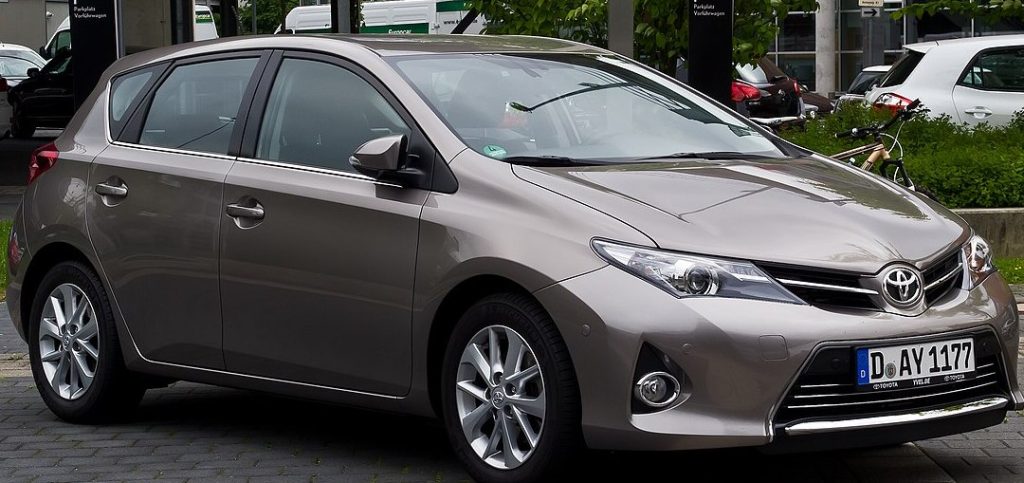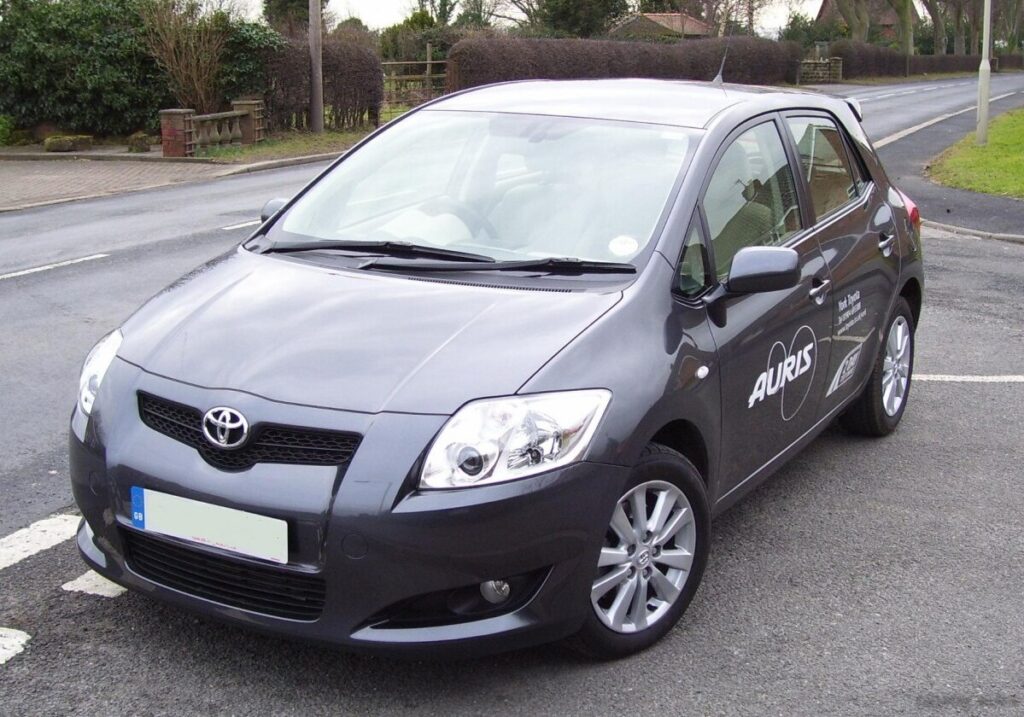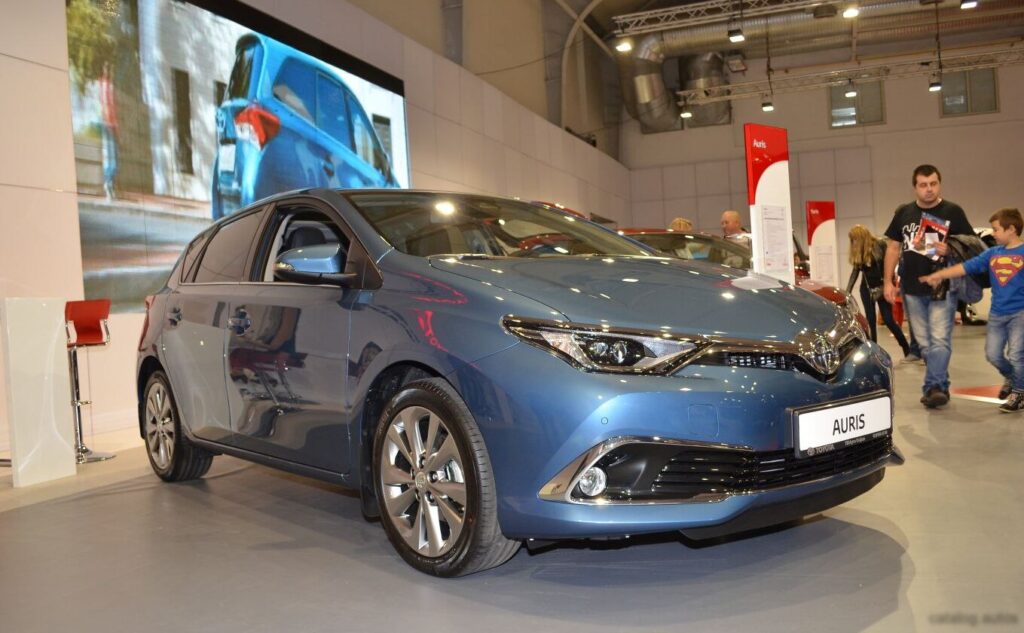
The Toyota Auris II, specifically the 1.6 D-4D (112 hp) Start&Stop variant produced from 2015 to 2018, represented a key offering in Toyota’s European compact hatchback lineup. Positioned as a fuel-efficient and practical option, this version of the Auris aimed to appeal to buyers prioritizing economy and lower running costs. It sat within the second generation of the Auris (known as the E180 series), which benefited from a facelift in 2015 bringing styling updates and revised equipment levels. This model was primarily marketed in Europe, where demand for diesel-powered compacts remained strong, and it competed with rivals like the Volkswagen Golf, Ford Focus, and Opel Astra.
Technical Specifications
| Brand | Toyota |
| Model | Auris |
| Generation | Auris II (facelift 2015) |
| Type (Engine) | 1.6 D-4D (112 Hp) start&stop |
| Start of production | 2015 |
| End of production | 2018 |
| Powertrain Architecture | Internal Combustion engine |
| Body type | Hatchback |
| Seats | 5 |
| Doors | 5 |
| Fuel consumption (urban) | 5.1 l/100 km (46.1 US mpg, 55.4 UK mpg, 19.6 km/l) |
| Fuel consumption (extra urban) | 3.8 l/100 km (61.9 US mpg, 74.3 UK mpg, 26.3 km/l) |
| Fuel consumption (combined) | 4.2 l/100 km (56 US mpg, 67.3 UK mpg, 23.8 km/l) |
| CO2 emissions | 108 g/km |
| Fuel Type | Diesel |
| Acceleration 0 – 100 km/h | 10.5 sec |
| Acceleration 0 – 62 mph | 10.5 sec |
| Acceleration 0 – 60 mph | 10 sec (Calculated) |
| Maximum speed | 195 km/h (121.17 mph) |
| Emission standard | Euro 6 W |
| Weight-to-power ratio | 12.2 kg/Hp, 81.8 Hp/tonne |
| Weight-to-torque ratio | 5.1 kg/Nm, 197.1 Nm/tonne |
| Power | 112 Hp @ 4000 rpm |
| Power per litre | 70.1 Hp/l |
| Torque | 270 Nm @ 1750-2250 rpm (199.14 lb.-ft. @ 1750-2250 rpm) |
| Engine layout | Front, Transverse |
| Engine Model/Code | 1WW |
| Engine displacement | 1598 cm3 (97.52 cu. in.) |
| Number of cylinders | 4 |
| Engine configuration | Inline |
| Compression ratio | 16.5:1 |
| Number of valves per cylinder | 4 |
| Fuel injection system | Diesel Commonrail |
| Engine aspiration | Turbocharger, Intercooler |
| Valvetrain | DOHC |
| Engine oil capacity | 5.2 l (5.49 US qt | 4.58 UK qt) |
| Coolant capacity | 7.3 l (7.71 US qt | 6.42 UK qt) |
| Kerb Weight | 1370-1510 kg (3020.33 – 3328.98 lbs.) |
| Max. weight | 1890 kg (4166.74 lbs.) |
| Max load | 380-520 kg (837.76 – 1146.4 lbs.) |
| Trunk (boot) space – minimum | 360 l (12.71 cu. ft.) |
| Fuel tank capacity | 50 l (13.21 US gal | 11 UK gal) |
| Max. roof load | 75 kg (165.35 lbs.) |
| Permitted trailer load with brakes (12%) | 1300 kg (2866.01 lbs.) |
| Permitted trailer load without brakes | 450 kg (992.08 lbs.) |
| Permitted towbar download | 55 kg (121.25 lbs.) |
| Length | 4330 mm (170.47 in.) |
| Width | 1760 mm (69.29 in.) |
| Height | 1475 mm (58.07 in.) |
| Wheelbase | 2600 mm (102.36 in.) |
| Front track | 1515 mm (59.65 in.) |
| Rear track | 1515 mm (59.65 in.) |
| Minimum turning circle | 11.0 m (36.09 ft.) |
| Drivetrain | Front wheel drive |
| Number of gears | 6 gears, manual transmission |
| Front suspension | Independent, McPherson with coil spring and anti-roll bar |
| Rear suspension | Double wishbone |
| Front brakes | Disc |
| Rear brakes | Disc |
| Assisting systems | ABS (Anti-lock braking system) |
| Steering type | Steering rack and pinion |
| Power steering | Electric |
| Tires size | 205/55 R16 |
| Wheel rims size | 6.5J x 16 |
Powertrain & Engine Architecture
The heart of this Auris variant is the 1.6-liter (1598cc) 1WW diesel engine. This engine is a four-cylinder, inline configuration, utilizing a common-rail direct injection system for optimized fuel delivery. The 1WW engine features a turbocharger with an intercooler, which helps to boost power and torque while improving efficiency. The engine produces 112 horsepower at 4000 rpm and a respectable 270 Nm (199 lb-ft) of torque between 1750 and 2250 rpm. The engine also incorporates a Start&Stop system, automatically shutting off the engine when the vehicle is stationary to further reduce fuel consumption and emissions. The engine’s DOHC (Double Overhead Camshaft) valvetrain, with four valves per cylinder, contributes to its efficient operation. This engine was known for its relatively quiet operation for a diesel, and its ability to deliver good fuel economy.
Driving Characteristics
The 1.6 D-4D with a manual transmission offered a balanced driving experience. While not particularly sporty, it provided adequate performance for everyday driving. Acceleration from 0-60 mph took around 10.5 seconds, and the top speed was approximately 195 km/h (121 mph). The engine’s torque delivery was its strong suit, providing good pulling power at lower engine speeds, making it suitable for both urban and highway driving. Compared to higher-output versions of the Auris, such as those with more powerful diesel engines or petrol options, this variant felt less eager to accelerate. However, it excelled in fuel efficiency, offering significantly better economy than its more powerful siblings. The six-speed manual transmission was well-matched to the engine, providing smooth gear changes and helping to keep the engine in its optimal power band.
Equipment & Trim Levels
The 1.6 D-4D Start&Stop variant typically came with a reasonable level of standard equipment. This included air conditioning, power windows, central locking, and a basic audio system with USB connectivity. Safety features such as ABS, multiple airbags, and stability control were also standard. Higher trim levels, such as Active or Icon, added features like alloy wheels, a touchscreen infotainment system, rear parking sensors, and cruise control. Interior upholstery was typically cloth, with a functional and durable design. Optional extras included navigation systems, upgraded audio systems, and metallic paint finishes.
Chassis & Braking
The Auris II utilized a McPherson strut front suspension and a double wishbone rear suspension, providing a comfortable and controlled ride. The suspension was tuned to prioritize comfort over outright sportiness. Braking was handled by disc brakes on all four wheels, providing adequate stopping power. ABS (Anti-lock Braking System) was standard, enhancing safety during emergency braking situations. The steering was electrically assisted, offering light and precise control.
Market Reception & Comparison
The 1.6 D-4D Start&Stop Auris was generally well-received by critics for its fuel efficiency and practicality. It was seen as a sensible choice for buyers seeking a reliable and economical compact hatchback. Compared to the petrol-powered Auris variants, the diesel offered significantly better fuel economy, making it a popular choice for high-mileage drivers. However, some critics noted that the engine lacked the refinement and performance of some of its rivals, such as the Volkswagen Golf TDI. The Auris’s interior was also sometimes criticized for its somewhat bland design and use of materials.
Legacy
The 1.6 D-4D engine, in various iterations, proved to be a reliable and durable powertrain. The Auris II 1.6 D-4D Start&Stop remains a relatively common sight on used car markets today. While diesel engines have faced increased scrutiny in recent years due to emissions concerns, this particular engine is generally considered to be relatively clean and efficient for its age. Maintenance costs are typically reasonable, and parts availability is good. The Auris II 1.6 D-4D continues to offer a practical and economical transportation solution for those seeking a reliable compact hatchback.