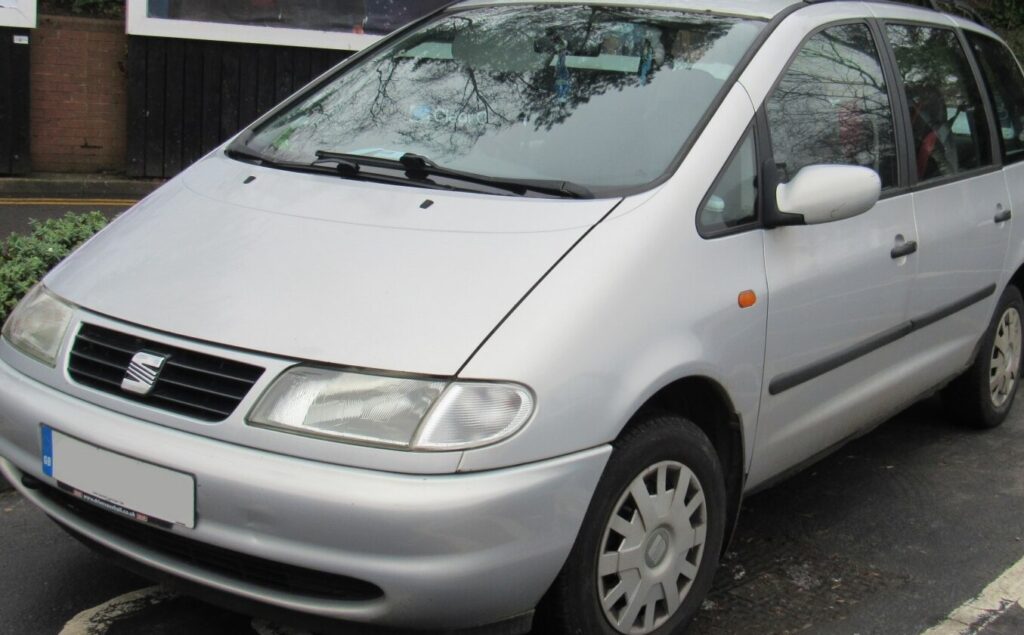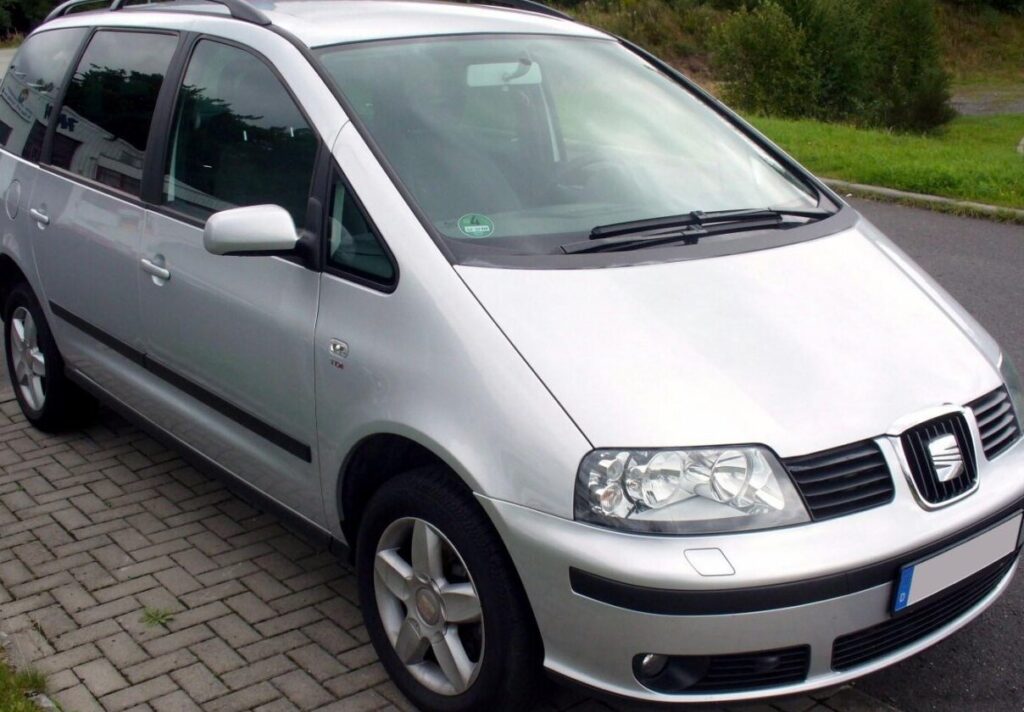
The Seat Alhambra II (7N) 2.0 TDI 140 hp DPF E-Ecomotive, produced from June 2010 to 2015, represents a significant iteration of Seat’s large MPV offering. Positioned as a fuel-efficient and practical option within the Alhambra range, this variant aimed to balance performance with economy, appealing to families and those requiring substantial passenger and cargo space. It shared its platform and much of its engineering with the Volkswagen Sharan, a testament to the collaborative efforts within the Volkswagen Group. The “E-Ecomotive” designation highlights the model’s focus on reduced emissions and improved fuel consumption, achieved through a combination of engine tuning and aerodynamic enhancements.
Technical Specifications
| Brand | Seat |
| Model | Alhambra |
| Generation | Alhambra II (7N) |
| Type (Engine) | 2.0 TDI (140 Hp) DPF E-Ecomotive |
| Start of production | June, 2010 |
| End of production | 2015 |
| Powertrain Architecture | Internal Combustion engine |
| Body type | Minivan, MPV |
| Seats | 5 |
| Doors | 5 |
| Fuel consumption (urban) | 6.8 l/100 km (34.6 US mpg, 41.5 UK mpg, 14.7 km/l) |
| Fuel consumption (extra urban) | 4.8 l/100 km (49 US mpg, 58.9 UK mpg, 20.8 km/l) |
| Fuel consumption (combined) | 5.5 l/100 km (42.8 US mpg, 51.4 UK mpg, 18.2 km/l) |
| CO2 emissions | 143 g/km |
| Fuel Type | Diesel |
| Acceleration 0 – 100 km/h | 10.9 sec |
| Acceleration 0 – 62 mph | 10.9 sec |
| Acceleration 0 – 60 mph | 10.4 sec |
| Maximum speed | 194 km/h (120.55 mph) |
| Emission standard | Euro 5 |
| Weight-to-power ratio | 12.7 kg/Hp, 78.9 Hp/tonne |
| Weight-to-torque ratio | 5.5 kg/Nm, 180.4 Nm/tonne |
| Power | 140 Hp @ 4200 rpm |
| Power per litre | 71.1 Hp/l |
| Torque | 320 Nm @ 1750-2500 rpm (236.02 lb.-ft. @ 1750-2500 rpm) |
| Engine layout | Front, Transverse |
| Engine Model/Code | CFFB |
| Engine displacement | 1968 cm3 (120.09 cu. in.) |
| Number of cylinders | 4 |
| Engine configuration | Inline |
| Cylinder Bore | 81 mm (3.19 in.) |
| Piston Stroke | 95.5 mm (3.76 in.) |
| Compression ratio | 16.5:1 |
| Number of valves per cylinder | 4 |
| Fuel injection system | Diesel Commonrail |
| Engine aspiration | Turbocharger, Intercooler |
| Engine oil capacity | 4.3 l (4.54 US qt | 3.78 UK qt) |
| Coolant | 8 l (8.45 US qt | 7.04 UK qt) |
| Kerb Weight | 1774 kg (3911 lbs.) |
| Max. weight | 2340 kg (5158.82 lbs.) |
| Max load | 566 kg (1247.82 lbs.) |
| Trunk (boot) space – minimum | 809 l (28.57 cu. ft.) |
| Trunk (boot) space – maximum | 2430 l (85.81 cu. ft.) |
| Fuel tank capacity | 70 l (18.49 US gal | 15.4 UK gal) |
| Permitted trailer load with brakes (12%) | 2200 kg (4850.17 lbs.) |
| Length | 4854 mm (191.1 in.) |
| Width | 1904 mm (74.96 in.) |
| Height | 1720 mm (67.72 in.) |
| Wheelbase | 2919 mm (114.92 in.) |
| Front track | 1569 mm (61.77 in.) |
| Rear (Back) track | 1617 mm (63.66 in.) |
| Minimum turning circle | 11.9 m (39.04 ft.) |
| Drivetrain Architecture | Front wheel drive |
| Number of gears and type of gearbox | 6 gears, manual transmission |
| Front suspension | Independent type McPherson |
| Rear suspension | Independent multi-link suspension |
| Front brakes | Ventilated discs, 314 mm |
| Rear brakes | Disc, 282 mm |
| Assisting systems | ABS (Anti-lock braking system) |
| Steering type | Steering rack and pinion |
| Power steering | Electric Steering |
| Tires size | 205/60 R16; 215/60 R16; 225/50 R17 |
| Wheel rims size | 6.5J x 16 |
INTRODUCTION
The Seat Alhambra II, launched in 2010, represented a significant update to Seat’s MPV offering. Built on the Volkswagen Group’s PQ46 platform (also known as the 1HX0/A3 platform), the second-generation Alhambra aimed to provide a more refined and practical experience than its predecessor. The 2.0 TDI 140 hp variant, with its E-Ecomotive enhancements, was positioned as a mid-range option, offering a balance between fuel efficiency, performance, and equipment. It catered to families and individuals needing a versatile vehicle for both daily commutes and longer journeys. This model competed directly with other large MPVs like the Ford Galaxy, Renault Espace, and, of course, its platform sibling, the Volkswagen Sharan.
Powertrain & Engine Architecture
At the heart of the Alhambra 2.0 TDI E-Ecomotive lies the CFFB engine code, a 1968cc inline-four cylinder diesel engine. This engine utilizes a common rail direct injection system, delivering fuel at extremely high pressure for optimized combustion. A turbocharger with an intercooler further enhances performance by forcing more air into the cylinders. The engine produces 140 horsepower at 4200 rpm and a respectable 320 Nm (236 lb-ft) of torque between 1750 and 2500 rpm. The E-Ecomotive designation indicates modifications aimed at improving fuel economy, including optimized engine mapping and potentially reduced weight. The Alhambra 2.0 TDI 140 hp was typically paired with a six-speed manual transmission, although a DSG (Direct-Shift Gearbox) automatic option was also available. The manual transmission provided precise gear changes, while the DSG offered smoother, faster shifts and enhanced convenience.
Driving Characteristics
The 140 hp 2.0 TDI engine, coupled with the six-speed manual transmission, provided adequate performance for everyday driving. Acceleration from 0-60 mph took around 10.4 seconds, and the top speed was approximately 120.55 mph. While not a particularly sporty vehicle, the Alhambra offered sufficient power for overtaking maneuvers and maintaining comfortable cruising speeds on the highway. The engine’s torque delivery was strong at lower and mid-range revs, making it easy to pull away from a standstill and navigate urban traffic. Compared to the higher-output 170 hp TDI version, the 140 hp model felt less eager to accelerate, but it offered improved fuel economy. The manual transmission allowed for greater driver control, while the optional DSG provided a more relaxed driving experience, particularly in stop-and-go traffic.
Equipment & Trim Levels
The Alhambra 2.0 TDI 140 hp E-Ecomotive typically came equipped with a reasonable level of standard features. These included air conditioning, electric windows, central locking, a CD/radio system, and alloy wheels. Higher trim levels added features such as climate control, parking sensors, a touchscreen infotainment system, and leather upholstery. The E-Ecomotive trim often included specific aerodynamic enhancements, such as a lower ride height and optimized front grille, to reduce drag and improve fuel efficiency. Optional extras included a panoramic sunroof, navigation system, and rear entertainment system.
Chassis & Braking
The Alhambra II featured an independent suspension system, with McPherson struts at the front and a multi-link setup at the rear. This provided a comfortable ride quality, even on uneven road surfaces. The front brakes were ventilated discs, while the rear brakes were solid discs. Anti-lock Braking System (ABS) was standard, enhancing safety during emergency braking situations. The Alhambra’s chassis was designed to accommodate the vehicle’s large size and weight, providing stable handling and predictable cornering. Stabilizer bars were fitted to both the front and rear axles to reduce body roll.
Market Reception & Comparison
The Seat Alhambra 2.0 TDI 140 hp E-Ecomotive was generally well-received by critics for its practicality, spaciousness, and fuel efficiency. It was praised for its comfortable ride and versatile interior. However, some reviewers noted that the 140 hp engine could feel underpowered when the vehicle was fully loaded. Compared to the 170 hp TDI version, the 140 hp model offered better fuel economy but less outright performance. The Alhambra also faced competition from other large MPVs, such as the Ford Galaxy and Volkswagen Sharan, which offered similar levels of practicality and comfort. The Alhambra often represented a more affordable option compared to the Sharan, while offering a similar driving experience.
Legacy
The Seat Alhambra II 2.0 TDI 140 hp E-Ecomotive has proven to be a relatively reliable vehicle, with the 2.0 TDI engine generally considered durable. Common issues include diesel particulate filter (DPF) problems, particularly on vehicles that primarily undertake short journeys. Regular servicing and the use of high-quality diesel fuel are essential for maintaining the engine’s health. On the used car market, the Alhambra 2.0 TDI 140 hp represents a good value proposition for those seeking a spacious and practical MPV. Its fuel efficiency and relatively low running costs make it an attractive option for families and individuals needing a versatile vehicle.