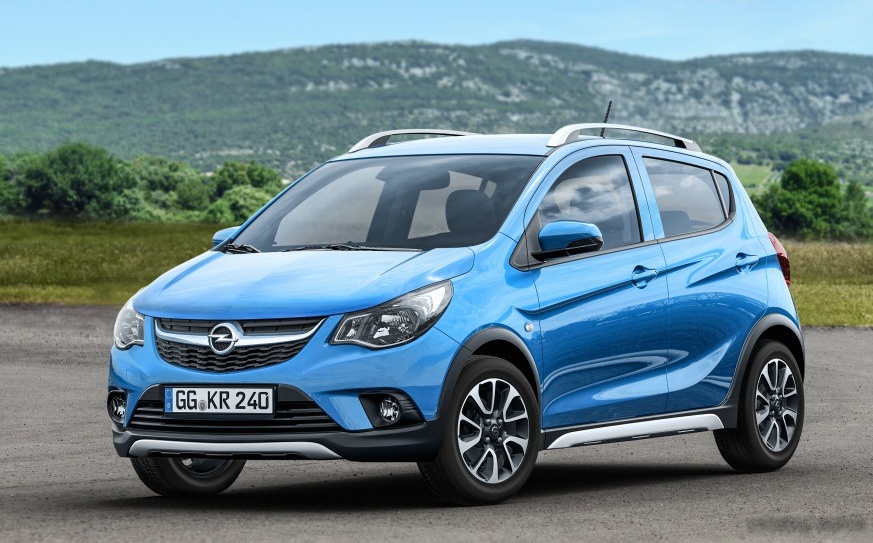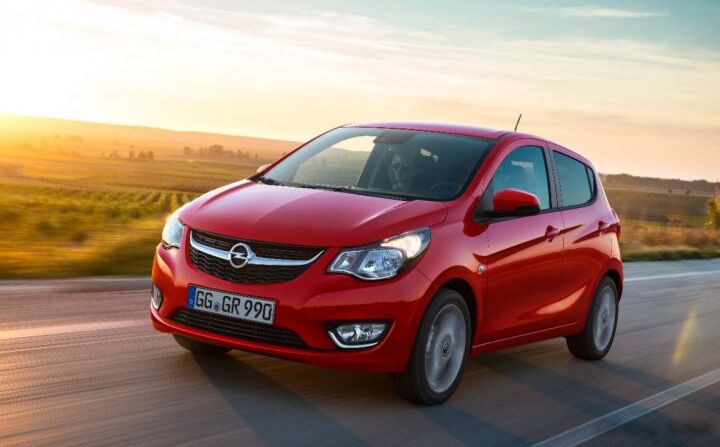
The Opel Karl 1.0 ecoFLEX (75 hp) start/stop, marketed as the Vauxhall Viva in the United Kingdom, was a city car produced by Opel from August 2015 to March 2018. Positioned as the entry-level model in Opel’s lineup, the Karl aimed to provide affordable and economical transportation. It was built on Opel’s new platform designed for small vehicles, intended to compete with established players like the Fiat 500 and Volkswagen up!. The “ecoFLEX” designation indicated a focus on fuel efficiency, incorporating features like a Start/Stop system to minimize emissions and fuel consumption. This variant, with its 1.0-liter engine and five-speed manual transmission, represented the base offering, prioritizing economy over outright performance.
Technical Specifications
| Brand | Opel |
| Model | Karl |
| Generation | Karl |
| Type (Engine) | 1.0 ecoFLEX (75 Hp) start/stop |
| Start of production | August, 2015 |
| End of production | March, 2018 |
| Powertrain Architecture | Internal Combustion engine |
| Body type | Hatchback |
| Seats | 5 |
| Doors | 5 |
| Fuel consumption (urban) | 5.1 l/100 km (46.1 US mpg) |
| Fuel consumption (extra urban) | 3.6 l/100 km (65.3 US mpg) |
| Fuel consumption (combined) | 4.1 l/100 km (57.4 US mpg) |
| CO2 emissions | 94 g/km |
| Fuel Type | Petrol (Gasoline) |
| Acceleration 0 – 100 km/h | 13.9 sec |
| Acceleration 0 – 62 mph | 13.9 sec |
| Acceleration 0 – 60 mph | 13.2 sec |
| Maximum speed | 170 km/h (105.63 mph) |
| Emission standard | Euro 6 |
| Weight-to-power ratio | 11.5 kg/Hp |
| Weight-to-torque ratio | 9.1 kg/Nm |
| Power | 75 Hp @ 6500 rpm |
| Torque | 95 Nm @ 4500 rpm (70.07 lb.-ft. @ 4500 rpm) |
| Engine layout | Front, Transverse |
| Engine Model/Code | B10XE |
| Engine displacement | 999 cm3 (60.96 cu. in.) |
| Number of cylinders | 3 |
| Engine configuration | Inline |
| Compression ratio | 10.5:1 |
| Fuel injection system | Multi-port manifold injection |
| Engine aspiration | Naturally aspirated engine |
| Engine oil capacity | 3.5 l (3.7 US qt | 3.08 UK qt) |
| Coolant capacity | 4.2 l (4.44 US qt | 3.7 UK qt) |
| Kerb Weight | 864 kg (1904.79 lbs.) |
| Max. weight | 1353 kg (2982.85 lbs.) |
| Max load | 489 kg (1078.06 lbs.) |
| Trunk (boot) space – minimum | 206 l (7.27 cu. ft.) |
| Trunk (boot) space – maximum | 1013 l (35.77 cu. ft.) |
| Fuel tank capacity | 32 l (8.45 US gal | 7.04 UK gal) |
| Length | 3675 mm (144.69 in.) |
| Width | 1604 mm (63.15 in.) |
| Width with mirrors folded | 1698 mm (66.85 in.) |
| Width including mirrors | 1876 mm (73.86 in.) |
| Height | 1476 mm (58.11 in.) |
| Wheelbase | 2385 mm (93.9 in.) |
| Front track | 1410 mm (55.51 in.) |
| Rear track | 1418 mm (55.83 in.) |
| Minimum turning circle | 9.8 m (32.15 ft.) |
| Drivetrain Architecture | Front wheel drive |
| Number of gears | 5 |
| Gearbox type | Manual transmission |
| Front brakes | Disc |
| Rear brakes | Disc |
| Assisting systems | ABS (Anti-lock braking system) |
| Steering type | Steering rack and pinion |
Introduction
The Opel Karl 1.0 ecoFLEX (75 hp) start/stop, launched in 2015, represented Opel’s attempt to capture a segment of the European market seeking affordable and fuel-efficient transportation. It was designed as a practical, no-frills city car, aimed at first-time buyers, commuters, and those needing a small, economical vehicle for urban driving. The Karl was built on a completely new platform, separate from Opel’s larger models, and was intended to be a key part of Opel’s strategy to broaden its appeal and compete more effectively in the budget car sector. The 75 hp variant, paired with a five-speed manual transmission, was the entry point to the Karl range.
Powertrain & Engine Architecture
At the heart of the Karl 1.0 ecoFLEX was the B10XE engine, a naturally aspirated 999cc three-cylinder petrol engine. This engine was a key component of Opel’s efforts to improve fuel economy and reduce emissions. The B10XE utilized a multi-point fuel injection system, delivering fuel directly into the intake ports. The engine featured a single overhead camshaft (SOHC) valvetrain, operating with four valves per cylinder. The Start/Stop system, standard on the ecoFLEX model, automatically shut off the engine when the vehicle came to a standstill (e.g., at traffic lights) and restarted it instantly when the driver depressed the clutch pedal. The five-speed manual transmission was chosen for its simplicity and efficiency, contributing to the car’s overall fuel economy. The engine’s relatively small displacement and three-cylinder configuration resulted in a characteristic engine note, often described as buzzy but not overly intrusive.
Driving Characteristics
The 1.0-liter, 75 hp engine in the Karl 1.0 ecoFLEX provided adequate, but not exhilarating, performance. Acceleration from 0 to 60 mph took around 13.2 seconds, and the top speed was 105.63 mph. In real-world driving, the engine felt most comfortable at lower speeds, making it well-suited for city traffic. The five-speed manual transmission offered a reasonable spread of gears, but the engine lacked significant low-end torque, requiring frequent downshifts when climbing hills or overtaking. Compared to potential higher-output versions (which were not offered on the Karl), this variant prioritized fuel efficiency over performance. The gear ratios were tuned for economy, resulting in a relatively high final drive ratio. The steering was light and easy, making maneuvering in tight spaces effortless, but it lacked the precision and feedback found in more performance-oriented vehicles.
Equipment & Trim Levels
The Opel Karl 1.0 ecoFLEX (75 hp) start/stop was typically equipped with a basic level of standard features. These included power steering, ABS brakes, electronic stability control, and a driver’s airbag. Interior upholstery was typically cloth, with a functional, if somewhat basic, dashboard layout. Air conditioning was often an optional extra, as were features like power windows and a basic audio system. Higher trim levels, if selected, added features like alloy wheels, upgraded interior trim, and a more comprehensive infotainment system. The focus of this base trim was on providing essential features at an affordable price point.
Chassis & Braking
The Karl’s chassis was designed to provide a comfortable ride and predictable handling. The front suspension utilized MacPherson struts, while the rear suspension employed a torsion beam setup. This configuration was chosen for its simplicity, cost-effectiveness, and ability to provide a reasonable balance between ride comfort and handling. Brakes were disc brakes on all four wheels, providing adequate stopping power for the car’s weight and performance. ABS (Anti-lock Braking System) was standard, enhancing safety during emergency braking situations. The Karl’s relatively light weight (864 kg / 1904.79 lbs) contributed to its nimble handling and fuel efficiency.
Market Reception & Comparison
The Opel Karl 1.0 ecoFLEX (75 hp) start/stop was generally well-received by critics as an affordable and economical city car. Its fuel economy of around 57.4 US mpg was a major selling point, and its compact size made it easy to maneuver in urban environments. However, some reviewers criticized its lack of power and refinement, particularly when compared to more expensive rivals. Compared to other trims within the Karl range (had they existed), this 75 hp variant would have been the most economical but also the slowest. It competed directly with other budget city cars like the Fiat 500, Volkswagen up!, and Hyundai i10, offering a competitive price point but lacking some of the brand cachet or refinement of its rivals.
Legacy
The Opel Karl, while not a groundbreaking vehicle, served as an important entry point into the Opel brand for many buyers. The 1.0-liter B10XE engine proved to be relatively reliable, although regular maintenance is crucial for any small-displacement engine. On the used car market, the Karl 1.0 ecoFLEX (75 hp) start/stop remains an affordable option for those seeking a cheap and economical city car. Its simplicity and low running costs make it an attractive proposition for first-time drivers or those on a tight budget. While not known for its performance or luxury, the Karl fulfilled its intended purpose as a practical and economical mode of transportation.