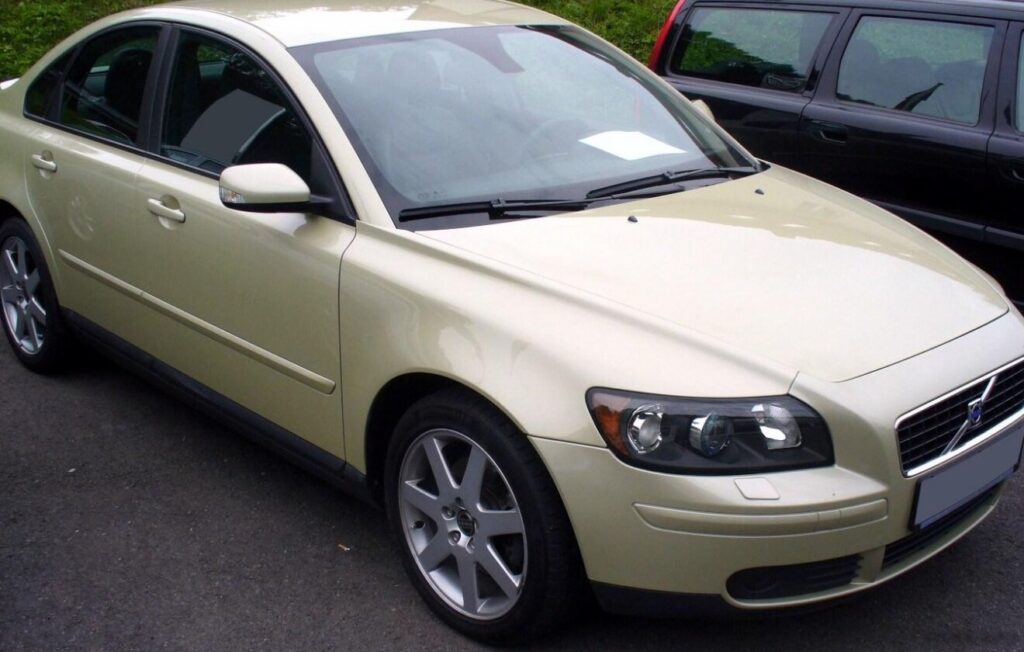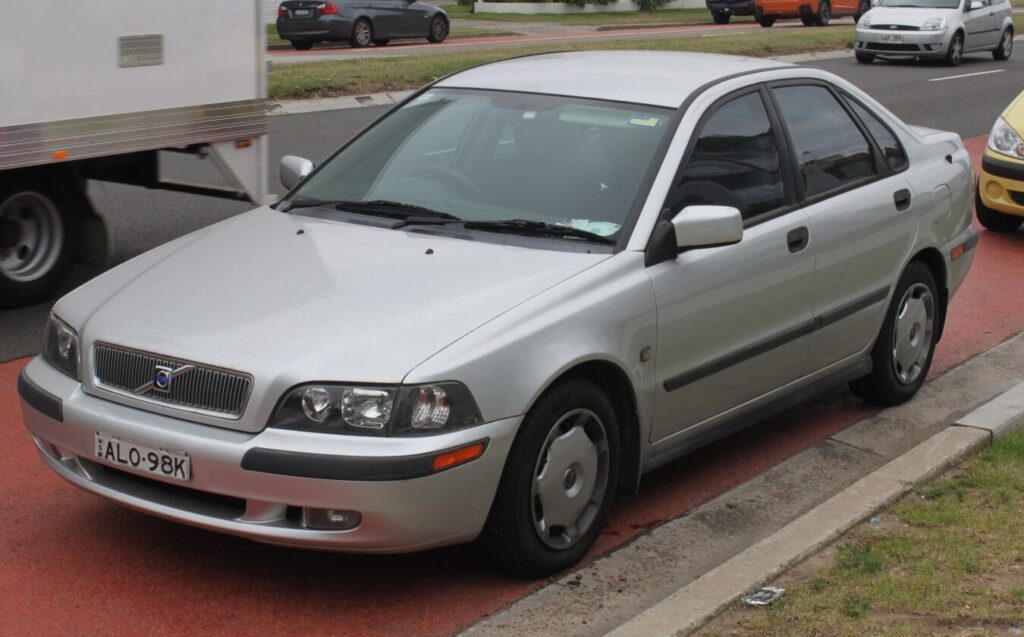
The Volvo S40 VS 1.6 16V, produced between 1995 and 1999, represented Volvo’s entry into the compact executive sedan market. This variant, powered by a 1.6-liter naturally aspirated engine producing 105 horsepower, was positioned as the most affordable and fuel-efficient option within the first generation (VS) S40 lineup. It served as a crucial model for attracting a broader customer base, particularly those prioritizing economy and practicality over outright performance. The S40 VS competed with rivals like the Audi A3, BMW 3 Series Compact, and Mercedes-Benz A-Class, offering a blend of Scandinavian design, safety features, and a comfortable driving experience.
Technical Specifications
| Brand | Volvo |
| Model | S40 |
| Generation | S40 (VS) |
| Type (Engine) | 1.6 16V (105 Hp) |
| Start of production | 1995 |
| End of production | 1999 |
| Powertrain Architecture | Internal Combustion engine |
| Body type | Sedan |
| Seats | 5 |
| Doors | 4 |
| Fuel consumption (urban) | 11.8 l/100 km (19.9 US mpg, 23.9 UK mpg, 8.5 km/l) |
| Fuel consumption (extra urban) | 6.6 l/100 km (35.6 US mpg, 42.8 UK mpg, 15.2 km/l) |
| Fuel consumption (combined) | 8.5 l/100 km (27.7 US mpg, 33.2 UK mpg, 11.8 km/l) |
| Fuel Type | Petrol (Gasoline) |
| Acceleration 0 – 100 km/h | 13 sec |
| Acceleration 0 – 62 mph | 13 sec |
| Acceleration 0 – 60 mph | 12.4 sec |
| Maximum speed | 185 km/h (114.95 mph) |
| Weight-to-power ratio | 11.7 kg/Hp, 85.4 Hp/tonne |
| Weight-to-torque ratio | 8.6 kg/Nm, 116.3 Nm/tonne |
| Power | 105 Hp @ 5500 rpm |
| Power per litre | 66.1 Hp/l |
| Torque | 143 Nm @ 4200 rpm (105.47 lb.-ft. @ 4200 rpm) |
| Engine layout | Front, Transverse |
| Engine Model/Code | B4164S |
| Engine displacement | 1588 cm3 (96.91 cu. in.) |
| Number of cylinders | 4 |
| Engine configuration | Inline |
| Cylinder Bore | 81 mm (3.19 in.) |
| Piston Stroke | 77 mm (3.03 in.) |
| Compression ratio | 10.5:1 |
| Number of valves per cylinder | 4 |
| Fuel injection system | Multi-port manifold injection |
| Engine aspiration | Naturally aspirated engine |
| Valvetrain | DOHC |
| Engine oil capacity | 5.4 l (5.71 US qt | 4.75 UK qt) |
| Coolant | 6.3 l (6.66 US qt | 5.54 UK qt) |
| Kerb Weight | 1230 kg (2711.69 lbs.) |
| Max. weight | 1750 kg (3858.09 lbs.) |
| Max load | 520 kg (1146.4 lbs.) |
| Trunk (boot) space – minimum | 415 l (14.66 cu. ft.) |
| Fuel tank capacity | 60 l (15.85 US gal | 13.2 UK gal) |
| Length | 4483 mm (176.5 in.) |
| Width | 1717 mm (67.6 in.) |
| Height | 1411 mm (55.55 in.) |
| Wheelbase | 2550 mm (100.39 in.) |
| Front track | 1450 mm (57.09 in.) |
| Rear (Back) track | 1470 mm (57.87 in.) |
| Drivetrain Architecture | The Internal combustion engine (ICE) drives the front wheels of the vehicle. |
| Drive wheel | Front wheel drive |
| Number of gears and type of gearbox | 5 gears, manual transmission |
| Front suspension | Wishbone |
| Rear suspension | Coil spring |
| Front brakes | Ventilated discs |
| Rear brakes | Disc |
| Assisting systems | ABS (Anti-lock braking system) |
| Steering type | Steering rack and pinion |
| Power steering | Hydraulic Steering |
| Tires size | 195/55 R15 |
| Wheel rims size | 15 |
Powertrain & Engine Architecture
The heart of the S40 1.6 16V is the B4164S engine, a 1.6-liter inline-four cylinder gasoline engine. This engine featured a double overhead camshaft (DOHC) valvetrain with four valves per cylinder, contributing to its relatively efficient breathing. Fuel delivery was handled by a multi-port fuel injection system, providing precise fuel metering for improved combustion. The engine’s 105 horsepower output at 5500 rpm and 143 Nm (105.47 lb-ft) of torque at 4200 rpm were modest, but sufficient for everyday driving. The engine was transversely mounted in the front of the vehicle, driving the front wheels. The standard transmission was a five-speed manual gearbox, offering a reasonable balance between fuel economy and driver engagement. While an automatic transmission was available in some markets, it wasn’t as common with this engine configuration.
Driving Characteristics
The S40 1.6 16V offered a comfortable, if not particularly sporty, driving experience. Acceleration from 0 to 60 mph took around 12.4 seconds, and top speed was limited to 114.95 mph. The engine felt somewhat strained at higher speeds or when carrying a full load. The five-speed manual transmission allowed drivers to keep the engine in its optimal power band, but the overall performance was noticeably slower than the higher-powered S40 variants, such as those equipped with the 1.8 or 2.0-liter engines. The suspension provided a compliant ride, absorbing bumps and imperfections in the road effectively. Steering was light and precise, making the car easy to maneuver in urban environments.
Equipment & Trim Levels
The S40 1.6 16V typically came with a fairly basic level of equipment, reflecting its position as the entry-level model. Standard features generally included power steering, central locking, electric front windows, and an AM/FM radio. Interior upholstery was typically cloth, and the dashboard featured a simple, functional design. Optional extras included air conditioning, alloy wheels, a sunroof, and upgraded audio systems. Higher trim levels, available with the more powerful engines, offered additional features such as leather upholstery, automatic climate control, and a trip computer.
Chassis & Braking
The S40 VS utilized a front-wheel-drive layout with independent wishbone suspension at the front and a coil spring rear suspension. This setup provided a good balance between ride comfort and handling. Braking duties were handled by ventilated discs at the front and solid discs at the rear. Anti-lock Braking System (ABS) was standard, enhancing safety by preventing wheel lockup during hard braking. The chassis was designed to provide a stable and predictable driving experience, prioritizing safety and comfort over outright performance.
Market Reception & Comparison
The S40 1.6 16V was generally well-received by critics as a practical and affordable compact sedan. However, its performance was often criticized as being underwhelming, particularly when compared to its rivals. Fuel economy was a strong point, with combined fuel consumption figures around 27.7 US mpg. Reliability was generally good, although some owners reported minor issues with the engine’s cooling system. Compared to the higher-output S40 variants, the 1.6-liter model offered a lower purchase price and better fuel economy, but at the expense of performance and refinement. The 1.8 and 2.0-liter models provided significantly more power and a more engaging driving experience, but came with a higher price tag.
Legacy
The Volvo S40 1.6 16V remains a relatively common sight on used car markets today. The B4164S engine is known for its durability and relatively simple maintenance requirements. While not a particularly exciting car to drive, it offers a reliable and affordable means of transportation. Parts availability is generally good, and the car’s relatively simple construction makes it accessible to amateur mechanics. The S40 1.6 16V represents a solid, if unspectacular, entry point into the Volvo brand, offering a blend of Scandinavian practicality and safety.