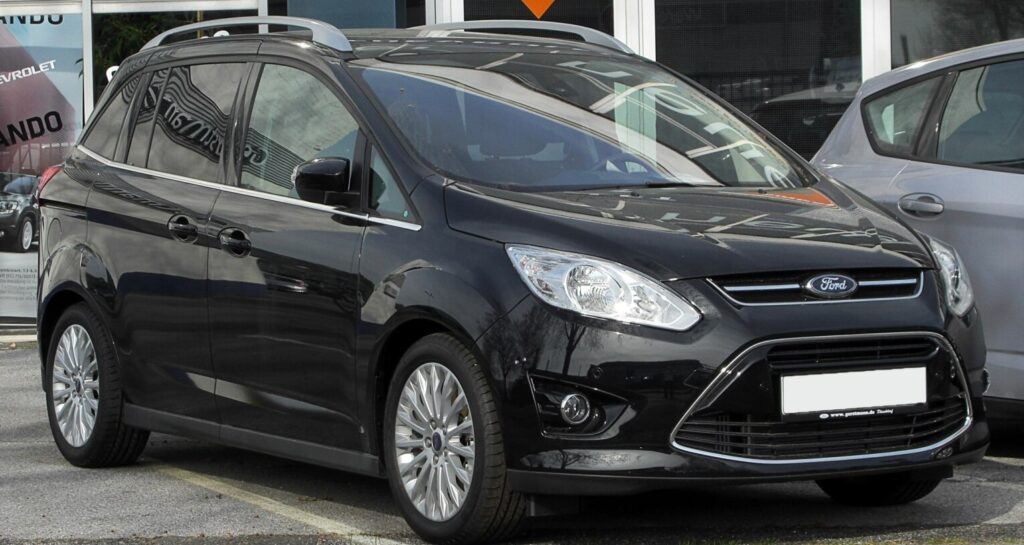
The Ford Grand C-MAX 2.0 Duratorq TDCi, producing 163 horsepower, was a significant variant within the second generation of the C-MAX line, manufactured between 2010 and 2015. Positioned as a mid-range offering, it catered to families needing a versatile seven-seat MPV (Multi-Purpose Vehicle) with a balance of fuel efficiency and performance. This model represented Ford’s commitment to offering practical, European-designed vehicles with increasingly sophisticated diesel powertrains in the global market, though its primary sales were concentrated in Europe. The Grand C-MAX, and this variant specifically, aimed to bridge the gap between compact MPVs and larger, more expensive people carriers.
Technical Specifications
| Brand | Ford |
| Model | C-MAX |
| Generation | Grand C-MAX |
| Type (Engine) | 2.0 Duratorq TDCi (163 Hp) DPF |
| Start of production | 2010 |
| End of production | 2015 |
| Powertrain Architecture | Internal Combustion engine |
| Body type | MPV |
| Seats | 7 |
| Doors | 5 |
| Fuel consumption (urban) | 6.3 l/100 km (37.3 US mpg, 44.8 UK mpg, 15.9 km/l) |
| Fuel consumption (extra urban) | 4.4 l/100 km (53.5 US mpg, 64.2 UK mpg, 22.7 km/l) |
| Fuel consumption (combined) | 5.1 l/100 km (46.1 US mpg, 55.4 UK mpg, 19.6 km/l) |
| CO2 emissions | 134 g/km |
| Fuel Type | Diesel |
| Acceleration 0 – 100 km/h | 9.2 sec |
| Acceleration 0 – 62 mph | 9.2 sec |
| Acceleration 0 – 60 mph | 8.7 sec |
| Maximum speed | 205 km/h (127.38 mph) |
| Emission standard | Euro 5 |
| Weight-to-power ratio | 9.7 kg/Hp, 103.5 Hp/tonne |
| Weight-to-torque ratio | 4.6 kg/Nm, 215.9 Nm/tonne |
| Power | 163 Hp |
| Torque | 340 Nm (250.77 lb.-ft.) |
| Engine layout | Front, Transverse |
| Engine Model/Code | TXDB |
| Engine configuration | Inline |
| Fuel injection system | Diesel Commonrail |
| Engine aspiration | Turbocharger, Intercooler |
| Engine oil capacity | 5.7 l (6.02 US qt, 5.02 UK qt) |
| Coolant capacity | 8.5 l (8.98 US qt, 7.48 UK qt) |
| Kerb Weight | 1575 kg (3472.28 lbs.) |
| Max. weight | 2300 kg (5070.63 lbs.) |
| Max load | 725 kg (1598.35 lbs.) |
| Trunk (boot) space – minimum | 56 l (1.98 cu. ft.) |
| Trunk (boot) space – maximum | 1706 l (60.25 cu. ft.) |
| Fuel tank capacity | 60 l (15.85 US gal, 13.2 UK gal) |
| Length | 4520 mm (177.95 in.) |
| Width | 1828 mm (71.97 in.) |
| Height | 1684 mm (66.3 in.) |
| Minimum turning circle | 11.2 m (36.75 ft.) |
| Drivetrain Architecture | ICE drives front wheels |
| Drive wheel | Front wheel drive |
| Number of gears | 6 gears, manual transmission |
| Assisting systems | ABS (Anti-lock braking system) |
| Steering type | Steering rack and pinion |
Powertrain & Engine Architecture
The heart of the Grand C-MAX 2.0 Duratorq TDCi was the TXDB engine, a 1998cc inline-four cylinder diesel. This engine belonged to Ford’s Duratorq family, known for its robust construction and relatively good fuel economy. The 163 horsepower output was achieved through the use of a turbocharger with an intercooler, boosting intake air density for improved combustion. The engine utilized a common-rail direct fuel injection system, delivering fuel at extremely high pressure for finer atomization and more complete burning. This system, coupled with a four-valve-per-cylinder configuration, contributed to both power and efficiency. The six-speed manual transmission was the standard offering, providing a good balance between acceleration and fuel consumption. The gear ratios were tuned to maximize torque delivery in the mid-range, making it suitable for everyday driving and hauling passengers.
Driving Characteristics
The 163 hp Duratorq TDCi in the Grand C-MAX offered a respectable driving experience. While not a performance-oriented vehicle, it provided sufficient power for comfortable cruising and overtaking. Acceleration from 0-60 mph took around 8.7 seconds, which was adequate for most situations. The turbocharger did exhibit some lag at lower engine speeds, but once spooled up, it delivered a noticeable surge of torque. The six-speed manual transmission allowed drivers to keep the engine in its optimal power band. Compared to the lower-powered 1.6-liter TDCi versions, the 2.0-liter offered a more relaxed driving experience, particularly when fully loaded with passengers and luggage. It also felt more capable on inclines and during highway merges. Compared to higher-output versions of the 2.0 Duratorq, this variant prioritized fuel economy over outright performance.
Equipment & Trim Levels
The Grand C-MAX 2.0 Duratorq TDCi was typically offered in mid-range trim levels, such as ‘Titanium’ or ‘Zetec’. Standard equipment generally included air conditioning, power windows, power mirrors, a CD/MP3 stereo system, and alloy wheels. Safety features like ABS, electronic stability control, and multiple airbags were also standard. Optional extras included a panoramic sunroof, leather upholstery, parking sensors, and a navigation system. Interior upholstery was typically cloth, with higher trims offering partial leather options. The dashboard layout was functional and user-friendly, with a clear instrument cluster and logically placed controls.
Chassis & Braking
The Grand C-MAX utilized a MacPherson strut front suspension and a multi-link rear suspension, providing a comfortable ride and decent handling. The suspension was tuned to prioritize comfort over sporty handling, making it well-suited for family use. Braking systems varied slightly depending on the specific trim level, but generally consisted of ventilated front discs and either disc or drum brakes on the rear. The 163 hp variant typically featured disc brakes all around. Anti-lock Braking System (ABS) was standard, enhancing braking performance and stability. Stabilizer bars were fitted to both the front and rear axles to reduce body roll during cornering.
Market Reception & Comparison
The Ford Grand C-MAX 2.0 Duratorq TDCi was generally well-received by automotive critics. It was praised for its spacious interior, versatile seating configuration, and fuel-efficient engine. However, some critics noted that the interior materials weren’t as premium as those found in some competitors. Compared to other MPVs in its class, such as the Renault Scenic or Citroën C4 Picasso, the Grand C-MAX offered a more engaging driving experience. Fuel economy was competitive, averaging around 46.1 US mpg in combined driving. Reliability was generally good, although some owners reported issues with the diesel particulate filter (DPF), a common problem with modern diesel engines.
Legacy
The Ford Grand C-MAX 2.0 Duratorq TDCi remains a popular choice in the used car market. The Duratorq engine, while requiring regular maintenance (particularly regarding the DPF), is known for its durability. These models offer a practical and affordable option for families needing a seven-seat vehicle. The combination of fuel efficiency, space, and reasonable running costs has ensured its continued appeal. While newer MPVs offer more advanced technology and features, the Grand C-MAX 2.0 TDCi represents a solid and dependable option for those seeking a well-rounded family vehicle.