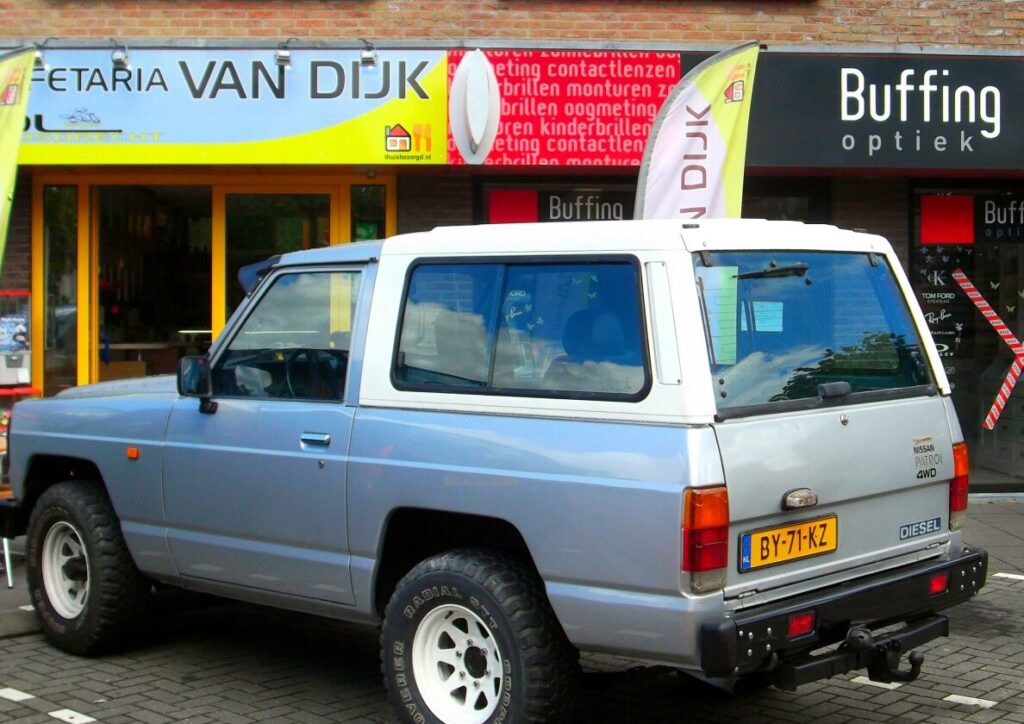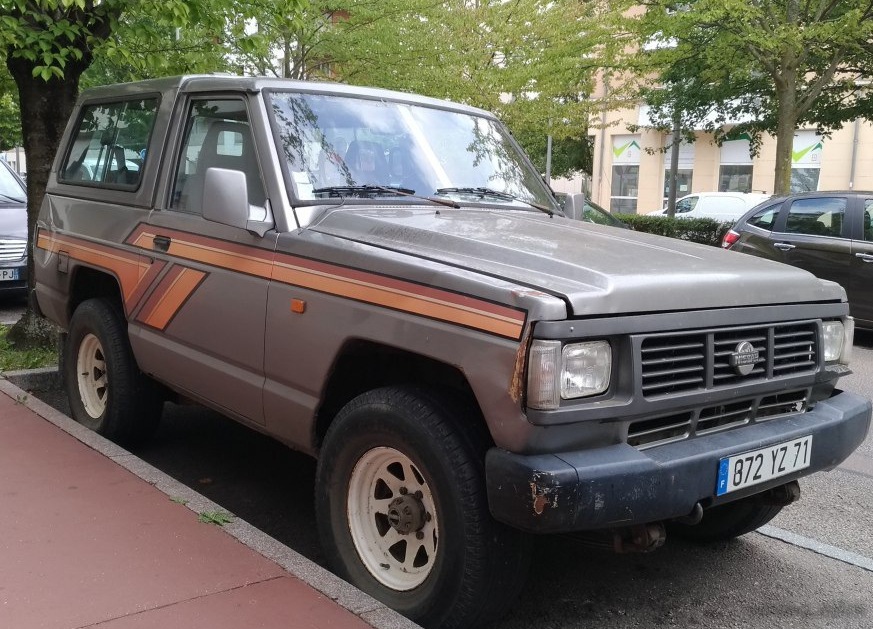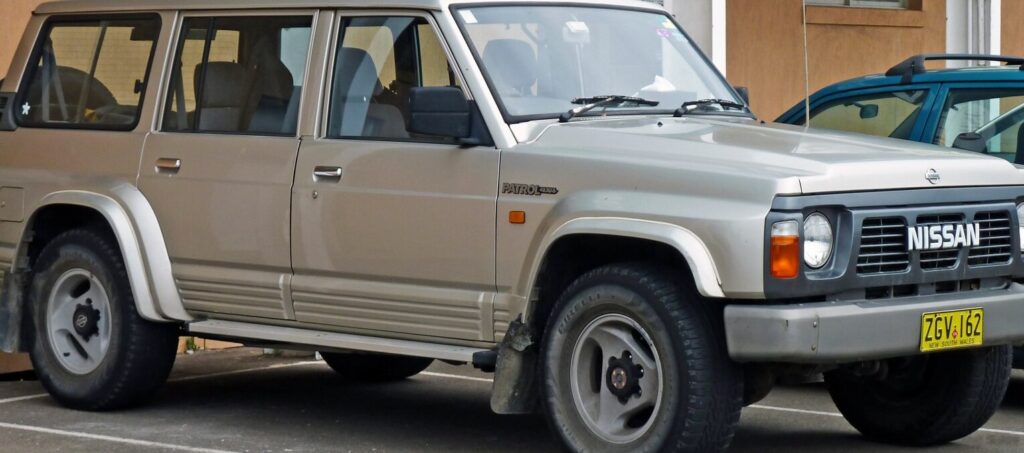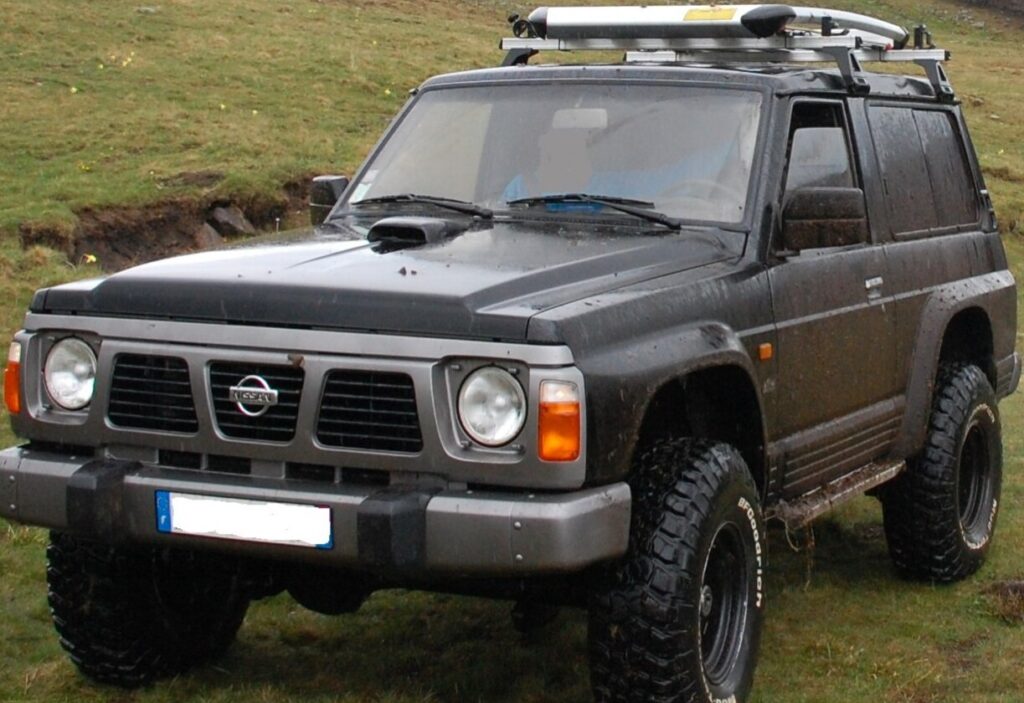
The Nissan Patrol IV 3-door (Y60) 2.8 TD, producing 115 horsepower, was a significant variant of Nissan’s long-running Patrol series, manufactured from 1987 to 1995. This model represented a blend of rugged off-road capability and increasingly refined features, catering to a market that demanded both practicality and durability. Positioned as a mid-range offering within the Y60 lineup, it slotted between the gasoline-powered models and the more powerful, often higher-trim diesel options. The Y60 Patrol, introduced in 1988, was a substantial redesign of the previous generation, aiming to improve comfort, handling, and overall refinement while maintaining the Patrol’s legendary off-road prowess.
Technical Specifications
| Brand | Nissan |
| Model | Patrol |
| Generation | Patrol IV 3-door (Y60) |
| Type (Engine) | 2.8 TD (115 Hp) 4WD |
| Start of production | 1987 |
| End of production | 1995 |
| Powertrain Architecture | Internal Combustion engine |
| Body type | Off-road vehicle |
| Seats | 5 |
| Doors | 3 |
| Fuel consumption (urban) | 12.4 l/100 km (19 US mpg, 22.8 UK mpg, 8.1 km/l) |
| Fuel consumption (extra urban) | 8.9 l/100 km (26.4 US mpg, 31.7 UK mpg, 11.2 km/l) |
| Fuel Type | Diesel |
| Acceleration 0 – 100 km/h | 19.6 sec |
| Acceleration 0 – 62 mph | 19.6 sec |
| Acceleration 0 – 60 mph | 18.6 sec |
| Maximum speed | 150 km/h (93.21 mph) |
| Weight-to-power ratio | 15.9 kg/Hp, 62.8 Hp/tonne |
| Weight-to-torque ratio | 7.8 kg/Nm, 128.4 Nm/tonne |
| Power | 115 Hp @ 4400 rpm |
| Power per litre | 40.7 Hp/l |
| Torque | 235 Nm @ 2400 rpm (173.33 lb.-ft. @ 2400 rpm) |
| Engine layout | Front, Longitudinal |
| Engine Model/Code | RD28T |
| Engine displacement | 2826 cm3 (172.45 cu. in.) |
| Number of cylinders | 6 |
| Engine configuration | Inline |
| Cylinder Bore | 85 mm (3.35 in.) |
| Piston Stroke | 83 mm (3.27 in.) |
| Compression ratio | 21.2:1 |
| Number of valves per cylinder | 2 |
| Fuel injection system | Precombustion chamber injection |
| Engine aspiration | Turbocharger |
| Valvetrain | SOHC |
| Engine oil capacity | 6.4 l (6.76 US qt | 5.63 UK qt) |
| Coolant capacity | 12.4 l (13.1 US qt | 10.91 UK qt) |
| Kerb Weight | 1830 kg (4034.46 lbs.) |
| Max. weight | 2450 kg (5401.33 lbs.) |
| Max load | 620 kg (1366.87 lbs.) |
| Trunk (boot) space – minimum | 260 l (9.18 cu. ft.) |
| Trunk (boot) space – maximum | 1120 l (39.55 cu. ft.) |
| Fuel tank capacity | 95 l (25.1 US gal | 20.9 UK gal) |
| Permitted trailer load with brakes (12%) | 3500 kg (7716.18 lbs.) |
| Permitted towbar download | 100 kg (220.46 lbs.) |
| Length | 4240 mm (166.93 in.) |
| Width | 1800 mm (70.87 in.) |
| Height | 1790 mm (70.47 in.) |
| Wheelbase | 2400 mm (94.49 in.) |
| Front track | 1530 mm (60.24 in.) |
| Rear track | 1535 mm (60.43 in.) |
| Front overhang | 725 mm (28.54 in.) |
| Rear overhang | 1115 mm (43.9 in.) |
| Ride height (ground clearance) | 205 mm (8.07 in.) |
| Minimum turning circle | 12 m (39.37 ft.) |
| Approach angle | 43° |
| Departure angle | 29° |
| Ramp-over angle | 32° |
| Climb angle | 39° |
| Wading depth | 600 mm (23.62 in.) |
| Drivetrain Architecture | All wheel drive (4×4). ICE drives rear wheels, front wheels engaged via clutch. |
| Number of gears and type of gearbox | 5 gears, manual transmission |
Powertrain & Engine Architecture
The heart of this Patrol variant is the RD28T 2.8-liter inline-six cylinder diesel engine. This engine, a staple of Nissan’s diesel offerings during the period, utilized a precombustion chamber injection system. This system, common in older diesel designs, involved injecting fuel into a small pre-chamber where it partially combusted, then igniting the main combustion chamber. The RD28T was turbocharged, boosting power output to 115 horsepower and 235 Nm (173 lb-ft) of torque. The engine featured a single overhead camshaft (SOHC) valvetrain, operating two valves per cylinder. The five-speed manual transmission was the standard offering, providing a balance between fuel efficiency and usability. The transmission’s gear ratios were geared towards low-end torque, essential for off-road driving and towing.
Driving Characteristics
The 2.8 TD with a manual transmission offered a distinctly utilitarian driving experience. Acceleration was leisurely, with a 0-60 mph time around 18.6 seconds. However, the engine’s strong low-end torque made it capable in off-road situations and when towing. The manual gearbox allowed for precise control, particularly when navigating challenging terrain. Compared to the gasoline-powered Patrols, the diesel offered significantly better fuel economy and superior torque. Against higher-output diesel variants (often with larger displacement engines), the 2.8 TD felt underpowered, especially when fully loaded or traveling at highway speeds. The gearing was optimized for climbing and maintaining momentum off-road, rather than outright speed.
Equipment & Trim Levels
The 2.8 TD 3-door Patrol typically came with a relatively basic level of equipment, reflecting its positioning as a workhorse vehicle. Standard features generally included steel wheels, vinyl or cloth upholstery, a basic instrument cluster, and manual windows and locks. Air conditioning was often an optional extra, as were power windows and upgraded audio systems. The interior was designed for durability and ease of cleaning, with hard-wearing plastics and rubber floor coverings. Trim levels varied depending on the market, but generally focused on adding comfort and convenience features rather than significantly altering the vehicle’s core functionality.
Chassis & Braking
The Y60 Patrol featured a robust ladder-frame chassis, providing excellent strength and durability. Suspension consisted of coil springs and a rigid axle setup at both the front and rear, with a transverse stabilizer bar to reduce body roll. Braking was typically accomplished with disc brakes on all four wheels, providing adequate stopping power for the vehicle’s weight. Hydraulic power steering was standard, making maneuvering the large vehicle easier, especially in tight spaces. The Patrol’s high ground clearance (205mm) and generous approach, departure, and ramp-over angles made it exceptionally capable off-road.
Market Reception & Comparison
The Nissan Patrol Y60 2.8 TD was well-received in markets where diesel-powered, rugged off-road vehicles were in demand. It was particularly popular in Australia, the Middle East, and parts of Asia. Critics praised its durability, off-road capability, and fuel efficiency. However, the engine’s relatively low power output and somewhat agricultural character were often noted. Compared to the gasoline-powered Patrols, the 2.8 TD offered superior fuel economy and torque, making it a better choice for those who prioritized practicality and off-road performance. Compared to more modern SUVs, the Y60 Patrol lacked refinement and advanced features, but its simplicity and robustness were seen as strengths.
Legacy
The RD28T engine, while not known for its high performance, earned a reputation for exceptional reliability and longevity. Many examples of the Y60 Patrol 2.8 TD are still in use today, testament to the engine’s durability and the vehicle’s overall build quality. In the used car market, these Patrols are sought after by enthusiasts and those looking for a capable and affordable off-road vehicle. Maintenance is generally straightforward, and parts availability remains relatively good, although some components may be becoming increasingly difficult to find. The Y60 Patrol 2.8 TD represents a classic example of a rugged, dependable off-road vehicle that continues to hold its own decades after its introduction.