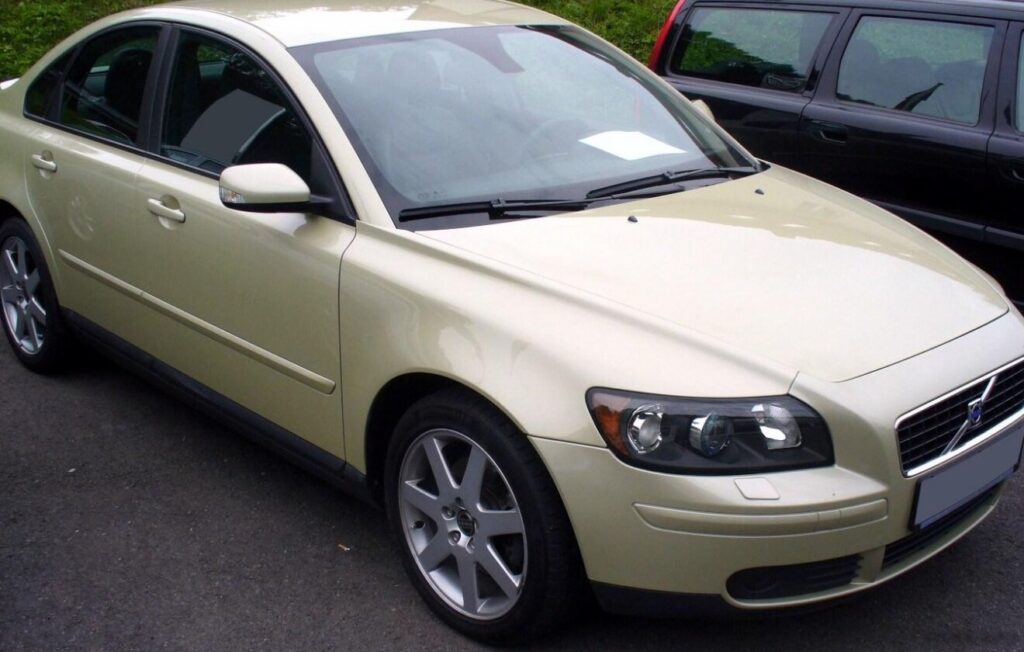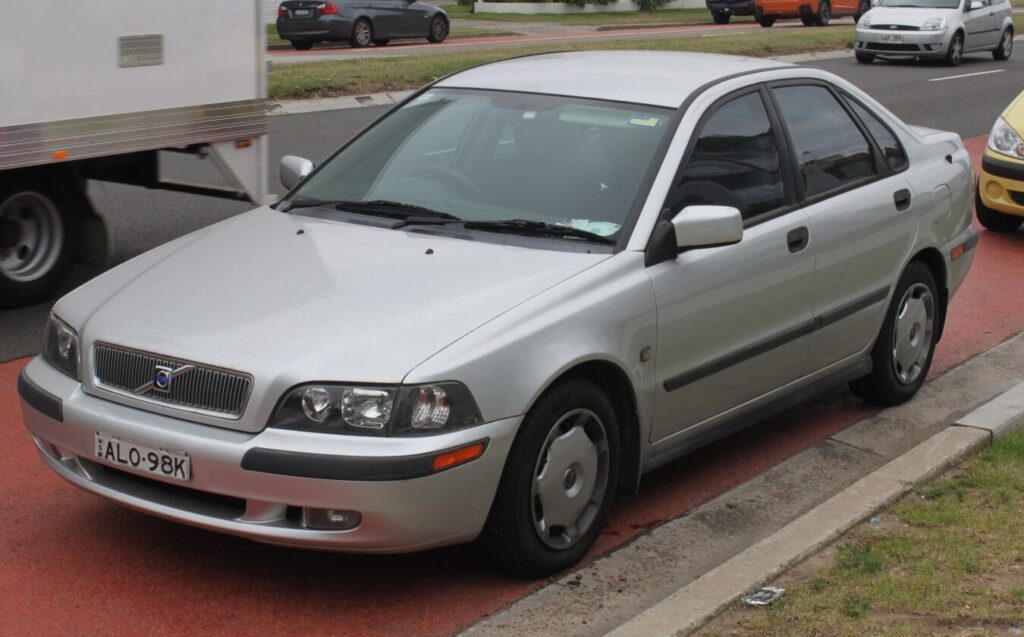
The Volvo S40 VS 1.6 16V Automatic, produced between 1995 and 1999, represented an entry-level offering within Volvo’s compact sedan lineup. Positioned as a more accessible alternative to the higher-performance and more expensive 2.0-liter variants, this model aimed to provide Volvo’s renowned safety and comfort in a practical and affordable package. It was built on the Volvo S40/V40 (1HX0/A3) platform, sharing its underpinnings with the related V40 estate. This generation S40 was Volvo’s first venture into the compact class, designed to appeal to a broader customer base than their traditionally larger vehicles.
Technical Specifications
| Brand | Volvo |
| Model | S40 |
| Generation | S40 (VS) |
| Type (Engine) | 1.6 16V (105 Hp) Automatic |
| Start of production | 1995 |
| End of production | 1999 |
| Powertrain Architecture | Internal Combustion engine |
| Body type | Sedan |
| Seats | 5 |
| Doors | 4 |
| Fuel consumption (urban) | 11.8 l/100 km (19.9 US mpg, 23.9 UK mpg, 8.5 km/l) |
| Fuel consumption (extra urban) | 6.6 l/100 km (35.6 US mpg, 42.8 UK mpg, 15.2 km/l) |
| Fuel consumption (combined) | 8.5 l/100 km (27.7 US mpg, 33.2 UK mpg, 11.8 km/l) |
| Fuel Type | Petrol (Gasoline) |
| Acceleration 0 – 100 km/h | 13 sec |
| Acceleration 0 – 62 mph | 13 sec |
| Acceleration 0 – 60 mph | 12.4 sec |
| Maximum speed | 185 km/h (114.95 mph) |
| Weight-to-power ratio | 11.7 kg/Hp, 85.4 Hp/tonne |
| Weight-to-torque ratio | 8.6 kg/Nm, 116.3 Nm/tonne |
| Power | 105 Hp @ 5500 rpm |
| Power per litre | 66.1 Hp/l |
| Torque | 143 Nm @ 4200 rpm (105.47 lb.-ft. @ 4200 rpm) |
| Engine layout | Front, Transverse |
| Engine Model/Code | B4164S |
| Engine displacement | 1588 cm3 (96.91 cu. in.) |
| Number of cylinders | 4 |
| Engine configuration | Inline |
| Cylinder Bore | 81 mm (3.19 in.) |
| Piston Stroke | 77 mm (3.03 in.) |
| Compression ratio | 10.5:1 |
| Number of valves per cylinder | 4 |
| Fuel injection system | Multi-port manifold injection |
| Engine aspiration | Naturally aspirated engine |
| Valvetrain | DOHC |
| Engine oil capacity | 5.4 l (5.71 US qt | 4.75 UK qt) |
| Coolant capacity | 6.3 l (6.66 US qt | 5.54 UK qt) |
| Kerb Weight | 1230 kg (2711.69 lbs.) |
| Max. weight | 1750 kg (3858.09 lbs.) |
| Max load | 520 kg (1146.4 lbs.) |
| Trunk (boot) space – minimum | 415 l (14.66 cu. ft.) |
| Fuel tank capacity | 60 l (15.85 US gal | 13.2 UK gal) |
| Length | 4483 mm (176.5 in.) |
| Width | 1717 mm (67.6 in.) |
| Height | 1411 mm (55.55 in.) |
| Wheelbase | 2550 mm (100.39 in.) |
| Front track | 1450 mm (57.09 in.) |
| Rear (Back) track | 1470 mm (57.87 in.) |
| Drivetrain Architecture | The Internal combustion engine (ICE) drives the front wheels of the vehicle. |
| Drive wheel | Front wheel drive |
| Number of gears and type of gearbox | 4 gears, automatic transmission |
| Front suspension | Wishbone |
| Rear suspension | Coil spring |
| Front brakes | Ventilated discs |
| Rear brakes | Disc |
| Assisting systems | ABS (Anti-lock braking system) |
| Steering type | Steering rack and pinion |
| Power steering | Hydraulic Steering |
| Tires size | 195/55 R15 |
| Wheel rims size | 15 |
Powertrain & Engine Architecture
The S40 1.6 Automatic was powered by Volvo’s B4164S engine, a 1.6-liter inline-four cylinder gasoline engine. This engine featured a single overhead camshaft (SOHC) design, later upgraded to a double overhead camshaft (DOHC) in some markets, though the 105 hp version typically retained the SOHC configuration. It utilized multi-port fuel injection, a common technology in the mid-1990s, to deliver fuel to the cylinders. The engine produced 105 horsepower at 5500 rpm and 143 Nm (105.47 lb-ft) of torque at 4200 rpm. The engine’s relatively modest output was paired with a four-speed automatic transmission, designed for smooth and comfortable operation rather than outright performance. This transmission was a conventional hydraulic automatic, lacking the electronic controls found in later designs.
Driving Characteristics
The 1.6-liter engine and four-speed automatic combination resulted in a driving experience focused on comfort and ease of use. Acceleration was adequate for everyday driving, with a 0-60 mph time of around 12.4 seconds, but it was noticeably slower than the 2.0-liter models. The automatic transmission’s gear ratios were optimized for fuel efficiency and smooth cruising, rather than aggressive acceleration. The transmission could feel somewhat sluggish during quick overtaking maneuvers, requiring a deliberate kickdown to access lower gears. Compared to the five-speed manual version, the automatic offered less driver engagement and slightly reduced fuel economy. However, it provided a more relaxed driving experience, particularly in urban traffic.
Equipment & Trim Levels
The S40 1.6 Automatic typically came with a reasonable level of standard equipment, reflecting Volvo’s commitment to safety and comfort. Standard features included power steering, ABS anti-lock brakes, central locking, and electric front windows. Interior upholstery was typically cloth, with a relatively simple dashboard layout. Optional extras included air conditioning, a sunroof, and upgraded audio systems. The trim level was generally considered the base model, offering a more affordable entry point into the S40 range. Higher trim levels, such as the 2.0, offered leather upholstery, wood trim, and more advanced features.
Chassis & Braking
The S40 VS featured a front-wheel-drive layout with independent wishbone suspension at the front and a coil spring rear suspension. The braking system consisted of ventilated discs at the front and solid discs at the rear. The suspension was tuned for comfort, providing a relatively smooth ride over uneven surfaces. The steering was hydraulic power-assisted, offering light and easy steering feel. The chassis was designed to provide a stable and predictable handling experience, prioritizing safety and comfort over sporty handling characteristics.
Market Reception & Comparison
The S40 1.6 Automatic was generally well-received as a practical and affordable compact sedan. Critics praised its safety features, comfortable ride, and build quality. However, the engine’s modest power output and the automatic transmission’s somewhat sluggish performance were often cited as drawbacks. Compared to the 2.0-liter models, the 1.6 offered significantly less performance but at a lower price point. Fuel economy was reasonable for the time, but not class-leading. The 1.9 TDI diesel variant, available in some European markets, offered superior fuel economy but with a different driving experience.
Legacy
The Volvo S40 1.6 Automatic, while not the most powerful or exciting variant in the lineup, proved to be a reliable and durable vehicle. The B4164S engine is known for its longevity, and the four-speed automatic transmission, while not particularly sophisticated, is generally robust. Today, these cars are relatively rare and often sought after by Volvo enthusiasts. Maintenance costs are generally reasonable, although finding parts for older models can sometimes be challenging. The S40 1.6 Automatic represents a solid and dependable entry into the world of classic Volvo ownership, offering a blend of safety, comfort, and affordability.