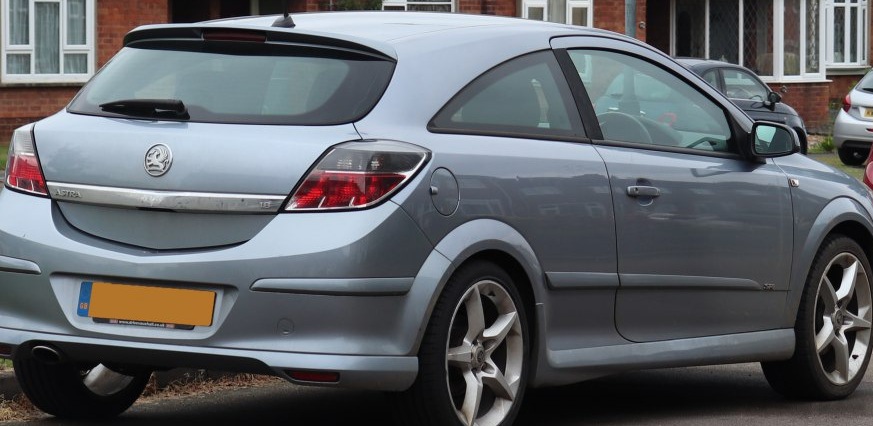
The Vauxhall Astra Mk V CC Sport Hatch 1.6i 16V Automatic, produced between 2005 and 2010, represented an entry-level offering within the broader Astra H (Mk V) range. Positioned as a practical and affordable hatchback, it catered to buyers prioritizing fuel efficiency and ease of use over outright performance. This three-door variant, often simply referred to as the Astra H, was a significant model for Vauxhall (and its Opel counterpart) in the UK and European markets, building upon the success of previous Astra generations. It was built on the GM Delta platform, shared with other vehicles like the Chevrolet Cobalt and Saturn Ion. The “CC” designation signified the coupe cabriolet styling, though this model was strictly a hatchback.
Technical Specifications
| Brand | Vauxhall |
| Model | Astra |
| Generation | Astra Mk V CC Sport Hatch |
| Type (Engine) | 1.6i 16V (105 Hp) Automatic |
| Start of production | 2005 |
| End of production | 2010 |
| Powertrain Architecture | Internal Combustion engine |
| Body type | Hatchback |
| Seats | 5 |
| Doors | 3 |
| Fuel consumption (urban) | 8.5 l/100 km (27.7 US mpg, 33.2 UK mpg, 11.8 km/l) |
| Fuel consumption (extra urban) | 5.3 l/100 km (44.4 US mpg, 53.3 UK mpg, 18.9 km/l) |
| Fuel consumption (combined) | 6.5 l/100 km (36.2 US mpg, 43.5 UK mpg, 15.4 km/l) |
| CO2 emissions | 156 g/km |
| Fuel Type | Petrol (Gasoline) |
| Acceleration 0 – 100 km/h | 13.2 sec |
| Acceleration 0 – 62 mph | 13.2 sec |
| Acceleration 0 – 60 mph | 12.5 sec |
| Maximum speed | 187 km/h (116.2 mph) |
| Weight-to-power ratio | 11.7 kg/Hp, 85.4 Hp/tonne |
| Weight-to-torque ratio | 8.2 kg/Nm, 122 Nm/tonne |
| Power | 105 Hp @ 6000 rpm |
| Power per litre | 65.7 Hp/l |
| Torque | 150 Nm @ 3900 rpm (110.63 lb.-ft. @ 3900 rpm) |
| Engine layout | Front, Transverse |
| Engine Model/Code | Z16XEP, Z16XE1 |
| Engine displacement | 1598 cm3 (97.52 cu. in.) |
| Number of cylinders | 4 |
| Engine configuration | Inline |
| Cylinder Bore | 79 mm (3.11 in.) |
| Piston Stroke | 81.5 mm (3.21 in.) |
| Compression ratio | 10.5:1 |
| Number of valves per cylinder | 4 |
| Fuel injection system | Multi-port manifold injection |
| Engine aspiration | Naturally aspirated engine |
| Valvetrain | DOHC |
| Engine oil capacity | 4 l (4.23 US qt | 3.52 UK qt) |
| Coolant capacity | 6.1 l (6.45 US qt | 5.37 UK qt) |
| Kerb Weight | 1230 kg (2711.69 lbs.) |
| Max. weight | 1770 kg (3902.18 lbs.) |
| Max load | 540 kg (1190.5 lbs.) |
| Trunk (boot) space – minimum | 312 l (11.02 cu. ft.) |
| Fuel tank capacity | 52 l (13.74 US gal | 11.44 UK gal) |
| Length | 4290 mm (168.9 in.) |
| Width | 1753 mm (69.02 in.) |
| Width including mirrors | 2033 mm (80.04 in.) |
| Height | 1415 mm (55.71 in.) |
| Wheelbase | 2614 mm (102.91 in.) |
| Front track | 1488 mm (58.58 in.) |
| Rear track | 1488 mm (58.58 in.) |
| Front overhang | 910 mm (35.83 in.) |
| Rear overhang | 766 mm (30.16 in.) |
| Ride height (ground clearance) | 130 mm (5.12 in.) |
| Drag coefficient (Cd) | 0.28 |
| Minimum turning circle | 10 m (32.81 ft.) |
| Drivetrain Architecture | ICE, Front wheel drive |
| Number of gears and type of gearbox | 5 gears, automatic transmission |
| Front brakes | Ventilated discs |
| Rear brakes | Disc |
| Assisting systems | ABS (Anti-lock braking system) |
| Steering type | Steering rack and pinion |
| Tires size | 205/55 R16 |
| Wheel rims size | 6.5J x 16 |
Powertrain & Engine Architecture
The heart of this Astra variant was the 1.6-liter (1598 cc) inline-four cylinder engine, designated either Z16XEP or Z16XE1 depending on specific production dates and market requirements. This engine belonged to Vauxhall/Opel’s ‘Family 1’ series, known for its relatively simple and robust design. It featured a dual overhead camshaft (DOHC) valvetrain with four valves per cylinder, and multi-point fuel injection. The engine produced 105 horsepower at 6000 rpm and 150 Nm (110.63 lb-ft) of torque at 3900 rpm. The automatic transmission was a five-speed unit, offering smooth but not particularly sporty gear changes. This transmission was chosen to provide ease of driving, particularly in urban environments, at the expense of some performance and fuel economy compared to the available manual gearbox.
Driving Characteristics
The 1.6L Automatic Astra Mk V offered a comfortable, if uninspiring, driving experience. Acceleration was modest, taking around 13.2 seconds to reach 62 mph (100 km/h). The automatic transmission, while convenient, contributed to a noticeable lack of responsiveness compared to the manual versions. Gear ratios were tuned for fuel efficiency rather than outright performance. In real-world driving, the engine felt strained when attempting brisk acceleration or overtaking maneuvers. The focus was clearly on providing a smooth and economical ride, making it well-suited for commuting and everyday driving.
Equipment & Trim Levels
The Sport Hatch trim level, even with the 1.6L engine, included a reasonable level of standard equipment. This typically included air conditioning, electric front windows, a CD player with basic audio controls, and central locking. Safety features such as ABS and driver/passenger airbags were also standard. Optional extras included alloy wheels, upgraded audio systems, and parking sensors. Interior upholstery was typically cloth, with a relatively simple dashboard layout. The three-door configuration emphasized a slightly sportier aesthetic compared to the five-door models.
Chassis & Braking
The Astra Mk V utilized a MacPherson strut front suspension and a torsion beam rear suspension. The front brakes were ventilated discs, providing adequate stopping power for the vehicle’s weight and performance. The rear brakes were solid discs. The suspension setup was tuned for comfort, prioritizing ride quality over sharp handling. Stabilizer bars were fitted to both the front and rear axles to reduce body roll during cornering, but the overall handling characteristics were considered safe and predictable rather than engaging.
Market Reception & Comparison
The 1.6L Automatic Astra Mk V was generally viewed as a sensible and practical choice, but not a particularly exciting one. Critics often noted its lack of performance and the somewhat sluggish response of the automatic transmission. Compared to the more powerful 1.8L and 2.0L variants, it offered significantly less performance. However, it was praised for its fuel efficiency and affordability. The 1.9 CDTi diesel versions were also popular, offering superior fuel economy and torque, but at a higher purchase price. The 1.6L Automatic appealed to buyers who prioritized ease of use and running costs over driving thrills.
Legacy
The Z16XEP/Z16XE1 engine, while not known for being particularly groundbreaking, proved to be relatively reliable. Common issues included occasional oil leaks and sensor failures, but these were generally not major concerns. The automatic transmission, if properly maintained, also proved to be durable. Today, these Astra Mk V models are readily available on the used car market at very affordable prices. They represent a budget-friendly option for those seeking a practical and economical hatchback, though potential buyers should be aware of the vehicle’s age and potential maintenance requirements.