
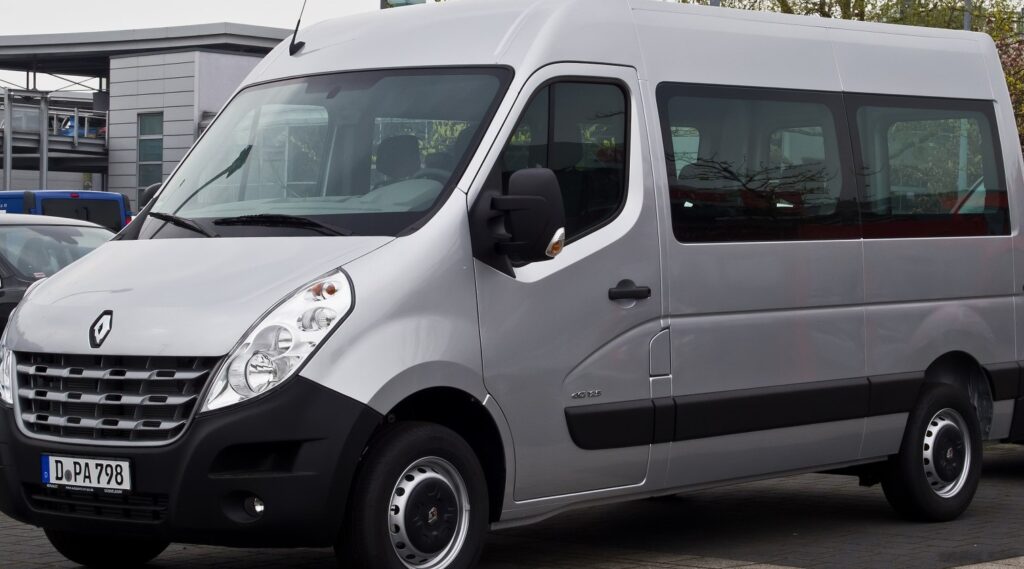
The Renault Master III Combi 2.3 dCi (125 hp) L1H1 Automatic, produced between 2014 and 2017, represents a significant iteration of Renault’s large van offering, tailored for passenger transport and commercial applications. This variant falls within the Phase II update of the third-generation Master (launched in 2010), focusing on improved efficiency and refinement. Positioned as a mid-range option within the Master Combi lineup, it aimed to balance practicality, fuel economy, and ease of driving with its automatic transmission. The L1H1 designation refers to the van’s body length and roof height – a shorter wheelbase and standard roof – making it more maneuverable than its larger counterparts. It primarily served the European market, catering to businesses and families requiring a versatile and spacious vehicle.
Technical Specifications
| Brand | Renault |
| Model | Master |
| Generation | Master III (Phase II, 2014) Combi |
| Type (Engine) | 2.3 dCi (125 Hp) L1H1 Automatic |
| Start of production | 2014 |
| End of production | 2017 |
| Powertrain Architecture | Internal Combustion engine |
| Body type | Minivan, MPV |
| Seats | 6 |
| Doors | 4 |
| Fuel consumption (urban) | 7.9-8.0 l/100 km (29.8 – 29.4 US mpg) |
| Fuel consumption (extra urban) | 6.3-6.4 l/100 km (37.3 – 36.8 US mpg) |
| Fuel consumption (combined) | 6.9-7.0 l/100 km (34.1 – 33.6 US mpg) |
| CO2 emissions | 180-184 g/km |
| Fuel Type | Diesel |
| Emission standard | Euro 5 |
| Power | 125 Hp @ 3500 rpm |
| Torque | 310 Nm @ 1250 rpm (228.64 lb.-ft. @ 1250 rpm) |
| Engine Model/Code | M9T |
| Engine displacement | 2298 cm3 (140.23 cu. in.) |
| Number of cylinders | 4 |
| Engine configuration | Inline |
| Cylinder Bore | 85 mm (3.35 in.) |
| Piston Stroke | 101.3 mm (3.99 in.) |
| Number of valves per cylinder | 4 |
| Fuel injection system | Diesel Commonrail |
| Engine aspiration | Turbocharger, Intercooler |
| Engine oil capacity | 8 l (8.45 US qt | 7.04 UK qt) |
| Coolant | 11 l (11.62 US qt | 9.68 UK qt) |
| Max. weight | 3000 kg (6613.87 lbs.) |
| Trunk (boot) space – maximum | 4100 l (144.79 cu. ft.) |
| Fuel tank capacity | 105 l (27.74 US gal | 23.1 UK gal) |
| Length | 5048 mm (198.74 in.) |
| Width | 2070 mm (81.5 in.) |
| Width including mirrors | 2470 mm (97.24 in.) |
| Height | 2303 mm (90.67 in.) |
| Wheelbase | 3182 mm (125.28 in.) |
| Front track | 1750 mm (68.9 in.) |
| Rear (Back) track | 1730 mm (68.11 in.) |
| Front overhang | 842 mm (33.15 in.) |
| Rear overhang | 1024 mm (40.31 in.) |
| Minimum turning circle | 12.5 m (41.01 ft.) |
| Drivetrain | Front wheel drive |
| Number of gears | 6 |
| Gearbox type | Automatic transmission |
| Front suspension | Independent, type McPherson with coil spring and anti-roll bar |
| Rear suspension | Leaf spring |
| Front brakes | Ventilated discs, 302 mm |
| Rear brakes | Disc, 305 mm |
| Tires size | 215/65 R16 |
| Wheel rims size | 16 |
Powertrain & Engine Architecture
The heart of the Master III Combi 2.3 dCi (125 hp) is the M9T engine, a 2.3-liter inline-four cylinder diesel. This engine is a member of Renault’s dCi (Direct Common-rail Injection) family, known for its focus on efficiency and reduced emissions. The M9T utilizes a common rail direct injection system, delivering fuel at extremely high pressure for optimized combustion. A turbocharger with an intercooler further enhances performance by forcing more air into the cylinders. The engine produces 125 horsepower at 3500 rpm and 310 Nm (228.64 lb-ft) of torque at a low 1250 rpm, prioritizing usability and driveability over outright speed. The automatic transmission is a six-speed unit, designed to provide smooth gear changes and contribute to fuel efficiency. While not a dual-clutch transmission, it offers a convenient alternative to a manual gearbox, particularly in urban environments.
Driving Characteristics
The 125 hp output, coupled with the automatic transmission, results in a driving experience geared towards practicality rather than performance. Acceleration is adequate for everyday driving, but it won’t offer the briskness of the higher-powered versions of the Master. The automatic transmission’s gear ratios are tuned for fuel economy, meaning it prioritizes keeping the engine in its optimal torque band. This translates to relaxed cruising on highways, but may require more deliberate throttle input when overtaking or climbing hills. Compared to the manual transmission versions, the automatic offers greater ease of use, especially in stop-and-go traffic. However, it does come with a slight penalty in fuel economy and a less engaging driving experience. The leaf spring rear suspension, while robust, can result in a somewhat firm ride when the vehicle is unladen.
Equipment & Trim Levels
The Combi trim level of the Master III generally included features aimed at passenger comfort and convenience. Standard equipment typically included air conditioning, power windows, central locking, and an adjustable steering wheel. The interior upholstery was usually a durable cloth material. Depending on the specific year and optional packages selected, features like a navigation system, rear parking sensors, and upgraded audio systems were available. The six-seat configuration was standard, with flexible seating arrangements to accommodate varying passenger and cargo needs. The dashboard layout was functional and straightforward, prioritizing ease of use over aesthetic flair.
Chassis & Braking
The Master III Combi utilizes a front-wheel-drive layout, contributing to its relatively low load floor and efficient packaging. The front suspension employs an independent McPherson strut design with coil springs and an anti-roll bar, providing a reasonable level of comfort and handling. The rear suspension utilizes a more traditional leaf spring setup, chosen for its durability and load-carrying capacity. The braking system consists of ventilated discs on the front wheels and solid discs on the rear, providing adequate stopping power for the vehicle’s weight. The 16-inch wheels were typically fitted with 215/65 R16 tires, offering a balance of comfort and grip.
Market Reception & Comparison
The Renault Master III Combi 2.3 dCi (125 hp) Automatic was generally well-received as a practical and versatile vehicle. Critics praised its spacious interior, comfortable ride (when loaded), and fuel efficiency. However, the 125 hp engine was sometimes considered underpowered, particularly when the vehicle was fully loaded with passengers and cargo. Compared to the higher-output versions of the Master, this variant offered a more affordable entry point, but at the expense of performance. Its fuel economy was comparable to other diesel vans in its class, and its reliability was generally considered good, although maintenance costs could be relatively high due to the complexity of the diesel engine and common rail injection system.
Legacy
The Renault Master III Combi 2.3 dCi (125 hp) Automatic remains a common sight on European roads today. The M9T engine, while not without its quirks, has proven to be relatively durable with proper maintenance. Used examples are readily available at affordable prices, making them an attractive option for businesses and families on a budget. However, potential buyers should be aware of the potential for issues with the diesel particulate filter (DPF) and the common rail injection system. Overall, this variant represents a solid and dependable workhorse, offering a good balance of practicality, fuel economy, and affordability.

