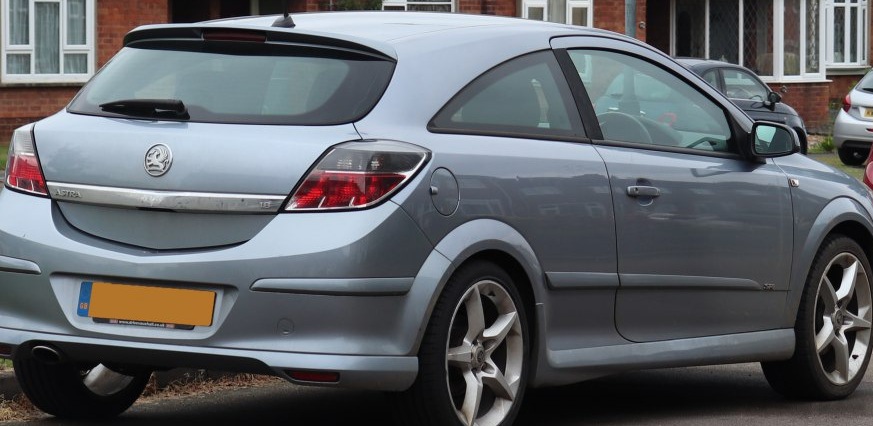
The Vauxhall Astra Mk V CC Sport Hatch 1.6i (180 hp) was a performance-oriented variant of the Mk V Astra, produced between 2005 and 2010. Positioned as a sporty offering within the Astra range, it aimed to provide a more engaging driving experience than the standard models. The “CC” designation stood for “Coupe Cabriolet,” though this model was strictly a hatchback; it signified the Astra’s styling cues inspired by the coupe-convertible version. This particular 1.6-liter turbocharged engine and six-speed manual transmission combination represented a mid-range performance option, slotting below the more powerful (and often more expensive) V8 models but above the base engine choices.
Technical Specifications
| Brand | Vauxhall |
| Model | Astra |
| Generation | Astra Mk V CC Sport Hatch |
| Type (Engine) | 1.6i (180 Hp) |
| Start of production | 2005 |
| End of production | 2010 |
| Powertrain Architecture | Internal Combustion engine |
| Body type | Hatchback |
| Seats | 5 |
| Doors | 3 |
| Fuel consumption (urban) | 10.3 l/100 km (22.8 US mpg, 27.4 UK mpg, 9.7 km/l) |
| Fuel consumption (extra urban) | 6.2 l/100 km (37.9 US mpg, 45.6 UK mpg, 16.1 km/l) |
| Fuel consumption (combined) | 7.7 l/100 km (30.5 US mpg, 36.7 UK mpg, 13 km/l) |
| CO2 emissions | 185 g/km |
| Fuel Type | Petrol (Gasoline) |
| Acceleration 0 – 100 km/h | 7.7 sec |
| Acceleration 0 – 62 mph | 7.7 sec |
| Acceleration 0 – 60 mph | 7.3 sec |
| Maximum speed | 224 km/h (139.19 mph) |
| Weight-to-power ratio | 7.2 kg/Hp, 138.2 Hp/tonne |
| Weight-to-torque ratio | 5.7 kg/Nm, 175.9 Nm/tonne |
| Power | 180 Hp @ 5500 rpm |
| Power per litre | 112.6 Hp/l |
| Torque | 229 Nm @ 1980 rpm (168.9 lb.-ft. @ 1980 rpm) |
| Engine layout | Front, Transverse |
| Engine displacement | 1598 cm3 (97.52 cu. in.) |
| Number of cylinders | 4 |
| Engine configuration | Inline |
| Fuel injection system | Multi-port manifold injection |
| Engine aspiration | Turbocharger, Intercooler |
| Valvetrain | DOHC |
| Engine oil capacity | 4.5 l (4.76 US qt | 3.96 UK qt) |
| Coolant capacity | 5.9 l (6.23 US qt | 5.19 UK qt) |
| Kerb Weight | 1302 kg (2870.42 lbs.) |
| Max. weight | 1880 kg (4144.69 lbs.) |
| Max load | 578 kg (1274.27 lbs.) |
| Trunk (boot) space – minimum | 312 l (11.02 cu. ft.) |
| Fuel tank capacity | 52 l (13.74 US gal | 11.44 UK gal) |
| Length | 4290 mm (168.9 in.) |
| Width | 1753 mm (69.02 in.) |
| Width including mirrors | 2033 mm (80.04 in.) |
| Height | 1415 mm (55.71 in.) |
| Wheelbase | 2614 mm (102.91 in.) |
| Front track | 1488 mm (58.58 in.) |
| Rear track | 1488 mm (58.58 in.) |
| Front overhang | 910 mm (35.83 in.) |
| Rear overhang | 766 mm (30.16 in.) |
| Ride height (ground clearance) | 130 mm (5.12 in.) |
| Drag coefficient (Cd) | 0.28 |
| Minimum turning circle | 10 m (32.81 ft.) |
| Drivetrain Architecture | Front wheel drive |
| Number of gears | 6 |
| Gearbox type | Manual transmission |
| Front brakes | Ventilated discs |
| Rear brakes | Disc |
| Assisting systems | ABS (Anti-lock braking system) |
| Steering type | Steering rack and pinion |
| Tires size | 215/45 R17 |
| Wheel rims size | 17 |
Powertrain & Engine Architecture
The heart of the Astra Mk V CC Sport Hatch 1.6i was the A16XER engine, a 1.6-liter inline-four cylinder gasoline engine equipped with a turbocharger and intercooler. This engine was part of Vauxhall/Opel’s Family 1 engine series. The A16XER featured multi-point fuel injection and a double overhead camshaft (DOHC) valvetrain. The turbocharger significantly boosted power output, allowing the relatively small displacement engine to produce 180 horsepower. The six-speed manual transmission was specifically chosen to complement the engine’s power band, providing close gear ratios for optimal acceleration and responsiveness. The transmission’s gear ratios were tuned to maximize the torque available at lower RPMs, aiding in everyday drivability, while still allowing for strong acceleration in higher gears.
Driving Characteristics
The 180 hp 1.6-liter turbo engine provided a noticeable performance upgrade compared to the base Astra models. Acceleration from 0-60 mph was achieved in approximately 7.3-7.7 seconds, making it a genuinely quick hatchback for its time. While not as brutally fast as the V8-powered versions, the 1.6i offered a good balance between performance and fuel economy. The turbocharger did exhibit some lag at lower RPMs, but once spooled up, the engine delivered a strong surge of power. The six-speed manual transmission allowed drivers to keep the engine in its optimal power band, enhancing the driving experience. Compared to the naturally aspirated engines, the turbocharger provided a more flexible power delivery, making overtaking maneuvers easier. The handling was generally considered competent, though not exceptionally sporty, with a focus on providing a comfortable ride.
Equipment & Trim Levels
The Sport Hatch trim level included several standard features designed to enhance the driving experience and aesthetics. These typically included sport seats with enhanced bolstering, a leather-wrapped steering wheel, alloy wheels (usually 17-inch), and revised suspension tuning. Interior upholstery was typically a combination of cloth and leatherette. Optional extras included features like climate control, a CD stereo system with MP3 compatibility, and parking sensors. The dashboard layout was typical of the Mk V Astra, with a functional and straightforward design. The Sport Hatch trim also often included unique exterior styling elements, such as a rear spoiler and body-colored side skirts.
Chassis & Braking
The Astra Mk V CC Sport Hatch utilized a MacPherson strut front suspension and a torsion beam rear suspension. The suspension was tuned to provide a balance between comfort and handling. Braking duties were handled by ventilated discs at the front and solid discs at the rear. Anti-lock Braking System (ABS) was standard equipment. The chassis was designed to be relatively lightweight, contributing to the car’s agility. Stabilizer bars were fitted to both the front and rear axles to reduce body roll during cornering.
Market Reception & Comparison
The Astra Mk V CC Sport Hatch 1.6i was generally well-received by automotive critics. It was praised for its strong performance, good fuel economy, and relatively affordable price point. Compared to other trims in the Astra lineup, the 1.6i offered a compelling combination of performance and practicality. It was often seen as a good alternative to rivals like the Ford Focus and Volkswagen Golf. However, some critics noted the turbo lag and the somewhat basic interior compared to more premium competitors. Fuel economy was respectable for a performance-oriented hatchback, averaging around 30.5 US mpg in combined driving.
Legacy
The A16XER engine, while generally reliable, is known to have some potential issues, including occasional turbocharger failures and oil consumption. Proper maintenance, including regular oil changes and inspections, is crucial for ensuring long-term reliability. Today, the Astra Mk V CC Sport Hatch 1.6i represents an affordable and enjoyable entry point into the world of performance hatchbacks. It remains a popular choice among enthusiasts looking for a practical and fun-to-drive car. The used car market values these models based on condition, mileage, and service history, with well-maintained examples commanding a premium.