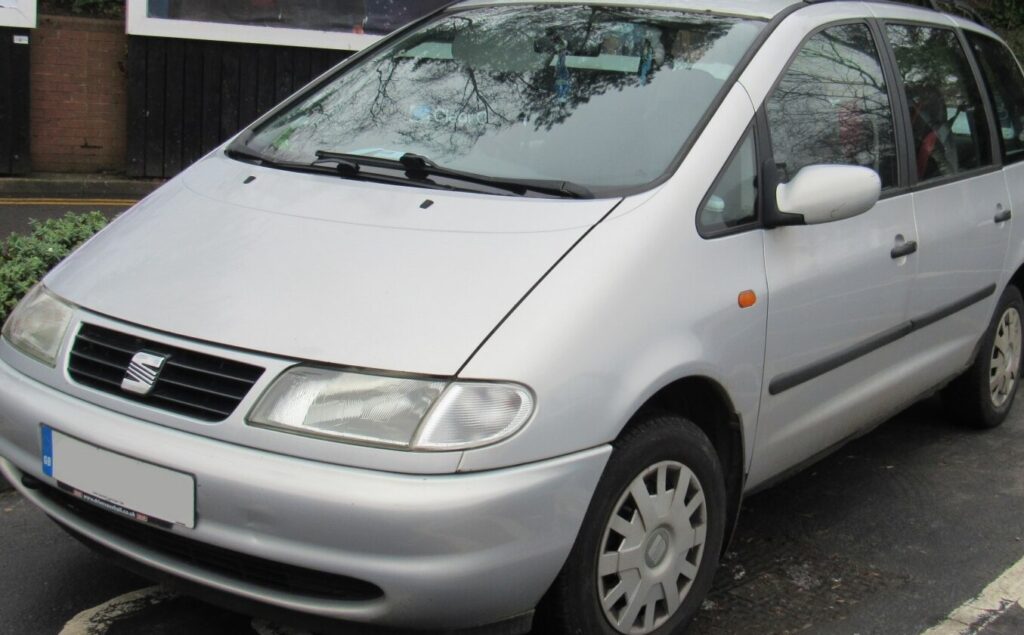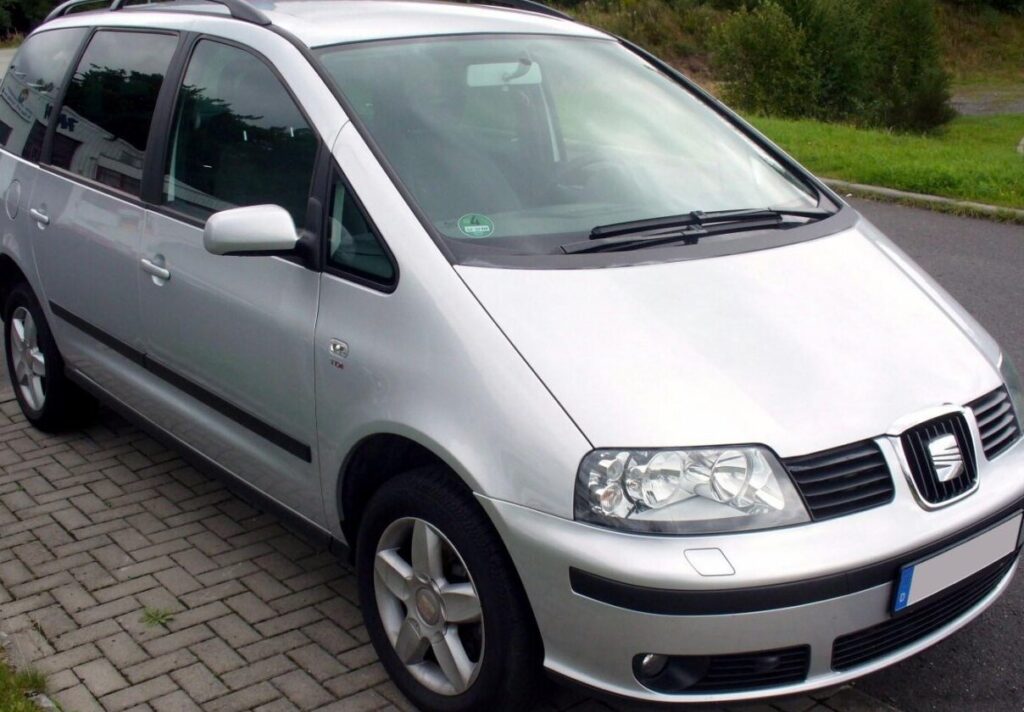
The Seat Alhambra II (7N) 2.0 TDI 170 hp DPF Ecomotive is a minivan produced by the Spanish automaker Seat from 2010 to 2015. It represents the second generation of the Alhambra, a vehicle developed in collaboration with Volkswagen and Ford, sharing its platform (PQ46) with the Volkswagen Sharan and Ford Galaxy. This particular variant, equipped with the 2.0-liter TDI engine producing 170 horsepower, was positioned as a mid-range offering within the Alhambra lineup, balancing fuel efficiency with respectable performance for family transport. The “Ecomotive” designation highlights its focus on reduced emissions and improved fuel economy through various engineering optimizations.
Technical Specifications
| Brand | Seat |
| Model | Alhambra |
| Generation | Alhambra II (7N) |
| Type (Engine) | 2.0 TDI (170 Hp) DPF Ecomotive |
| Start of production | August, 2010 |
| End of production | 2015 |
| Powertrain Architecture | Internal Combustion engine |
| Body type | Minivan, MPV |
| Seats | 5 |
| Doors | 5 |
| Fuel consumption (urban) | 7.3 l/100 km (32.2 US mpg, 38.7 UK mpg, 13.7 km/l) |
| Fuel consumption (extra urban) | 5 l/100 km (47 US mpg, 56.5 UK mpg, 20 km/l) |
| Fuel consumption (combined) | 5.8 l/100 km (40.6 US mpg, 48.7 UK mpg, 17.2 km/l) |
| CO2 emissions | 152 g/km |
| Fuel Type | Diesel |
| Acceleration 0 – 100 km/h | 9.5 sec |
| Acceleration 0 – 62 mph | 9.5 sec |
| Acceleration 0 – 60 mph | 9 sec |
| Maximum speed | 207 km/h (128.62 mph) |
| Emission standard | Euro 5 |
| Weight-to-power ratio | 10.6 kg/Hp, 94.8 Hp/tonne |
| Weight-to-torque ratio | 5.1 kg/Nm, 195.1 Nm/tonne |
| Power | 170 Hp @ 4200 rpm |
| Power per litre | 86.4 Hp/l |
| Torque | 350 Nm @ 1750-2500 rpm (258.15 lb.-ft. @ 1750-2500 rpm) |
| Engine layout | Front, Transverse |
| Engine Model/Code | CFGB |
| Engine displacement | 1968 cm3 (120.09 cu. in.) |
| Number of cylinders | 4 |
| Engine configuration | Inline |
| Cylinder Bore | 81 mm (3.19 in.) |
| Piston Stroke | 95.5 mm (3.76 in.) |
| Compression ratio | 16:1 |
| Number of valves per cylinder | 4 |
| Fuel injection system | Diesel Commonrail |
| Engine aspiration | Turbocharger, Intercooler |
| Engine oil capacity | 4.3 l (4.54 US qt | 3.78 UK qt) |
| Coolant | 8 l (8.45 US qt | 7.04 UK qt) |
| Kerb Weight | 1794 kg (3955.09 lbs.) |
| Max. weight | 2360 kg (5202.91 lbs.) |
| Max load | 566 kg (1247.82 lbs.) |
| Trunk (boot) space – minimum | 809 l (28.57 cu. ft.) |
| Trunk (boot) space – maximum | 2430 l (85.81 cu. ft.) |
| Fuel tank capacity | 70 l (18.49 US gal | 15.4 UK gal) |
| Permitted trailer load with brakes (12%) | 2200 kg (4850.17 lbs.) |
| Length | 4854 mm (191.1 in.) |
| Width | 1904 mm (74.96 in.) |
| Height | 1720 mm (67.72 in.) |
| Wheelbase | 2919 mm (114.92 in.) |
| Front track | 1557 mm (61.3 in.) |
| Rear (Back) track | 1605 mm (63.19 in.) |
| Minimum turning circle | 11.9 m (39.04 ft.) |
| Drivetrain Architecture | Front wheel drive |
| Number of gears and type of gearbox | 6 gears, manual transmission |
| Front suspension | Independent, type McPherson with coil spring and anti-roll bar |
| Rear suspension | Independent coil spring |
| Front brakes | Ventilated discs, 314 mm |
| Rear brakes | Disc, 282 mm |
| Assisting systems | ABS (Anti-lock braking system) |
| Steering type | Steering rack and pinion |
| Power steering | Electric Steering |
| Tires size | 205/60 R16; 215/60 R16; 225/50 R17 |
| Wheel rims size | 6.5J x 16; 7.0J x 17 |
Powertrain & Engine Architecture
The heart of the Alhambra II 2.0 TDI Ecomotive is the CFGB engine code, a 1968cc inline-four cylinder diesel engine. This engine utilizes a common rail direct injection system, delivering fuel at extremely high pressure for optimized combustion. A turbocharger with an intercooler is employed to increase power output and improve efficiency. The engine boasts 170 horsepower at 4200 rpm and a substantial 350 Nm (258 lb-ft) of torque available from 1750 to 2500 rpm. This broad torque curve is characteristic of modern turbo-diesel engines and contributes to the Alhambra’s usability. The engine features four valves per cylinder and a compression ratio of 16:1. The 6-speed manual transmission was standard for this variant, providing a good balance between fuel economy and driver control.
Driving Characteristics
The 2.0 TDI 170 hp engine provides adequate performance for the Alhambra, despite its considerable weight. Acceleration from 0 to 62 mph takes approximately 9.5 seconds, and the top speed is around 128.6 mph. While not a sporty vehicle, the engine delivers sufficient power for highway cruising and overtaking maneuvers. The manual transmission allows for precise gear selection, and the engine’s strong low-end torque makes it easy to drive in urban environments. Compared to the higher-output 140 hp TDI version, the 170 hp model offers noticeably more power, especially when fully loaded with passengers and luggage. However, it doesn’t match the responsiveness of the petrol engines available in the Alhambra range.
Equipment & Trim Levels
The 2.0 TDI 170 hp Ecomotive typically came with a reasonable level of standard equipment. This included air conditioning, electric windows, central locking, a CD/radio system, and alloy wheels. Higher trim levels added features such as automatic climate control, parking sensors, a navigation system, leather upholstery, and a panoramic sunroof. The Ecomotive designation also included specific aerodynamic enhancements and low rolling resistance tires to further improve fuel efficiency. Interior upholstery was typically cloth, with options for leather upgrades. The dashboard layout was functional and straightforward, prioritizing usability over luxury.
Chassis & Braking
The Alhambra II utilizes an independent suspension setup, with McPherson struts at the front and a multi-link system at the rear. This provides a comfortable ride quality, even on uneven surfaces. The front brakes are ventilated discs, while the rear brakes are solid discs. Anti-lock Braking System (ABS) is standard. The steering is electrically assisted, providing light and precise control. The Alhambra’s weight necessitates a robust braking system, and the discs provide adequate stopping power. Stabilizer bars are fitted to both the front and rear axles to reduce body roll during cornering.
Market Reception & Comparison
The Seat Alhambra II 2.0 TDI 170 hp Ecomotive was generally well-received by automotive critics. It was praised for its spacious interior, comfortable ride, and fuel efficiency. The 2.0 TDI engine was considered a good compromise between performance and economy. Compared to the Volkswagen Sharan and Ford Galaxy, the Alhambra often offered a slightly more affordable price point. The 170 hp TDI variant was seen as a sensible choice for families who needed a practical and economical vehicle. However, some critics noted that the interior materials weren’t as premium as those found in some of its competitors.
Legacy
The 2.0 TDI engine, in various iterations, proved to be a reliable and durable powerplant. The CFGB engine code is generally considered robust, although regular maintenance is crucial. Common issues include diesel particulate filter (DPF) clogging, particularly on vehicles used primarily for short journeys. The Alhambra II, and this specific variant, has maintained a reasonable level of popularity in the used car market, appreciated for its practicality and value for money. Parts availability is generally good, and the vehicle’s relatively simple mechanical design makes it relatively easy to maintain and repair. Today, well-maintained examples of the Alhambra II 2.0 TDI 170 hp Ecomotive continue to provide reliable family transport.