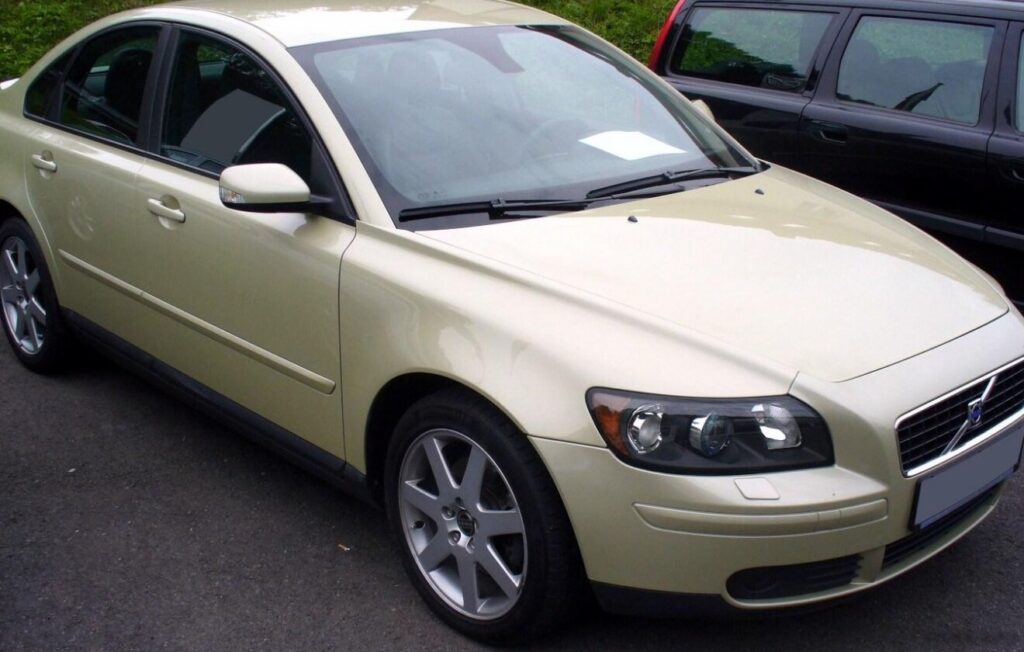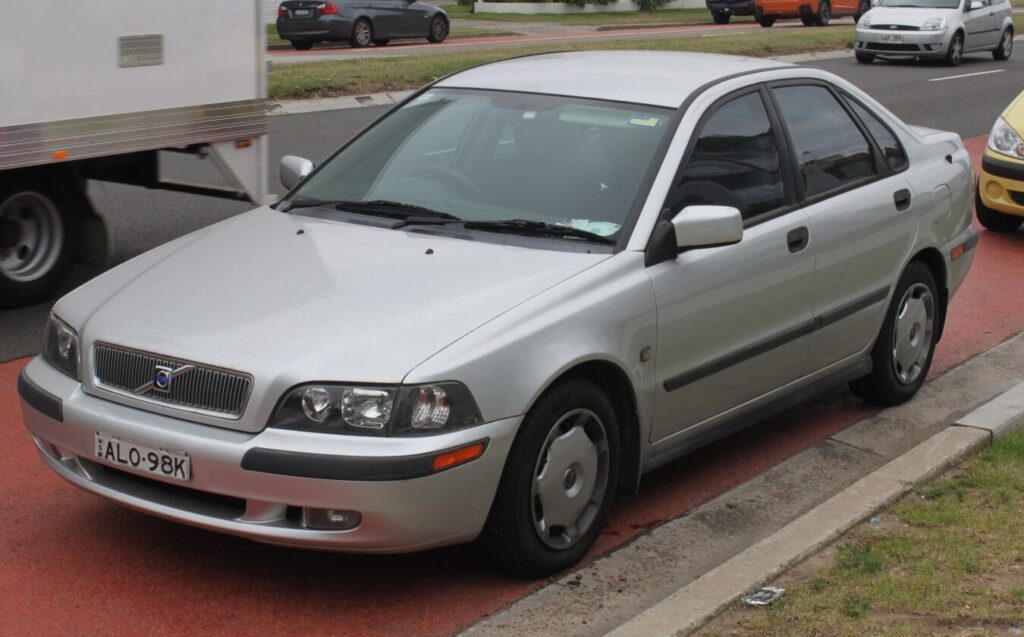
The Volvo S40 VS 1.8 16V Automatic, produced between 1995 and 1999, represented a key entry point into Volvo’s compact executive sedan lineup. Part of the first generation S40 (VS) series, built on Volvo’s 400 platform, this variant aimed to provide a comfortable and practical vehicle for families and commuters. It occupied the lower-mid range of the S40 offerings, positioned below the more powerful 2.0-liter and turbocharged models. The VS designation refers to the vehicle’s internal Volvo code for this generation.
Technical Specifications
| Brand | Volvo |
| Model | S40 |
| Generation | S40 (VS) |
| Type (Engine) | 1.8 16V (115 Hp) Automatic |
| Start of production | 1995 |
| End of production | 1999 |
| Powertrain Architecture | Internal Combustion engine |
| Body type | Sedan |
| Seats | 5 |
| Doors | 4 |
| Fuel consumption (urban) | 12 l/100 km (19.6 US mpg) |
| Fuel consumption (extra urban) | 6-6.7 l/100 km (39.2 – 35.1 US mpg) |
| Fuel consumption (combined) | 7.8 l/100 km (30.2 US mpg) |
| Fuel Type | Petrol (Gasoline) |
| Acceleration 0 – 100 km/h | 10.5 sec |
| Acceleration 0 – 62 mph | 10.5 sec |
| Acceleration 0 – 60 mph | 10 sec |
| Maximum speed | 195 km/h (121.17 mph) |
| Weight-to-power ratio | 11.2 kg/Hp |
| Weight-to-torque ratio | 7.8 kg/Nm |
| Power | 115 Hp @ 5500 rpm |
| Torque | 165 Nm @ 4100 rpm (121.7 lb.-ft. @ 4100 rpm) |
| Engine layout | Front, Transverse |
| Engine Model/Code | B4184S |
| Engine displacement | 1731 cm3 (105.63 cu. in.) |
| Number of cylinders | 4 |
| Engine configuration | Inline |
| Cylinder Bore | 83 mm (3.27 in.) |
| Piston Stroke | 80 mm (3.15 in.) |
| Compression ratio | 10.5:1 |
| Number of valves per cylinder | 4 |
| Fuel injection system | Multi-port manifold injection |
| Engine aspiration | Naturally aspirated |
| Valvetrain | DOHC |
| Engine oil capacity | 5.4 l (5.71 US qt | 4.75 UK qt) |
| Coolant capacity | 6.3 l (6.66 US qt | 5.54 UK qt) |
| Kerb Weight | 1286 kg (2835.14 lbs.) |
| Max. weight | 1720 kg (3791.95 lbs.) |
| Max load | 434 kg (956.81 lbs.) |
| Trunk (boot) space – minimum | 471 l (16.63 cu. ft.) |
| Trunk (boot) space – maximum | 853 l (30.12 cu. ft.) |
| Fuel tank capacity | 60 l (15.85 US gal | 13.2 UK gal) |
| Length | 4483 mm (176.5 in.) |
| Width | 1717 mm (67.6 in.) |
| Height | 1411 mm (55.55 in.) |
| Wheelbase | 2550 mm (100.39 in.) |
| Front track | 1450 mm (57.09 in.) |
| Rear track | 1470 mm (57.87 in.) |
| Drivetrain Architecture | Front wheel drive |
| Number of gears | 4 |
| Gearbox type | Automatic transmission |
| Front suspension | Wishbone |
| Rear suspension | Coil spring |
| Front brakes | Ventilated discs |
| Rear brakes | Disc |
| Assisting systems | ABS (Anti-lock braking system) |
| Steering type | Steering rack and pinion |
| Power steering | Hydraulic |
| Tires size | 195/55 R15 |
| Wheel rims size | 15 |
Powertrain & Engine Architecture
The heart of the S40 1.8 16V Automatic is the Volvo B4184S engine, a 1.8-liter inline-four cylinder gasoline engine. This engine featured a cast iron block and an aluminum cylinder head, incorporating a dual overhead camshaft (DOHC) valvetrain with four valves per cylinder. This 16-valve configuration, while not groundbreaking, provided a reasonable balance of power and efficiency for its time. Fuel delivery was handled by a multi-port fuel injection system, contributing to improved throttle response and fuel economy compared to earlier carbureted designs. The engine produced 115 horsepower at 5500 rpm and 165 Nm (121.7 lb-ft) of torque at 4100 rpm. The automatic transmission was a four-speed unit, designed for smooth and comfortable shifting. While not known for its sportiness, it was reliable and well-suited to the engine’s characteristics.
Driving Characteristics
The S40 1.8 Automatic offered a comfortable, rather than sporty, driving experience. Acceleration from 0-60 mph took around 10 seconds, and top speed was approximately 121 mph. The automatic transmission, while providing convenience, did detract from the engine’s available power. Gear ratios were optimized for fuel efficiency and smooth cruising, resulting in a somewhat leisurely pace. Compared to the manual transmission version, the automatic felt noticeably slower. Higher-output S40 models, such as those with the 2.0-liter engine or the turbocharged variants, offered significantly more performance. The suspension was tuned for comfort, absorbing bumps and providing a stable ride, but it wasn’t particularly engaging for enthusiastic drivers.
Equipment & Trim Levels
The S40 1.8 Automatic typically came with a reasonable level of standard equipment. This included power steering, central locking, electric front windows, and an AM/FM radio. Interior upholstery was usually cloth, with a relatively simple dashboard layout. Optional extras included air conditioning, a sunroof, and upgraded audio systems. The trim level was generally considered a mid-range offering, providing a good balance of features and affordability. It wasn’t as luxurious as the higher-spec S40 models, but it offered a comfortable and well-equipped interior for its price point.
Chassis & Braking
The S40 VS featured a front-wheel-drive layout with independent wishbone suspension at the front and a coil spring rear suspension. The front brakes were ventilated discs, providing good stopping power, while the rear brakes were solid discs. Anti-lock Braking System (ABS) was standard, enhancing safety and control during emergency braking. The chassis was designed to provide a comfortable ride and stable handling, prioritizing practicality over outright performance. Stabilizer bars were fitted to both the front and rear axles to reduce body roll during cornering.
Market Reception & Comparison
The S40 1.8 Automatic was generally well-received as a practical and reliable family sedan. Critics praised its comfortable ride, spacious interior, and Volvo’s reputation for safety. However, the engine’s performance was often criticized as being somewhat underwhelming, particularly when paired with the automatic transmission. Compared to competitors like the BMW 3 Series and Audi A4, the S40 offered a more affordable price point but lacked the same level of driving refinement. Fuel economy was respectable for its time, averaging around 30 mpg in combined driving. Reliability was generally good, although routine maintenance was essential to ensure long-term durability.
Legacy
The Volvo S40 1.8 16V Automatic, while not the most exciting variant in the lineup, remains a relatively common sight on used car markets today. The B4184S engine is known for its durability and relatively simple construction, making it relatively easy and affordable to maintain. However, age-related issues such as corrosion and wear on suspension components are common. These cars are often sought after by those looking for a safe, reliable, and affordable classic Volvo. The combination of a comfortable ride, practical interior, and Volvo’s strong safety reputation continues to appeal to a wide range of buyers.