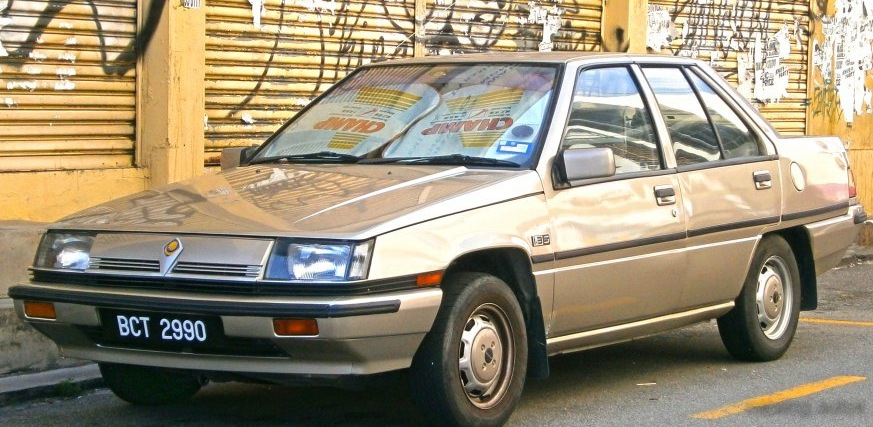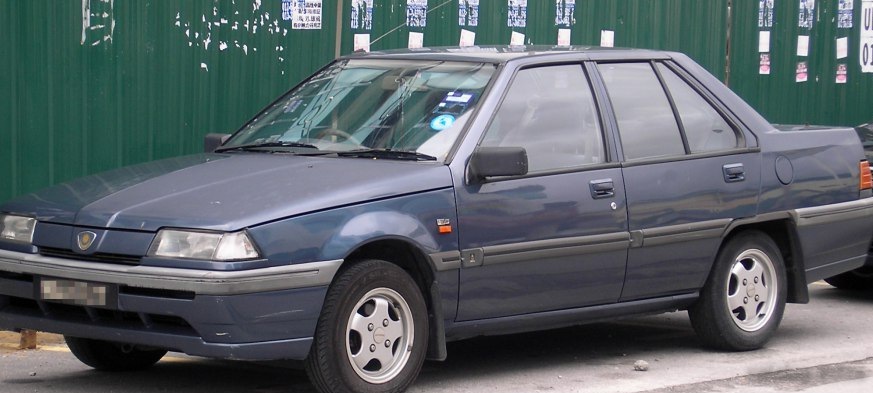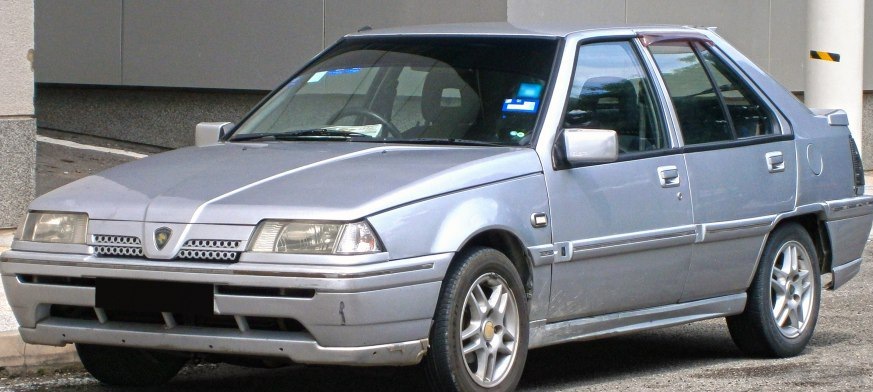
The Proton Saga Iswara Aeroback 1.3i, produced between 2001 and 2003, represents a significant iteration of Proton’s long-running Saga model. Positioned as an affordable and practical hatchback within the Malaysian automotive market, the Iswara Aeroback aimed to provide economical transportation for families and first-time car buyers. It built upon the foundation of the earlier Saga models, offering a more contemporary body style and improved features while retaining the core values of reliability and value. The Iswara Aeroback was a key model for Proton during a period of increasing competition from imported vehicles, and it played a role in establishing the brand’s presence in the Southeast Asian region.
Technical Specifications
| Brand | Proton |
| Model | Saga Iswara |
| Generation | Saga Iswara Aeroback |
| Type (Engine) | 1.3 i (75 Hp) |
| Start of production | 2001 |
| End of production | 2003 |
| Powertrain Architecture | Internal Combustion engine |
| Body type | Hatchback |
| Seats | 5 |
| Doors | 5 |
| Fuel consumption (urban) | 8.3 l/100 km (28.3 US mpg) |
| Fuel consumption (extra urban) | 6.3 l/100 km (37.3 US mpg) |
| Fuel consumption (combined) | 7.4 l/100 km (31.8 US mpg) |
| Fuel Type | Petrol (Gasoline) |
| Acceleration 0 – 100 km/h | 13.8 sec |
| Acceleration 0 – 62 mph | 13.8 sec |
| Acceleration 0 – 60 mph | 13.1 sec |
| Maximum speed | 166 km/h (103.15 mph) |
| Weight-to-power ratio | 12.7 kg/Hp |
| Weight-to-torque ratio | 8.8 kg/Nm |
| Power | 75 Hp @ 6000 rpm |
| Power per litre | 57.8 Hp/l |
| Torque | 108 Nm @ 3000 rpm (79.66 lb.-ft. @ 3000 rpm) |
| Engine layout | Front, Transverse |
| Engine displacement | 1298 cm3 (79.21 cu. in.) |
| Number of cylinders | 4 |
| Engine configuration | Inline |
| Cylinder Bore | 71 mm (2.8 in.) |
| Piston Stroke | 82 mm (3.23 in.) |
| Compression ratio | 9.5:1 |
| Number of valves per cylinder | 3 |
| Fuel injection system | Multi-port manifold injection |
| Engine aspiration | Naturally aspirated |
| Valvetrain | OHC |
| Kerb Weight | 950 kg (2094.39 lbs.) |
| Max. weight | 1400 kg (3086.47 lbs.) |
| Max load | 450 kg (992.08 lbs.) |
| Trunk (boot) space – minimum | 735 l (25.96 cu. ft.) |
| Fuel tank capacity | 45 l (11.89 US gal) |
| Length | 4280 mm (168.5 in.) |
| Width | 1655 mm (65.16 in.) |
| Height | 1360 mm (53.54 in.) |
| Wheelbase | 2380 mm (93.7 in.) |
| Front track | 1390 mm (54.72 in.) |
| Rear (Back) track | 1340 mm (52.76 in.) |
| Drivetrain Architecture | Front wheel drive |
| Number of gears and type of gearbox | 5 gears, manual transmission |
| Front brakes | Disc |
| Rear brakes | Drum |
| Assisting systems | ABS (Anti-lock braking system) |
| Steering type | Steering rack and pinion |
| Power steering | Hydraulic |
| Tires size | 155/80 R13 |
Powertrain & Engine Architecture
The Proton Saga Iswara Aeroback 1.3i was powered by a 1.3-liter inline-four cylinder engine. This engine, typically identified by its internal code, was a naturally aspirated unit featuring a single overhead camshaft (OHC) valvetrain and three valves per cylinder. The multi-port fuel injection system delivered fuel to the cylinders, contributing to reasonable fuel efficiency for its time. Producing 75 horsepower at 6000 rpm and 108 Nm (79.66 lb-ft) of torque at 3000 rpm, the engine was designed for economy rather than outright performance. The engine’s relatively simple design prioritized reliability and ease of maintenance. The Iswara Aeroback was exclusively offered with a five-speed manual transmission, designed to maximize fuel economy and provide adequate acceleration for everyday driving.
Driving Characteristics
The 1.3-liter engine and five-speed manual transmission combination in the Iswara Aeroback delivered a driving experience focused on practicality. Acceleration was modest, with a 0-60 mph time of around 13.1 seconds. The gear ratios were tuned for fuel efficiency, meaning the engine needed to be revved to achieve brisk acceleration. Compared to potential higher-spec versions (had they been offered), the 1.3i lacked the punch for quick overtaking maneuvers or spirited driving. However, the light weight of the vehicle (approximately 950 kg or 2094 lbs) helped to mitigate the engine’s power deficit. The steering was hydraulic, providing reasonable assistance at low speeds, but lacked the precision found in more modern systems. Overall, the driving experience was best described as comfortable and predictable, suited for urban commuting and everyday transportation.
Equipment & Trim Levels
The Proton Saga Iswara Aeroback 1.3i was generally equipped with basic, but functional, features. Standard equipment typically included cloth upholstery, a simple dashboard layout with analog gauges, and manual windows and door locks. Air conditioning was often included, but could sometimes be an optional extra depending on the specific market and package. The interior was designed with durability in mind, utilizing hard-wearing plastics. Optional extras could include a basic audio system, upgraded interior trim, and power windows. The Iswara Aeroback was positioned as the entry-level trim within the Iswara range, focusing on affordability and essential features.
Chassis & Braking
The Iswara Aeroback utilized a relatively simple chassis design. The front suspension consisted of MacPherson struts, while the rear suspension employed a semi-independent torsion beam setup. This configuration provided a comfortable ride, but didn’t offer particularly sporty handling characteristics. The braking system featured disc brakes on the front wheels and drum brakes on the rear. An Anti-lock Braking System (ABS) was included as a standard safety feature, enhancing braking performance and stability, particularly on slippery surfaces. The relatively narrow 155/80 R13 tires contributed to a comfortable ride but limited grip during cornering.
Market Reception & Comparison
The Proton Saga Iswara Aeroback 1.3i was generally well-received in the Malaysian market as an affordable and reliable hatchback. Critics praised its practicality, spacious interior, and fuel efficiency. However, the engine’s lack of power was a common criticism. Compared to other vehicles in its class, the Iswara Aeroback offered a competitive price point and a reputation for durability. Its fuel economy of around 31.8 US mpg (combined) was respectable for the early 2000s. The Iswara Aeroback’s main competitors included other locally assembled vehicles and imported compact hatchbacks. The Iswara generally offered a better value proposition than many of its imported rivals.
Legacy
The Proton Saga Iswara Aeroback 1.3i remains a common sight on Malaysian roads today, testament to its durability and reliability. The 1.3-liter engine, while not particularly powerful, proved to be robust and relatively easy to maintain. Parts availability remains good, making it an affordable option for budget-conscious buyers. In the used car market, the Iswara Aeroback is valued for its simplicity and practicality. While it lacks the modern features and refinement of newer vehicles, it continues to serve as a dependable and economical mode of transportation for many Malaysians. The Iswara Aeroback represents a significant chapter in Proton’s history, demonstrating the company’s commitment to providing affordable and accessible vehicles to the Malaysian public.