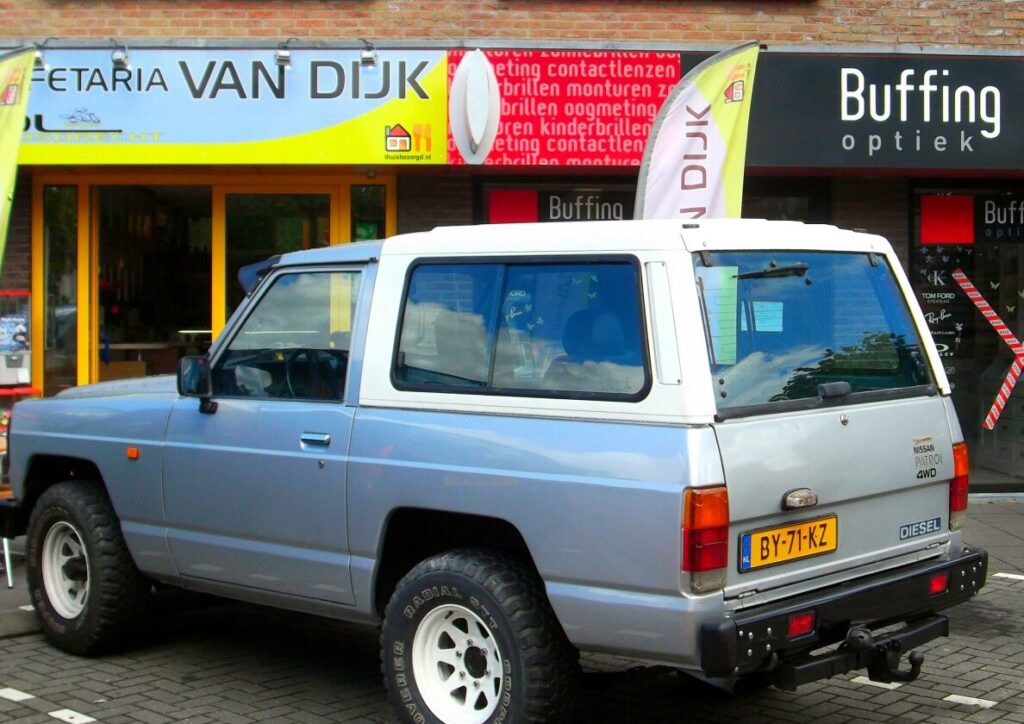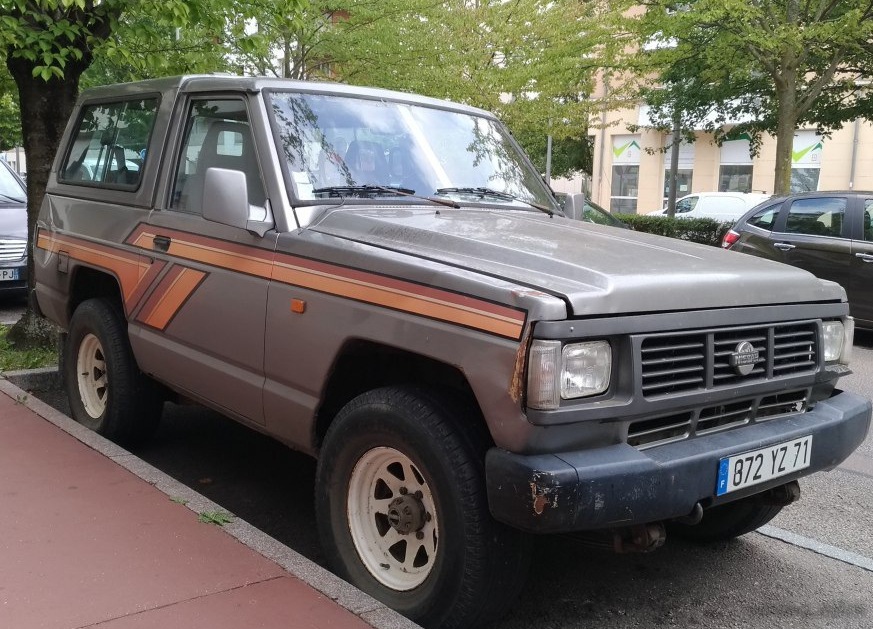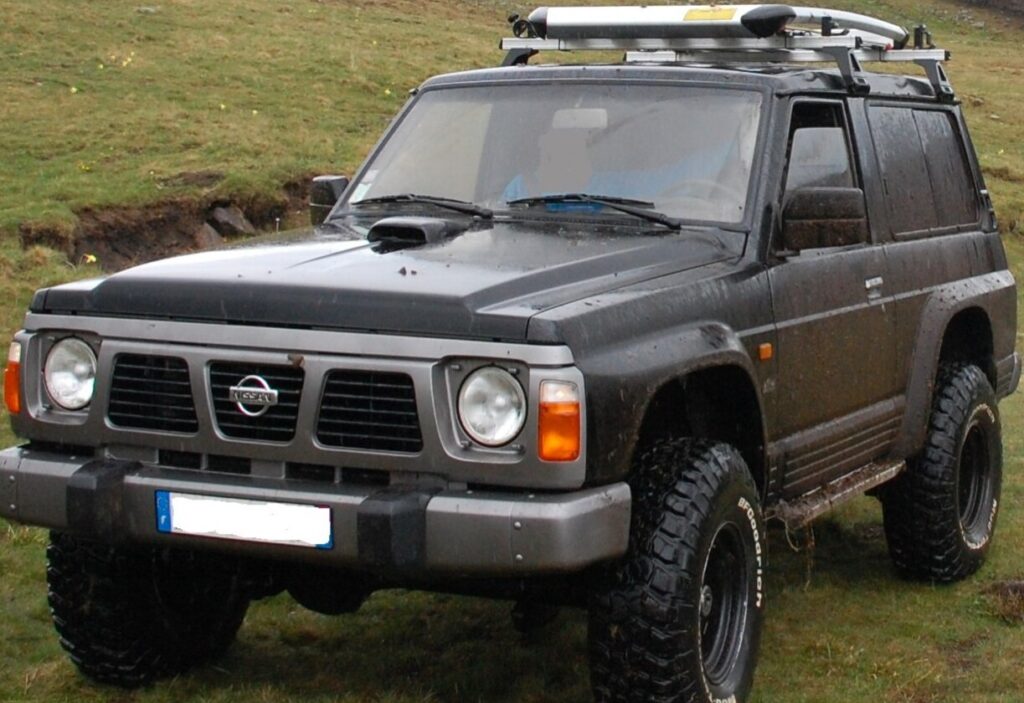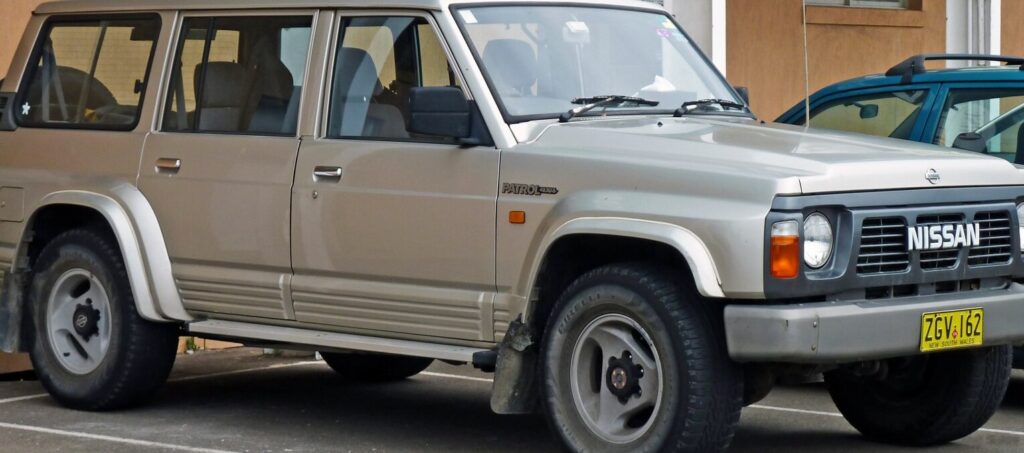
The Nissan Patrol IV, specifically the 5-door variant with the 4.2-liter (TB42E) engine paired with a 4-speed automatic transmission, represents a significant iteration in the long and storied history of Nissan’s iconic off-road vehicle. Produced from 1992 to 1995, this configuration was primarily aimed at markets outside of North America, where the Patrol was less commonly sold. The Y60 series, as it’s known internally, built upon the rugged reputation of its predecessors, offering increased refinement and capability for both on and off-road use. This particular engine and transmission combination occupied a middle ground in the Y60 Patrol lineup, offering a balance between power, fuel economy, and ease of use, appealing to a broader range of buyers than the more performance-oriented or diesel-powered options.
Technical Specifications
| Brand | Nissan |
| Model | Patrol |
| Generation | Patrol IV 5-door (Y60) |
| Type (Engine) | 4.2 (170 Hp) 4WD Automatic |
| Start of production | 1992 |
| End of production | 1995 |
| Powertrain Architecture | Internal Combustion engine |
| Body type | Off-road vehicle |
| Seats | 5 |
| Doors | 5 |
| Fuel consumption (urban) | 20.6 l/100 km (11.4 US mpg, 13.7 UK mpg, 4.9 km/l) |
| Fuel consumption (extra urban) | 11.3 l/100 km (20.8 US mpg, 25 UK mpg, 8.8 km/l) |
| Fuel Type | Petrol (Gasoline) |
| Maximum speed | 165 km/h (102.53 mph) |
| Weight-to-power ratio | 12.4 kg/Hp, 80.6 Hp/tonne |
| Weight-to-torque ratio | 6.6 kg/Nm, 151.7 Nm/tonne |
| Power | 170 Hp @ 4000 rpm |
| Power per litre | 40.8 Hp/l |
| Torque | 320 Nm @ 3200 rpm (236.02 lb.-ft. @ 3200 rpm) |
| Engine layout | Front, Longitudinal |
| Engine Model/Code | TB42E |
| Engine displacement | 4169 cm3 (254.41 cu. in.) |
| Number of cylinders | 6 |
| Engine configuration | Inline |
| Cylinder Bore | 96 mm (3.78 in.) |
| Piston Stroke | 96 mm (3.78 in.) |
| Compression ratio | 8.3:1 |
| Number of valves per cylinder | 2 |
| Fuel injection system | Multi-port manifold injection |
| Engine aspiration | Naturally aspirated engine |
| Valvetrain | OHV |
| Engine oil capacity | 8.2 l (8.66 US qt, 7.21 UK qt) |
| Coolant capacity | 15.7 l (16.59 US qt, 13.81 UK qt) |
| Kerb Weight | 2110 kg (4651.75 lbs.) |
| Max. weight | 2800 kg (6172.94 lbs.) |
| Max load | 690 kg (1521.19 lbs.) |
| Trunk (boot) space – minimum | 623 l (22 cu. ft.) |
| Trunk (boot) space – maximum | 2170 l (76.63 cu. ft.) |
| Fuel tank capacity | 95 l (25.1 US gal, 20.9 UK gal) |
| Max. roof load | 100 kg (220.46 lbs.) |
| Permitted trailer load with brakes (12%) | 3500 kg (7716.18 lbs.) |
| Permitted trailer load without brakes | 750 kg (1653.47 lbs.) |
| Permitted towbar download | 75 kg (165.35 lbs.) |
| Length | 4920 mm (193.7 in.) |
| Width | 1930 mm (75.98 in.) |
| Height | 1790 mm (70.47 in.) |
| Wheelbase | 2970 mm (116.93 in.) |
| Front track | 1580 mm (62.2 in.) |
| Rear (Back) track | 1585 mm (62.4 in.) |
| Front overhang | 830 mm (32.68 in.) |
| Rear overhang | 1120 mm (44.09 in.) |
| Ride height (ground clearance) | 205 mm (8.07 in.) |
| Minimum turning circle (turning diameter) | 14.2 m (46.59 ft.) |
| Approach angle | 42° |
| Departure angle | 29° |
| Climb angle | 39° |
| Wading depth | 600 mm (23.62 in.) |
| Drivetrain Architecture | All wheel drive (4×4). ICE drives rear wheels, front wheels engaged via clutch. |
| Drive wheel | All wheel drive (4×4) |
| Number of gears and type of gearbox | 4 gears, automatic transmission |
| Front suspension | Coil spring, Rigid axle suspension, Transverse stabilizer |
| Rear suspension | Rigid axle suspension, Transverse stabilizer, Coil spring |
| Front brakes | Disc |
| Rear brakes | Disc |
| Power steering | Hydraulic Steering |
| Tires size | 265/70 R16 |
| Wheel rims size | 8J x 16 |
Powertrain & Engine Architecture
The heart of this Patrol variant is the TB42E, a 4.2-liter inline-six cylinder gasoline engine. This engine is a naturally aspirated, overhead valve (OHV) design, known for its durability and relatively simple construction. The TB42E utilizes a multi-port fuel injection system, which improved efficiency and responsiveness compared to earlier carbureted versions. The engine produces 170 horsepower at 4000 rpm and 320 Nm (236 lb-ft) of torque at 3200 rpm. The automatic transmission is a 4-speed unit, providing relatively smooth shifts but lacking the efficiency of more modern transmissions. This transmission was chosen for its ease of use, making the Patrol accessible to a wider range of drivers, particularly those less experienced with manual transmissions or who preferred the convenience of an automatic in off-road situations.
Driving Characteristics
The 4.2-liter engine and 4-speed automatic combination delivers adequate, but not exhilarating, performance. Acceleration is leisurely, and the vehicle feels its weight, especially when fully loaded. The automatic transmission’s gear ratios are geared towards low-end torque, making it well-suited for off-road crawling and towing. However, this comes at the expense of high-speed passing power. Compared to the manual transmission versions of the same engine, the automatic suffers a slight performance penalty due to drivetrain losses. The 4WD system, with its part-time engagement, provides excellent traction in challenging terrain, but requires the driver to manually switch between 2WD and 4WD modes as needed.
Equipment & Trim Levels
The Patrol IV 5-door with the 4.2L automatic typically came with a fairly basic level of equipment, reflecting its positioning as a workhorse vehicle. Standard features generally included power steering, air conditioning, and a basic audio system. Interior upholstery was typically cloth, and the dashboard featured a functional, utilitarian design. Optional extras could include power windows, central locking, and upgraded audio systems. Trim levels varied depending on the specific market, but generally focused on adding convenience features rather than significant performance upgrades.
Chassis & Braking
The Y60 Patrol utilizes a robust body-on-frame construction, providing excellent durability and off-road capability. The suspension consists of coil springs and rigid axles front and rear, with transverse stabilizers to reduce body roll. Braking is provided by disc brakes on all four wheels, offering adequate stopping power for the vehicle’s weight. The steering is hydraulic, making it relatively easy to maneuver, even in challenging terrain.
Market Reception & Comparison
The 4.2-liter automatic Patrol was generally well-received as a capable and reliable off-road vehicle. Critics praised its durability and off-road prowess, but noted its relatively low fuel economy and leisurely performance. Compared to the 3.3-liter inline-six engine, the 4.2 offered more power and torque, making it better suited for towing and tackling steep inclines. However, the 4.2 consumed significantly more fuel. The diesel-powered versions of the Patrol were favored by those prioritizing fuel economy and low-end torque, while the 4.2 appealed to those who preferred the smoother power delivery of a gasoline engine.
Legacy
The TB42E engine, in general, has a reputation for being exceptionally durable and long-lasting, even with minimal maintenance. The 4-speed automatic transmission, while not as sophisticated as modern units, is also known for its reliability. Today, these Patrols are sought after by off-road enthusiasts and collectors, particularly those who appreciate their simplicity and ruggedness. Parts availability can be a challenge in some markets, but the engine’s robust design means that it can often withstand significant abuse. The Y60 Patrol with the 4.2L automatic remains a testament to Nissan’s commitment to building durable and capable off-road vehicles.