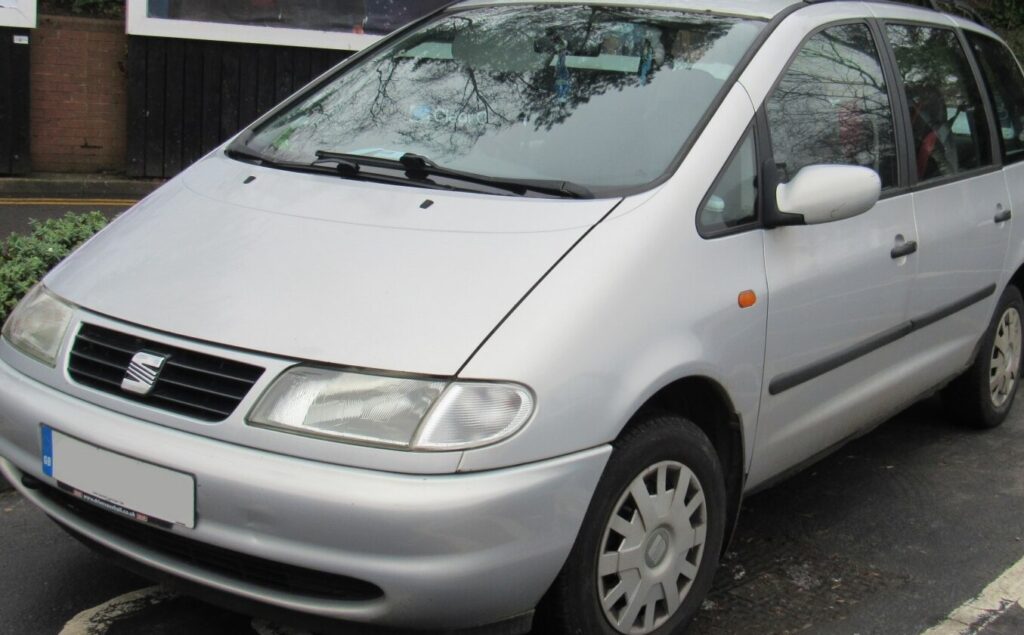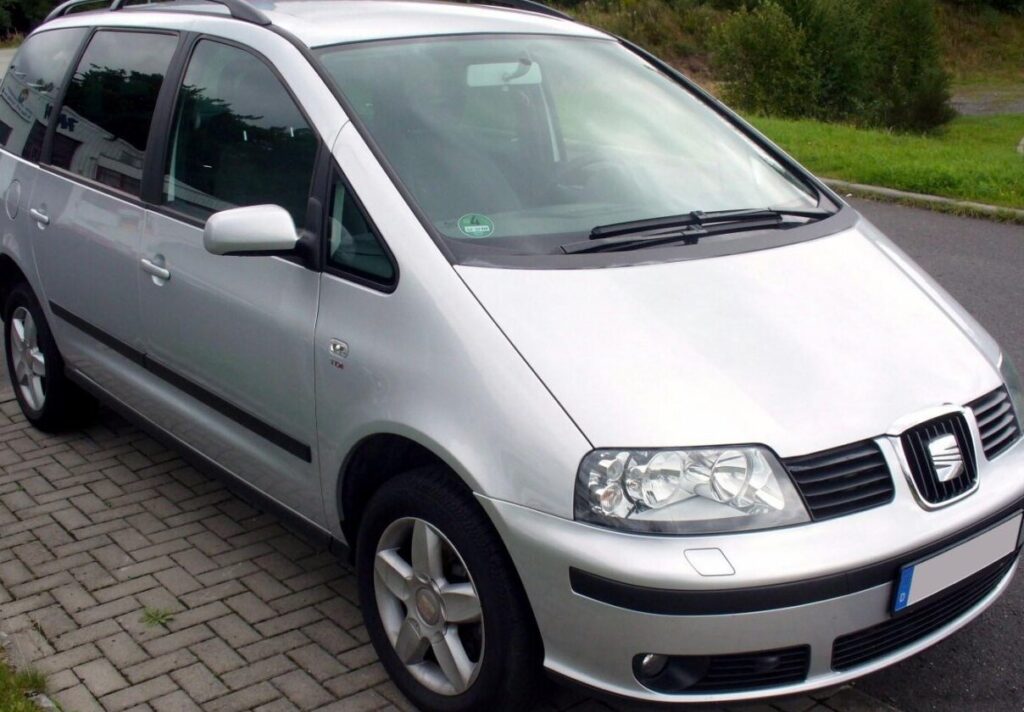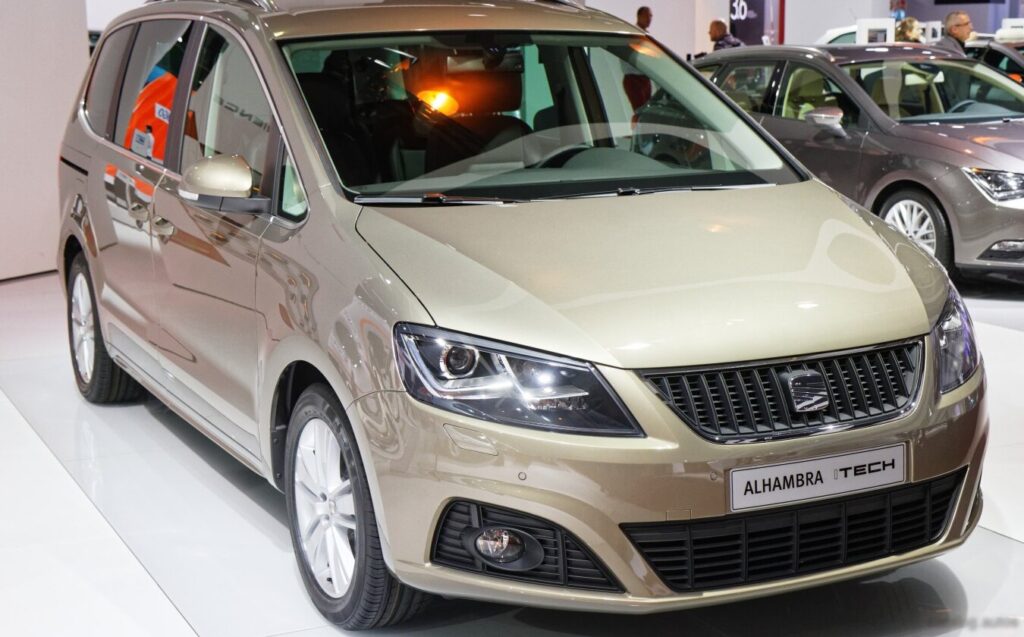
The Seat Alhambra II (7N) 2.0 TDI 170 hp with a Dual Clutch Gearbox (DSG) represents a significant iteration of Seat’s large MPV offering, produced from August 2010 to 2015. Positioned as a mid-range to upper-mid-range trim within the Alhambra lineup, it aimed to balance fuel efficiency, performance, and practicality for families. The 7N generation Alhambra, co-developed with Volkswagen (sharing a platform with the VW Sharan), was designed to compete with other European MPVs like the Ford Galaxy and Renault Espace, offering seven-seat capability and a spacious interior. This variant, with its focus on the 2.0 TDI engine and DSG transmission, was particularly popular in European markets where diesel engines and automated transmissions were highly favored.
Technical Specifications
| Brand | Seat |
| Model | Alhambra |
| Generation | Alhambra II (7N) |
| Type (Engine) | 2.0 TDI (170 Hp) DPF Ecomotive DSG |
| Start of production | August, 2010 |
| End of production | 2015 |
| Powertrain Architecture | Internal Combustion engine |
| Body type | Minivan, MPV |
| Seats | 7 |
| Doors | 5 |
| Fuel consumption (urban) | 6.7 l/100 km (35.1 US mpg, 42.2 UK mpg, 14.9 km/l) |
| Fuel consumption (extra urban) | 5.4 l/100 km (43.6 US mpg, 52.3 UK mpg, 18.5 km/l) |
| Fuel consumption (combined) | 5.9 l/100 km (39.9 US mpg, 47.9 UK mpg, 16.9 km/l) |
| CO2 emissions | 154 g/km |
| Fuel Type | Diesel |
| Acceleration 0 – 100 km/h | 9.5 sec |
| Acceleration 0 – 62 mph | 9.5 sec |
| Acceleration 0 – 60 mph | 9 sec (Calculated) |
| Maximum speed | 204 km/h (126.76 mph) |
| Emission standard | Euro 5 |
| Weight-to-power ratio | 10.4 kg/Hp, 95.7 Hp/tonne |
| Weight-to-torque ratio | 5.1 kg/Nm, 197.1 Nm/tonne |
| Power | 170 Hp @ 4200 rpm |
| Torque | 350 Nm @ 1750-2500 rpm (258.15 lb.-ft. @ 1750-2500 rpm) |
| Engine layout | Front, Transverse |
| Engine Model/Code | CFGB |
| Engine displacement | 1968 cm3 (120.09 cu. in.) |
| Number of cylinders | 4 |
| Engine configuration | Inline |
| Cylinder Bore | 81 mm (3.19 in.) |
| Piston Stroke | 95.5 mm (3.76 in.) |
| Compression ratio | 16:1 |
| Number of valves per cylinder | 4 |
| Fuel injection system | Diesel Commonrail |
| Engine aspiration | Turbocharger, Intercooler |
| Engine oil capacity | 4.3 l (4.54 US qt | 3.78 UK qt) |
| Coolant capacity | 8 l (8.45 US qt | 7.04 UK qt) |
| Kerb Weight | 1776 kg (3915.41 lbs.) |
| Max. weight | 2540 kg (5599.74 lbs.) |
| Max load | 764 kg (1684.33 lbs.) |
| Trunk (boot) space – minimum | 809 l (28.57 cu. ft.) |
| Trunk (boot) space – maximum | 2430 l (85.81 cu. ft.) |
| Fuel tank capacity | 70 l (18.49 US gal | 15.4 UK gal) |
| Length | 4854 mm (191.1 in.) |
| Width | 1904 mm (74.96 in.) |
| Height | 1720 mm (67.72 in.) |
| Wheelbase | 2919 mm (114.92 in.) |
| Front track | 1569 mm (61.77 in.) |
| Rear track | 1617 mm (63.66 in.) |
| Minimum turning circle | 11.9 m (39.04 ft.) |
| Drivetrain Architecture | Front wheel drive |
| Number of gears | 6 |
| Gearbox type | Automatic transmission DSG |
| Front suspension | Independent type McPherson |
| Rear suspension | Independent multi-link suspension |
| Front brakes | Ventilated discs |
| Rear brakes | Disc |
| Assisting systems | ABS (Anti-lock braking system) |
| Steering type | Steering rack and pinion |
| Power steering | Electric |
| Tires size | 205/60 R16; 215/60 R16; 225/50 R17 |
| Wheel rims size | 6.5J x 16 |
Powertrain & Engine Architecture
The heart of this Alhambra variant is the 2.0-liter TDI engine, specifically the CFGB engine code. This engine is a four-cylinder, inline diesel engine utilizing common rail direct injection and a turbocharger with intercooling. The common rail system, operating at very high pressures, allows for precise fuel metering and optimized combustion, contributing to both power and efficiency. The turbocharger boosts power output by forcing more air into the cylinders. The engine produces 170 horsepower at 4200 rpm and a substantial 350 Nm (258 lb-ft) of torque between 1750 and 2500 rpm. This broad torque curve is a hallmark of modern diesel engines, providing strong pulling power at lower engine speeds. The engine also incorporates a Diesel Particulate Filter (DPF) to reduce emissions, meeting Euro 5 standards. Paired with the engine is a 6-speed Dual Clutch Gearbox (DSG). This transmission offers quick, smooth shifts and contributes to improved fuel economy compared to a traditional automatic transmission. The DSG operates by essentially having two separate manual gearboxes within one housing, allowing for pre-selection of the next gear for near-instantaneous changes.
Driving Characteristics
The 170 hp TDI with the DSG transmission delivers a competent and refined driving experience. While not a sports car, the Alhambra offers ample power for everyday driving, including fully loaded with passengers and luggage. Acceleration from 0-60 mph takes around 9 seconds, which is respectable for a large MPV. The DSG transmission enhances the driving experience with its quick and seamless gear changes. In typical driving scenarios, the transmission is nearly imperceptible, providing smooth acceleration. Compared to the lower-powered 1.6 TDI versions, the 2.0 TDI offers a noticeable improvement in performance, particularly when overtaking or climbing hills. The gear ratios are tuned for a balance of fuel economy and responsiveness. The 2.0 TDI also feels more relaxed on the highway, maintaining speed with less effort than the smaller engine. However, it doesn’t offer the same level of driver engagement as a manual transmission.
Equipment & Trim Levels
The 2.0 TDI 170 hp DSG variant typically came with a good level of standard equipment. This included features like air conditioning, electric windows, central locking, a CD/radio system, and alloy wheels. Higher trim levels, such as the Stylance or Reference, added features like climate control, parking sensors, a touchscreen infotainment system, and upgraded interior upholstery. Optional extras included a panoramic sunroof, leather seats, and a navigation system. Interior upholstery was typically cloth, but leather options were available. The dashboard layout was functional and well-designed, with clear instrumentation and logically placed controls.
Chassis & Braking
The Alhambra II (7N) utilizes an independent suspension setup, with McPherson struts at the front and a multi-link suspension at the rear. This provides a comfortable ride quality, even on uneven surfaces. The suspension is tuned to prioritize comfort over sporty handling. Braking is handled by ventilated discs at the front and solid discs at the rear. Anti-lock Braking System (ABS) is standard, providing enhanced braking performance and stability. The steering is power-assisted, making it easy to maneuver at low speeds.
Market Reception & Comparison
The Seat Alhambra 2.0 TDI DSG was generally well-received by automotive critics. It was praised for its spacious interior, comfortable ride, and fuel efficiency. The 2.0 TDI engine was considered a good compromise between performance and economy. Compared to the 1.6 TDI version, the 2.0 TDI offered a significant performance boost, making it a more suitable choice for those who frequently carry passengers or travel long distances. The DSG transmission was also a popular feature, praised for its smoothness and convenience. However, some critics noted that the Alhambra’s styling was somewhat conservative compared to some of its rivals.
Legacy
The 2.0 TDI engine in the Alhambra II (7N) has proven to be a relatively reliable powertrain. While DPF issues can occur, particularly with vehicles primarily used for short trips, the engine itself is generally robust. The DSG transmission, if properly maintained (regular fluid changes are crucial), is also known for its durability. On the used car market, the 2.0 TDI DSG variants of the Alhambra tend to command a slightly higher price than the lower-powered versions, reflecting their superior performance and refinement. The Alhambra remains a practical and spacious MPV, making it a popular choice for families seeking a versatile vehicle.