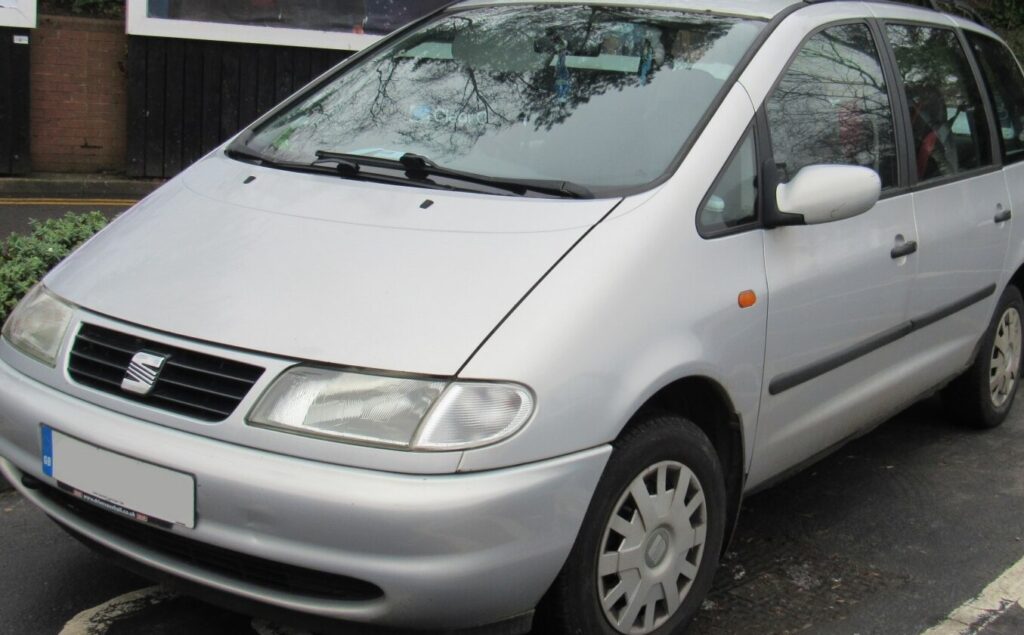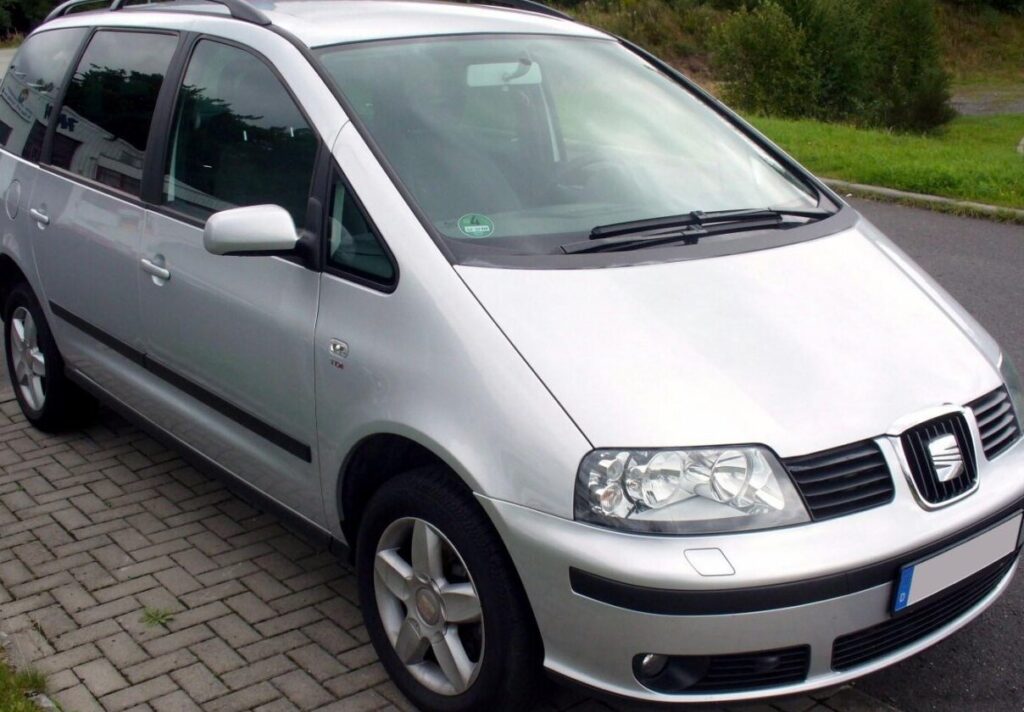
The Seat Alhambra II (7N) 2.0 TDI, producing 177 horsepower, represents a significant iteration of Seat’s large MPV offering. Introduced in November 2010 and continuing through 2015, this version of the Alhambra was part of the second generation (7N) model line, sharing its platform with the Volkswagen Sharan. Positioned as a mid-range offering within the Alhambra lineup, it aimed to balance performance, fuel efficiency, and practicality for families. The 7N generation represented a substantial upgrade over its predecessor, offering increased space, improved refinement, and a more modern feature set. It was primarily marketed in Europe, where the MPV segment remained strong, catering to buyers needing a versatile and spacious vehicle.
Technical Specifications
| Brand | Seat |
| Model | Alhambra |
| Generation | Alhambra II (7N) |
| Type (Engine) | 2.0 TDI (177 Hp) |
| Start of production | November, 2010 |
| End of production | 2015 |
| Powertrain Architecture | Internal Combustion engine |
| Body type | Minivan, MPV |
| Seats | 5 |
| Doors | 5 |
| Fuel consumption (economy) – urban (NEDC) | 7.3 l/100 km (32.2 US mpg, 38.7 UK mpg, 13.7 km/l) |
| Fuel consumption (economy) – extra urban (NEDC) | 5 l/100 km (47 US mpg, 56.5 UK mpg, 20 km/l) |
| Fuel consumption (economy) – combined (NEDC) | 5.8 l/100 km (40.6 US mpg, 48.7 UK mpg, 17.2 km/l) |
| CO2 emissions (NEDC) | 152 g/km |
| Fuel Type | Diesel |
| Acceleration 0 – 100 km/h | 9.3 sec |
| Acceleration 0 – 62 mph | 9.3 sec |
| Acceleration 0 – 60 mph | 8.8 sec |
| Maximum speed | 208 km/h (129.25 mph) |
| Emission standard | Euro 5 |
| Weight-to-power ratio | 9.7 kg/Hp, 102.8 Hp/tonne |
| Weight-to-torque ratio | 4.5 kg/Nm, 220.7 Nm/tonne |
| Power | 177 Hp @ 4200 rpm |
| Power per litre | 89.9 Hp/l |
| Torque | 380 Nm @ 1750-2500 rpm (280.27 lb.-ft. @ 1750-2500 rpm) |
| Engine layout | Front, Transverse |
| Engine Model/Code | CFGC |
| Engine displacement | 1968 cm3 (120.09 cu. in.) |
| Number of cylinders | 4 |
| Engine configuration | Inline |
| Cylinder Bore | 81 mm (3.19 in.) |
| Piston Stroke | 95.5 mm (3.76 in.) |
| Compression ratio | 16:1 |
| Number of valves per cylinder | 4 |
| Fuel injection system | Diesel Commonrail |
| Engine aspiration | Turbocharger, Intercooler |
| Valvetrain | DOHC |
| Engine oil capacity | 4.3 l (4.54 US qt | 3.78 UK qt) |
| Coolant | 8 l (8.45 US qt | 7.04 UK qt) |
| Kerb Weight | 1722 kg (3796.36 lbs.) |
| Max. weight | 2370 kg (5224.96 lbs.) |
| Max load | 648 kg (1428.6 lbs.) |
| Trunk (boot) space – minimum | 809 l (28.57 cu. ft.) |
| Trunk (boot) space – maximum | 2430 l (85.81 cu. ft.) |
| Fuel tank capacity | 70 l (18.49 US gal | 15.4 UK gal) |
| Max. roof load | 100 kg (220.46 lbs.) |
| Permitted trailer load with brakes (12%) | 2200 kg (4850.17 lbs.) |
| Permitted trailer load without brakes | 750 kg (1653.47 lbs.) |
| Permitted towbar download | 100 kg (220.46 lbs.) |
| Length | 4854 mm (191.1 in.) |
| Width | 1904 mm (74.96 in.) |
| Width including mirrors | 2081 mm (81.93 in.) |
| Height | 1720 mm (67.72 in.) |
| Wheelbase | 2919 mm (114.92 in.) |
| Front track | 1557-1569 mm (61.3 – 61.77 in.) |
| Rear (Back) track | 1605-1617 mm (63.19 – 63.66 in.) |
| Drag coefficient (Cd) | 0.299 |
| Minimum turning circle (turning diameter) | 11.9 m (39.04 ft.) |
| Drivetrain Architecture | The Internal combustion engine (ICE) drives the front wheels of the vehicle. |
| Drive wheel | Front wheel drive |
| Number of gears and type of gearbox | 6 gears, manual transmission |
| Front suspension | Independent type McPherson, Transverse stabilizer |
| Rear suspension | Transverse stabilizer, Coil spring |
| Front brakes | Ventilated discs, 314×30 mm |
| Rear brakes | Disc, 282×12 mm |
| Assisting systems | ABS (Anti-lock braking system) |
| Steering type | Steering rack and pinion |
| Power steering | Electric Steering |
| Tires size | 215/60 R16; 225/50 R17; 225/45 R18 |
| Wheel rims size | 6.5J x 16; 7J x 17; 7.5J x 18 |
Powertrain & Engine Architecture
The heart of the Alhambra 2.0 TDI (177 Hp) is the CFGC engine, a 1968cc inline-four cylinder diesel. This engine is a member of the Volkswagen Group’s modular engine family, known for its robust construction and efficiency. It utilizes a common rail direct injection system, delivering fuel at extremely high pressure for optimized combustion. The engine also features a turbocharger with an intercooler, boosting power output and improving torque delivery. The double overhead camshaft (DOHC) valvetrain, with four valves per cylinder, further enhances breathing and performance. The engine’s 16:1 compression ratio is typical for a diesel engine, contributing to its thermal efficiency. The 6-speed manual transmission was the standard offering, providing a good balance between fuel economy and driver control.
Driving Characteristics
The 177 horsepower 2.0 TDI engine in the Alhambra provided adequate, though not exhilarating, performance. Acceleration from 0-60 mph took around 8.8 seconds, making it suitable for everyday driving and long-distance journeys with a full load. The engine’s 380 Nm (280 lb-ft) of torque, available from 1750-2500 rpm, provided good pulling power, especially useful for overtaking and climbing hills. Compared to the lower-powered 1.6 TDI versions, the 2.0 TDI offered a noticeable improvement in responsiveness. However, it didn’t match the performance of the higher-spec petrol engines available in the Alhambra range. The 6-speed manual transmission was well-matched to the engine, offering smooth gear changes and a reasonable spread of ratios. The Alhambra’s weight, however, did impact its overall agility, making it feel less sporty than some of its competitors.
Equipment & Trim Levels
The 2.0 TDI 177 Hp Alhambra typically came with a good level of standard equipment. This included air conditioning, electric windows, central locking, a CD stereo system, and alloy wheels. Higher trim levels, such as Style and Sport, added features like climate control, parking sensors, a touchscreen infotainment system, and leather upholstery. Optional extras included a panoramic sunroof, navigation system, and advanced safety features like adaptive cruise control and lane departure warning. Interior upholstery was typically cloth on the base models, with leather options available on higher trims. The dashboard layout was functional and well-designed, with clear instrumentation and intuitive controls.
Chassis & Braking
The Alhambra II (7N) utilized a McPherson strut front suspension and a coil spring rear suspension. A transverse stabilizer bar was fitted to both axles to reduce body roll during cornering. The braking system consisted of ventilated discs on the front wheels and solid discs on the rear. Anti-lock Braking System (ABS) was standard. The suspension setup prioritized comfort and ride quality, making it well-suited for long journeys. The steering was power-assisted, providing light and easy operation. The Alhambra’s relatively high weight necessitated a robust braking system, which provided adequate stopping power in most conditions.
Market Reception & Comparison
The Seat Alhambra 2.0 TDI (177 Hp) was generally well-received by automotive critics. It was praised for its spacious interior, comfortable ride, and good fuel economy. The 2.0 TDI engine was considered a good compromise between performance and efficiency. Compared to the lower-powered 1.6 TDI versions, the 2.0 TDI offered a more refined driving experience. However, some critics noted that the Alhambra lacked the driving dynamics of some of its competitors, such as the Ford S-Max. Fuel economy was a strong point, with combined figures around 5.8 l/100 km (40.6 US mpg), making it an attractive option for families covering long distances. Reliability was generally good, although some owners reported issues with the diesel particulate filter (DPF).
Legacy
The Seat Alhambra 2.0 TDI (177 Hp) remains a practical and affordable MPV in the used car market. The CFGC engine is known for its durability, provided it has been properly maintained. Regular servicing, including oil changes and DPF regeneration, is crucial for long-term reliability. While not as sought-after as some of its Volkswagen counterparts, the Alhambra offers excellent value for money and a spacious, comfortable interior. Its robust construction and relatively simple mechanicals make it a relatively easy vehicle to maintain, ensuring its continued presence on roads for years to come.