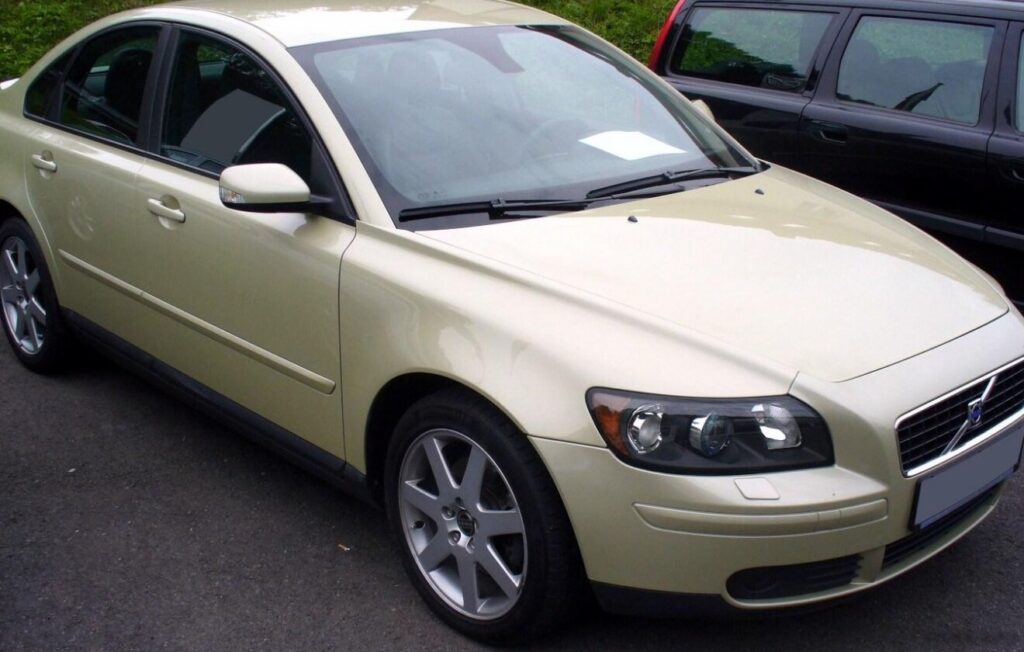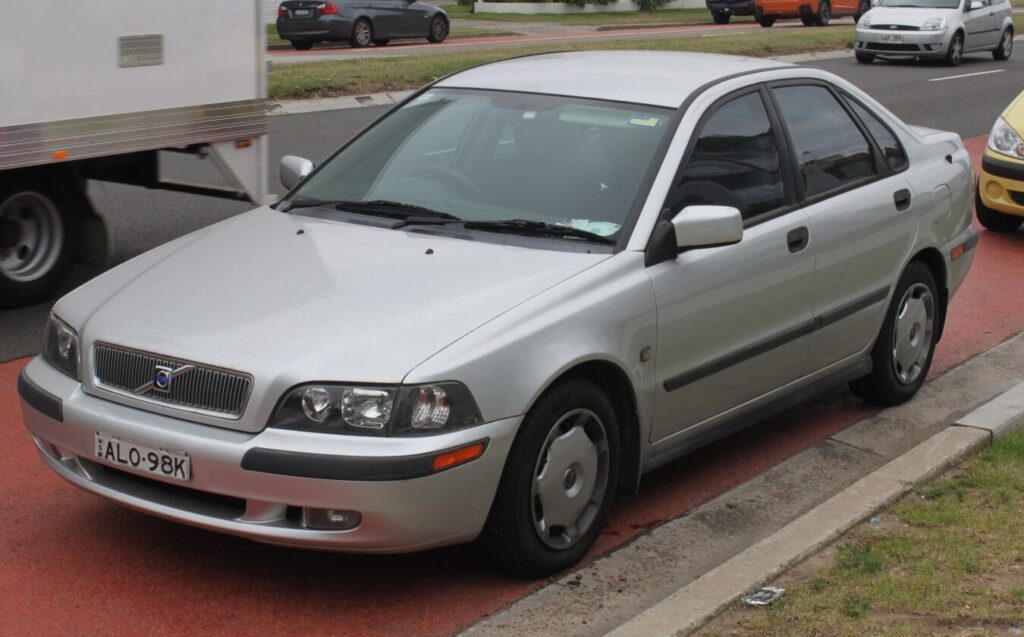
The Volvo S40 VS 1.9 D, produced between 2000 and 2004, represented Volvo’s entry into the compact executive sedan market with a diesel engine option. This variant, powered by the D4192T3 engine producing 115 horsepower, was positioned as the fuel-efficient choice within the S40 lineup, appealing to buyers prioritizing economy over outright performance. It was built on the 1HX0/A3 platform, shared with the first-generation Ford Focus, marking a period of collaboration between the two automakers. The 1.9 D aimed to provide a refined and practical driving experience, typical of Volvo’s brand values, while offering a lower price point than the gasoline-powered models.
Technical Specifications
| Brand | Volvo |
| Model | S40 |
| Generation | S40 (VS) |
| Type (Engine) | 1.9 D (115 Hp) |
| Start of production | 2000 |
| End of production | 2004 |
| Powertrain Architecture | Internal Combustion engine |
| Body type | Sedan |
| Seats | 5 |
| Doors | 4 |
| Fuel consumption (urban) | 7.3 l/100 km (32.2 US mpg) |
| Fuel consumption (extra urban) | 4.2 l/100 km (56 US mpg) |
| Fuel Type | Diesel |
| Acceleration 0 – 100 km/h | 10.5 sec |
| Acceleration 0 – 62 mph | 10.5 sec |
| Acceleration 0 – 60 mph | 10 sec |
| Maximum speed | 195 km/h (121.17 mph) |
| Weight-to-power ratio | 11.3 kg/Hp |
| Weight-to-torque ratio | 4.9 kg/Nm |
| Power | 115 Hp @ 4000 rpm |
| Torque | 265 Nm @ 1750 rpm (195.45 lb.-ft. @ 1750 rpm) |
| Engine layout | Front, Transverse |
| Engine Model/Code | D4192T3 |
| Engine displacement | 1870 cm3 (114.11 cu. in.) |
| Number of cylinders | 4 |
| Engine configuration | Inline |
| Cylinder Bore | 80 mm (3.15 in.) |
| Piston Stroke | 93 mm (3.66 in.) |
| Compression ratio | 19:1 |
| Number of valves per cylinder | 2 |
| Fuel injection system | Diesel Commonrail |
| Engine aspiration | Turbocharger |
| Engine oil capacity | 5.6 l (5.92 US qt | 4.93 UK qt) |
| Coolant capacity | 6.3 l (6.66 US qt | 5.54 UK qt) |
| Kerb Weight | 1295 kg (2854.99 lbs.) |
| Max. weight | 1770 kg (3902.18 lbs.) |
| Max load | 475 kg (1047.2 lbs.) |
| Trunk (boot) space – minimum | 471 l (16.63 cu. ft.) |
| Trunk (boot) space – maximum | 853 l (30.12 cu. ft.) |
| Fuel tank capacity | 60 l (15.85 US gal | 13.2 UK gal) |
| Length | 4516 mm (177.8 in.) |
| Width | 1716 mm (67.56 in.) |
| Height | 1422 mm (55.98 in.) |
| Wheelbase | 2562 mm (100.87 in.) |
| Front track | 1472 mm (57.95 in.) |
| Rear track | 1474 mm (58.03 in.) |
| Drivetrain Architecture | Front wheel drive |
| Number of gears | 5 |
| Gearbox type | Manual transmission |
| Front suspension | Wishbone |
| Rear suspension | Coil spring |
| Front brakes | Ventilated discs |
| Rear brakes | Disc |
| Assisting systems | ABS (Anti-lock braking system) |
| Steering type | Steering rack and pinion |
| Power steering | Hydraulic |
| Tires size | 195/60 R15 |
| Wheel rims size | 15 |
Powertrain & Engine Architecture
The heart of the S40 1.9 D was the D4192T3, a 1.9-liter inline-four cylinder diesel engine. This engine utilized a direct injection common rail system, a relatively advanced technology for its time, allowing for precise fuel delivery and improved combustion efficiency. The turbocharger, a key component, boosted power output to 115 horsepower and 265 Nm (195 lb-ft) of torque. The engine featured a cast iron block and an aluminum cylinder head, a common configuration for durability and weight reduction. The five-speed manual transmission was the standard offering, chosen for its efficiency and driver engagement. While an automatic transmission was available in other S40 variants, it wasn’t typically paired with the 1.9 D engine due to concerns about fuel economy and the transmission’s ability to handle the diesel torque effectively.
Driving Characteristics
The S40 1.9 D offered a comfortable, if not particularly sporty, driving experience. Acceleration from 0 to 60 mph took around 10.5 seconds, making it slower than the gasoline-powered S40 models. However, the engine’s strong low-end torque made it feel responsive in everyday driving situations, particularly for overtaking maneuvers. The five-speed manual transmission provided adequate control, although the gear ratios were geared towards fuel efficiency rather than outright performance. Compared to the higher-output S40 variants, the 1.9 D prioritized fuel economy and refinement over raw speed. The steering was light and precise, typical of Volvo’s tuning, and the suspension provided a comfortable ride, absorbing bumps and imperfections in the road surface effectively.
Equipment & Trim Levels
The S40 1.9 D typically came with a reasonable level of standard equipment. This included power windows, central locking, air conditioning, and an AM/FM radio. Safety features, a hallmark of the Volvo brand, were also standard, including ABS brakes, airbags, and side impact protection. Higher trim levels offered options such as leather upholstery, a sunroof, alloy wheels, and a more advanced audio system. The interior design was typically Scandinavian, characterized by clean lines, functional layouts, and high-quality materials. The base trim focused on providing essential features at an affordable price point, while optional packages allowed buyers to customize their S40 to their specific needs and preferences.
Chassis & Braking
The S40 1.9 D utilized a front-wheel-drive layout with independent wishbone suspension at the front and a semi-independent coil spring suspension at the rear. The front brakes were ventilated discs, providing good stopping power, while the rear brakes were solid discs. The chassis was designed to provide a balance between comfort and handling, offering a stable and predictable driving experience. The steering was a hydraulic rack-and-pinion system, providing precise control and feedback. The suspension tuning was geared towards comfort, prioritizing ride quality over sporty handling. Stabilizer bars were fitted to both the front and rear axles to reduce body roll during cornering.
Market Reception & Comparison
The Volvo S40 1.9 D was generally well-received by critics as a practical and fuel-efficient compact executive sedan. It was praised for its comfortable ride, refined interior, and strong safety features. However, it was also criticized for its relatively slow acceleration and lack of sporty handling. Compared to other diesel-powered compact sedans of the time, such as the Volkswagen Golf TDI and the Ford Focus TDCi, the S40 1.9 D offered a more premium interior and a more comfortable ride. However, it was typically more expensive than its competitors. The fuel economy was a major selling point, offering significant savings compared to the gasoline-powered S40 models.
Legacy
The D4192T3 engine, while not known for being exceptionally durable, proved to be reasonably reliable with proper maintenance. Common issues included turbocharger failure and injector problems, but these were often addressed with preventative maintenance. Today, the S40 1.9 D can be found on the used car market at relatively affordable prices. It remains a popular choice for buyers seeking a comfortable, fuel-efficient, and safe compact sedan. Its simplicity and relatively low running costs make it an attractive option for those looking for a practical and reliable vehicle. The S40 1.9 D represents a significant chapter in Volvo’s history, showcasing the brand’s commitment to safety, comfort, and fuel efficiency.