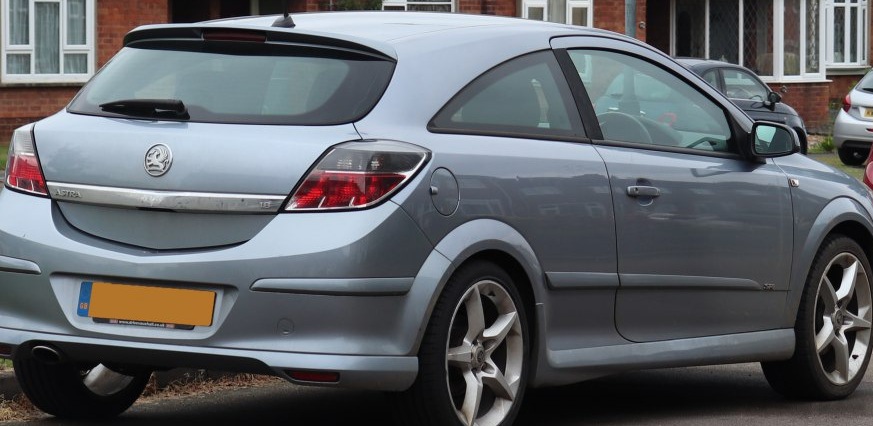
The Vauxhall Astra Mk V CC Sport Hatch 1.8i Automatic, produced between 2005 and 2010, represented a key offering within the H-series Astra range (Mk V). Positioned as a mid-range trim, it aimed to balance performance with convenience, targeting buyers who preferred the ease of an automatic transmission. This three-door hatchback variant was a popular choice in the UK and European markets, offering a practical and relatively affordable option in the competitive C-segment. It was built on the GM Delta platform, shared with other models like the Opel Astra and Chevrolet Astra.
Technical Specifications
| Brand | Vauxhall |
| Model | Astra |
| Generation | Astra Mk V CC Sport Hatch |
| Type (Engine) | 1.8i (125 Hp) Automatic |
| Start of production | 2005 |
| End of production | 2010 |
| Powertrain Architecture | Internal Combustion engine |
| Body type | Hatchback |
| Seats | 5 |
| Doors | 3 |
| Fuel consumption (urban) | 11.4 l/100 km (20.6 US mpg, 24.8 UK mpg, 8.8 km/l) |
| Fuel consumption (extra urban) | 6.3 l/100 km (37.3 US mpg, 44.8 UK mpg, 15.9 km/l) |
| Fuel consumption (combined) | 8.2 l/100 km (28.7 US mpg, 34.4 UK mpg, 12.2 km/l) |
| CO2 emissions | 197 g/km |
| Fuel Type | Petrol (Gasoline) |
| Acceleration 0 – 100 km/h | 11.7 sec |
| Acceleration 0 – 62 mph | 11.7 sec |
| Acceleration 0 – 60 mph | 11.1 sec |
| Maximum speed | 190 km/h (118.06 mph) |
| Weight-to-power ratio | 9.9 kg/Hp, 100.8 Hp/tonne |
| Weight-to-torque ratio | 7.3 kg/Nm, 136.3 Nm/tonne |
| Power | 125 Hp @ 5600 rpm |
| Power per litre | 69.6 Hp/l |
| Torque | 169 Nm @ 3800 rpm (124.65 lb.-ft. @ 3800 rpm) |
| Engine layout | Front, Transverse |
| Engine Model/Code | Z18XE |
| Engine displacement | 1796 cm3 (109.6 cu. in.) |
| Number of cylinders | 4 |
| Engine configuration | Inline |
| Cylinder Bore | 80.5 mm (3.17 in.) |
| Piston Stroke | 88.2 mm (3.47 in.) |
| Compression ratio | 10.5:1 |
| Number of valves per cylinder | 4 |
| Fuel injection system | Multi-port manifold injection |
| Engine aspiration | Naturally aspirated engine |
| Valvetrain | DOHC |
| Engine oil capacity | 4.25 l (4.49 US qt | 3.74 UK qt) |
| Coolant | 6.5 l (6.87 US qt | 5.72 UK qt) |
| Kerb Weight | 1240 kg (2733.73 lbs.) |
| Max. weight | 1780 kg (3924.23 lbs.) |
| Max load | 540 kg (1190.5 lbs.) |
| Trunk (boot) space – minimum | 312 l (11.02 cu. ft.) |
| Fuel tank capacity | 52 l (13.74 US gal | 11.44 UK gal) |
| Permitted trailer load with brakes (12%) | 1300 kg (2866.01 lbs.) |
| Permitted trailer load without brakes | 630 kg (1388.91 lbs.) |
| Length | 4290 mm (168.9 in.) |
| Width | 1753 mm (69.02 in.) |
| Width including mirrors | 2033 mm (80.04 in.) |
| Height | 1415 mm (55.71 in.) |
| Wheelbase | 2614 mm (102.91 in.) |
| Front track | 1488 mm (58.58 in.) |
| Rear (Back) track | 1488 mm (58.58 in.) |
| Front overhang | 910 mm (35.83 in.) |
| Rear overhang | 766 mm (30.16 in.) |
| Ride height (ground clearance) | 130 mm (5.12 in.) |
| Drag coefficient (Cd) | 0.28 |
| Minimum turning circle (turning diameter) | 10 m (32.81 ft.) |
| Drivetrain Architecture | The Internal combustion engine (ICE) drives the front wheels of the vehicle. |
| Drive wheel | Front wheel drive |
| Number of gears and type of gearbox | 4 gears, automatic transmission |
| Front brakes | Ventilated discs |
| Rear brakes | Disc |
| Assisting systems | ABS (Anti-lock braking system) |
| Steering type | Steering rack and pinion |
| Tires size | 205/55 R16 |
| Wheel rims size | 6.5J x 16 |
Powertrain & Engine Architecture
The heart of the Astra Mk V 1.8i Automatic is the Z18XE engine, a 1.8-liter (1796 cc) inline-four cylinder petrol engine. This engine is a member of the Ecotec family, known for its relatively lightweight construction and decent efficiency. The Z18XE utilizes multi-port fuel injection and a double overhead camshaft (DOHC) valvetrain with four valves per cylinder. This configuration allows for good breathing and contributes to the engine’s 125 horsepower output at 5600 rpm and 169 Nm (124.65 lb-ft) of torque at 3800 rpm. The engine features a compression ratio of 10.5:1. Paired with this engine is a four-speed automatic transmission, which, while providing convenience, wasn’t known for its particularly quick shifts or fuel efficiency compared to manual counterparts.
Driving Characteristics
The 1.8i Automatic offered a comfortable, if not particularly sporty, driving experience. Acceleration from 0-60 mph took around 11.1 seconds, and top speed was approximately 118 mph. The four-speed automatic transmission, while smooth, resulted in noticeable gear changes and a less engaging driving experience compared to the five-speed manual version. The gear ratios were optimized for fuel economy and everyday usability rather than outright performance. The engine felt adequate for typical commuting and highway driving, but lacked the punch of the higher-output versions like the 2.0 Turbo or the diesel variants. The automatic transmission did contribute to slightly higher fuel consumption than the manual.
Equipment & Trim Levels
The Sport Hatch trim level, even with the automatic transmission, offered a reasonable level of equipment. Standard features typically included air conditioning, power steering, electric front windows, a CD player, and alloy wheels. Safety features like ABS were also standard. Optional extras could include upgraded audio systems, sunroofs, and parking sensors. Interior upholstery was typically cloth, with a relatively simple dashboard layout. The Sport trim added some visual enhancements, such as a sportier steering wheel and unique seat fabrics.
Chassis & Braking
The Astra Mk V utilized a MacPherson strut front suspension and a torsion beam rear suspension. The front brakes were ventilated discs, providing adequate stopping power, while the rear brakes were solid discs. The suspension setup was tuned for comfort, offering a reasonably compliant ride. Stabilizer bars were fitted to both the front and rear axles to reduce body roll during cornering. The chassis was designed to provide a balance between handling and ride quality, prioritizing comfort over outright sportiness.
Market Reception & Comparison
The Astra Mk V 1.8i Automatic was generally well-received as a practical and affordable family car. Critics noted its comfortable ride and decent fuel economy, but also pointed out its lack of outright performance compared to rivals and higher-spec Astra models. Compared to the 1.6-liter versions, the 1.8i offered a noticeable power increase, making it more suitable for motorway driving and carrying passengers. However, the 2.0 Turbo models provided significantly more performance, while the 1.9 CDTi diesel offered superior fuel economy. The automatic transmission was seen as a convenience feature, but it did detract from the overall driving experience for enthusiasts.
Legacy
The Z18XE engine, while not known for being particularly groundbreaking, proved to be a relatively reliable unit. The four-speed automatic transmission, however, is a potential weak point, and regular servicing is crucial to prevent issues. Today, the Astra Mk V 1.8i Automatic represents an affordable entry point into modern classic ownership. Parts availability is generally good, and maintenance costs are reasonable. While not a performance icon, it remains a practical and comfortable car for everyday use, and well-maintained examples are still relatively common on the used car market.