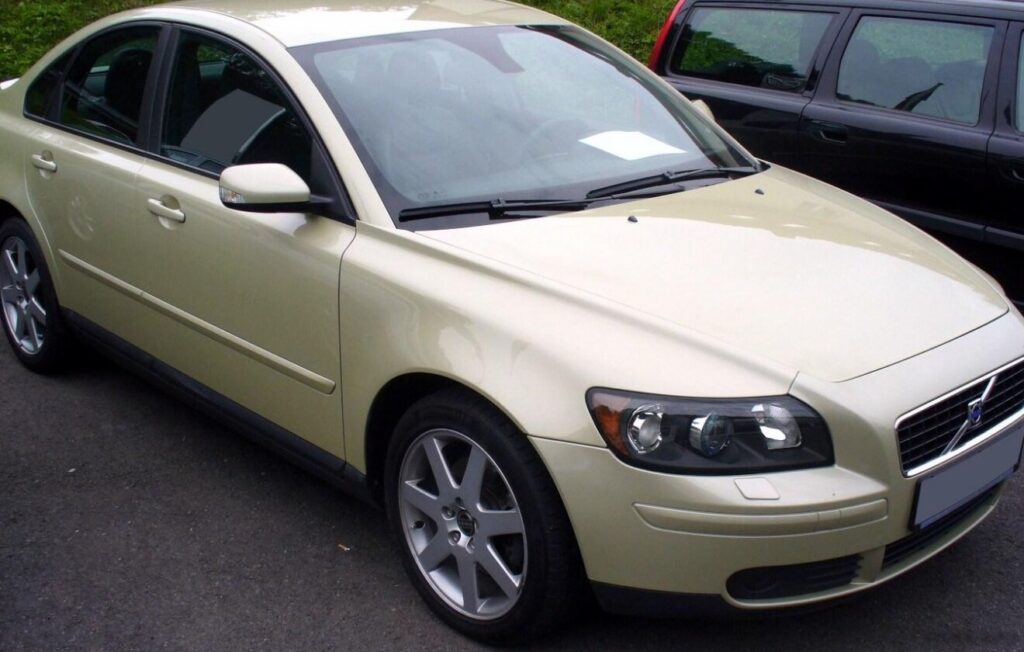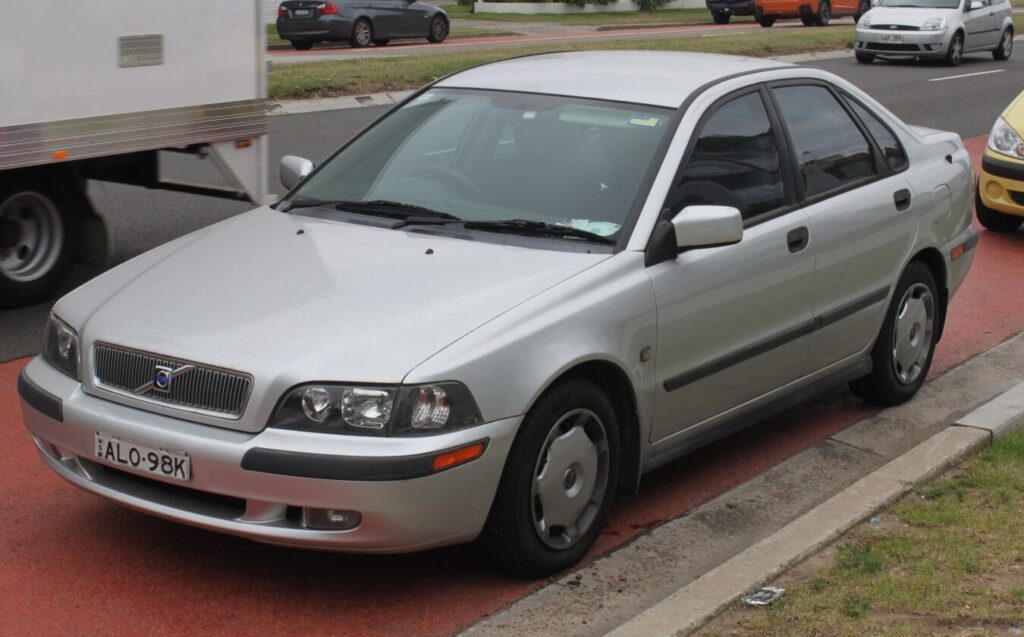
The Volvo S40 VS 1.9 Di, produced between 1999 and 2003, represented Volvo’s entry into the compact executive car segment with a diesel engine option. This variant, powered by a 1.9-liter turbocharged diesel engine producing 102 horsepower, was primarily aimed at the European market where diesel fuel was more prevalent and economically advantageous. It occupied the lower end of the S40 lineup, offering a balance of fuel efficiency and practicality for buyers seeking a comfortable and reliable sedan. The VS designation refers to the first generation of the S40, built on Volvo’s 19XX platform, shared with the V40 estate.
Technical Specifications
| Brand | Volvo |
| Model | S40 |
| Generation | S40 (VS) |
| Type (Engine) | 1.9 Di (102 Hp) |
| Start of production | 1999 |
| End of production | 2003 |
| Powertrain Architecture | Internal Combustion engine |
| Body type | Sedan |
| Seats | 5 |
| Doors | 4 |
| Fuel consumption (urban) | 7.5 l/100 km (31.4 US mpg) |
| Fuel consumption (extra urban) | 4.2 l/100 km (56 US mpg) |
| Fuel Type | Diesel |
| Acceleration 0 – 100 km/h | 12 sec |
| Acceleration 0 – 62 mph | 12 sec |
| Acceleration 0 – 60 mph | 11.4 sec |
| Maximum speed | 185 km/h (114.95 mph) |
| Weight-to-power ratio | 12.6 kg/Hp |
| Weight-to-torque ratio | 6 kg/Nm |
| Power | 102 Hp @ 4000 rpm |
| Torque | 215 Nm @ 1750 rpm (158.58 lb.-ft. @ 1750 rpm) |
| Engine layout | Front, Transverse |
| Engine Model/Code | D4192T4 |
| Engine displacement | 1870 cm3 (114.11 cu. in.) |
| Number of cylinders | 4 |
| Engine configuration | Inline |
| Cylinder Bore | 80 mm (3.15 in.) |
| Piston Stroke | 93 mm (3.66 in.) |
| Compression ratio | 18.3:1 |
| Number of valves per cylinder | 2 |
| Fuel injection system | Diesel Commonrail |
| Engine aspiration | Turbocharger |
| Valvetrain | OHC |
| Engine oil capacity | 5.6 l (5.92 US qt | 4.93 UK qt) |
| Coolant capacity | 6.3 l (6.66 US qt | 5.54 UK qt) |
| Kerb Weight | 1285 kg (2832.94 lbs.) |
| Max. weight | 1770 kg (3902.18 lbs.) |
| Max load | 485 kg (1069.24 lbs.) |
| Trunk (boot) space – minimum | 415 l (14.66 cu. ft.) |
| Trunk (boot) space – maximum | 853 l (30.12 cu. ft.) |
| Fuel tank capacity | 60 l (15.85 US gal | 13.2 UK gal) |
| Length | 4516 mm (177.8 in.) |
| Width | 1716 mm (67.56 in.) |
| Height | 1422 mm (55.98 in.) |
| Wheelbase | 2562 mm (100.87 in.) |
| Front track | 1472 mm (57.95 in.) |
| Rear track | 1474 mm (58.03 in.) |
| Drivetrain Architecture | Front wheel drive |
| Number of gears | 5 |
| Gearbox type | Manual transmission |
| Front suspension | Wishbone |
| Rear suspension | Coil spring |
| Front brakes | Ventilated discs |
| Rear brakes | Disc |
| Assisting systems | ABS (Anti-lock braking system) |
| Steering type | Steering rack and pinion |
| Power steering | Hydraulic |
| Tires size | 195/55 R15 |
| Wheel rims size | 15 |
Powertrain & Engine Architecture
The heart of the S40 1.9 Di was the D4192T4 engine, a 1.9-liter inline-four cylinder diesel. This engine utilized a direct injection system with a common rail setup, allowing for precise fuel delivery and improved combustion efficiency. The turbocharger, a key component, boosted power output by forcing more air into the cylinders. The engine featured an overhead camshaft (OHC) valvetrain with two valves per cylinder. The 18.3:1 compression ratio was typical for a direct injection diesel engine of the era, contributing to its thermal efficiency. This engine was part of Volvo’s broader effort to offer more fuel-efficient options in their lineup, responding to growing demand for diesel vehicles in Europe. The five-speed manual transmission was the standard offering, providing a relatively direct connection between the engine and the front wheels.
Driving Characteristics
The 102 horsepower and 215 Nm (158.58 lb-ft) of torque delivered by the 1.9 Di engine provided adequate, though not exhilarating, performance. Acceleration from 0 to 60 mph took around 11.4 seconds, and top speed was limited to 114.95 mph. Compared to the higher-output gasoline engines available in the S40 range, such as the 1.8L or 2.0L variants, the 1.9 Di prioritized fuel economy over outright speed. The turbocharger did provide a noticeable boost in power at lower RPMs, making it reasonably responsive for everyday driving. The manual transmission, while not particularly sporty, offered a predictable and reliable driving experience. The gear ratios were tuned for efficiency, rather than aggressive acceleration.
Equipment & Trim Levels
The 1.9 Di trim typically represented the entry-level diesel offering in the S40 range. Standard equipment generally included power steering, ABS brakes, central locking, and electric front windows. Interior upholstery was typically cloth, and the dashboard featured a functional, if somewhat understated, design. Optional extras included alloy wheels, a sunroof, air conditioning, and upgraded audio systems. The focus was on providing a well-equipped, practical vehicle at a competitive price point.
Chassis & Braking
The S40 VS utilized a front-wheel-drive layout with independent wishbone suspension at the front and a coil spring setup at the rear. This suspension configuration provided a comfortable ride quality, suitable for everyday commuting. The front brakes were ventilated discs, offering good stopping power, while the rear brakes were solid discs. The hydraulic power steering provided a light and responsive feel. The chassis was designed to balance handling with ride comfort, prioritizing stability and predictability over sporty dynamics.
Market Reception & Comparison
The S40 1.9 Di was generally well-received by critics as a practical and fuel-efficient option in the compact executive segment. It was praised for its comfortable ride, reliable engine, and reasonable running costs. However, it was often criticized for its relatively modest performance compared to its gasoline-powered counterparts. Compared to other diesel-powered competitors, such as the Volkswagen Golf or Ford Focus, the S40 1.9 Di offered a more premium interior and a reputation for safety. Fuel economy was a key selling point, with the 1.9 Di achieving around 56 mpg on the extra-urban cycle.
Legacy
The D4192T4 engine, while not known for being particularly high-performance, proved to be a relatively durable and reliable unit. Properly maintained examples can still be found on the road today. In the used car market, the S40 1.9 Di is often sought after by buyers looking for an affordable, fuel-efficient, and reliable compact sedan. While parts availability may be becoming more challenging as the car ages, the relatively simple mechanical design makes it a viable option for those willing to perform their own maintenance. The S40 1.9 Di represents a significant step in Volvo’s efforts to broaden their appeal and offer a wider range of powertrain options to meet the diverse needs of European drivers.