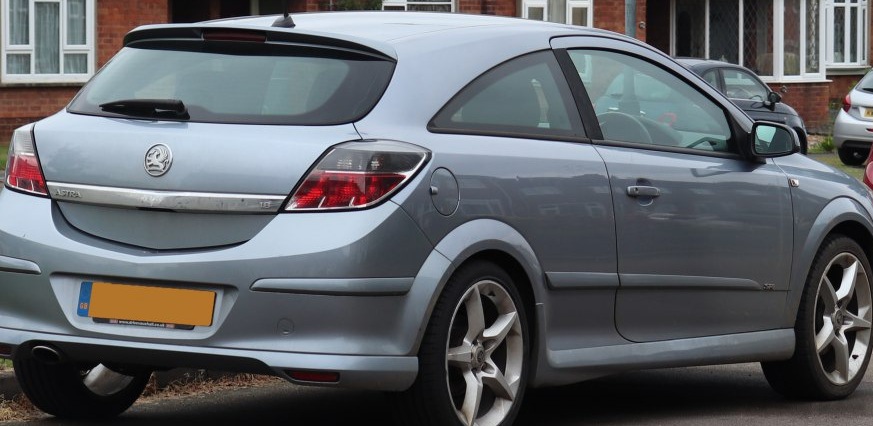
The Vauxhall Astra Mk V CC Sport Hatch 1.9 CDTi, produced between 2005 and 2010, represented a key offering in the British market’s compact hatchback segment. Positioned as a sporty, yet economical, variant within the Mk V Astra range (designated as the H-platform in Opel/Vauxhall terminology), it aimed to appeal to drivers seeking a balance between performance and fuel efficiency. The “CC” designation signified a coupe-inspired body style with a three-door configuration, differentiating it from the five-door hatchback and estate versions. This particular 1.9 CDTi 120 horsepower model occupied a mid-range position in the lineup, offering a step up in performance from the lower-powered petrol engines while remaining more accessible than the higher-output diesel options.
Technical Specifications
| Brand | Vauxhall |
| Model | Astra |
| Generation | Astra Mk V CC Sport Hatch |
| Type (Engine) | 1.9 CDTi (120 Hp) |
| Start of production | 2005 |
| End of production | 2010 |
| Powertrain Architecture | Internal Combustion engine |
| Body type | Hatchback |
| Seats | 5 |
| Doors | 3 |
| Fuel consumption (urban) | 7.4 l/100 km (31.8 US mpg) |
| Fuel consumption (extra urban) | 4.9 l/100 km (48 US mpg) |
| Fuel consumption (combined) | 5.8 l/100 km (40.6 US mpg) |
| CO2 emissions | 157 g/km |
| Fuel Type | Diesel |
| Acceleration 0 – 100 km/h | 9.7 sec |
| Acceleration 0 – 62 mph | 9.7 sec |
| Acceleration 0 – 60 mph | 9.2 sec |
| Maximum speed | 196 km/h (121.79 mph) |
| Weight-to-power ratio | 11.2 kg/Hp |
| Weight-to-torque ratio | 4.8 kg/Nm |
| Power | 120 Hp @ 3500 rpm |
| Torque | 281 Nm @ 2000-2750 rpm (207.25 lb.-ft. @ 2000-2750 rpm) |
| Engine layout | Front, Transverse |
| Engine Model/Code | Z19DT |
| Engine displacement | 1910 cm3 (116.56 cu. in.) |
| Number of cylinders | 4 |
| Engine configuration | Inline |
| Cylinder Bore | 82 mm (3.23 in.) |
| Piston Stroke | 90.4 mm (3.56 in.) |
| Compression ratio | 17.5:1 |
| Number of valves per cylinder | 2 |
| Fuel injection system | Diesel Commonrail |
| Engine aspiration | Turbocharger, Intercooler |
| Engine oil capacity | 4.3 l (4.54 US qt | 3.78 UK qt) |
| Coolant | 7 l (7.4 US qt | 6.16 UK qt) |
| Kerb Weight | 1342 kg (2958.6 lbs.) |
| Max. weight | 1880 kg (4144.69 lbs.) |
| Max load | 538 kg (1186.09 lbs.) |
| Trunk (boot) space – minimum | 312 l (11.02 cu. ft.) |
| Fuel tank capacity | 52 l (13.74 US gal | 11.44 UK gal) |
| Permitted trailer load with brakes (12%) | 1500 kg (3306.93 lbs.) |
| Permitted trailer load without brakes | 680 kg (1499.14 lbs.) |
| Length | 4290 mm (168.9 in.) |
| Width | 1753 mm (69.02 in.) |
| Width including mirrors | 2033 mm (80.04 in.) |
| Height | 1415 mm (55.71 in.) |
| Wheelbase | 2614 mm (102.91 in.) |
| Front track | 1488 mm (58.58 in.) |
| Rear (Back) track | 1488 mm (58.58 in.) |
| Front overhang | 910 mm (35.83 in.) |
| Rear overhang | 766 mm (30.16 in.) |
| Ride height (ground clearance) | 130 mm (5.12 in.) |
| Drag coefficient (Cd) | 0.28 |
| Minimum turning circle (turning diameter) | 10 m (32.81 ft.) |
| Drivetrain Architecture | Front wheel drive |
| Number of gears and type of gearbox | 6 gears, manual transmission |
| Front brakes | Ventilated discs |
| Rear brakes | Disc |
| Assisting systems | ABS (Anti-lock braking system) |
| Steering type | Steering rack and pinion |
| Tires size | 205/55 R16 |
| Wheel rims size | 16 |
Powertrain & Engine Architecture
The heart of this Astra variant was the Z19DT, a 1.9-liter inline-four cylinder diesel engine. This engine was a common sight in various Opel, Vauxhall, and Fiat models of the era. It featured a cast iron block and aluminum cylinder head, employing a common rail direct injection system for optimized fuel delivery. The turbocharger, coupled with an intercooler, boosted power output and improved torque characteristics. The engine produced 120 horsepower at 3500 rpm and a substantial 281 Nm (207 lb-ft) of torque between 2000 and 2750 rpm. This torque band provided good in-gear acceleration. The engine utilized a single overhead camshaft (SOHC) design with two valves per cylinder. The manual transmission was a six-speed unit, chosen for its balance of fuel efficiency and driver engagement. While an automatic transmission was offered on other Astra Mk V models, it wasn’t typically paired with the 1.9 CDTi 120 hp engine.
Driving Characteristics
The 1.9 CDTi 120 hp Astra CC Sport Hatch offered a respectable driving experience. Acceleration from 0-60 mph took around 9.2 seconds, and it could achieve a top speed of 121.79 mph. The engine’s strong low-end torque made it feel responsive in everyday driving situations, particularly for overtaking maneuvers. However, compared to the more powerful 150 hp version of the 1.9 CDTi, or the petrol-powered SRi models, this variant felt less eager to rev. The six-speed manual transmission allowed drivers to keep the engine within its optimal torque band, maximizing efficiency and responsiveness. The three-door body style and relatively lightweight construction contributed to a reasonably agile feel, although the suspension was tuned more for comfort than outright sportiness.
Equipment & Trim Levels
The “Sport Hatch” trim level included several standard features. Typically, these included air conditioning, electric front windows, a CD stereo system, alloy wheels, and remote central locking. Interior upholstery was usually cloth, with a sporty design. Optional extras could include features like a sunroof, upgraded audio systems, and parking sensors. The dashboard layout was functional and straightforward, typical of Vauxhall/Opel interiors of the period. Safety features included ABS brakes, front airbags, and seatbelt pretensioners.
Chassis & Braking
The Astra Mk V utilized a MacPherson strut front suspension and a torsion beam rear suspension. This setup provided a good compromise between ride comfort and handling. The front brakes were ventilated discs, while the rear brakes were solid discs. ABS (Anti-lock Braking System) was standard, enhancing braking performance and stability. The steering was a rack and pinion system, offering precise control. The 16-inch alloy wheels were typically fitted with 205/55 R16 tires.
Market Reception & Comparison
The Astra Mk V 1.9 CDTi 120 hp was generally well-received by automotive critics as a practical and economical choice. It offered a good balance of performance and fuel efficiency, making it suitable for both urban commuting and longer journeys. Compared to the 150 hp CDTi variant, it was less expensive to purchase and insure, but offered less outright performance. The petrol-powered Astra models were generally considered less refined and less fuel-efficient. Fuel economy figures of around 40.6 US mpg combined were competitive for the time. Reliability was generally good, although, like all diesel engines, it was susceptible to issues with the fuel injection system and turbocharger if not properly maintained.
Legacy
The Z19DT engine, while now aging, has proven to be relatively durable when properly maintained. Used examples of the Astra Mk V 1.9 CDTi are still relatively common on the used car market. Potential buyers should be aware of the typical diesel engine maintenance requirements, including regular oil changes and fuel filter replacements. The 1.9 CDTi engine is known for its potential for increased power through tuning, but modifications should be undertaken with caution. The Astra Mk V, in general, remains a popular choice for those seeking an affordable and practical hatchback, and the 1.9 CDTi 120 hp variant offers a good blend of economy and usability.