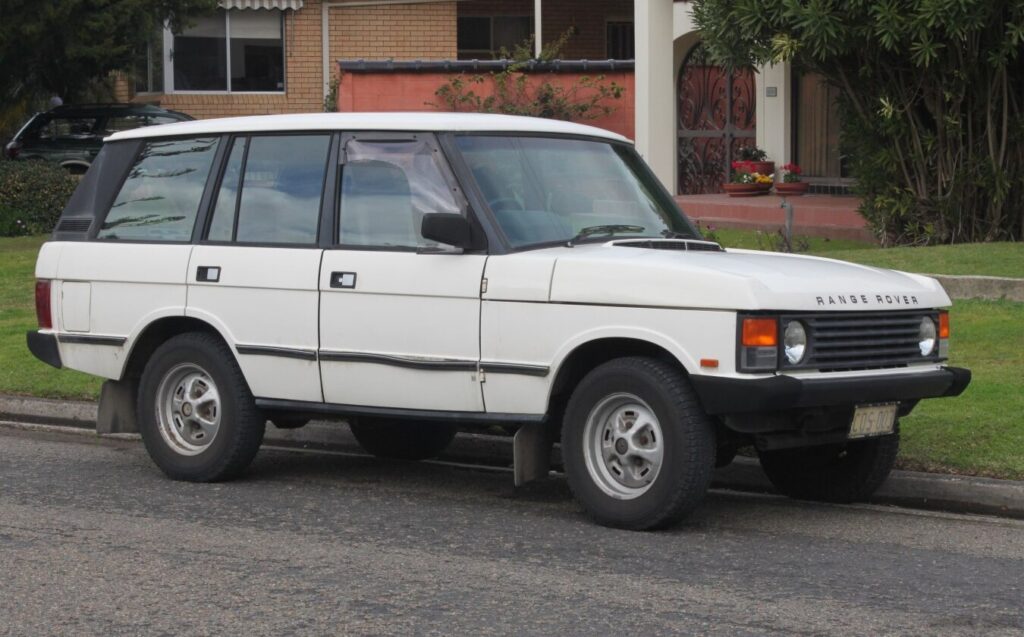
The Land Rover Range Rover I 2.4 Diesel (106 hp) represents a unique and relatively rare variant of the original Range Rover, produced between 1986 and 1990. Introduced as a response to market demand for a more fuel-efficient option, particularly in Europe, this diesel-powered Range Rover offered a different character than its gasoline-fueled siblings. It occupied a specific niche within the first-generation Range Rover lineup, appealing to buyers prioritizing economy and durability over outright performance. While the Range Rover was initially conceived as a luxury off-roader, the 2.4 Diesel broadened its appeal to a more pragmatic customer base.
Technical Specifications
| Brand | Land Rover |
| Model | Range Rover |
| Generation | Range Rover I |
| Type (Engine) | 2.4 Diesel (106 hp) |
| Start of Production | 1986 |
| End of Production | 1990 |
| Powertrain Architecture | Internal Combustion Engine |
| Body Type | SUV |
| Fuel Type | Diesel |
| Power | 106 hp |
| Engine Aspiration | Naturally Aspirated |
Powertrain & Engine Architecture
The heart of the Range Rover I 2.4 Diesel is the 2.4-liter (2495 cc) inline-four diesel engine, designated as the 200Tdi. This engine was a significant development for Land Rover, representing a move towards more modern diesel technology. It featured indirect injection, utilizing a Bosch rotary injection pump. Unlike earlier Land Rover diesel engines, the 200Tdi incorporated a more robust block and improved cooling, addressing some of the reliability concerns associated with previous designs. The engine’s head featured a single overhead camshaft operating two valves per cylinder. The 200Tdi produced 106 horsepower at 3800 rpm and approximately 195 lb-ft of torque at 1800 rpm. This torque figure, while lower than the V8 gasoline engines, was delivered at lower engine speeds, providing good pulling power for off-road use and towing. The engine was typically paired with a five-speed manual transmission, although a three-speed automatic transmission was also available, albeit less common. The automatic transmission, a Borg-Warner unit, was known for its durability but contributed to reduced fuel economy and slightly slower acceleration.
Driving Characteristics
The Range Rover I 2.4 Diesel offered a distinctly different driving experience compared to the V8 models. Acceleration was considerably slower, with a 0-60 mph time estimated around 16-18 seconds. However, the engine’s strong low-end torque made it surprisingly capable in off-road situations. The diesel engine’s power delivery was linear, but required more frequent gear changes to maintain momentum, especially when ascending hills or overtaking. The automatic transmission, when equipped, further dulled acceleration, but provided a more relaxed driving experience. The 2.4 Diesel was noticeably more economical than the V8s, achieving fuel economy in the range of 24-28 mpg, a significant improvement for a vehicle of this size and capability. The increased weight of the diesel engine over the front axle did slightly affect handling, making the steering feel a bit heavier and less precise compared to the gasoline versions.
Equipment & Trim Levels
The 2.4 Diesel Range Rover typically came with a more basic level of equipment compared to the V8 models. Standard features generally included cloth upholstery, manual windows and door locks, and a relatively simple dashboard layout. Air conditioning was often an optional extra, as were features like power steering and a sunroof. The interior trim was generally functional and durable, reflecting the vehicle’s more utilitarian focus. The exterior trim was similar to other Range Rover I models, featuring the iconic boxy shape and aluminum trim. However, the 2.4 Diesel often lacked some of the more luxurious exterior appointments found on the higher-end V8 trims. The trim level was generally positioned as the entry-level Range Rover, appealing to buyers who prioritized practicality and affordability over luxury.
Chassis & Braking
The Range Rover I 2.4 Diesel utilized the same robust chassis and suspension setup as other Range Rover I models. It featured a separate chassis construction with a coil-spring suspension system, providing a comfortable ride both on and off-road. The front suspension utilized double wishbones, while the rear suspension employed a live axle with trailing arms. Braking systems varied depending on the year and market. Early models typically featured disc brakes on the front wheels and drum brakes on the rear. Later models often received disc brakes all around, providing improved stopping power. The steering was a recirculating ball system, offering good feel but requiring a reasonable amount of effort. Stabilizer bars were fitted to both the front and rear axles to reduce body roll during cornering.
Market Reception & Comparison
The Range Rover I 2.4 Diesel was generally well-received in Europe, where diesel engines were more popular and fuel economy was a major concern. Critics praised its fuel efficiency and durability, but noted its slower performance compared to the V8 models. In the US market, the diesel Range Rover was less common, as gasoline engines were preferred. Compared to the 3.5-liter and 3.9-liter V8 Range Rovers, the 2.4 Diesel offered significantly lower running costs but lacked the refinement and performance of its gasoline counterparts. The 2.4 Diesel was also often compared to other diesel-powered SUVs of the time, such as the Jeep Cherokee and Nissan Patrol, generally holding its own in terms of off-road capability and build quality. The 200Tdi engine proved to be a reliable unit, and the 2.4 Diesel Range Rover offered a compelling value proposition for buyers seeking a capable and economical off-roader.
Legacy
The Range Rover I 2.4 Diesel played a crucial role in establishing the Range Rover’s reputation for durability and versatility. The 200Tdi engine became a cornerstone of Land Rover’s diesel engine lineup for many years, and its robust design ensured long-term reliability. Today, the 2.4 Diesel Range Rover I is a sought-after classic vehicle, particularly among enthusiasts who appreciate its simplicity and ruggedness. While parts availability can be a challenge, the 200Tdi engine is relatively easy to maintain and rebuild. The 2.4 Diesel models generally command lower prices than the V8 versions, making them an accessible entry point into Range Rover ownership. The vehicle represents a unique chapter in the Range Rover’s history, demonstrating the brand’s willingness to adapt to changing market demands and offer a more practical alternative to its luxurious gasoline-powered counterparts.