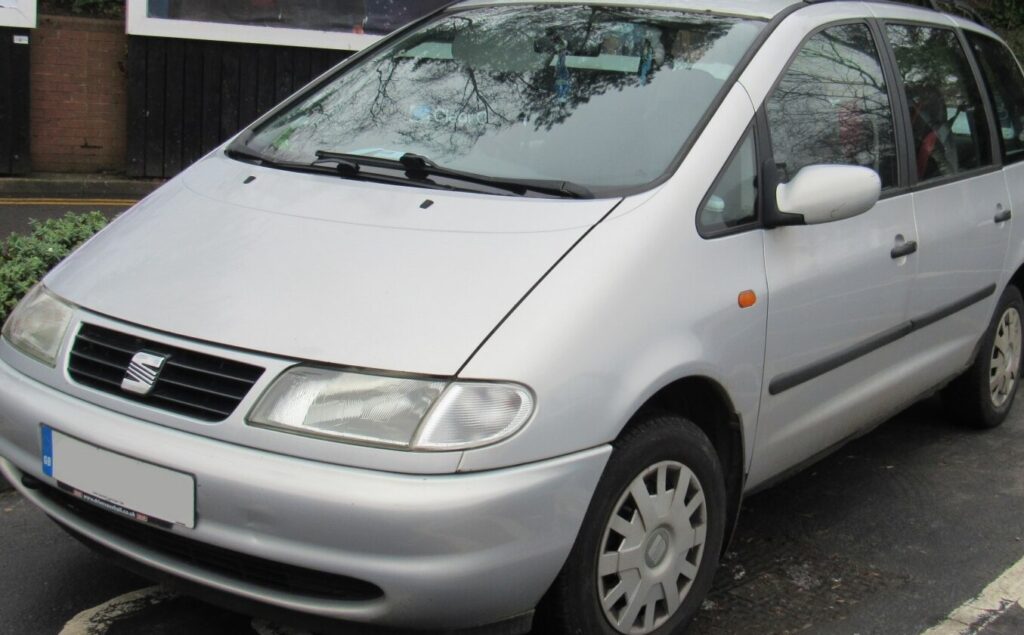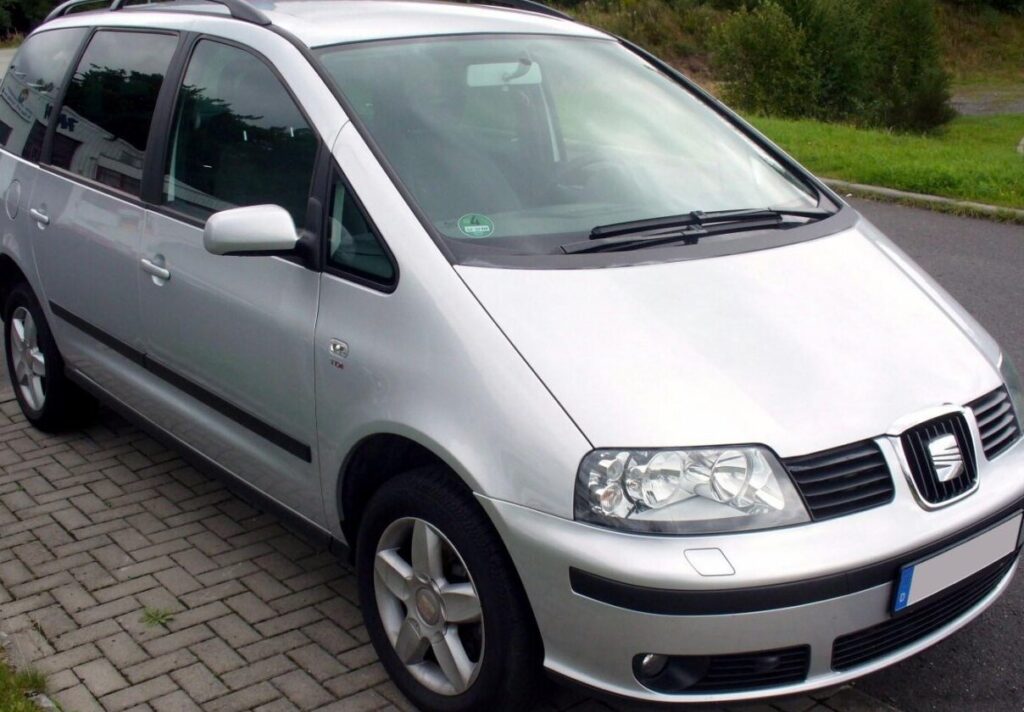
The Seat Alhambra II (7N), particularly the facelifted version introduced in May 2015 and continuing through March 2020, represents Seat’s entry into the large MPV (Multi-Purpose Vehicle) segment. This generation Alhambra, co-developed with Volkswagen (sharing a platform with the VW Sharan), aimed to provide a spacious and practical vehicle for families. The 1.4 TSI 150 horsepower variant occupied a middle ground in the Alhambra lineup, offering a balance between fuel efficiency and acceptable performance. It was positioned as a more accessible option compared to the higher-powered diesel variants, appealing to buyers prioritizing gasoline engines and lower initial costs.
Technical Specifications
| Brand | Seat |
| Model | Alhambra |
| Generation | Alhambra II (7N, facelift 2015) |
| Type (Engine) | 1.4 TSI (150 Hp) |
| Start of production | May, 2015 |
| End of production | March, 2020 |
| Powertrain Architecture | Internal Combustion engine |
| Body type | Minivan, MPV |
| Seats | 5 |
| Doors | 5 |
| Fuel consumption (combined) | 6.4 l/100 km (36.8 US mpg, 44.1 UK mpg, 15.6 km/l) |
| CO2 emissions | 148-149 g/km |
| Fuel Type | Petrol (Gasoline) |
| Acceleration 0 – 100 km/h | 9.9 sec |
| Acceleration 0 – 62 mph | 9.9 sec |
| Acceleration 0 – 60 mph | 9.4 sec |
| Maximum speed | 200 km/h (124.27 mph) |
| Emission standard | Euro 6 |
| Weight-to-power ratio | 10.9 kg/Hp, 92.1 Hp/tonne |
| Weight-to-torque ratio | 6.5 kg/Nm, 153.6 Nm/tonne |
| Power | 150 Hp @ 5000-6000 rpm |
| Power per litre | 107.5 Hp/l |
| Torque | 250 Nm @ 1500-3500 rpm (184.39 lb.-ft. @ 1500-3500 rpm) |
| Engine layout | Front, Transverse |
| Engine Model/Code | CZDA |
| Engine displacement | 1395 cm3 (85.13 cu. in.) |
| Number of cylinders | 4 |
| Engine configuration | Inline |
| Cylinder Bore | 74.5 mm (2.93 in.) |
| Piston Stroke | 80 mm (3.15 in.) |
| Compression ratio | 10:1 |
| Number of valves per cylinder | 4 |
| Fuel injection system | Direct injection |
| Engine aspiration | Turbocharger, Intercooler |
| Engine oil capacity | 4 l (4.23 US qt | 3.52 UK qt) |
| Coolant | 8 l (8.45 US qt | 7.04 UK qt) |
| Kerb Weight | 1628 kg (3589.13 lbs.) |
| Max. weight | 2300 kg (5070.63 lbs.) |
| Max load | 672 kg (1481.51 lbs.) |
| Trunk (boot) space – minimum | 955 l (33.73 cu. ft.) |
| Trunk (boot) space – maximum | 2430 l (85.81 cu. ft.) |
| Fuel tank capacity | 70 l (18.49 US gal | 15.4 UK gal) |
| Length | 4854 mm (191.1 in.) |
| Width | 1904 mm (74.96 in.) |
| Height | 1720 mm (67.72 in.) |
| Wheelbase | 2919 mm (114.92 in.) |
| Front track | 1557-1569 mm (61.3 – 61.77 in.) |
| Rear (Back) track | 1605-1617 mm (63.19 – 63.66 in.) |
| Minimum turning circle | 11.9 m (39.04 ft.) |
| Drivetrain Architecture | Front wheel drive |
| Number of gears and type of gearbox | 6 gears, manual transmission |
| Front suspension | Independent type McPherson |
| Rear suspension | Independent coil spring |
| Front brakes | Ventilated discs |
| Rear brakes | Disc |
| Assisting systems | ABS (Anti-lock braking system) |
| Steering type | Steering rack and pinion |
| Power steering | Electric Steering |
| Tires size | 205/60 R16; 215/60 R16; 225/50 R17; 225/50 R18 |
| Wheel rims size | 16; 17; 18 |
Powertrain & Engine Architecture
The heart of this Alhambra variant is the CZDA engine code, a 1.4-liter turbocharged inline-four cylinder gasoline engine. This engine is part of the Volkswagen Group’s EA211 engine family, known for its compact design and efficiency. It utilizes direct fuel injection (FSI) and a turbocharger with an intercooler to deliver a respectable 150 horsepower and 250 Nm (184 lb-ft) of torque. The turbocharger provides a boost in power, particularly at lower engine speeds, helping to overcome the limitations of the relatively small displacement. The engine’s valvetrain features four valves per cylinder, contributing to improved breathing and overall performance. The Alhambra 1.4 TSI came exclusively with a 6-speed manual transmission, designed to maximize fuel economy and provide a reasonably engaging driving experience.
Driving Characteristics
The 1.4 TSI engine in the Alhambra provides adequate performance for everyday driving. Acceleration from 0-60 mph takes around 9.4 seconds, which is sufficient for merging onto highways and overtaking slower traffic. However, it’s not a particularly sporty engine, and drivers should expect some turbo lag at lower RPMs. The 6-speed manual transmission allows for precise gear selection, and the gear ratios are well-suited for both city and highway driving. Compared to the more powerful diesel variants, the 1.4 TSI feels less effortless when fully loaded with passengers and luggage. The manual transmission also requires more driver involvement than the available DSG (Direct-Shift Gearbox) options found on other Alhambra trims.
Equipment & Trim Levels
The 1.4 TSI Alhambra typically came with a reasonable level of standard equipment. This included features like air conditioning, electric windows, central locking, and a basic audio system. Higher trim levels added features such as alloy wheels, parking sensors, a touchscreen infotainment system, and climate control. Interior upholstery was typically cloth, with options for leather upgrades. Safety features included ABS, ESP (Electronic Stability Program), and multiple airbags. Optional extras included a panoramic sunroof, navigation system, and advanced driver-assistance systems.
Chassis & Braking
The Alhambra II utilizes an independent McPherson strut suspension at the front and an independent coil spring suspension at the rear. This setup provides a comfortable ride quality, absorbing bumps and imperfections in the road effectively. The front brakes are ventilated discs, while the rear brakes are solid discs, providing adequate stopping power for the vehicle’s weight. Electric power steering offers light and precise steering feel. The Alhambra’s chassis is designed to prioritize comfort and stability over sporty handling.
Market Reception & Comparison
The 1.4 TSI Alhambra was generally well-received by critics as a practical and fuel-efficient MPV. It offered a good balance between price, performance, and economy. However, some reviewers noted that the engine could feel strained when the vehicle was fully loaded. Compared to the 2.0 TDI diesel variants, the 1.4 TSI offered lower running costs (due to cheaper gasoline) but sacrificed some performance and fuel economy. The 1.4 TSI was often seen as a good choice for families who primarily used their MPV for shorter journeys and didn’t require the extra power of the diesel engines.
Legacy
The Seat Alhambra II, including the 1.4 TSI variant, has proven to be a relatively reliable vehicle. The EA211 engine family is generally known for its durability, although regular maintenance is crucial. Common issues include turbocharger wear and potential problems with the direct injection system. In the used car market, the 1.4 TSI Alhambra represents a good value proposition for buyers seeking a spacious and practical MPV at an affordable price. Its fuel efficiency and relatively low maintenance costs make it an attractive option for families on a budget.